

Publications
Current publications
Books

Below you will find books that are freely accessible and/or have been published as part of the GPN network.
2025
>> Post-development advocates and decolonial thinkers are calling for radical alternatives to development, but how do these ideals sit with the day-to-day reality of marginalized communities struggling with poverty, precarity, and the deprivation of human rights?
>> This book examines the complexities of Black existence and temporality in the context of globalization's violence, employing a decolonial poethics of global*Blackness. It offers new interpretations of coloniality and decoloniality by exploring the "problem" of Blackness.
>> Drawing on the methods of Michel Foucault, Ziai's ground-breaking book traces the origins of development discourse back to late colonialism and notes the significant discontinuities that led to the establishment of a new discourse and its accompanying industry.
>>The book compiles academic reflections written during the first phase of the GPN Network (2022-2024).
2021
>> It admirably deploys Foucauldian theory and methodology, demonstrating why its author has become the most persistent and insightful analyst of development from poststructuralist perspectives.
- Arturo Escobar, Kenan Professor of Anthropology, University of North Carolina, Chapel Hill, USA
>> The volume critiques Eurocentric development discourse and reveals colonial continuities in contemporary development cooperation. It advances decolonial perspectives and practical alternatives to address global inequality in line with post-development thinking.
GPN Working Papers

Below you will find working papers published by the GPN.
Link to all published GPN Working Papers
>>How to decolonize development cooperation in practice? This policy paper shares the 12 most important recommendations based on five years of experience within the Global Partnership Network, a network of 11 universities and 18 civil society organizations in 12 countries, all of which are located in the Global South except Germany.
Authors: Fiona Faye, Aram Ziai, Joshua Kwesi Aikins
Supported and authorized by our partners from the GPN
International cooperation in a neocolonial world
Learnings from the GPN experience - Policy Paper
Download PDF
2026
>> Decolonizing global economic policy is one of the most pressing tasks of our time. Precisely because of the long history of violent exploitation, we must first establish historical justice through reparations for the slave trade and colonialism, land restitution, and climate reparations. Given that current economic relations lead to immense financial transfers from the Global South to the Global North, this economic system, which continuously produces inequality, must be fundamentally overhauled. Such 'systemic reparations' would align economic policy with cosmopolitan values and counteract the colonial shaping of the global economy. Appropriate political goals that economic policy should aim for include food sovereignty, energy sovereignty, socio-ecological transformation, democratic economic policy institutions, local and global public goods, monetary and currency sovereignty, strong transnational coalitions, and freedom of movement.
Authors: Aram Ziai, Fiona Faye
Rethinking Global Economic Policy: Moving Towards Decolonization
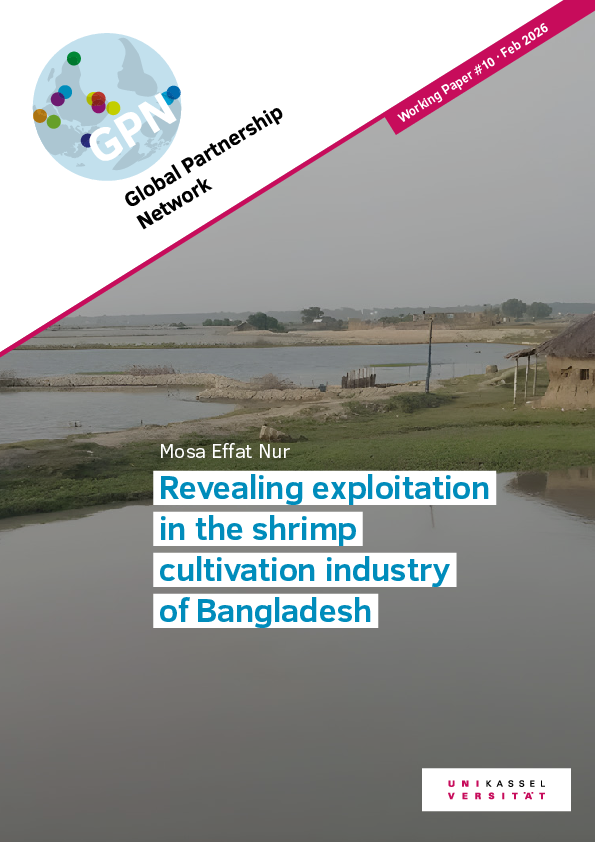
>>This paper reveals how exploitation manifests in the shrimp cultivation industry of Bangladesh. Fish, as the second most valuable crop, contributes significantly to Bangladesh's national income and food security. Due to the demand for cheap shrimp in the international market, shrimp farming is expanding in Bangladesh. Therefore, different studies raise concerns about the shrimp supply chain, labor practices, and exploitation of shrimp producers and fry collectors within the industry.
Author: Mosa Effat Nur
Revealing exploitation in the shrimp cultivation industry of Bangladesh
2025
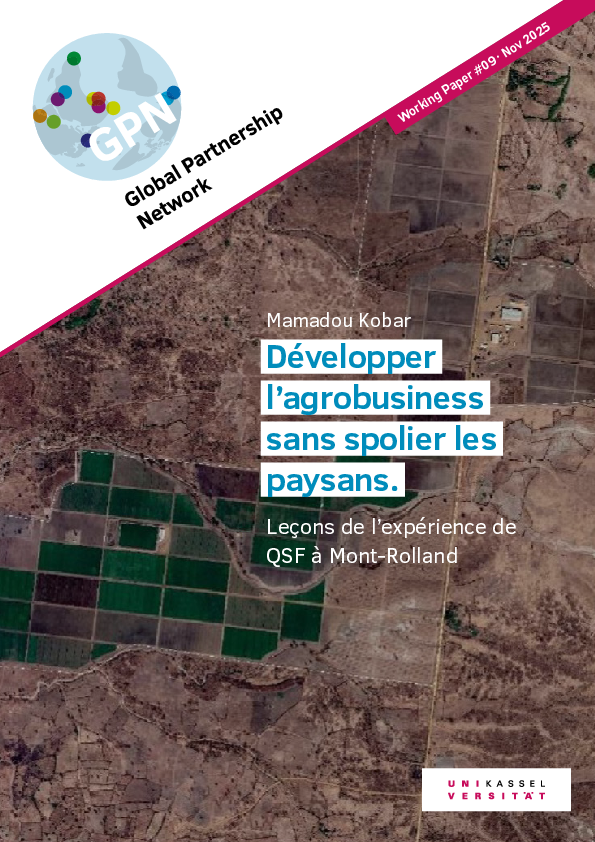
>>This paper is a contribution to the search for equitable and socially acceptable methods of developing agribusiness in Senegal. It presents the results of an experience capitalization, proposed by ENDA GRAF SAHEL to the town hall of Mont-Rolland, and carried out under the scientific expertise of Makhtar Ndao.
Author: Mamadou Kobar
Développer l'agrobusiness sans spolier les paysans.
Leçons de l'expérience de QSF à Mont-Rolland
>>The paper explores how the concepts of race and gender have been used in the discourse of development and how racialized and gendered differences have been constructed. It also maps convergences between race, gender and capitalism and discusses the co-optation of critical concepts in the discourse with the empirical example of a strategy paper on feminist development policy from the German government.
Author: Aram Ziai
Race and gender in development discourse; The German strategy of feminist development policy
>> Beyond Green Capitalism criticizes green capitalism as insufficient and argues for a democratic-humanist Marxism that combines social justice, environmental sustainability and feminist values. It emphasizes the need for a radical transformation in South Africa to effectively combat social inequality, environmental degradation and the crisis of capitalism.
Authors: Prof. Devan Pillay
Editorial Board: Prof. Dr. Aram Ziai (Executive Director)
Beyond Green Capitalism: Democratic Humanist Marxism and counter-hegemonic politics in South Africa
2024
>> The present paper analyzes this complex scenario in the frame of the dilemma of an individual right to migrate and a citizen's right everywhere to health. It synthesizes the articles contributed to the Global Partnership Network by giving an overview of the five papers from Ghana and five papers from India.
Authors:
Jayanti Saha
Sampurna Kundu
Dr. Christa Wichterich
To Stay or to Go? Comparison of Migration of Nurses from Ghana and India
>> Movement of nurses is a coalescence of different factors and forces. It is not just an occurrence rising from global equation of supply and demand of nurses as the spaces of globalization are multiple, intersecting, socially and politically constructed.
- Dr. Reema Gill (2024)
Authors:
Dr. Reema Gill
Sneha Maji
Sanjeet
Daisy Zacharia
Vaishnavi Mangal
Ajit Kumar
Santosh Mahindrakar
To Stay or to Go? Recruitment and Outmigration of Nurses from India. A GPN / JNU Project
>> Since the Covid-19 crisis, we have seen an exponential increase, a surge, in the number of nurses leaving the shores of Ghana to the UK, the USA, Canada, and Australia. This is worrying because of the critical role nurses play in the Ghanaian health service delivery system.
- Dr. Anarfi Asamoa-Baah (2024)
Authors:
Sarah Ama Amoo
Dr. Nancy Innocentia Ebu Enyan
Kofi Ameyaw Domfeh
Dr. Edward Kwabena Ameyaw
John Eliasu Mahama
Isaac Boadu
Prof. Kingsley Kwadwo Asare Pereko
Dr. Anarfi Asamoa-Baah
To Stay or to Go? Outmigration of Nurses from Ghana. A GPN / UCC Project
2023
>> This paper reviews what Africa can learn from the success and failures of Green Revolution, the pace at which the continental agricultural transformation is progressing towards attaining its stated goals and then proposes few strategic pathways that may be considered to enhance sustainable and resilient agri-food systems that would produce sufficient, safe and nutritious food to meet the needs of all people for an active and healthy life - and doing so without compromising the food security, health and nutrition of future generations.
- Prof. Dr. Ayalneh Bogale (2023)
Prof. Dr. Ayalneh Bogale
Editorial Board: Prof. Dr. Aram Ziai (Executive Director)
Design/ Layout: Nina Sangenstedt, gestaltvoll.de
The Africa Agricultural Transformation Agenda
Concurrent Challenges and Strategic Pathways for Building Resilience and Sustainable Food Systems.
>> The main motivation of the project was to understand how the power and control of transnational businesses is growing over the agricultural system in the context of persistent agrarian distress because of the changing role of the Indian State and its declining interventions in the agricultural sector.
- Prof. Dr. Archana Prasad (2023)
Archana Prasad, Dinesh Abrol, Praveen Jha, Tanja Verena Matheis and Christian Herzig
In Collaboration with Rollins John and Rajinder Singh
Impact of Corporate Integrated Farm Solutions on Small Farmers: A Case Study of Bayer, Karnal, Haryana
2022
>> While it is not surprising then that the fintech sector has had an immense role in shaping the demand for and supply of technology centred on digital identification, a distinct feature of how this technology is deployed is a somewhat nebulous public-private partnership model.
- Juvaria Jafri (2022)
Juvaria Jafri (2022) Fintech, Philanthropy and Development: Is KYC the core problem or solution for Digital Inclusion?
Publications of the GPN network

Below you will find research papers and publications from our network
2026
>> This report, Vulnerability, Adaptation, and Climate Justice in Urban India, is an important contribution to understanding climate change not merely as an environmental phenomenon, but as a profound social, economic, and political crisis.
---
ActionAid Karnataka Projects, New Delhi, January, 2026
>> This report stands as a collective effort, grounded in collaboration between communities, researchers, field teams, and institutional partners. It reflects not only shared labour but also shared commitments to justice, dignity, and the rights of marginalized communities in the context of climate change and structural inequality.
---
ActionAid Karnataka Projects, New Delhi, May, 2026
2025
>> Debates on who arrived in Kanyemba first have been central in many aspects of everyday life in the Kanyemba community. This study examines the history of the Tembo Mvura people in northern Zimbabwe, from the pre-colonial period to 1980.
---
Vol. 7 No. 2 (2025): African Journal of Inter/Multidisciplinary Studies (AJIMS)
2024
>> This report analyzes the causes and effects of teenage pregnancy and motherhood in India. It emphasizes the role of child marriage, lack of sexual education and socio-economic factors. It also recommends political and social measures to improve sex education, health care and gender equality and to protect the rights of young girls.
---
ActionAid Karnataka Projects, New Delhi, November, 2024
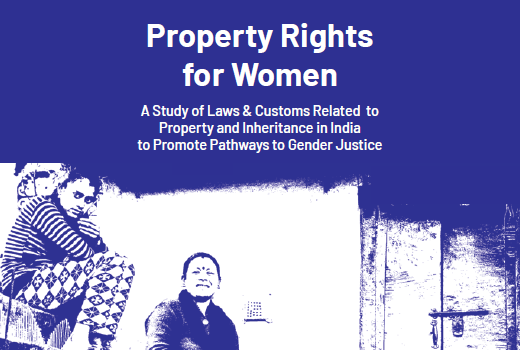
>> Property Rights for Women analyzes women's rights to property and inheritance in India and shows how legal, religious and cultural structures disadvantage women. It highlights legal discrepancies, gender discrimination and the challenges women face in enforcing land and property rights. The goal is fairer legislation to promote gender equality.
---
ActionAid Karnataka Projects, New Delhi, November, 2024
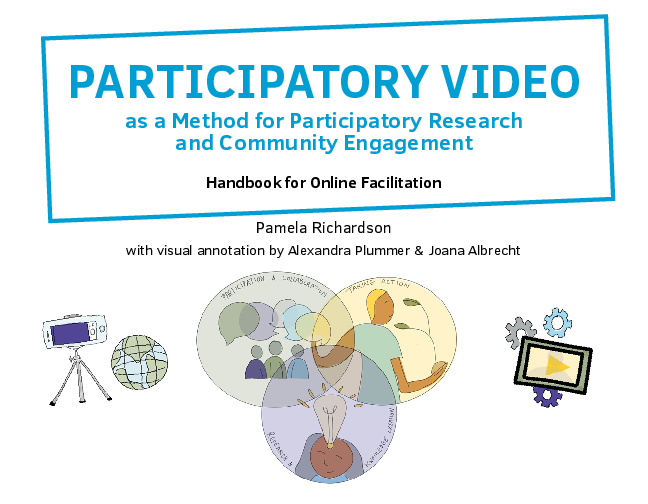
>> The Handbook provides resources for engaging community based organizations (CBOs) or individuals in Participatory Videos.
---
Video-Co-Lab, April 2024
>> This handbook offers a simple, step-by-step guide through the process of video-making. It is designed to assist beginners in putting together short videos, using a smartphone and minimal, low-cost equipment.
---
Video-Co-Lab, May 2024.
2023

>> Together, we can radically alter North-South relations, gender relations, human-nature relations, state-people relations and human relations in a broader sense.
---
Master thesis by Fiona Faye
>> In other words, it is not a model for a just energy transition. We need to find other ways to tackle the climate crisis and for the Global North to pay its climate debt!
---
Global Energy Justice Workshop Collective, Johannesburg, February 2023
2022
>> This study fills this methodological gap by using an endogenous switching regression (ESR) to determine the impacts of certification on the intensity of market participation and household income of mango farmers.
---
By: Rexford Akrong, Angela Dziedzom Akorsu, Praveen Jha, Joseph Boateng Agyenim
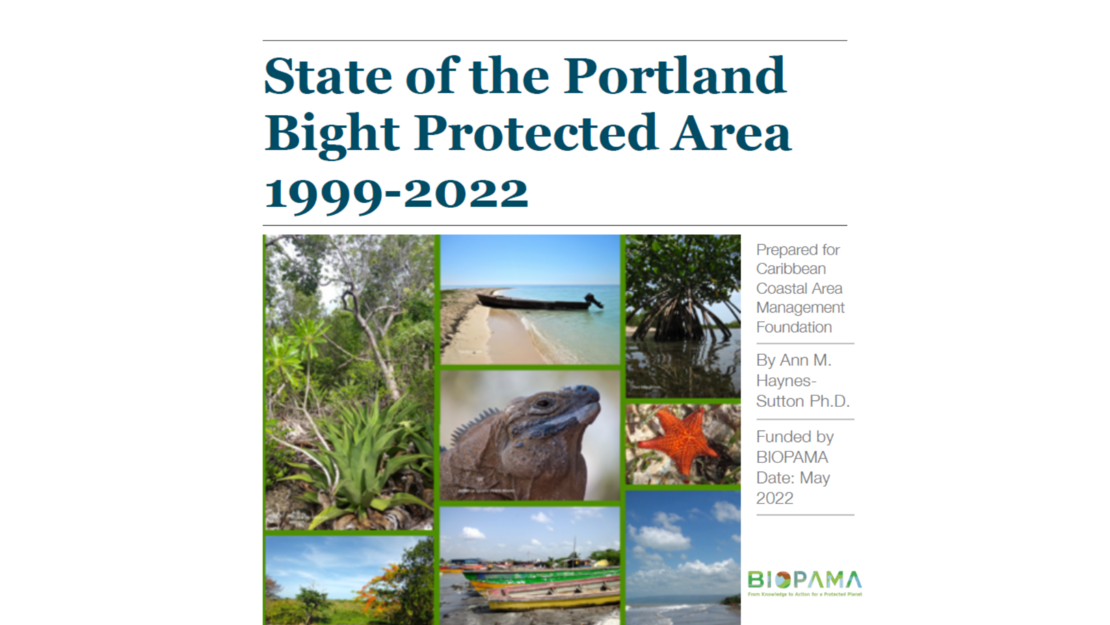
>> This document was prepared as part of a project called "Implementing adaptive management of the Portland Bight Protected Area through METT-4 assessment" that was funded by BIOPAMA. This document highlights progress made by Portland Bight Protected Area (PBPA) partners towards addressing issues identified through METT.
---
Published by Ann M. Haynes-Sutton (PhD), C-CAM
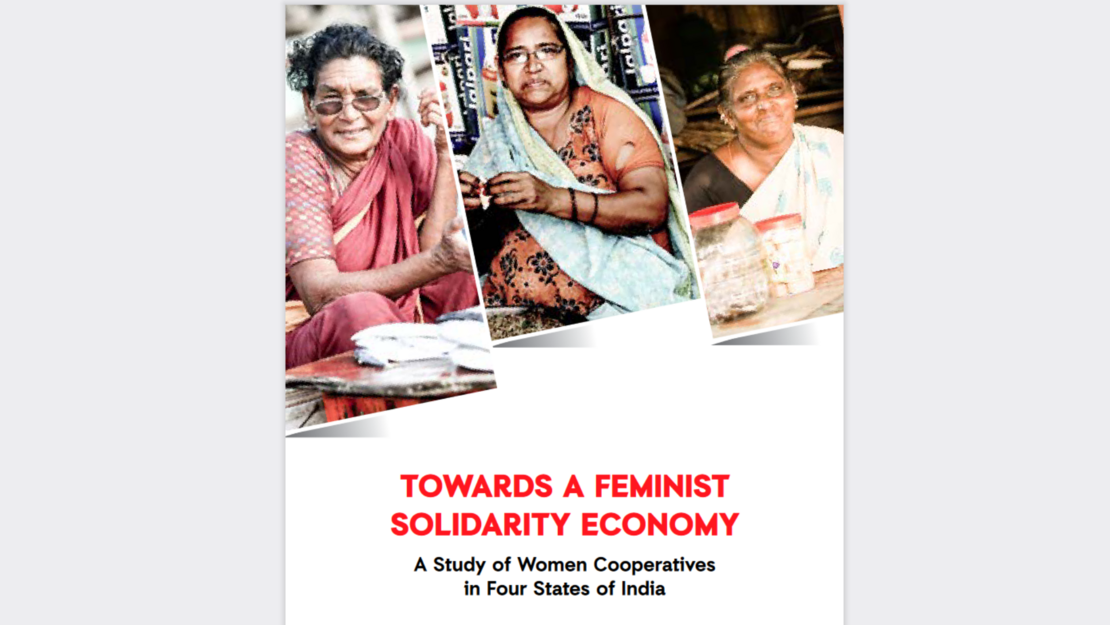
>> It is necessary that we go out of the confines of the house so that we can learn new things and acquire new knowledge. That's how we become capable.
---
Ratuben, a member of Sangam cooperative (Gujarat)
Towards A Feminist Solidarity Economy | A Study of Women Cooperatives in Four States of India
>> There can be little doubt that the gendered dimension of witchcraft is the strongest, given the fact that a large majority of those killed in this patriarchal assertion are women and within them older and single women and those who dare to assert.
---
Action Aid India, Foreword
Published by the Action Aid India and GPN