Wangari Maathai Visiting Professors

The international “visiting professorship” of the newly founded Global Partnership Network (GPN) is named after a prominent activist from Kenya—Wangari Maathai.

Wangari Maathai is a symbol of her commitment to justice, the environment, and human rights.

Learn more about the program

Below you will find a list of our visiting professors.

Wangari Maathai: Portrait by Beninese artist Youss Atacora

Summer 2026: Praveen Jha

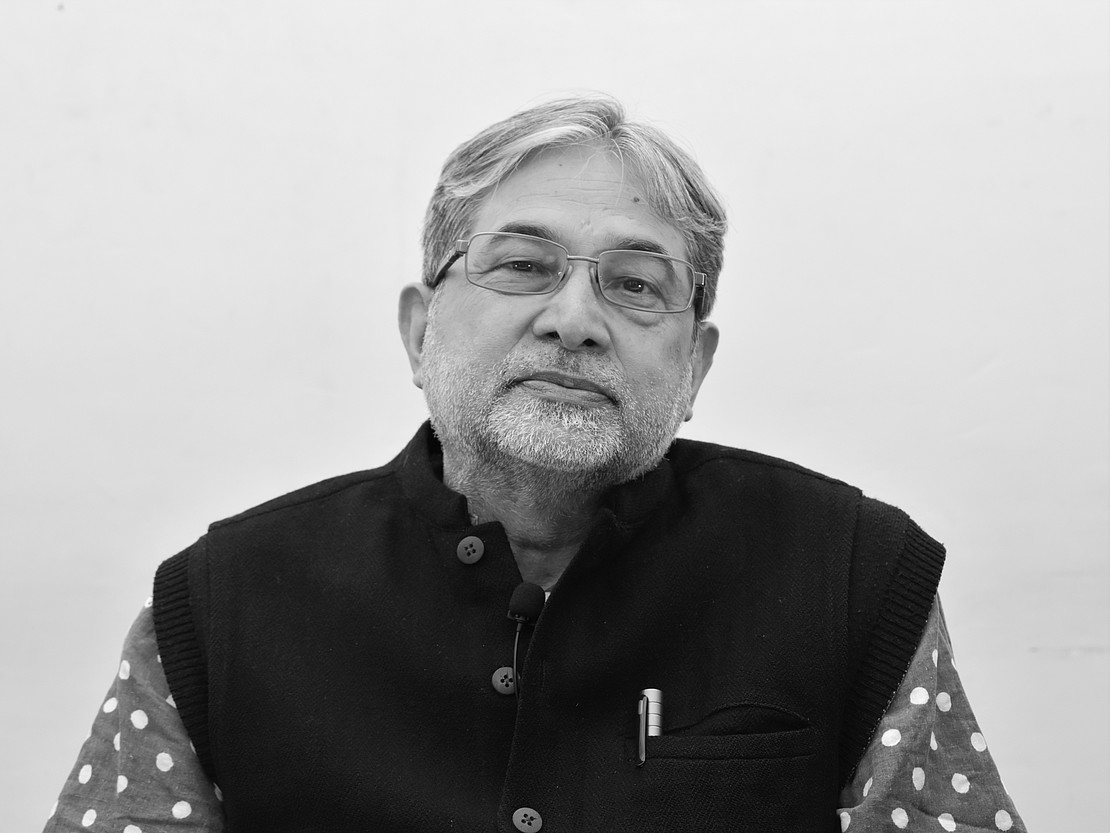
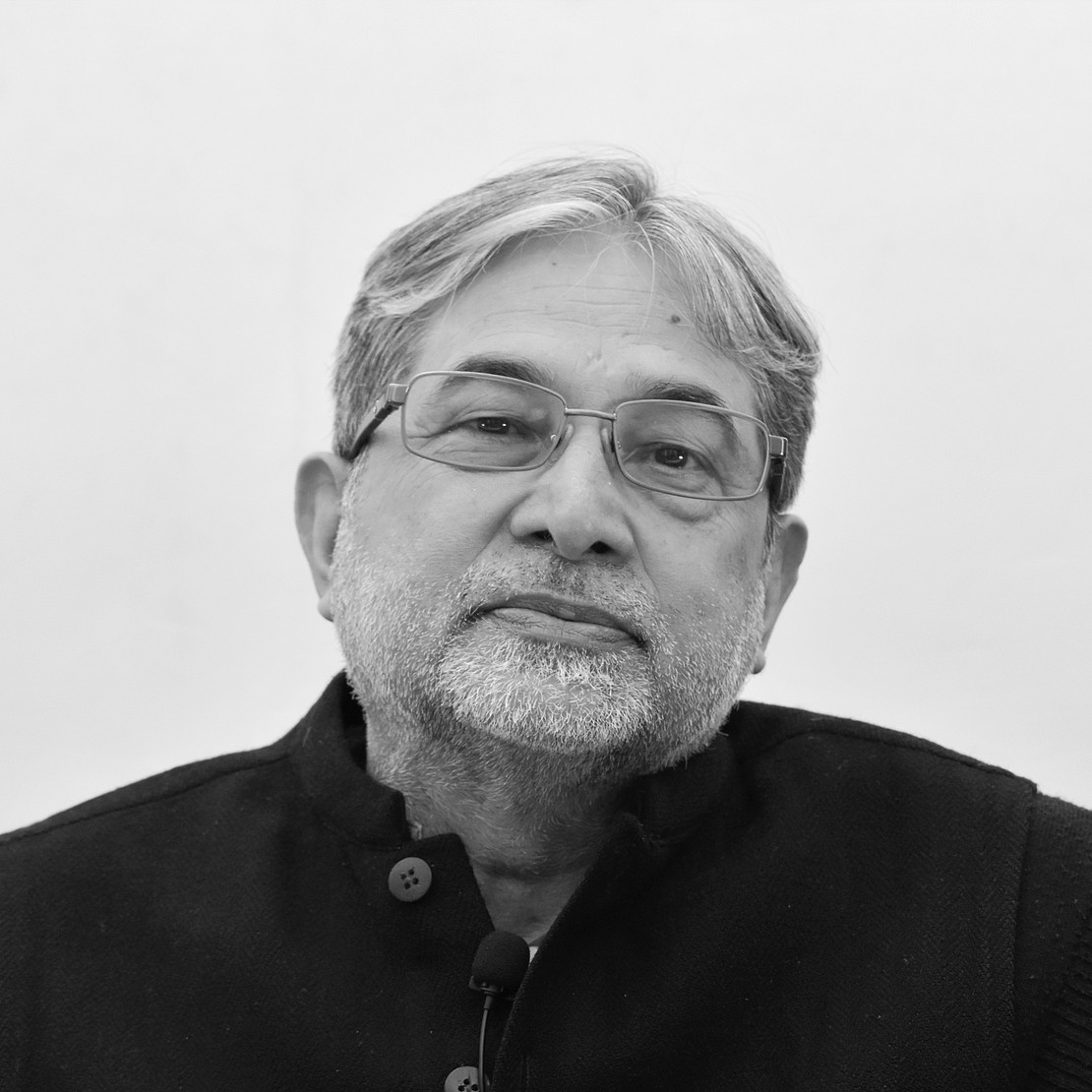
Prof. Praveen Jha

Praveen Jha retired as Sukhamoy Chakravarty Chair Professor of Economics, from the Centre for Economic Studies and Planning (CESP), Jawaharlal Nehru University (JNU),New Delhi, India . He also served as Adjunct Professor at the Centre for Informal Sector and Labour Studies (CISLS), School of Social Sciences, JNU, New Delhi, India. His areas of teaching and research interests include: Political Economy of Development, with particular reference to Labour, Agriculture and Education. His other areas of interest are Natural Resources, Public Finance and History of Economic Thought.


Winter 2025: Javier Becerril

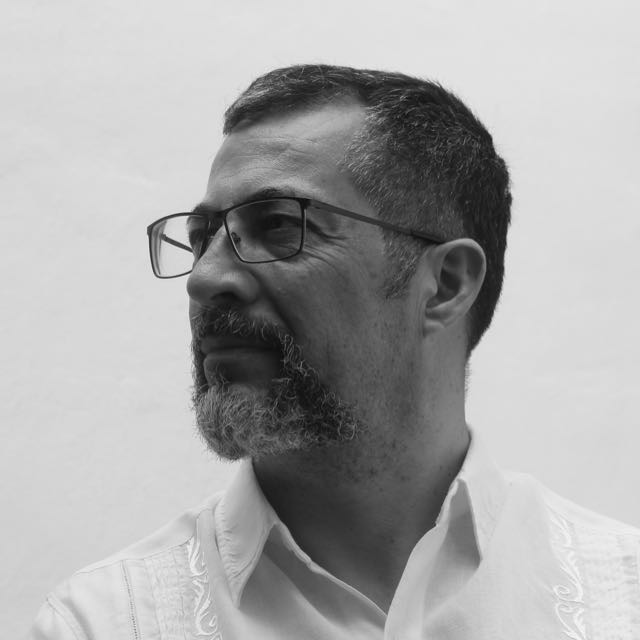
Prof. Dr. Javier Becerril

Prof. Dr. Javier Becerril is a professor at the Faculty of Economics of the Universidad Autónoma de Yucatán (UADY) in Mexico. He holds a Bachelor's degree in Economics from the Universidad Autónoma Metropolitana (UAM) de México, a Master of Arts in Urban Planning, Economics and Environment from the Universidad Autónoma de México (UNAM) and a Master's degree in Ecological Economics from the Autonomous University of Barcelona. He holds a PhD in Agricultural Economics from the University of Kiel. His research focuses on the agricultural and rural sector in Mexico, with a particular focus on agrobiodiversity, food sovereignty and public policy, focusing specifically on the Yucatán Peninsula. The title of his research project for the Wangari Maathai Professorship is "Loss of agrobiodiversity in the Mayan agricultural system: a biocultural crisis of economic origin".


Summer 2025: Devan Pillay

Prof. Dr. Devan Pillay

Prof. Devan Pillay is a Research Associate at the Institute of Sociology and the Global Labor University at the University of the Witwatersrand in Johannesburg (South Africa). He was a Lecturer and Associate Professor at this university from 2002 to 2024. He holds a Master's degree in South African Studies. He holds a PhD in Sociology from the University of Essex in England. A former political prisoner during apartheid, he later worked as a labor law writer, magazine editor, trade unionist, government official and consultant before settling down as an academic.


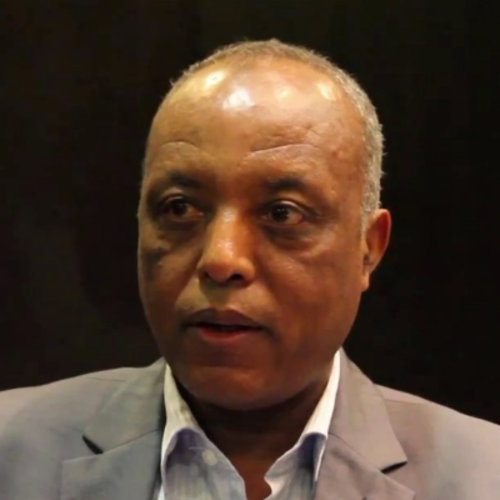
Summer 2023: Fekadu Beyene Kenee

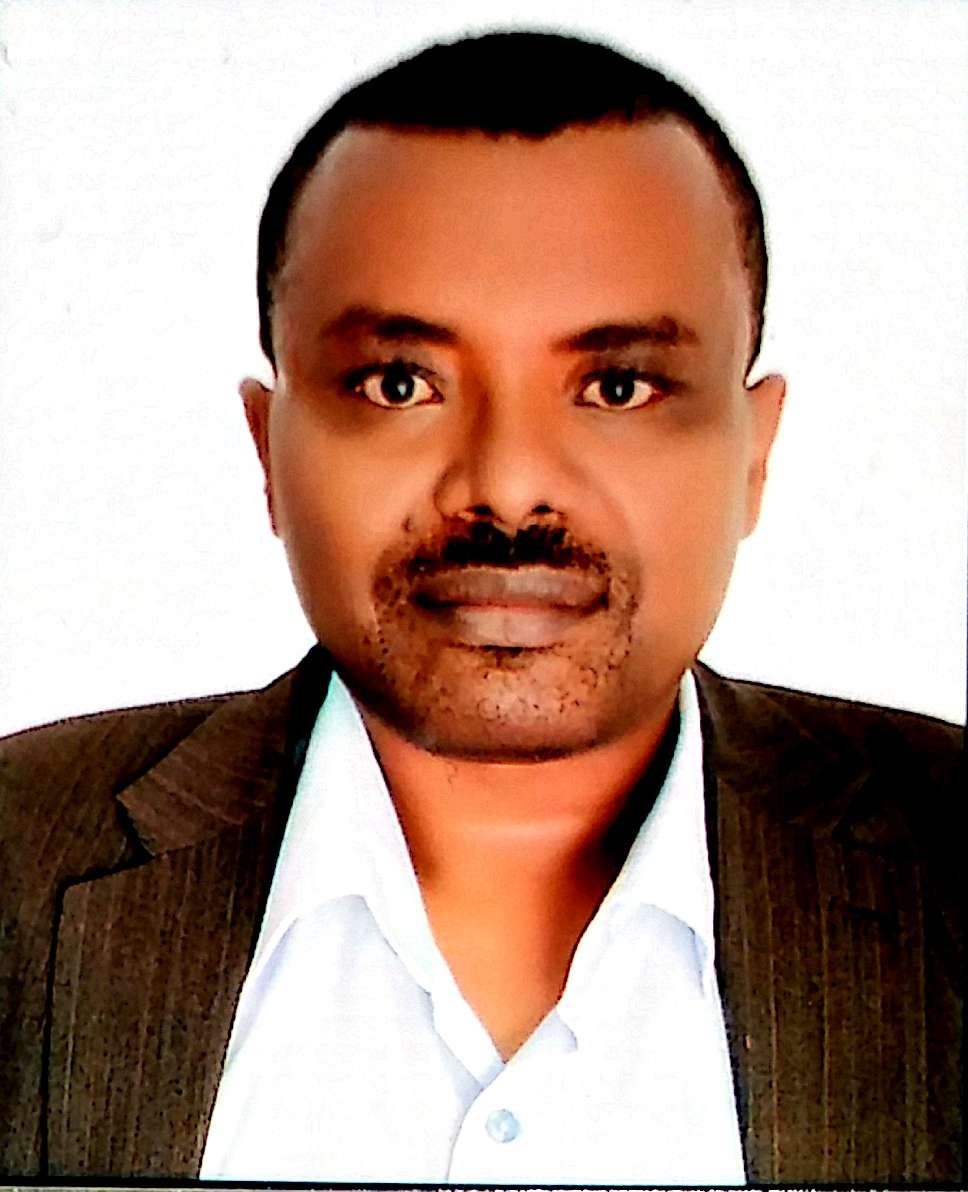
Prof. Dr. Fekadu Beyene Kenee

Fekadu Beyene Kenee is Professor of Institutional and Resource Economics and Associate Professor at Haramaya University, Ethiopia. He earned a BSc. in Agricultural Economics from Haramaya University, an MSc. from Wageningen University, Netherlands, in 1997 in Agricultural Knowledge Systems Management and a PhD from Humboldt University of Berlin in Resource Economics, Germany, in 2008.
He has taught various courses and conducted research on diverse topics including sustainable land management, traditional pastoral land administration, food security and land use systems, climate change and pastoral adaptation, river basin governance with emphasis on institutional arrangements and natural resource conflicts.

Research Interests

His research interests include property rights and collective action in natural resource management, institutions in environmental protection, project impact assessment, and institutional and behavioral analysis.


Summer 2022: Ayalneh Bogale

Prof. Dr. Ayalneh Bogale

Prof. Dr. Ayalneh Bogale has been a Wangari Maathai Visiting Professor in the Global Partnership Network (GPN) at the University of Kassel since April 1, 2022.

From November 2013 to June 2020, Ayalneh Bogale worked as an advisor on climate change, agriculture and food security in the Department of Rural Economy and Agriculture of the African Union Commission (AUC), seconded by the Deutsche Gesellschaft für Internationale Zusammenarbeit (GIZ).

Prof. Dr. Ayalneh Bogale: Learn more

Research Interests

His professional and research interests are in the areas of adaptation and resilience to climate change, economics of resource degradation, poverty and food security, land tenure and conflict.


Summer 2022: Praveen Jha

Starting in June 2022: Prof. Praveen Jha

Praveen K. Jha, Professor of Economics at the Centre for Economic Studies and Planning (CESP) and Associate Professor at the Centre for Informal Sector and Labour Studies (CISLS), is at the School of Social Sciences, Jawaharlal Nehru University, New Delhi, India.

From June 2022, he is now Wangari Maathai Visiting Professor at the University of Kassel.

The COVID-19 Pandemic and the Visiting Professorship

The Wangari Maathai Visiting Professorship was originally advertised for the period from April to October 2021. Due to the Covid-19 pandemic, it was not possible to take up the offer for the entire duration, which is why it was postponed to the summer semester 2022 (June to October). In 2021, the offer was shortened accordingly to a shorter duration between September and October, and Praveen Jha was on site for about three weeks. As part of the visit, he gave public online lectures, which can also be found on the website. He also taught two courses (online) during the summer semester 2021.

Research Interests

Labor economics, agricultural economics, development economics, public finance, economics of education, history of economic thought.


Winter 2021/22: Devan Pillay

Prof. Devan Pillay

Prof. Devan Pillay works in the Faculty of Sociology at the University of Witwatersrand in Johannesburg (South Africa). A former political prisoner during the apartheid era, Devan Pillay completed his PhD at the University of Essex (England). He then worked as a trade union writer, magazine editor, trade unionist and government official before settling in his current role as an academic.

Prof. Devan Pillay : Learn more

Research Interests

Working class politics; South African trade unionism and politics; ecological Marxism; happiness, well-being and holistic development

This course explores the connections between economics and ecology, both of which share a common root in the ancient Greek word *oikos*. However, it goes even further by examining the connections between ecology, economics, and politics (which, in its broader sense, encompasses all power relations in society). This expanded understanding of ecology, economics, and society allows for a deeper exploration of topics that fall under the concept of “holistic development.”

This in-depth exploration traces its roots to the ancient thought of the Axial Age over 2,000 years ago, when religious and secular philosophers grappled with the problem of human suffering in a context of brutal class formation and the emergence of debt. Compassion for other human beings and non-human nature became a guiding principle most clearly expressed in the thought and teachings of the Buddha (although it is also found in a number of other belief systems, including the Indigenous American concept of buen vivir (or sumak kawsay) and the African concept of ubuntu).

Ancient thought is linked to the modern revival, as today’s society struggles with increasing social inequality, alienation, and what some call “ecocide.” The course focuses in particular on the emerging school of ecological-Marxist thought, social ecology, and ecofeminism. The course concludes with reflections on more concrete considerations regarding happiness and well-being and ecosocialism, as well as case studies on ecosocialist working-class politics and the liberated zone of Rojava in Kurdistan.
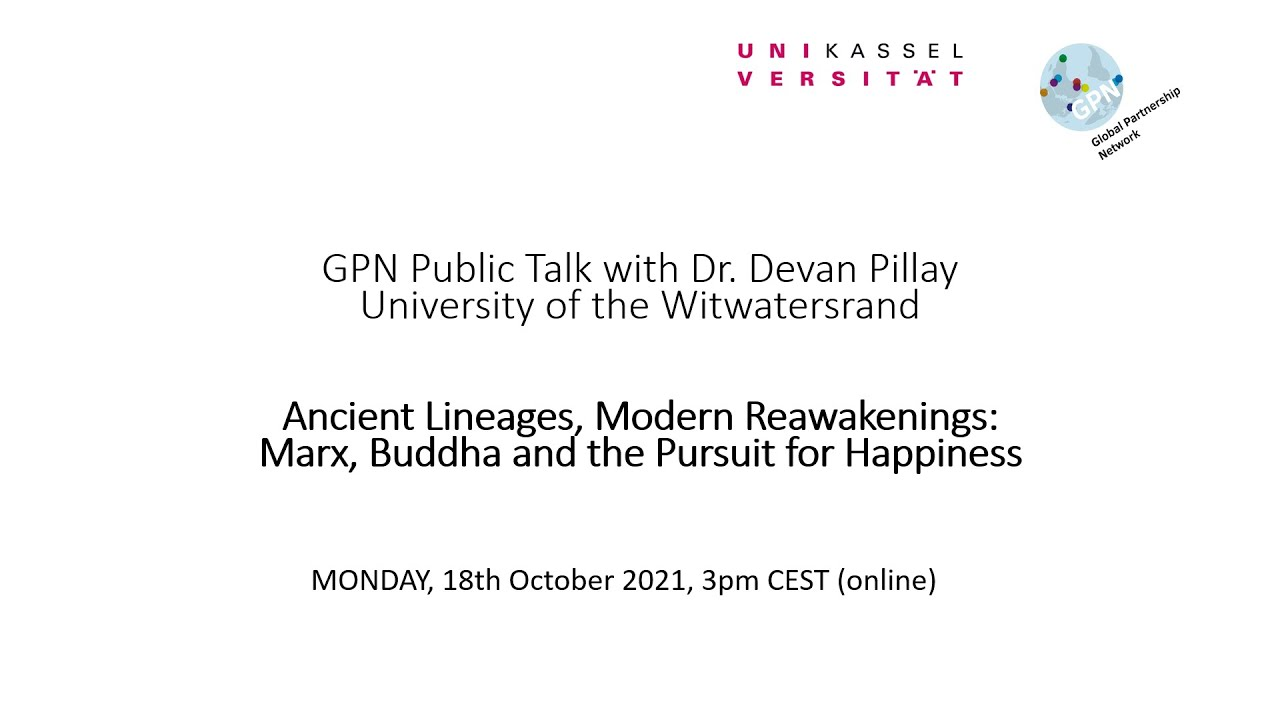
Your cookie settings have blocked this video

Old Traditions, Modern Revivals—Marx, Buddha, and Happiness


Winter 2020/21: Juvaria Jafri
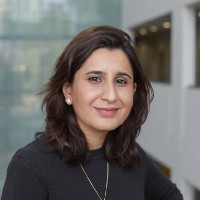
Prof. Dr. Juvaria Jafri

Prof. Dr. Juvaria Jafri works at the City University of London, where she is a lecturer in international political economy. She received her PhD in 2019 for her thesis on shadow banking and inclusive finance in Pakistan. Her previous degrees are from SZABIST in Karachi, Pakistan, and the University of Toronto in Canada. She also has several years of work experience with investment banks and management consultancies in Karachi and Islamabad.

Prof. Dr. Juvaria Jafri: Learn more

Research Interests

Areas of research/specialization: Political economy of financial development in the global South, in particular strategies for financing interventions, including inclusive finance, impact investing and digital identification databases.

Juvaria Jafri (2022) Fintech, Philanthropy, and Development: Is KYC the Core Problem or the Solution for Digital Inclusion?


Download PDF

The course examines the structures surrounding finance, money, and banking to explore how closely these two are intertwined. The goal of this course is to familiarize students with issues in finance within the global economy and to provide them with a critical perspective. The theoretical focus is on finance as a form of power, particularly on how issues of coercion and inequality are legitimized and institutionalized in the global economy. The empirical focus is on—but is not limited to—the countries and regions of the Global South, which have been both enriched and subordinated by international monetary and financial structures. Topics covered include mainstream and heterodox approaches to finance, financial development and aid, changing banking models, offshore finance, money creation, and financial crises and instability.

Global Partnerships, Global Finance, and Unequal Inclusion

Watchon YouTube

Inclusive Finance and Credit Constraints in Pakistan

→ Watch on YouTube