This course takes as its starting point the inter-connections between economy and ecology, both of which have a common root in the ancient Greek word oikos. However, it goes further by considering the interconnections between ecology, economics and politics (which in its extended form includes all power relations in society). This stretched understanding of ecology, economy and society allows for a deeper exploration issues that can fall under the rubric of 'holistic development'.
This deep exploration goes back to the ancient thinking of the Axial Age over 2000 years ago, where religious and secular philosophers grappled with the problem of human suffering, in a context of brutal class formation and the emergence of debt. Compassion towards other humans, as well as non-human nature, became guiding principles.This is most evident in the thinking and teaching of the Buddha (although it can be found in a range of other belief systems, including the Native American concept of buen vivir (or sumak kawsay) and the African concept of ubuntu, among others).
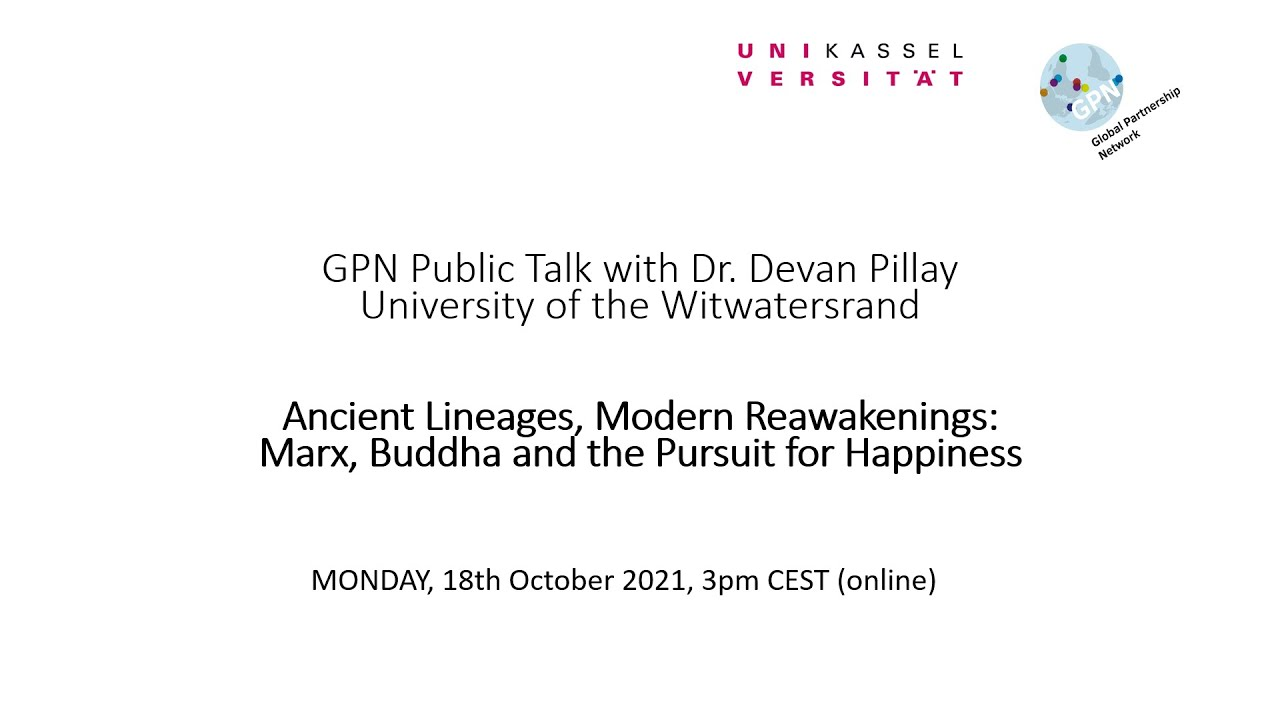
Ancient thinking is linked to modern re-awakenings, as society today grapples with rising social inequality, alienation and what some have termed 'ecocide'. It in particular considers the emerging Ecological Marxist school of thinking, Social Ecology and eco-feminism. The course ends with considerations of more concrete thinking around Happiness and Wellbeing, and Ecosocialism, as well as case studies of ecosocialist working class politics and the liberated zone of Rojava in Kurdistan.