

Partnership in knowledge production
Eurocentrism, alternative knowledge and Post-Development
2026
Local alternatives to Development and Participatory Governance: Evidence from Darreh-Bid, Iran
The rural community of Darreh-Bid, widely known in public sources only for its fritillaria fields and seasonal tourism, has undergone a profound transformation in its social organization that has so far gone completely unrecognized in the academic and policy literature. Even the village's fame as a tourist destination is due to a locally organized, collective initiative - the annual Fritillaria Festival - and not to external advertising. Since the early 2000s, a group of local elites initiated a bottom-up process of institutional change, through which fragmented land parcels - originally created by the land reforms of the 1960s - were gradually brought together under a participatory management structure. Today, 144 smallholder farmers collectively manage not only agricultural production, but also decision-making processes, the allocation of grazing resources, community challenges and a wide range of social issues. This hybrid system - which combines informal norms with formal village institutions - extends far beyond agriculture: it regulates community resource use, organizes national festivals and has enabled the construction of cultural infrastructure such as a sports hall and a library.
This case is of theoretical importance as it directly contradicts the long-established scholarly narrative in Iran - coined since Ann Lambton's "Landlord and Peasant in Persia" - which portrays Iran's rural population as individualistic, backward and anti-participatory. Even prominent critics of this narrative, such as Mortaza Farhadi, who has written extensive works challenging such claims, rely largely on historical and ethnographic evidence rather than contemporary examples of collective governance. The Darreh-Bid experience therefore represents a rare, contemporary and empirically grounded counterexample to these prevailing assumptions.
This study examines how this model of governance emerged, what social mechanisms underpin it, how conflicts are resolved, how religious, traditional and formal state institutions interact within it, and how the residents themselves perceive this collective structure. Based on ethnographic fieldwork, semi-structured interviews, and systematic analysis of local documents, the project contributes to the GPN agenda by providing a grounded account of a locally developed "alternative to development" rooted in endogenous, non-Eurocentric forms of community knowledge and organization.
---
Project coordinator: Yaser Bagheri (University of Tehran, Iran)
E-mail: yaser.bagheri[at]ut[dot]ac[dot]ir
---
Main research partner: Prof. Aram Ziai (University of Kassel)
E-mail: ziai[at]uni-kassel[dot]de
The idea that Iranians show a tendency to avoid collective participation is deeply rooted both in everyday discourse and in the views of many intellectuals. In this context, Ghazizadeh and Keshishyan Siraki (2020) characterize Iran's political culture as characterized by a form of stagnation and attribute its causes to several fundamental factors: A traditional and reticent public culture; an authoritarian and uncritical knowledge system; the ambiguity and indirectness inherent in Persian political expression; the persistence of local and tribal power structures that hinder the development of a coherent civic identity; and a vertical, authority-centered relationship between state and society. According to these scholars, the interplay of these dynamics means that political participation in Iran is largely episodic and reactive rather than institutionalized and sustainable, and prevents political change from translating into more profound cultural or behavioral transformation.
This perspective - which can be critiqued through the lens of Orientalism (Said, 1978; Turner, 1994) and postcolonial theory - appears repeatedly in the existing literature.
In contrast, Morteza Farhadi's numerous works have sought to emphasize the enduring traditions of cooperation and collective action within Iranian society (Farhadi, 1994), including his detailed account of women's cooperatives as a widespread manifestation of such practices (Farhadi, 2007). He further argues that the rise of individualism is due to the influence of Western culture and the adoption of Western individualistic values by Iranian intellectuals (Farhadi, 2010), and argues that Iranian culture is fundamentally cooperative, albeit increasingly undermined under the pressures of Western cultural expansion (Farhadi, 2019).
Nevertheless, Farhadi focuses largely on traditional forms of cooperation, which are themselves in decline, and does not address contemporary or emerging manifestations of collective participation. Moreover, there is no systematic research on participatory governance or alternative models of development in contemporary Iran, and no study has been conducted that has specifically examined such dynamics in the village of Darreh-Bid.
The present research offers an alternative perspective on locally based approaches in Iran - one that is distinct from the 'gharbzadegi' discourse (see: Ziai, 2019) - and extends the line of research developed in Ziai's previous studies (2009, 2017) as well as the work of other scholars who have explored localized, alternative forms of collective life.
Negotiating Tradition and Modernity: Vernacular Architecture and Post-Development Sustainability in Iran, Togo and Senegal
Prevailing models of global development have historically marginalized traditional building practices in favor of standardized, CO₂-intensive modern architecture, which has often led to cultural erosion and environmental unsustainability. This research project goes beyond the critique of 'development thinking' and explores concrete alternatives rooted in post-development theory and local architectural practices. Using a comparative ethnographic and architectural approach, and considering the intersection of economics, politics, culture and market forces, the project aims to explore how local builders, craftspeople and residents maintain, adapt and reinterpret traditional building systems in rapidly changing social, economic and climatic contexts. Field research in Yazd Province (Iran), Koutammakou among the Batammariba in northern Togo, and Casamance/Kédougou (Senegal) will combine participant observation, interviews, and architectural documentation to analyze materials, spatial practices, climate-responsive strategies, and community-based knowledge, as well as how adaptation can occur in modern construction. The aim of the research is to identify common patterns and context-specific strategies that promote culturally relevant and ecologically sustainable architectural modernity. By focusing on lived practices of hybridization and negotiation, this study seeks to articulate an alternative model of post-development sustainability and demonstrate that culturally anchored solutions are essential to creating resilient and equitable built environments in the Global South.
---
Project coordinator: Prof. Dr. Mehrdad Arabestani (University of Tehran, Iran)
E-mail: m.arabestani[at]ut[dot]ac[dot]ir
---
Main research partner: Adama Doudou Diop (University of Kara, Togo)
E-mail: diop12ada[at]gmail[dot]com
---
Further research partners: Prof. Dr. Pooya Alaedini, Dr. Zohreh Anvari, Yusef Sarafraz (University of Tehran); Prof. Dr. Nabe Bammoy, Dr. Kandjime Konlani (University of Kara)
The proposed research project draws on the literature on vernacular architecture, post-development studies, postcolonial theory and sustainable design, while addressing the gaps between these disciplines. The seminal works of Rapoport (1969) and Oliver (2003) consider architecture as a cultural construct, but often treat forms of vernacular architecture as static; this project extends their insights by analyzing how traditional practices are actively negotiated and adapted today. Post-development theorists such as Sachs (1992) and Escobar (1995) critique Western models of modernization but offer few empirical alternatives; this study provides concrete, architecturally evidenced examples of locally rooted, low-carbon building practices that embody post-development principles. Research on modernity and hybridity emphasizes the agency of actors from the Global South - e.g. Diouf (2001) and Nassar (2020) - but typically in the context of single region analyses; by comparing Iran, Togo and Senegal, the project deepens the understanding of how hybrid architectural modernities emerge in different socio-historical contexts. Finally, sustainability and sensory architecture scholars such as Fathy (1973), Edwards (2006) and Pallasmaa (2005) argue for material, climatic and experiential forms of ecological design; this project contributes by documenting contemporary practices that affirm and extend these principles. Overall, the study synthesizes these strands to address a crucial gap: the need for comparative, empirical research on how culturally rooted, sustainable architectural practices evolve in the rapidly changing environments of the Global South.
2025
Post-Development Alternatives in Practice
Authors of the post-development movement such as Esteva, Escobar and Sachs claim that post-development alternatives are emerging in grassroots organizations and local communities in the Global South. By this they mean economic, political and epistemic models and practices that go beyond those of Western modernity. Against this background, the project examines the work of the civil society organizations Kalpavriksh, REDES and Enda Graf Sahel as three possible examples of post-development alternatives.
---
Project coordinator: Prof. Aram Ziai (University of Kassel)
E-mail: ziai[at]uni-kassel[dot]de
---
Main research partners: Milind Wani (Kalpvriksh); Ousmane Pame (REDES); Mamadou Kobar (Enda Graf Sahel)
E-mail: milindwani[at]yahoo[dot]com; oalypame[at]gmail[dot]com; kobarnetvigator[at]gmail[dot]com
The classic works of post-development theory formulated the thesis of grassroots alternatives as early as the 1990s (Sachs 1992, Escobar 1995, Rahnema 1997, Esteva/Prakash 1998). This was met with great skepticism in development theory, and the claim was denounced as romantic and unrealistic (Corbridge 1998, Kiely 1999, Pieterse 2000). The more recent debate on post-development is aware of its problematic aspects (such as culturalist projections, reactionary interpretations and the neglect of the need for material improvements in the Global South, see e.g. Ziai 2004 and Matthews 2017), but nevertheless attempts to engage with empirical analyses of possible alternatives (Klein/Morreo 2019, Matthews/Castellsagué 2025). Our research project will contribute to this new line of research.
2024
Field study in KOUYOUKOUL in Bassar country (North Togo) on funeral practices relating to the issue of the return of human remains from Togo to Germany
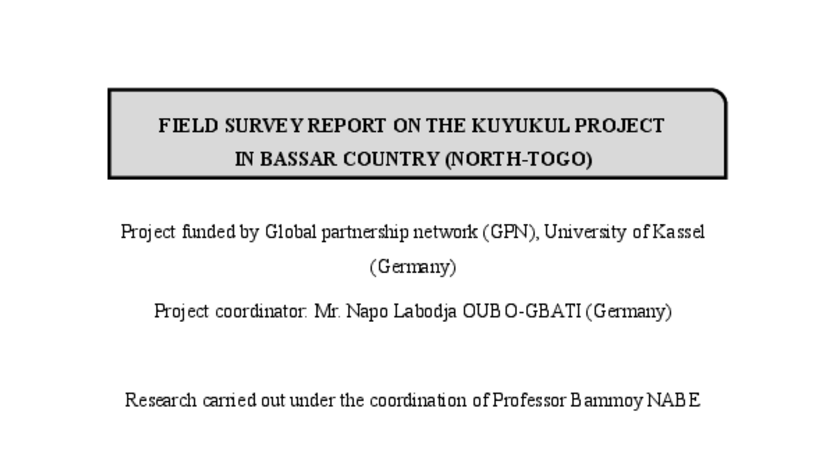
The Bassar people, like their neighbors in northern Togo, experienced various forms of colonial rule after the Berlin Conference from November 1884 to February 1885. At this conference, the European powers decided to divide up Africa. In Togo, as elsewhere, German rule and occupation of the territory took place in a tense climate characterized by various forms of popular resistance, especially in northern Togo. In the north-west, in the Kara region, the Germans encountered fierce resistance from the Bassar metalworkers and blacksmiths. The consequences were devastating for the local resistance fighters. Many people lost their lives, other resistance fighters were arrested and deported to France, where they were first physically punished and then executed to be subjected to various examinations, including bioanthropological ones.
This project, which concerns the repatriation of Togolese human remains from the village of Kouyoukoul in the canton of Bitchabé, is part of a broader project to recontextualize human remains from the German colonial period, which is already the subject of interministerial and intergovernmental deliberations. The conference and debate held at the University of Lomé on 21 and 22 November 2022 brought together a number of researchers specializing in biomedical, biological, human and social sciences to discuss the usefulness of bioanthropology in the study, investigation and treatment of human remains from a scientific perspective.
Bitchabé Cantonment is located about twenty-five (25) kilometers west of Bassar-Ville. It is bordered to the north by the canton of Bandjéli, to the south by the canton of Dimouri, to the east by the canton of Kalanga and to the west by the Republic of Ghana. It consists of fourteen villages: Bitchobébé, Bidjomambé, Bissirkpimb, Inghale, Katcha-Losso, Baoulessi, Bissokpab, Bakpayam, Bikpadjab, Bibadjib, Kouyoukoul, Binadjoube, Gnakpal and Kissatchéou. Bitchabé, the area where blacksmithing developed between the 19th and 20th centuries, provided the hunter-warriors with weapons and defense tools during the resistance movements. (Koumaï, 2014; Bakrobena, 2015). The mastery of fire and the processing of iron enabled the Bassar to form a community of castes. There is the hunter-warrior caste, the blacksmith caste and the metalworker caste. However, the rites differ from caste to caste, from birth to burial ceremonies.
---
Project coordinator: Bammoy Nabe (University of Kara)
E-Mail: moynaba[at]yahoo[dot]fr
---
Main research partner: Prof. Aram Ziai (University of Kassel)
E-Mail: ziai[at]uni-kassel[dot]de
---
Further research partners: Napo Oubo-Gbati, Prof. Labante Nakpane, Magnetine, Konlani Kndjime, Kpante Nadjombé (University of Kara)
E-mail: yabdoh[at]yahoo[dot]fr
Radical Alternatives or Ambivalent Engagements? (Post)Development Understandings from the Global South
Thinkers in the post-development, decolonial and other critical development movements call for radical alternatives to development that are rooted in marginalized concepts and practices attributed to people in the Global South. For example, these thinkers refer to concepts such as "Buen Vivir", which refers to a "culture of life" in certain regions of South America; "Ubuntu", an African concept that refers to human interconnectedness and reciprocity; and the Indian concept of "Swaraj", which aims at self-governance or sovereignty. The aforementioned concepts are associated with social and environmental sustainability, in contrast to the logic of progress and economic growth anchored in the hegemonic development paradigms. It is pointed out not only that such concepts have the potential to be transformative, but also that they are already being advanced as alternatives to development in the Global South. However, there is a gap between the ideals that such alternatives embody and the reality of marginalized communities in the Global South who struggle with poverty, precarity and the denial of human rights. Field research with communities in the Global South shows that these communities typically engage in complex ways with the ideas and practices associated with development, rather than either embracing or rejecting development. There is too little published research based on long-term fieldwork examining whether and how particular communities in the Global South embrace the supposed indigenous alternatives to development discussed by thinkers of the post-development and decolonial schools of thought. There is certainly also room for further theoretical reflection on whether and how alternatives to development can be implemented in the Global South. The proposed project, which will result in an edited volume, aims to capture how development and proposed alternatives to development are understood and negotiated on the ground - a process that is characterized by numerous contradictions and controversies. Each contribution to this project (and the resulting book) is based on field research in the Global South and conveys the perspectives of a particular community in the Global South on development and alternatives to development. All contributions critically and carefully address the claim that communities in the Global South are putting forward alternatives to development thinking.
---
Project coordinator: Prof. Sally Matthews (Rhodes University, South Africa)
E-mail: s.matthews[at]ru[dot]ac[dot]za
---
Main research partner: Prof. Aram Ziai (University of Kassel)
E-mail: ziai[at]uni-kassel[dot]de
---
Further research partners: Neil Maheve, Nhlanhla Mkhutle, Simphiwe Gongga (Rhodes University); Fernanda Cordova Suxo (University of Kassel); Dr. Alba Castellsaqué (University of Girona, Spain); Joseph Edward Alegado (Australian National University); Emile Kwa, Yves van Leynseele (University of Amsterdam, Netherlands); Justin Dodd Mullikin (University of Pennsylvania, USA); Léna Prouchet (University of Exeter, UK); Vanessa Azañedo Gamarra (Pontificia Universidad Católica del Perú); Eija Ranta (University of Helsinki, Finland); Cecilia Zenteno (Universidad Mayor de San Simón, Bolivia); Leiyo Singo (University of Dar es Salaam, Tanzania); Eugen Pissarskoi (University of Tübingen); Injina Panthi (The Asia Foundation); Hadi Darvishi (Mazandaran University, Iran); Somayeh Momeni (Tehran University, Iran)
2020
The notion of Empowerment as defined by participants of Urban Action School and Netritva Vicharshala
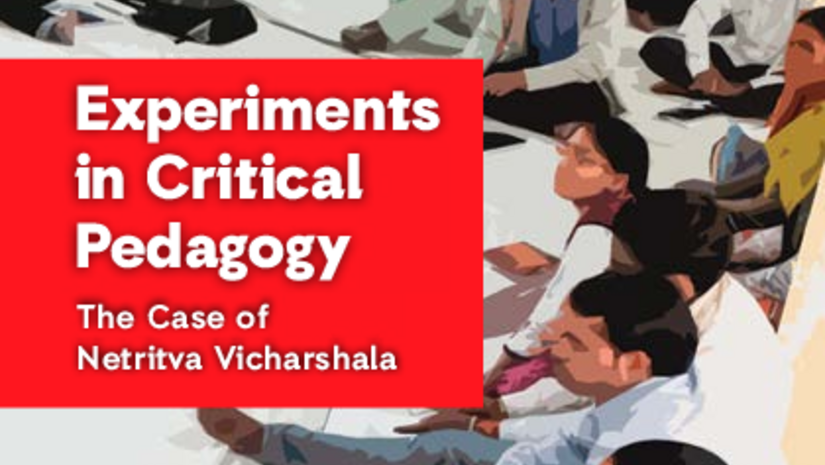
The ActionAid initiative called Netritiva Vicharshala (the Leadership Discourse) and the Urban Action School are designed to provide grassroots activists, community leaders and young activists with a social justice perspective with which to analyze the politics that shape daily life. The overall aim is to rebalance the debate on structures and powers through insights into power relations within society. It also enables a better understanding of the co-constitutive nature of politics, an understanding and perspective on economics and development, and an understanding of feminism, power and patriarchy.
While the Urban Action School provides a learning platform for young activists in urban spaces, the Leadership School aims to empower people from marginalized and excluded communities at the grassroots level.
These institutions have also given individuals the opportunity to expand their knowledge, build knowledge networks for practitioners and provide participants with new skills to think and strive for a better world. They aim to make a difference both to the individual and to the society, institution or network to which they belong.
In recent years, ActionAid has facilitated the coming together of groups committed to developing an ideology and striving to offer alternatives. While the educator is concerned with reading and books, another important component is leadership development. The leaders who participate in the schools come from various community-based organizations, groups, and mass organizations, and their approaches vary greatly. One of the most important things that are emphasized when selecting leaders is their eagerness to ask questions or have a thought pattern, their connection to the grassroots, their experience, their enthusiastic desire and understanding to change themselves to be involved in our ideology, but these qualities are not mandatory because change is possible based on experience.
---
Project Coordinator: Sandeep Chachra (ActionAid India)
E-Mail: sandeep.chachra[at]actionaid[dot]org
---