

Partnerships in development cooperation
Focusing on gender and diversity and on protest and displacement
2026
Indebted Women Workers: Regulating Private Microfinance in India
Over the last two decades, microfinance in India has shifted from small, NGO-led programmes to a highly commercialised system dominated by private Microfinance Institutions (MFIs), NBFC-MFIs and, increasingly, digital microloan platforms. While the policy narrative continues to frame microfinance as an instrument of ‘financial inclusion’ and women’s empowerment, a large body of feminist and political economy scholarship now documents its predatory, financialised character, especially for rural women. Our field-based reports show that MFIs charge effective interest rates that can reach 48–60 per cent, extend multiple loans to the same woman, and rely on coercive recovery practices, in Andhra Pradesh this model, for instance, has been directly linked to a wave of borrower suicides.
However, most critical research and documentation focus on southern and eastern states like Andhra Pradesh, Odisha, Karnataka, Tamil Nadu. There is limited systematic evidence on how private microfinance targeted at individual women borrowers outside SHG structures, which is unfolding in Northern India, particularly in Punjab, Uttar Pradesh,Jharkhand, West Bengal and Maharashtra states is marked by agrarian distress, informalisation, and deep caste–gender hierarchies.
The research will explore the private microfinance to individual women borrowers. It will (1)
map the credit and debt ecologies of women borrowers, (2) analyse the gendered mechanisms of discipline and coercion used by private MFIs and digital lenders, (3) assess the social, psychological and economic impacts of over-indebtedness, and (4) identify viable policy and regulatory interventions, in dialogue with women’s organisations and regulators.
The research will generate policy and practice tools, state-level briefs, advocacy materials, contributing to global debates on the financialization of poverty and to national struggles for gender-just regulation of microfinance.
---
Project Coordinator: Sandeep Chachra (ActionAid)
E-Mail: sandeep.chachra[at]actionaid[dot]org
---
Main research partners: Prof. Dr. Elisabeth Tuider (University of Kassel); Tanveer Kazi (ActionAid); Prof. Praveen Jha (Jahawarlal Nehru University)
E-mail: tuider[at]uni-kassel[dot]de
The critical literature on microfinance, debt, and women’s financial vulnerability in India and the Global South has shifted over the past two decades from narratives of empowerment to analyses of financialisation, coercion, and structural poverty. Jason Hickel (2015), in The Microfinance Delusion: Who Really Wins? and Milford Bateman Why Doesn't Microfinance Work? (2010), argues that microcredit often expands low-productivity informal enterprises, displaces stable jobs, and entrenches chronic indebtedness. Philip Mader, in "Financializing Poverty: The Transnational Political Economy of Microfinance and "The Political Economy of Microfinance" (2015), conceptualises microfinance as a strategy for transforming poor households’ survival economies into profitable sites for global finance.
Feminist scholarship adds critical ethnographic depth. Lamia Karim’s "Microfinance and Its Discontents" (2011) demonstrate how women’s social reputations and kinship networks are mobilised as instruments of loan recovery. Isabelle Guérin’s"Juggling with Debt, Social Ties and Values" (2014) and "Microfinance, Indebtedness and Vulnerability" explore how women bear the emotional and social burden of household debt even when men control its use. Literature on gender and debt within the larger Global South context—such as Kabeer’s article "Is Microfinance a 'Magic Bullet' for Women's Empowerment?" (Economic and Political Weekly, 2005) highlights how patriarchal norms shape women’s access to, and responsibility for, credit.
India-specific literature, documented extensively in Economic and Political Weekly (EPW), critiques the commercialisation of microfinance. M. S. Sriram’s “"Commercialization of Microfinance in India: A Discussion of the Emperor's Clothes" (EPW, 2010) analyses the shift toward profit-driven MFIs and predatory lending models. Studies on the 2010 Andhra Pradesh crisis remain central: A. Priyadarshee and A. Ghalib’s "Over-indebtedness, coercion, and default: Causes of the Andhra Pradesh microfinance crisis and regulatory implications" (Enterprise Development and Microfinance 23(3), 2012) documents coercive recovery practices that triggered suicides and regulatory backlash.
Taken together, this body of work demonstrates that microfinance often entrenches rather than alleviates poverty, deepens gendered precarity, and converts women’s social worlds into mechanisms of financial discipline. These insights provide a strong intellectual foundation for the proposed research, while also revealing crucial gaps in region-specific data, women-centred analyses, and state-level regulatory studies in India.
Forest Rights Act (FRA) @ 20 Years: Community Forest and Habitat Rights of vulnerable groups —Challenges and Pathways Forward
This study examines the implementation of the Forest Rights Act (FRA) of 2006 with a particular focus on the recognition of Community Forest Rights (CFRs) and habitat rights for vulnerable groups, especially Particularly Vulnerable Tribal Groups (PVTGs), De-notified Tribes (DNTs) and nomadic and pastoralist communities. Despite its transformative intent, implementation of the FRA remains uneven, with less than 3% of the potential area officially recognized for community forest resources. Ongoing challenges include high rejection rates, bureaucratic bottlenecks, limited recognition of community rights, and slow progress in granting habitat rights to PVTGs. The study critically examines the structural, procedural and institutional factors that shape these outcomes, including the failure to recognize habitat as a socio-cultural landscape that encompasses traditional practices, mobility and collective governance systems. It also identifies facilitative practices across states to understand differences in implementation. By combining empirical evidence with community perspectives, the research aims to generate policy-relevant insights and recommendations to strengthen inclusive and effective implementation of the FRA, with a particular focus on advancing the forest and habitat rights of the most vulnerable forest-dependent communities.
---
Project Coordinator: Sandeep Chachra (Action Aid)
E-Mail: sandeep.chachra[at]actionaid[dot]org
---
Main research partners: Prof. Dr. Elisabeth Tuider (University of Kassel), Tanveer Kazi (ActionAid)
E-mail: tuider[at]uni-kassel[dot]de
Several studies, policy reports and academic analyses have examined the implementation, achievements and challenges associated with the Scheduled Tribes and Other Traditional Forest Dwellers (Recognition of Forest Rights) Act, 2006 (FRA). This work provides valuable insights into the socio-political context of the Act, the progress made in recognizing forest rights and the institutional impediments that continue to affect its implementation across India.
A recent and significant contribution is the United Nations Development Program (UNDP) 2025 report titled "Securing Rights, Enabling Futures: Policy Lessons from Forest Rights Act and Future Pathways". The report highlights that while the FRA has played an important role in empowering tribal communities and securing tenure rights, the recognition of community forest rights remains limited. According to the report, only about 18% of the potential 98.8 million acres of community forest rights have been formally recognized nationwide. The study also identifies the need for stronger post-recognition governance systems, improved interdepartmental coordination between tribal and forest agencies, and a greater emphasis on gender equity in FRA implementation. It also recommends exploring institutional mechanisms, including a possible sunset clause, to expedite the completion of pending rights recognition processes.
Academic research has also examined the historical and institutional dynamics of the FRA. Geetanjoy Sahu provides a detailed analysis in "The Genesis, Process, and Implications of the Forest Rights Act, 2006", in which the author sheds light on the political and social context that led to the passage of the Act. Based on field research conducted between 2014 and 2020 in states such as Odisha, Maharashtra and Jharkhand, the study highlights the uneven implementation of the FRA across states. It emphasizes that differences in political commitment, administrative support and engagement of civil society organizations significantly affect the pace and quality of implementation.
Another important empirical analysis is the study by Jocelyn I. Lee and Steven A. Wolf, which provides a critical assessment of the implementation of the FRA across India in the period 2008-2017. Their study looks at the recognition rates of forest rights claims at the state level and identifies key factors that contribute to the varying outcomes. The study concludes that while the legal framework of the FRA contains strong provisions for rights recognition, administrative capacity, institutional resistance and the level of involvement of local communities significantly influence the success of implementation. The authors also emphasize that the recognition of community forest rights has progressed more slowly in many states compared to individual forest rights.
Institutional studies conducted in India have also documented practical experiences in the implementation of the FRA. A report published by the Scheduled Castes and Scheduled Tribes Research and Training Institute (SCSTRTI) titled "Implementation of Forest Rights Act, 2006: Approaches, Good Practices and Learning Experiences from Selected States" (2015) examines the implementation strategies adopted in several states. The report highlights innovative approaches used by both government agencies and civil society organizations to facilitate submission and review of applications, strengthen the role of Gram Sabhas and raise awareness among forest-dependent communities about their rights under the FRA. The study highlights that joint efforts of government institutions and community-based organizations can significantly improve the effectiveness of the rights recognition process.
Another important area of research concerns the implementation of the FRA in protected areas. A study conducted by Eleonora Fenari and Neema Pathak Broome, supported by organizations such as the Rights and Resources Initiative (2017), examines the status of FRA implementation in protected areas across India. Their report highlights the tensions between conservation policy and the recognition of community rights, particularly in national parks and wildlife sanctuaries. The authors argue that despite the legal provisions of the FRA, forest-dependent communities living in protected areas often face delays or obstacles in the recognition of their rights due to conservation-related restrictions and administrative resistance.
Overall, these studies provide important insights into the successes and limitations of FRA implementation in India. They highlight the transformative potential of the Act in securing land use rights, strengthening community participation in forest management and improving the livelihoods of forest dwellers. At the same time, the literature consistently points to several persistent challenges, including high rejection rates of applications, limited recognition of community forest rights, institutional resistance within forest governance structures, and difficulties faced by marginalized groups such as Other Traditional Forest Dwellers and Particularly Vulnerable Tribal Groups.
2025
Contested Waters: Challenges to Resource Access for Inland Fisherfolks in India
This study addresses both the challenges and ecological responsibilities of inland fishing communities. While small-scale inland fishers face significant socio-economic and environmental pressures, they are not merely users of resources - they are custodians of freshwater ecosystems. Recognizing their role and empowering them through sustainable policies, fair access to resources and environmental incentives is crucial for the future of both inland fisheries and overall freshwater biodiversity and ecosystems.
---
Project Coordinator: Sandeep Chachra (ActionAid)
E-Mail: sandeep.chachra[at]actionaid[dot]org
---
Main research partners: Prof. Dr. Elisabeth Tuider (University of Kassel); Prof. Praveen Jha
E-mail: tuider[at]uni-kassel[dot]de
Vulnerability, Adaptation, and Climate Justice in Urban India: A Multi Climatic Zone Study
This research project investigates the impacts of climate change on vulnerable urban communities in five different climate zones in India: mountain ecosystems, drylands, the Gangetic Plain, Peninsular India and coastal areas. The aim is to understand the specific challenges, losses and damages faced by these communities, especially marginalized groups such as informal workers, slum dwellers and fisherfolk. Through participatory action research, the project will document lived experiences, co-design community-based solutions for mitigation and adaptation, and build evidence-based knowledge to support policy advocacy. By engaging diverse stakeholders, including community members, researchers, and policy makers, the project seeks to bridge the gap between science and policy, promote participatory decision-making, and empower communities to lead climate action and advance climate justice. The research will help strengthen climate resilience in cities, promote sustainable development and ensure that the voices of the most vulnerable people are heard in the planning and implementation of climate action.
---
Project Coordinator: Sandeep Chachra (ActionAid)
E-Mail: sandeep.chachra[at]actionaid[dot]org
---
Main research partners: Prof. Dr. Elisabeth Tuider (University of Kassel); Dr. Praveen Jha (JNU);
E-mail: tuider[at]uni-kassel[dot]de
2024
Teenage pregnant and adolescent mothers in India: Identifying Policy barriers and Mitigation strategies
India has the largest adolescent population in the world with 253 million adolescents aged 10-19 years. The 4th National Family Health Survey (NFHS-4) estimates that there were 11.8 million teenage pregnancies in India, while the NFHS-5 shows that 6.8% of women aged 15-19 years in India were already mothers or pregnant at the time of the survey.
Teenage pregnancies in India impose lifelong and intergenerational health costs that significantly affect the lives of a large proportion of the adolescent girl population [Lancet 2019], emphasizing the need for in-depth study of the factors that determine teenage pregnancies and their outcomes. Higher rates of adolescent pregnancy are due to the entrenched practice of child marriage, poor access to health care, poverty and low literacy rates in India [Medhi R, Das B, et al. 2016] and have been shown to have a significant impact on women's health, educational opportunities and population growth. Despite wide regional variations in rates of adolescent pregnancy in India, there is insufficient epidemiological evidence for India.
There are numerous programs and initiatives to support adolescents in the country as well as pregnant women and young mothers. These programs include educational services, nutritional support, skill development opportunities, etc. One example is the 'Pradhan Mantri Kaushal Vikas Yojana' (PMKVY), which aims to impart relevant vocational skills to youth to enhance their employability and enable them to earn a livelihood. However, a gap arises where these programs do not take into account the special situation in which adolescent mothers and pregnant adolescents find themselves. Many programs that provide nutritional benefits to pregnant women base their eligibility criteria on age, thus excluding girls who need this support. While the age-based criteria are seen as a deterrent to teenage pregnancy and child marriage, they actually have the effect of limiting support for girls who are in a difficult situation through no fault of their own. It must also be noted that including teenage pregnancies and victims of child marriage in the provision of these programs is unlikely to promote child marriage, but rather provide girls with the support they need.
In addition, evidence on factors associated with adolescent pregnancies would help inform policymaking and programmatic development while addressing adolescent pregnancies and monitoring progress towards Sustainable Development Goal (SDG) target 3.7. Given the poor maternal and child health outcomes and high adolescent population in Indian states, this study aimed to understand the contextual factors that determine adolescent pregnancies and motherhood and uncover the policy gaps to generate sound evidence that can inform policy to create an enabling environment and address issues related to early marriages, child and/or forced marriages or relationships in five Indian states - West Bengal, Rajasthan, Bihar, Jharkhand and Odisha.
---
Project Coordinator: Sandeep Chachra (ActionAid)
E-Mail: sandeep.chachra[at]actionaid[dot]org
---
Main research partner: Prof. Dr. Elisabeth Tuider (University of Kassel)
E-Mail: tuider[at]uni-kassel[dot]de
---
Research associate: Ghasiram Panda (ActionAid)
2022
Gender Based Violence on women workers in informal sector of India – Identifying barriers and mitigation strategies
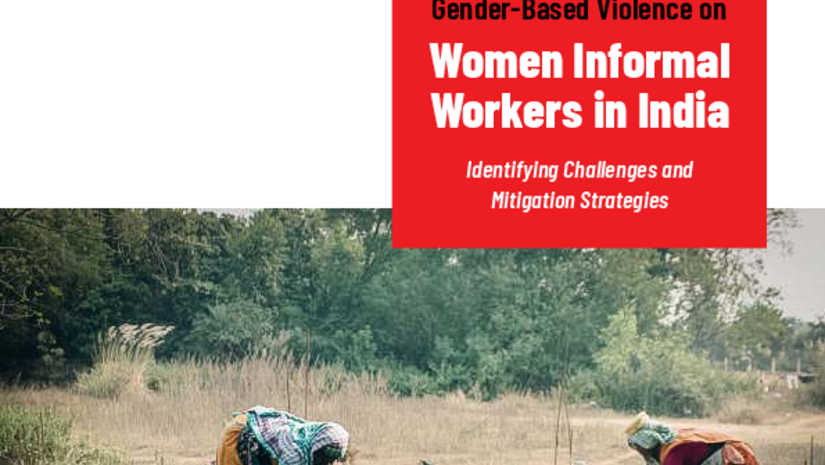
At 23.4%, the female labor force participation rate in India is one of the lowest in the world. The gendered division of labor in the labor market and various forms of patriarchal control have pushed women into the informal economy. Their work is usually unpaid or underpaid and takes place in precarious and discriminatory conditions, making them particularly vulnerable to violence and harassment. Due to the insecure and informal nature of their working environment, they have no access to legal protection.
The proposed research project will (a) gain insights into the different forms of gender-based violence faced by informally employed women and how these can be addressed, (b) explore different forms of cooperation and dialogue between different actors such as civil society organizations, employers and governments with regard to the formal recognition of informal women workers and the creation of gender-equitable workplaces, (c) analyse the effectiveness and challenges of organizing marginalized and vulnerable groups to ensure their access to rights and protection in the workplace, (d) develop best practice recommendations on how civil society actors can contribute to changing the norms that underpin gender-based violence (GBV) against informal women workers, and (e) develop recommendations on how civil society actors can contribute to changing the norms that underpin gender-based violence (GBV) against informal women workers.
informal women workers and close the gaps in the implementation of laws promoting their labor rights.
The proposed research project focuses on collectives of women workers in three different sectors of the informal economy in three states - domestic workers in West Bengal, agricultural and other migrant workers in Bihar, and home-based workers in Delhi. Through this research, we will highlight specific forms of gender-based violence faced by informal women workers in the workplace and analyze the gaps in laws such as the Prevention, Prohibition and Punishment of Sexual Harassment of Women at Workplace Act, 2013 (POSH Act) in protecting these women. We will generate insights and evidence to substantiate the role of collectivization processes in reducing gender-based violence in the workplace and in bringing about critical policy changes. We will document the role of worker registration and the facilitation of migration processes in ensuring women workers' access to rights and entitlements, thereby reducing the risk of violence and changing gender norms over time.
---
Coordinators of the project: Sandeep Chachra; Esther Mariaselvam (Action Aid India)
E-mail: sandeep.chachra[at]actionaid[dot]org; esther.mariaselvam[at]actionaid[dot]org
---
Main research partner: Prof. Dr. Elisabeth Tuider (University of Kassel)
E-mail: tuider[at]uni-kassel[dot]de
2021
Negotiating Co-Constitutive Crises: Racism and the Climate Crisis as experienced by Black, Indigenous and PoC Climate Negotiators and Experts
While racism is increasingly recognized as a constitutive element of the current climate crisis and imperial patterns have been analysed and critiqued in the COP process, there is a dearth of research that focuses on the ways in which climate negotiators and experts who are Black, Indigenous and/or People of Colour experience the co-constitutive dynamics of racism and the climate crisis in the context of climate negotiations and international and multilateral climate policy making. The project fills this gap by analyzing the experiences of BIPoC climate negotiators and experts, whose perspective is unique in that it allows for a combination of structural, institutional and interpersonal dynamics of racism in climate negotiations and policy. Their experiences, analyses and strategies will be collected through expert interviews and focus groups, which will be analyzed using qualitative coding. The project aims to gain empirical insight into how racism operates, how it is experienced by BIPoC climate negotiators and climate policy experts, and what counter-strategies they have developed.
---
Project coordinator:
Joshua Kwesi Aikins (University of Kassel)
E-mail: Kwesi.Aikins[at]uni-kassel[dot]de
---
Main research partner:
Bongiwe Matsoha (Earthlive South Africa)
E-mail: makoma[at]earthlife[dot]org[dot]za
---
Research collaborators:
Imeh Ituen; Franziska Müller (GLOCAL Power, University of Hamburg)
Makoma Lekalakala (Earthlive South Africa)
While racism and the climate crisis have increasingly been identified as co-constitutive (Moore 2015; Pulido 2018; Vergès 2017), the existing literature mainly addresses the historical, conceptual and structural dimensions of this entanglement (Baldwin and Erickson 2020). The proposed project fills a gap in the literature by linking these structural and institutional critiques to the experiences of BIPoC climate negotiators and experts, whose perspective is unique in that it allows for a combination of structural, institutional as well as interpersonal dynamics of racism in multilateral climate negotiations and policy.
In doing so, it draws on literature that shows that the climate crisis cannot be fully understood without considering the multiple colonial continuities and racialized hierarchies embedded in Western human-nature relations, in which BIPoC are relegated to the realm of a nature to be dominated as an ongoing continuity of a colonial dynamic (Plumwood 1993, 2005). These racist hierarchies are also evident in analyses of the international system (Grove 1998; Grovogui 2016), climate policy (Sealey-Huggins 2018) and imperial dynamics in the COP negotiation process, where "bullying tactics" (Sealey-Huggins 2017, 2449) against formerly colonized nations have been documented and analyzed (ibid.). The project contributes to a decolonial understanding of and intervention in racialized climate justice (Pulido and De Lara 2018). It builds on a Black radical tradition that links climate and racial justice by pointing out that they can only be achieved together (Johnson 2020; Johnson and Wilkinson 2020).
2020
Role of Women Cooperatives in empowerment of marginalised women
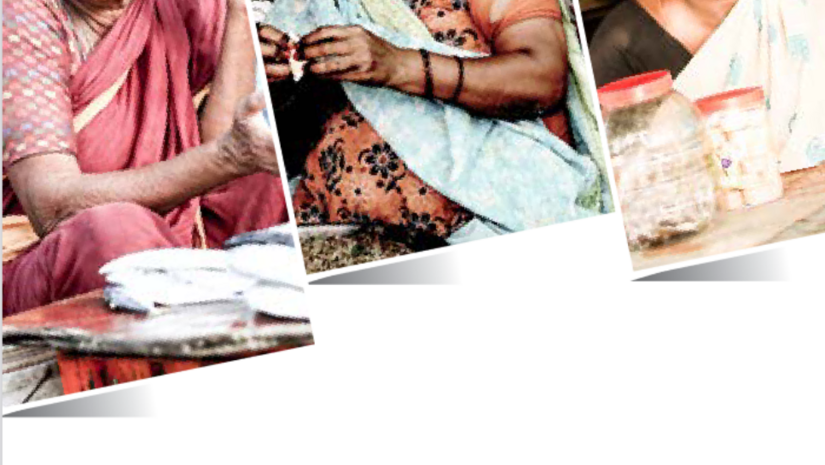
According to UN Women, women do at least two and a half times as much domestic and care work as men. The gender gap in the labor force is more pronounced than ever in India. The trend shows a rapid masculinization of the workforce, with the female participation rate falling to a historic low of 23.3% in 2017-18 (PLFS data from NSSO). This is despite the fact that various flagship programs have been implemented over the years to empower women. Further analysis shows that women belonging to marginalized communities such as Dalit, tribal, DNT and Muslim communities are exposed to various manifestations of patriarchy. The increasing number of assaults against these communities recorded by the NCRB bears testimony to this fact. Experience shows that women belonging to these communities have less access to education, government programs, skills, credit and other factors required for entrepreneurship. They are usually employed in low-paid jobs that require longer working hours and have no social protection.
The cooperative movement is of great importance in India and is even mentioned in the Indian Constitution. It has touched various spheres of life, from agriculture, fertilizers, banking, dairies, sugar, housing to modern sectors like information technology. Women's cooperatives have a long history in India. They have a direct and indirect impact on women's employment. Their economic success and their role in women's empowerment have been the subject of various studies conducted over the years. However, an examination of the role of cooperatives in the empowerment of women belonging to marginalized communities such as Dalit, tribals, DNTs and Muslims is a research gap. In the proposed study, the women's cooperatives in Bihar, West Bengal, Kerala, Gujarat and some other Indian states are studied to assess the involvement of women belonging to marginalized communities in particular.
---
Coordinator of the project:
Sandeep Chachra, ActionAid India
Exploring gendered cultural-violence like witch branding/hunting and discrimination on women as a impediment to equitable development as envisaged under SDGs
Women face severe violence, discrimination and injustice when they assert their rights to productive resources. It is not surprising that women own less of all productive resources such as land and housing. Despite numerous rights and laws enshrined in the constitution, administrative units fail to implement women's rights and grant them equal rights.
The research proposal aims to reflect on one of the most common forms of violence experienced by tribal or Adivasi women in India - witch hunting and witch branding, where women are accused of possessing occult powers to harm others. A combination of superstitious beliefs, religious practices and patriarchal norms mean that women accused of witchcraft experience a lifetime of suffering, leading in many cases to their murder and lynching.
The roots of this violence lie not only in specific religious or cultural beliefs and superstitions, but also in the cold calculation of patriarchal mindsets, in the collusion to deprive women of land and property, to take revenge when women refuse sexual advances, and to punish women for petty disputes. Inadequate health care in rural areas and lack of sustained awareness programs, implementation of laws and informed government intervention exacerbate the problem.
The complexity of this problem and its penal dimensions are evident in the blurring of the lines between protector and perpetrator. As in other cases of lynching, it is difficult to identify the perpetrators and bring them to justice. Survivors of these acts of violence are deeply scarred as the perpetrators are often members of their own family, neighborhood and community.
In addition, single women are more at risk of being stigmatized and women who own land are even more vulnerable. Land rights play an important role in women's struggle for survival, dignity, respect, safety and economic security. However, social norms, customary laws and legislation do not allow women to have easy access to and control over land and other productive resources. In many cases, attempts are made to appropriate women's land resources by branding them as witches, which is accompanied by violence. Women carry out most agricultural activities but are not recognized as farmers if they have no ownership and control over land and no access to credit and other inputs. All these situations, which show the disadvantage and unequal position of women in society, are due to discrimination against women, gender-specific policies, legislation and socio-cultural norms and practices.
Apart from this, it is evident that when women's sexuality is not under control in a patriarchal world, attempts are made to desexualize them by branding them as widows, witches or having a bad eye.
The proposed research study will also make a systematic attempt to understand the problem and find out the structures and practices that prevent or help women from sexual autonomy as well as economic resources, and establish the close link between the two.
---
Coordinator of the project:
Sandeep Chachra, ActionAid India