

This page contains automatically translated content.
Latest news
Why are there so many IT security updates right now? - Important tips for your day-to-day work
Dear colleagues,
You may have already noticed it: In recent weeks, update requests have been popping up on service devices much more frequently than usual.
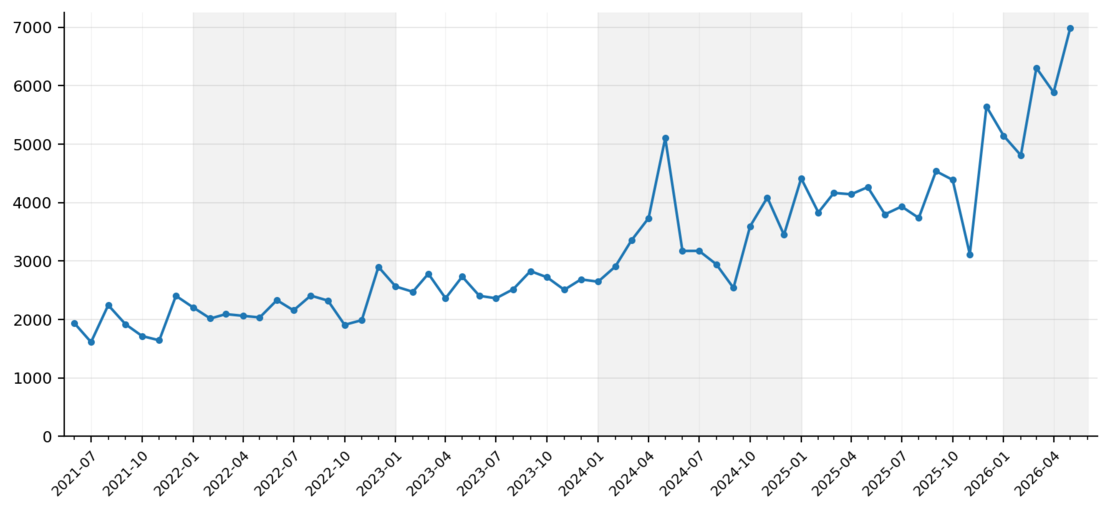
The reason for this is that the use of AI means that security vulnerabilities in software can now be detected much more quickly worldwide - unfortunately also by attackers. According to recent IT security reports, attacks via software vulnerabilities have increased significantly.
The university's IT security must therefore react more quickly. You can find out what this means for your day-to-day work here:
1. my PC is managed centrally by IT
You do not have to take care of installing the updates yourself. But please be prepared for the following changes in your everyday life:
- More frequent restarts: updates will be installed much more frequently (sometimes several times a week) - even at short notice in an emergency. Your computer may have to restart afterwards.
- Patience during interruptions: We know that this can disrupt the flow of work. Nevertheless, we ask for your understanding: this is the only way to protect the university computers and your data.
2 I administer my end device myself
If you manage your device yourself, you are responsible for its security.
- Activate automatic updates: For the operating system and all main programs (browser, Office etc.).
- Check several times a week: Actively check for updates. What used to sound excessive is now a necessary habit.
- Act quickly: Please always close critical security gaps immediately.
3 I administer IT systems (e.g. servers, specialist applications)
You are currently faced with the challenge of applying patches quickly and minimizing downtime at the same time.
- Prioritize: Critical systems with external connections have absolute priority.
- Shorten test cycles: A known, open security vulnerability is currently a higher risk than a quickly applied update.
- Have a contingency plan ready: Do you and your team know what to do if a system needs to be isolated at short notice?
Thank you for your support and attention - IT security only works as a team effort.
Questions or uncertainties?
Your information security officer will be happy to help you: isb[at]uni-kassel[dot]de