
This page contains automatically translated content.
Simply see the city as a fox
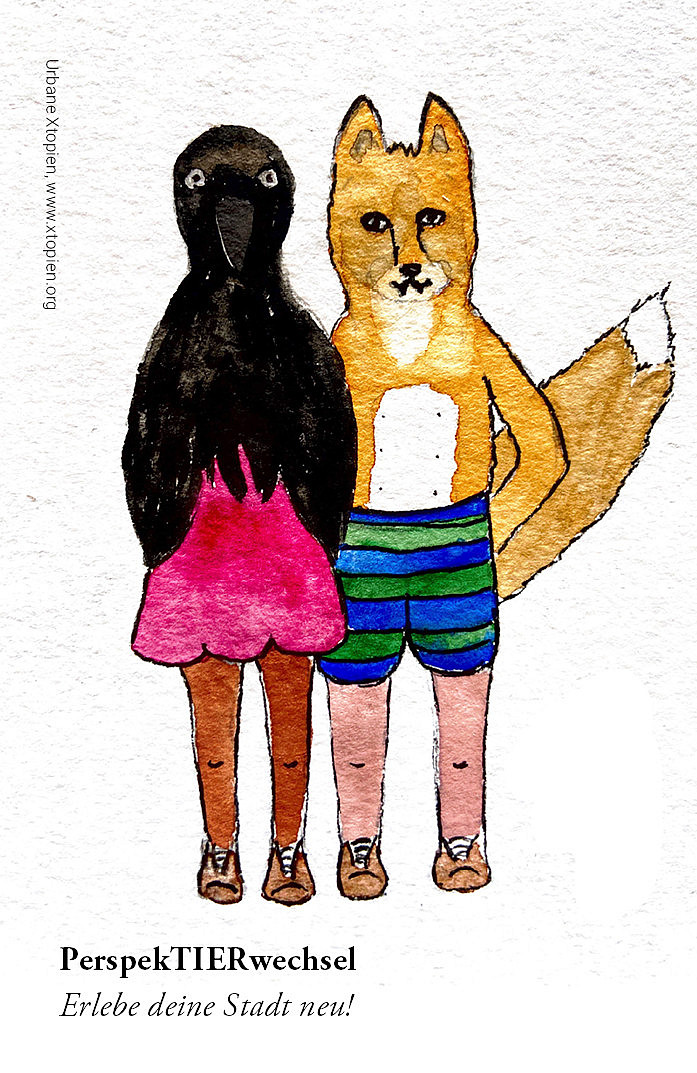
Imagine a fox guiding you through the city - not in a fairy tale, but in an audio walk through green spaces, bushes and paths. Where we see order, design and recreation, he recognizes dangers, retreats and opportunities for food. This change of perspective exemplifies the approach of the Kassel research and teaching project PerspekTIERwechsel: cities are not just living spaces for people. And yet they are planned almost exclusively from a human perspective. Animals often remain invisible or are seen as disruptive factors, even though we share urban spaces with pigeons and other birds, bats, insects and foxes.
"This is a huge problem," says Dr. Annette Voigt, research associate in the Department of Open Space Planning and head of the project. Budding architects and planners "hardly learn what consequences their designs have for animals. There are huge gaps in their knowledge and an astonishing lack of awareness. The consequences show up later: in buildings that invite birds to breed and endanger them at the same time, in infrastructures that become insurmountable barriers for animals, or in the lighting of urban spaces that contributes to the decline of insects."
This is precisely where PerspekTIERwechsel comes in. It sees "cohabitation", i.e. the coexistence of humans and animals, not as a moral slogan, but as a planning task. "It's about responsibility. Good design can minimize conflicts, prevent suffering and, above all, open up opportunities - both for animals that find a habitat in areas used intensively by humans and for people who encounter animals and experience nature in their everyday lives," explains Voigt. PerspekTIERwechsel starts where the city of tomorrow is created - in the professional training of those who will plan and build it.
Blind spots in urban planning
Dangers for animals are everywhere: pigeons get lost behind the glass façade at Kassel City Point and cannot find a way out. Collisions with glass panes often end fatally. "This is not an isolated case, but an expression of planning and architecture that does not take animals into account," says Voigt. Birds do not recognize reflective and transparent glass façades as obstacles and collide with them. Artificial lighting exacerbates the problem - in Germany, it is estimated that an unimaginable 100 million birds die on glass surfaces every year.
Another example: In Berlin, an area where the city's last population of natterjack toads lives is to be built on. Whether it will be possible to relocate the animals in the long term is uncertain. "There is often an underlying attitude: The city is built by and for people. Animals belong in 'nature'. But animals have always used urban spaces and it is to be expected that they will do so more and more," says Voigt. "Can't we plan construction projects from the outset in such a way that they integrate existing animal populations - or even provide new habitats?" In order to integrate the topic of wildlife more strongly into ASL degree programmes, various tools have been developed in courses: thematic booklets on bird strikes and the effects of lighting, species portraits, but also creative methods such as the fox audio walk for a change of perspective.
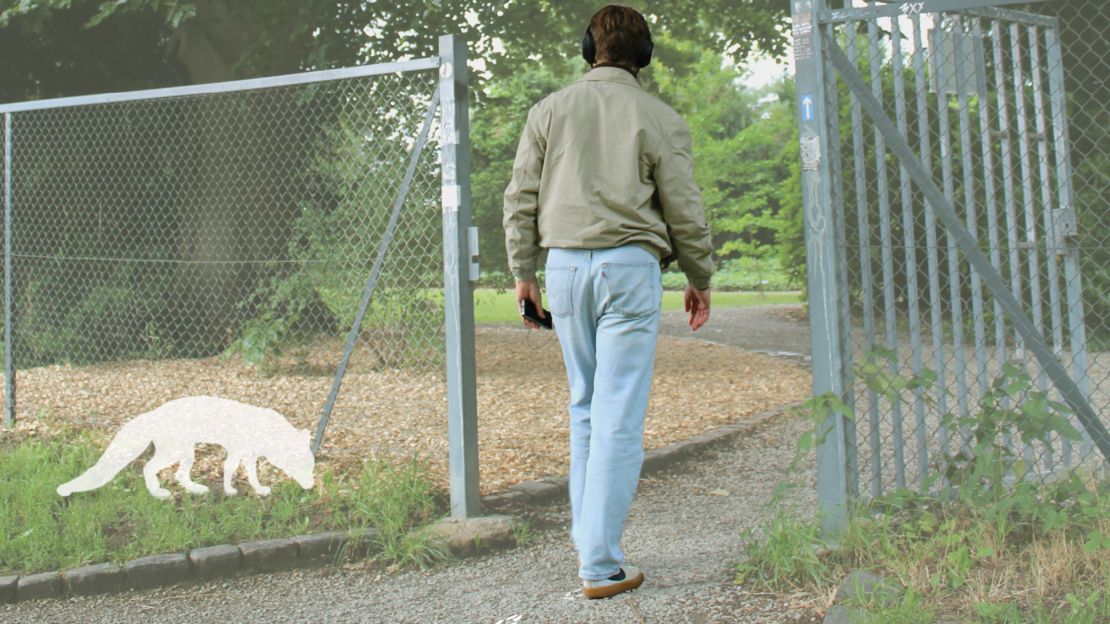 Image: Nina Fritsch
Animals as actors in urban space
Student assistant Irene Fischer is working on species portraits, for example of the moth, a moth. "Many nocturnal insects are guided by stars and moonlight," she explains. "Artificial lighting in certain light wavebands can irritate or attract them - sometimes with serious consequences." The portraits not only serve to impart knowledge, but also provide concrete tips for planning practice, including on the design of lighting and the selection of light wave ranges that are less harmful to animals. Another format is the audio walk "With different ears through the city", which student Nina Fritsch created as her Master's thesis and which has become part of the project. Guided by a talking fox, the participants become foxes themselves to a certain extent and learn about their needs. Such methods make the change of perspective not only theoretical but also tangible. In addition, role-playing cards make it possible to empathize with the situation of twelve different animal species in the city: Where can I find food? Where are dangers lurking? Where can I retreat?
Not just favorite animals
But the project is not just about charismatic or protected species. "Rats, pigeons, bedbugs - they are also part of the city," says Samantha Hentschel, who worked on the project and wrote her master's thesis on dealing with pigeons and rats in urban areas. Those who plan better can avoid conflicts between humans and animals and have to use less poison. Positive examples show that coexistence works: At Tempelhofer Feld in Berlin, the former airport site, skylarks breed between the runways - despite its intensive use as a public park. Targeted protected areas, temporary restrictions and consideration have created spaces in which humans and animals can coexist. Even small architectural solutions such as roosts for sparrows, bats and hedgehogs integrated into façades or a well thought-out choice of plants in open spaces can make a big difference. This is demonstrated by the housing project in Brantstrasse in Munich, the first to be implemented according to the principle of animal-aided design. Nevertheless, there are still major gaps in knowledge in practice: "Many architecture students are shocked that they have never heard of the phenomenon of bird strikes - in other words, that birds die en masse on glass façades and transparent building components," Voigt points out. "This shows how big the gap in professional training still is.
Toolbox for the city of tomorrow
All of the project's findings will therefore flow into a toolbox that will be accessible via the doku:lab in future: a collection of methods for changing perspectives, ecological species portraits for planners and planning approaches for students and teachers. "We want to make a lasting change," explains Voigt. "If we change teaching, we will change the cities of the future in the long term."
This article appeared in the university magazine publik 2026/1. Text: Bastian Puchmüller.