
This page contains automatically translated content.
University of Kassel Conducts Research on a European Web Data Infrastructure to Combat Disinformation
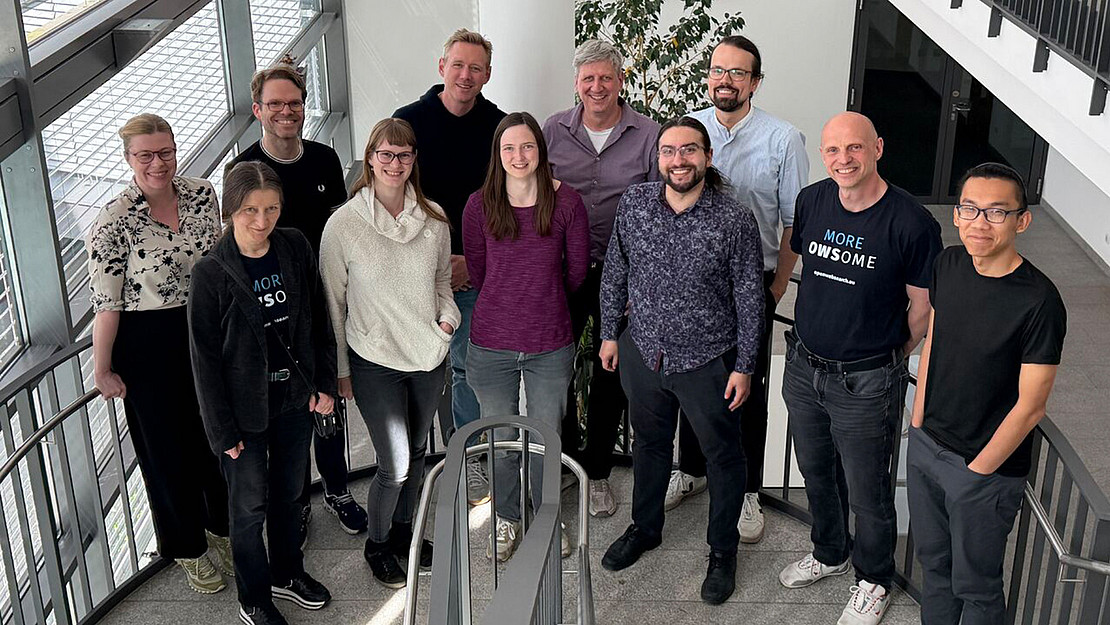 Image: University of Kassel
In the recently launched collaborative project “SOURCE,” partners from the research and professional communities are working together to develop a research and analysis infrastructure that can be used across Europe to help combat targeted disinformation campaigns online. This infrastructure is designed to automatically collect large volumes of web and social media data and analyze it using innovative AI methods. Both content and dissemination channels will be analyzed to expose inauthentic information campaigns and strengthen Europe’s digital sovereignty.
Disinformation—that is, the targeted dissemination of information with the intent to deceive and mislead—poses a challenge to social cohesion, democratic processes, and trust in (digital) media. The enormous volume of online content makes it difficult to detect and analyze coordinated information campaigns on the web at an early stage. This problem is further exacerbated by the proliferation of generative artificial intelligence.
“The goal is to provide researchers, fact-checking organizations, the media, civil society, and government agencies with a tool to detect potential disinformation on the web at an early stage, trace its origin, and develop effective countermeasures,” explains Prof. Dr. Martin Potthast of the University of Kassel.
The University of Kassel is participating in the project through its “Deep Semantic Learning” research group, which is funded by hessian.AI and is a member of the Scientific Center for Information Technology Design (ITeG). The focus of Prof. Potthast’s research group is on content-based disinformation detection. This includes the detection of AI-generated texts, stylometric analyses to determine authorship, and text watermarking techniques. In addition, the research group contributes its expertise in the field of argumentation mining to the project.
The project is coordinated by the University of Passau. Other partners include the Leibniz Computing Center of the Bavarian Academy of Sciences, the Open Search Foundation e.V., and Alliance4Europe gGmbH.
The project began on April 27, 2026, with a kickoff workshop in Passau and will run for three years.
Contact:
Prof. Dr. Martin Potthast
Deep Semantic Learning
+49 (0)561 804 6132
Email: martin.potthast[at]uni-kassel[dot]de
What does this mean in summary?
- The University of Kassel (Department of “Deep Semantic Learning” led by Prof. Dr. Martin Potthast) is receiving 580,000 euros in funding to develop a data infrastructure for analyzing and detecting online disinformation as part of the BMFTR collaborative project “SOURCE.”
- The project, which has just been launched, is developing a research and analysis infrastructure accessible throughout Europe that automatically collects vast amounts of data from the web and social media and identifies the content and dissemination pathways of fake news.