
Tradition and Change: Leaders Discuss the Future of the University
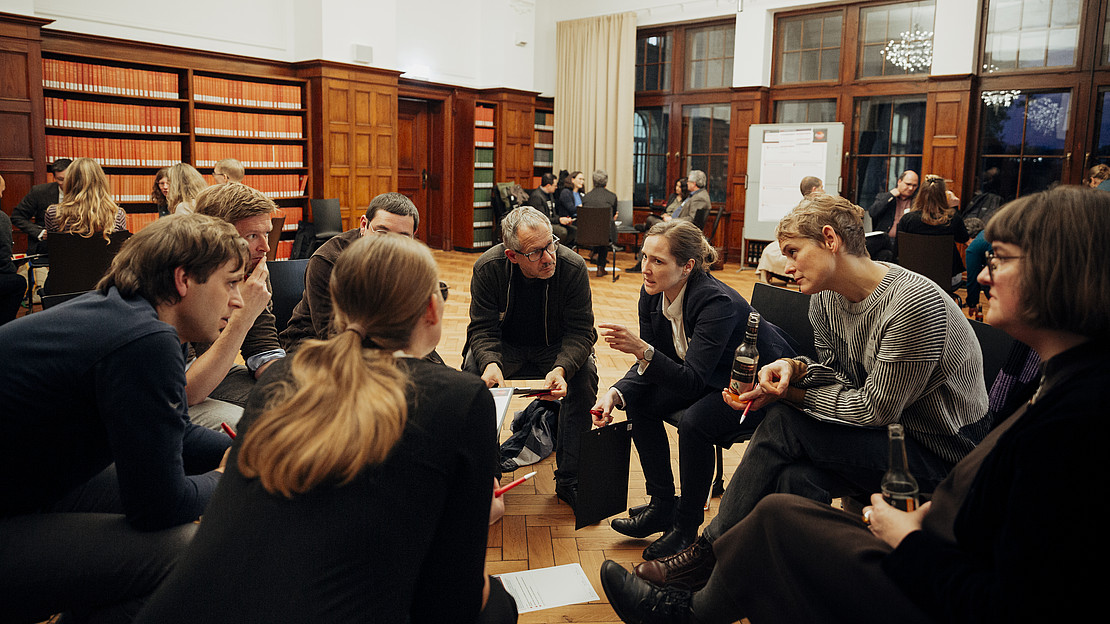 Image: Nick Mitmanski.
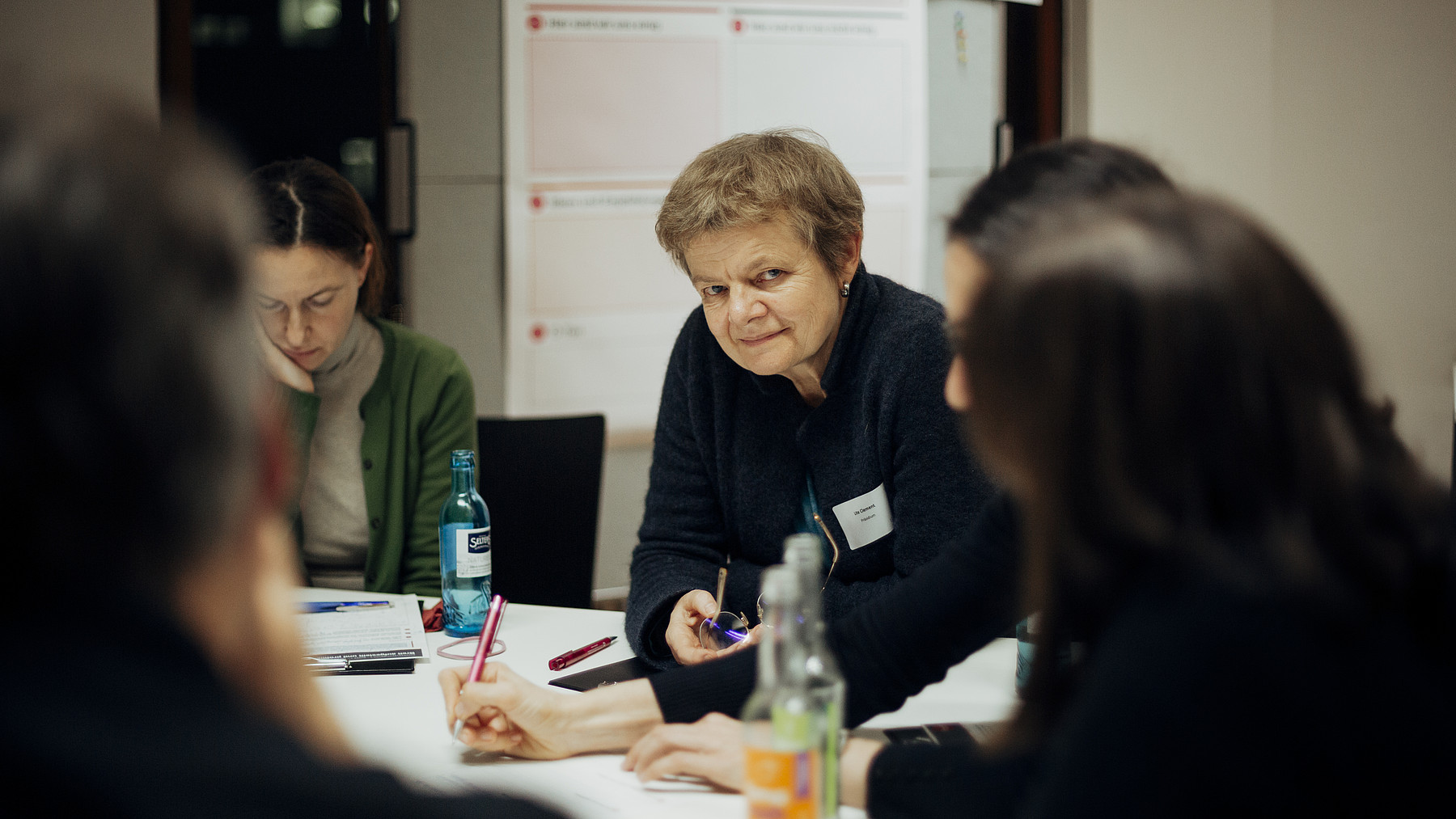
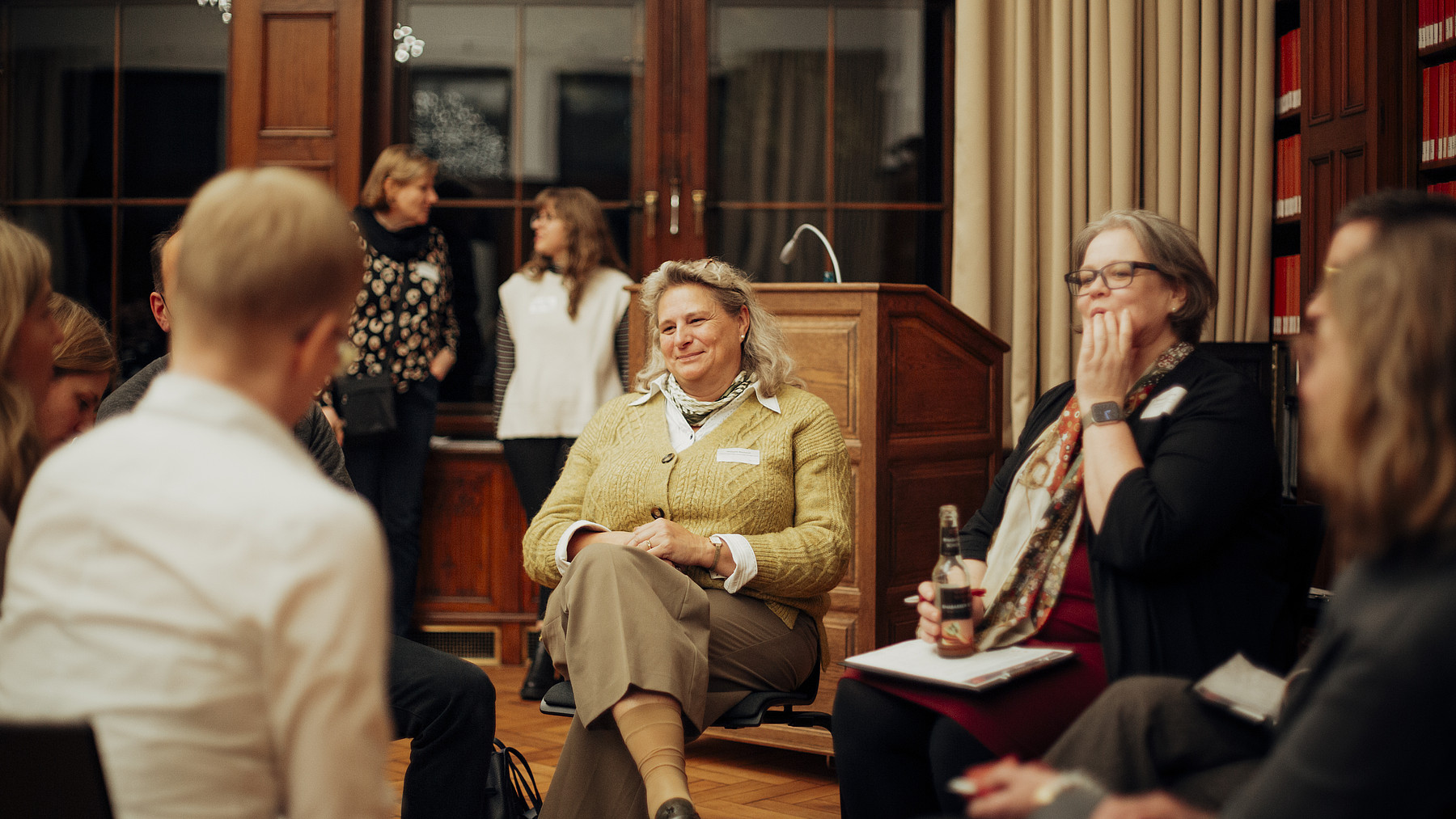
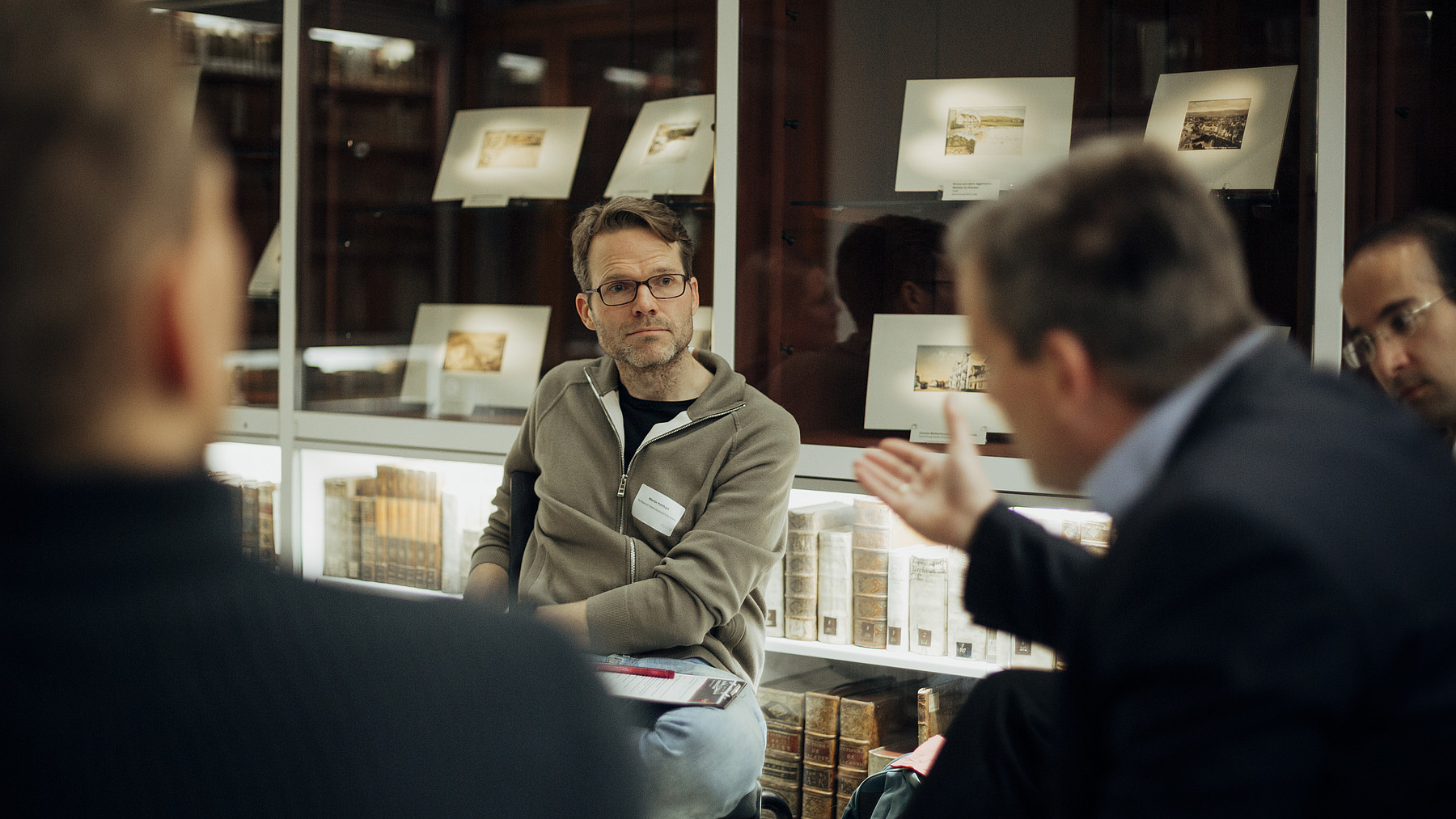
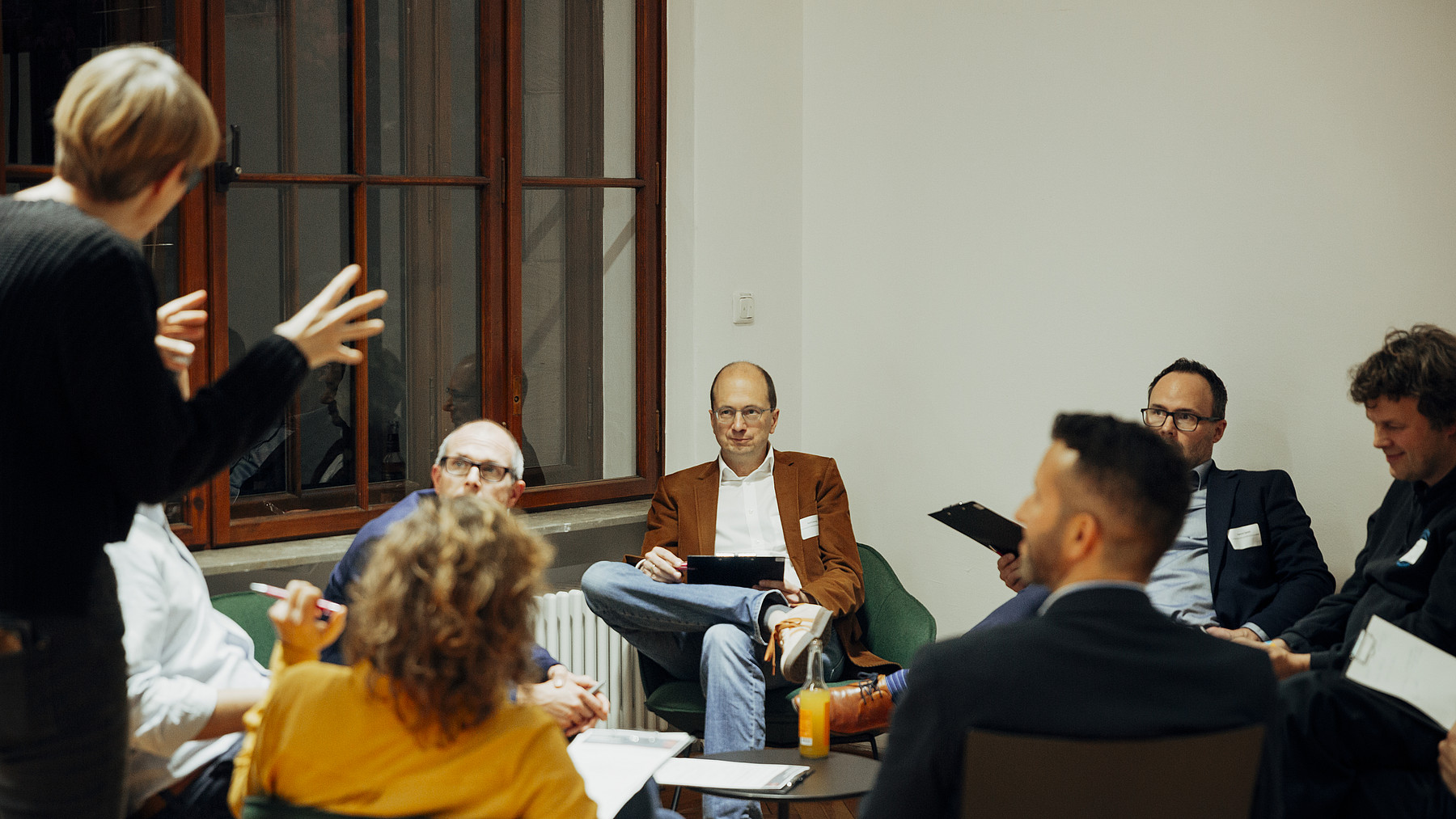
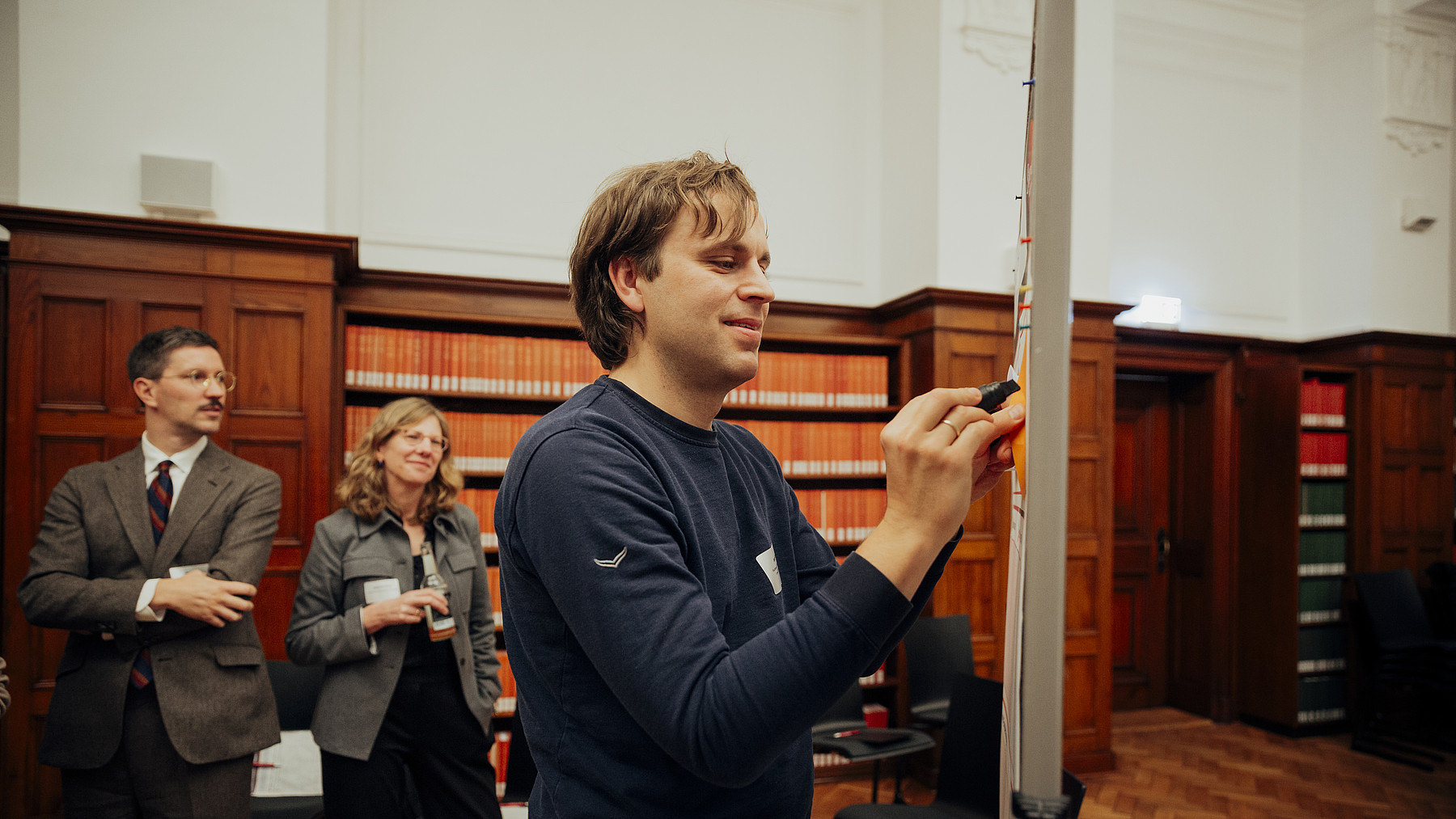
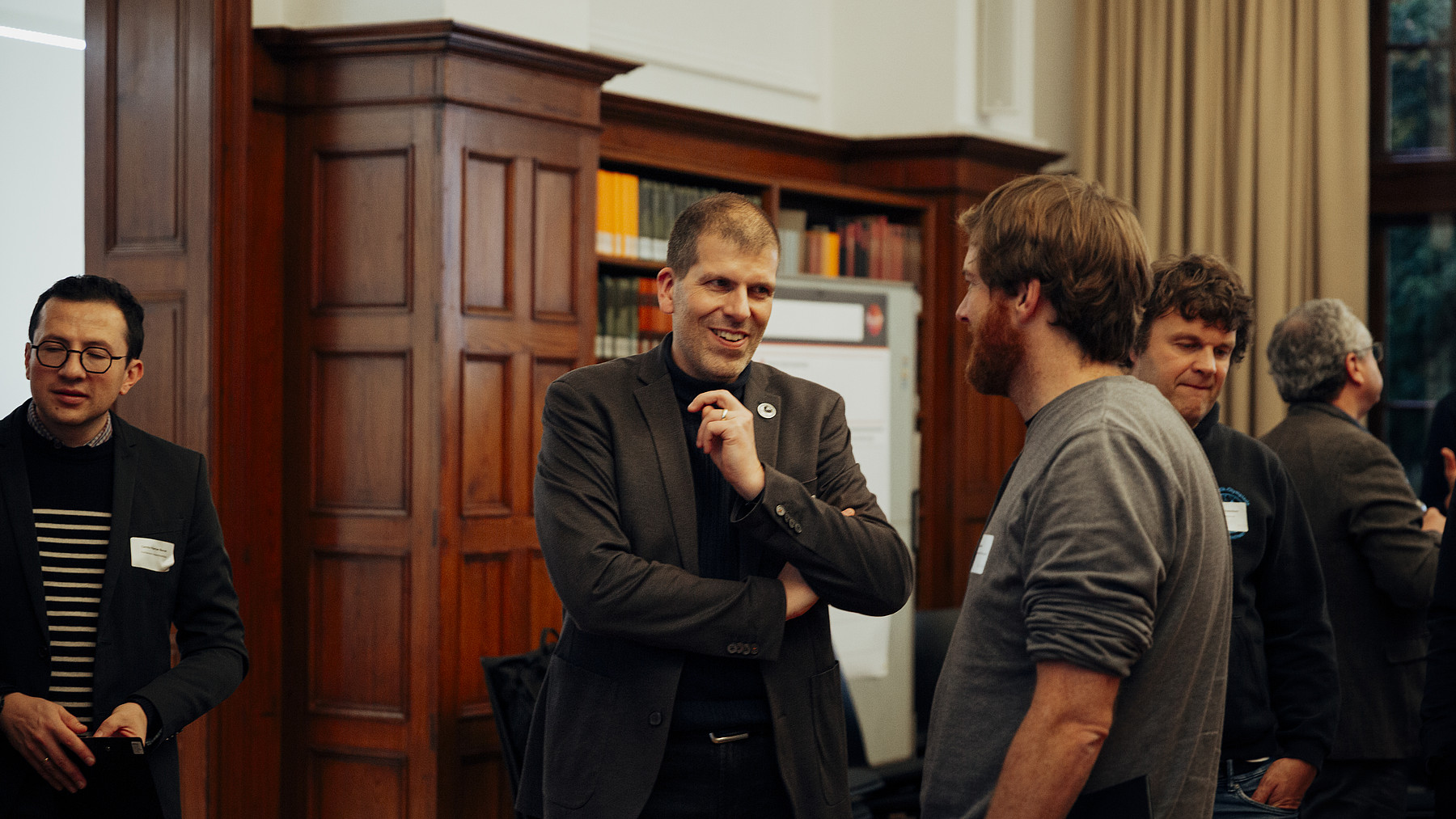
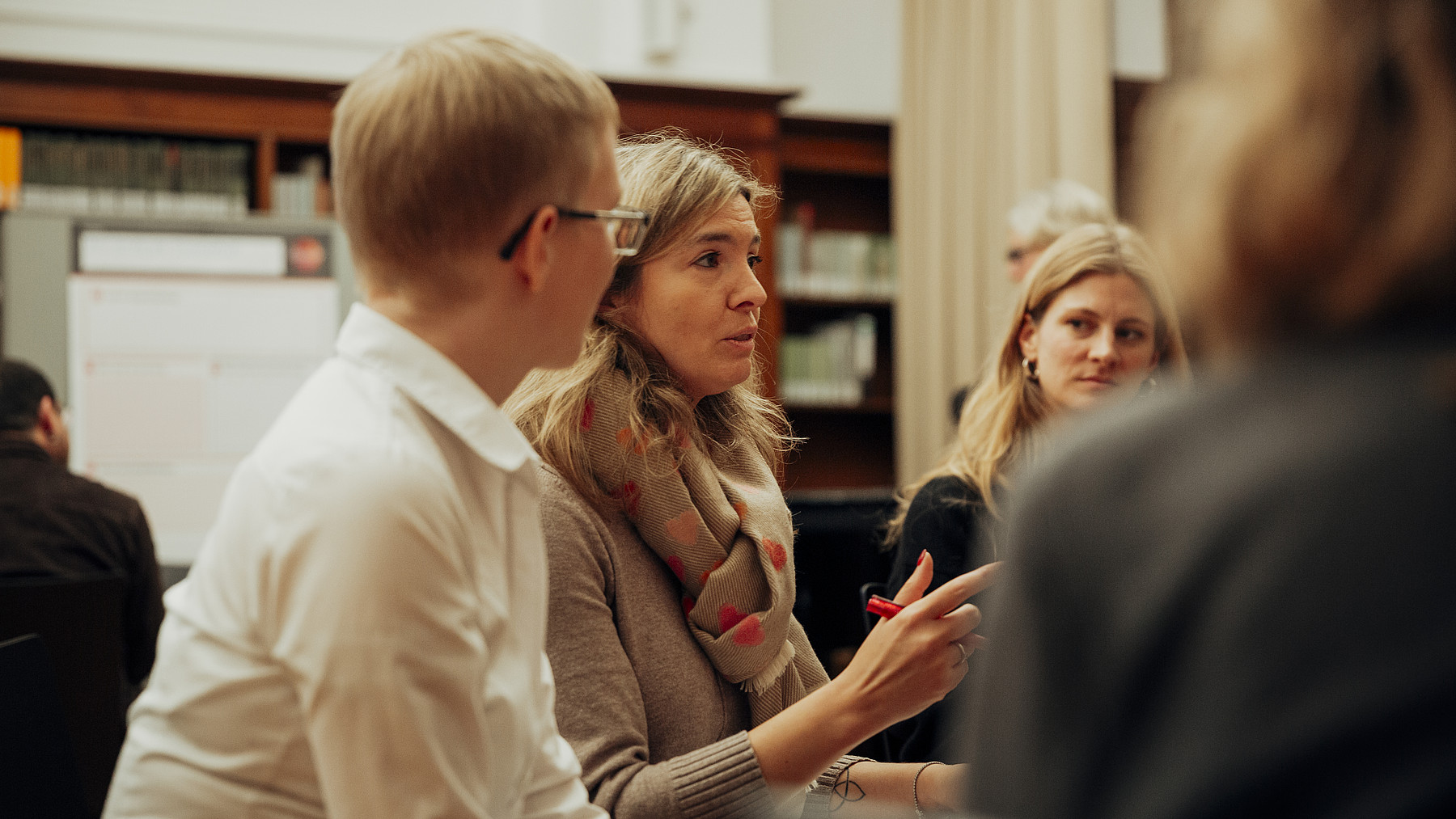

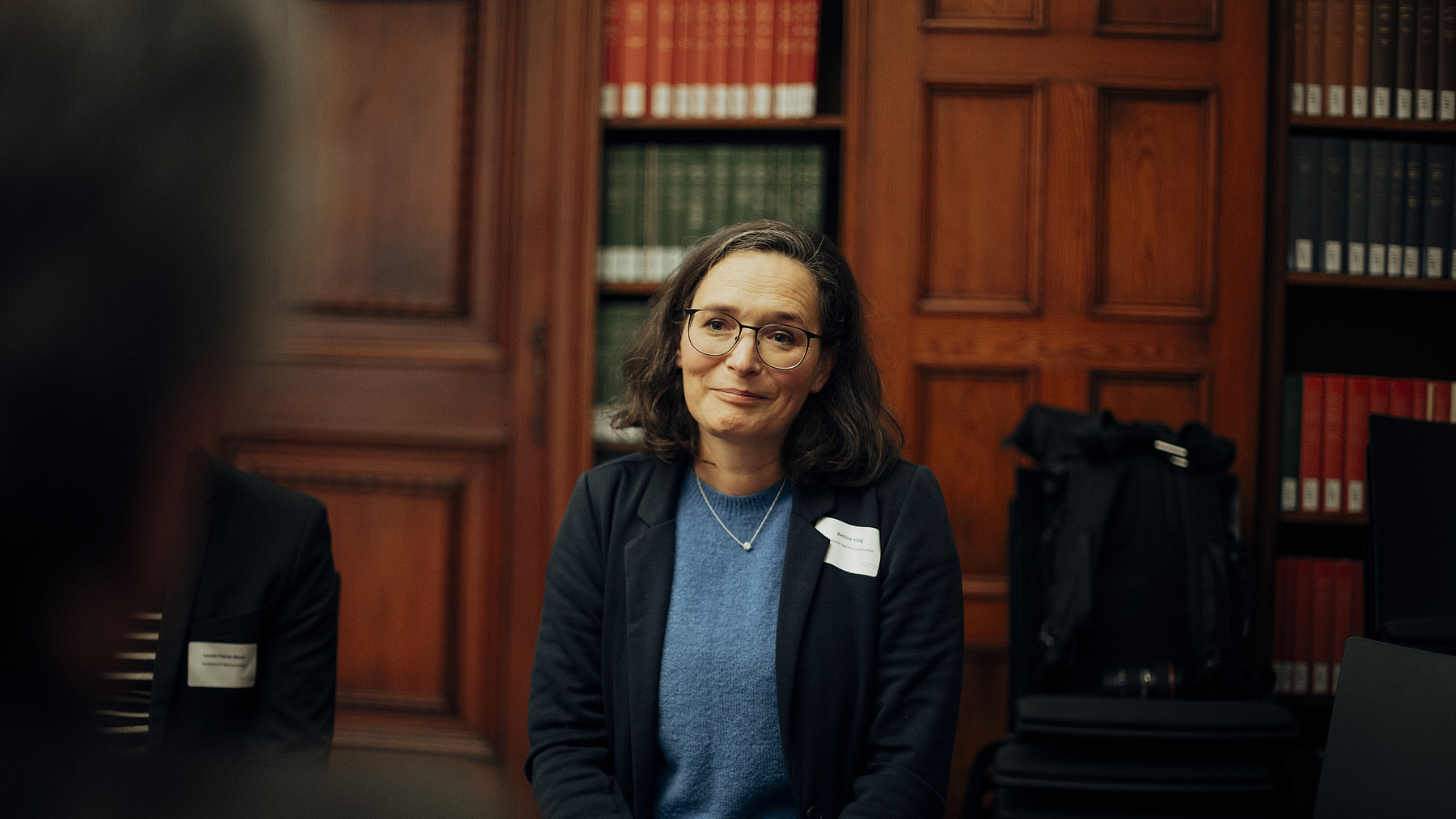
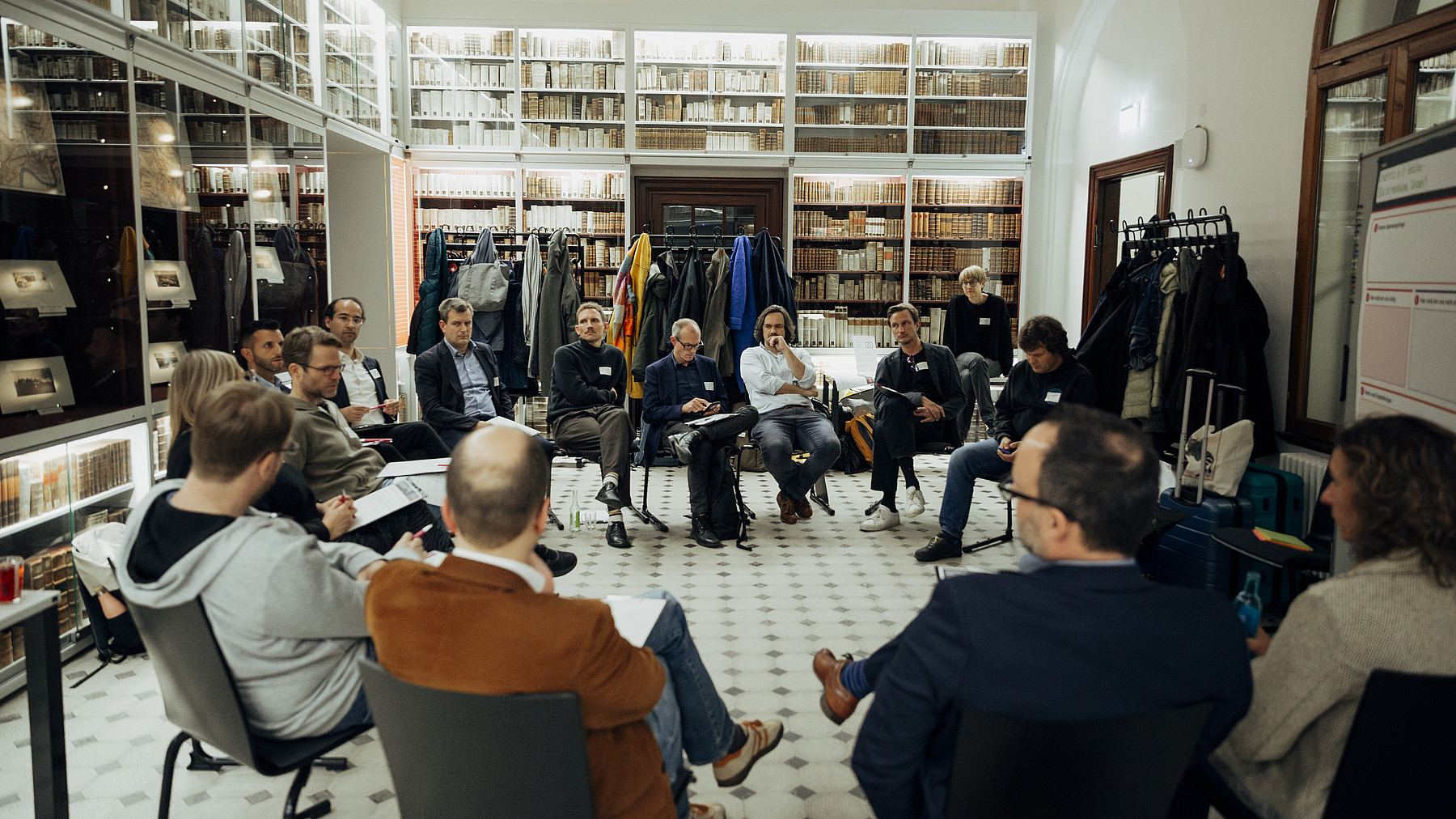
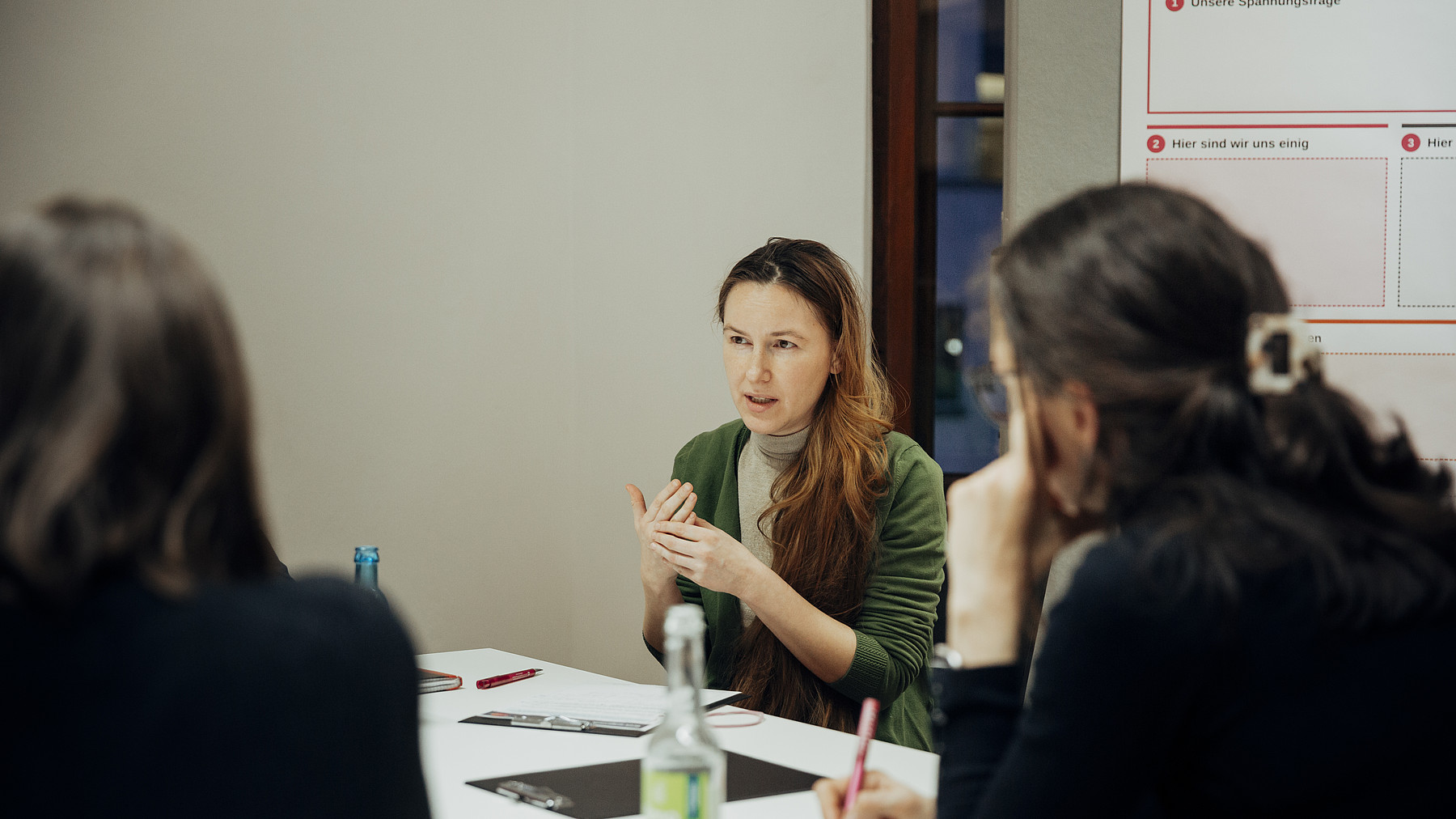
Hardly any venue could have been more fitting for a discussion under the theme “Tradition and New Beginnings” than the historic Eulensaal in the newly renovated Murhard Library. The event brought together leaders from research, administration, and departmental management who have been working and conducting research at the university since 2020. The goal of the event was to examine existing aspects of the university’s self-image and, building on that, to sketch out visions for the university’s future. In the course of this, five key issues were identified, and possible solutions were developed.
The results of the group work were documented using the graphic recording method.
Topic 1: Broadly Diversified and Distinctive
The University of Kassel has a broad research profile. In times of dwindling public funding and increasingly costly research infrastructures, the pressure to raise the university’s profile is growing.
Participants in the first group explored the question of whether a stronger research profile is desirable and, if so, in what form. The goal would be not only to use scarce resources more efficiently but also to promote the visibility of the university’s research strengths to the outside world and to strengthen internal self-confidence.
There was agreement that the university’s broad scope is precisely one of its strengths. Without this diverse research spectrum, interdisciplinary and transdisciplinary research, as practiced at the University of Kassel, would not be possible. Accordingly, the group placed great emphasis on organic rather than top-down profile development.
The central question was: How can a visible profile be established through organic development? Does this require different structures?
The participants identified mid-level collaborative research—for example, by securing new Collaborative Research Centers (SFBs)—as a crucial path toward organic profile development. The group also did not rule out participation in larger funding programs such as the Excellence Strategy, provided that the necessary foundation for this is established in advance. One central question remained unanswered: How can resources be pooled to develop new ideas and create the freedom needed to draft proposals?
Topic 2: Rooted in the Region—Connected to the World
The slogan “Engine for the Region” is an integral part of the University of Kassel’s self-image. At the same time, the university has repeatedly set itself the goal of strengthening its international orientation. Over the years, it has thus established and maintained numerous collaborations, particularly with partners in countries of the Global South. At a time when internationalization is being hampered by geopolitical developments and cuts to public funding, while regional development is losing momentum, the question arises as to whether this balancing act remains sustainable.
The participants in the second group agreed that regional roots and international networking do not have to be contradictory. Rather, the opportunity lies in strategically leveraging the university’s international network for the region’s development.
The central question can therefore be formulated as follows: International networking for the region—how can this be effectively structured in the future?
The group identified the development of ecosystems centered on key research areas with unique selling points for Kassel as one possible solution. The establishment of an alumni network and startup support that goes beyond traditional startup funding were also seen as important starting points. Furthermore, the participants emphasized the importance of the structured integration of all university members into the region. A clear stance by the university against racism and anti-Semitism forms an essential foundation for a cosmopolitan and internationally connected university.
Topic 3. Knowledge in the Age of AI – What Is Human Knowledge?
It is undisputed that artificial intelligence poses particularly serious challenges for universities. The third group discussed what solutions might be available for the University of Kassel, which sees itself as a campus-based university and has experienced declining or stagnant enrollment numbers for several years.
The participants agreed that rapid access to information through new technologies cannot replace the need for independent learning. Both foundational knowledge and exam formats that challenge students are necessary. They see an opportunity for the university in defining itself as a social learning environment and positioning itself more effectively.
Based on these considerations, they formulated the following key question: How much WE does knowledge need? How to build AI competence—versus—productively combining independent learning without AI?
The answer to this question was “Education Initiative—now more than ever!” Building AI competencies should become a new and important component of the curriculum. If we approach AI with enthusiasm and an open mind, its responsible use in both study and teaching will be all the more successful. The ability to think autonomously and to justify decisions with well-reasoned arguments becomes increasingly valuable in this context. And this is precisely where the university can and should play a decisive role.
Topic 4: Open Educational Pathways for All
At the University of Kassel, we are proud that academic education is accessible here to people from diverse backgrounds. The diversity of our student body continues to grow: more and more students with a high school diploma, as well as international students, are enrolling at the University of Kassel. The fourth group discussed how teaching can be successfully structured under these conditions.
The participants agreed that equal opportunity and low-barrier access to education are major strengths of the University of Kassel and that we should hold fast to them. After all, interest and motivation are more important than the high school GPA. Therefore, the key question was: How can we keep the pathways to higher education open—or open them up even further?
From the participants’ perspective, this can be achieved if prospective students receive intensive support in choosing their field of study both before and during the enrollment phase. It is also essential to continue raising awareness of discrimination and unconscious bias across all student groups. Ideally, the diversity of the first semester should mirror that of a first-grade class in elementary school.
Topic 5: Change and Cohesion
Short reporting lines, flat hierarchies, and collegial collaboration are repeatedly highlighted as unique selling points of the University of Kassel. The fifth group addressed the question of how this work culture can be upheld and further developed even in times of multiple crises.
Two key insights shaped the group discussion: First, it is important to recognize the university’s own heterogeneity as a strength. Diversity gives rise to friction, which can provide valuable impetus for the university’s development. Second, the administration should act—and be perceived—not as a “restrictive framework” but as a supportive partner to the academic community.
Against the backdrop of these considerations, the group formulated the following key question: How can change processes be shaped in a participatory manner within the tension between leadership responsibility and relationships of dependency?
From the participants’ perspective, this requires spaces where different perspectives can be acknowledged and differences can be constructively negotiated. It is crucial to maintain dialogue even when interests and positions differ. This also involves consciously reflecting on existing relationships of dependency. As a concrete solution, the group proposed the development of a joint Code of Conduct. This could serve to reflect on the tension between leadership responsibility and participation and to agree on shared principles for cohesion and work culture at the University of Kassel.