
Study structure
This page contains automatically translated content.
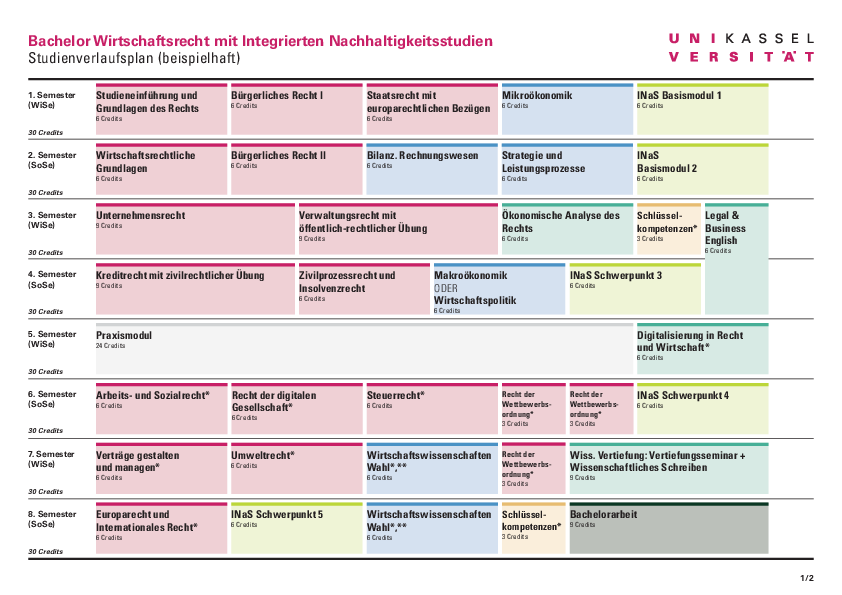
Sample study plan
Download
Integrated sustainability studies
The basic modules teach fundamental theoretical and methodological knowledge about sustainability. You will receive an introduction to:
- central terms, theories and concepts of sustainability science,
- basic methods of interdisciplinary and transdisciplinary sustainability research,
- social conflicts and legal disputes in the field of sustainability,
- the connection between sustainability and transformation processes.
- Students will also learn the techniques of scientific work.
Students can choose a specialization from a total of 31 specializations.
The specialization module shows you how differently sustainability can be thought of and shaped - technically, socially, scientifically, legally, creatively or politically, depending on your choice.
Whether it's urban planning, biodiversity, climate change, digitalization or issues of justice: you decide which topic you are interested in. This will give you well-founded professional insights and teach you to understand complex challenges from different perspectives and actively help shape them.
Discover over 30 exciting focus areas - and find your approach to sustainable transformation. We recommend that you click on some of the focus areas to get a better idea of them.
- Human scientific prerequisites for sustainable development
- Human-nature relationships (philosophy)
- Sustainability communication and social participation
- Sustainability communication in crisis discourses
- Sustainability communication on cultural norms and values
- Genesis and structures: sustainability concepts and nature relations
- Processes and consequences: Diversity, globalization and solidarity
- Actors and practices of socio-ecological transformations
- Sustainable, energy-efficient buildings
- The green, climate-friendly city
- Socially just urban development
- Biological principles of sustainability - molecular biology
- Biological principles of sustainability - ecology & botany
- Mathematics for SDG considerations
- Sustainability in chemical-physical applications
- Ecological agricultural systems
- Organic agriculture and society
- Mobility and transportation
- Water management
- Sustainable material cycles and product life cycles
- Environmental economics
- Sustainability management
- Environmental sustainability law
- Social sustainability law
- Sustainability studies on electrical energy technology
- Computer science: people and society
- Artificial intelligence and data science
- Computer Science: Safety and Reliability
- Critical Sustainability in Art and Design
- Transformative project management
- Sustainability discourses and fields of action
