
The content on this page was translated automatically.
Public lecture series "Brazil. Land of the Future or the Past?"
In 1941, while in exile in Brazil, Stefan Zweig wrote the book "Brazil. A country of the future". The title of the book was used as an epithet for the country in Brazil for decades. This was justified because, despite massive problems, the population always radiated hope - i.e. a future - to foreign visitors. Brazilians often added the melancholy and ironic phrase ... a future that we will never reach.
Then the improbable happened. With the election of the left-wing candidate Luiz Inácio Lula da Silva as president, who took office on January 1, 2003, Brazil had achieved its future. The first years of his government were characterized by a broad social awakening and the shaping of the future. Disillusionment set in. Brazil is currently ruled by a radical right-wing president. There is little sign of new beginnings or hope. His re-election would turn Brazil into a country of the past. But what could the future be?
Brazil today is a deeply divided country. The question of whether it is still a country of the future or of the past will be examined by the speakers from various perspectives.
Participation is possible for a maximum of 100 people in presence or you can register for online participation via Zoom with Ms. Klein: p.klein[at]uni-kassel[dot]de
Lecture on May 19: Does the Cerrado have a future? Book presentation
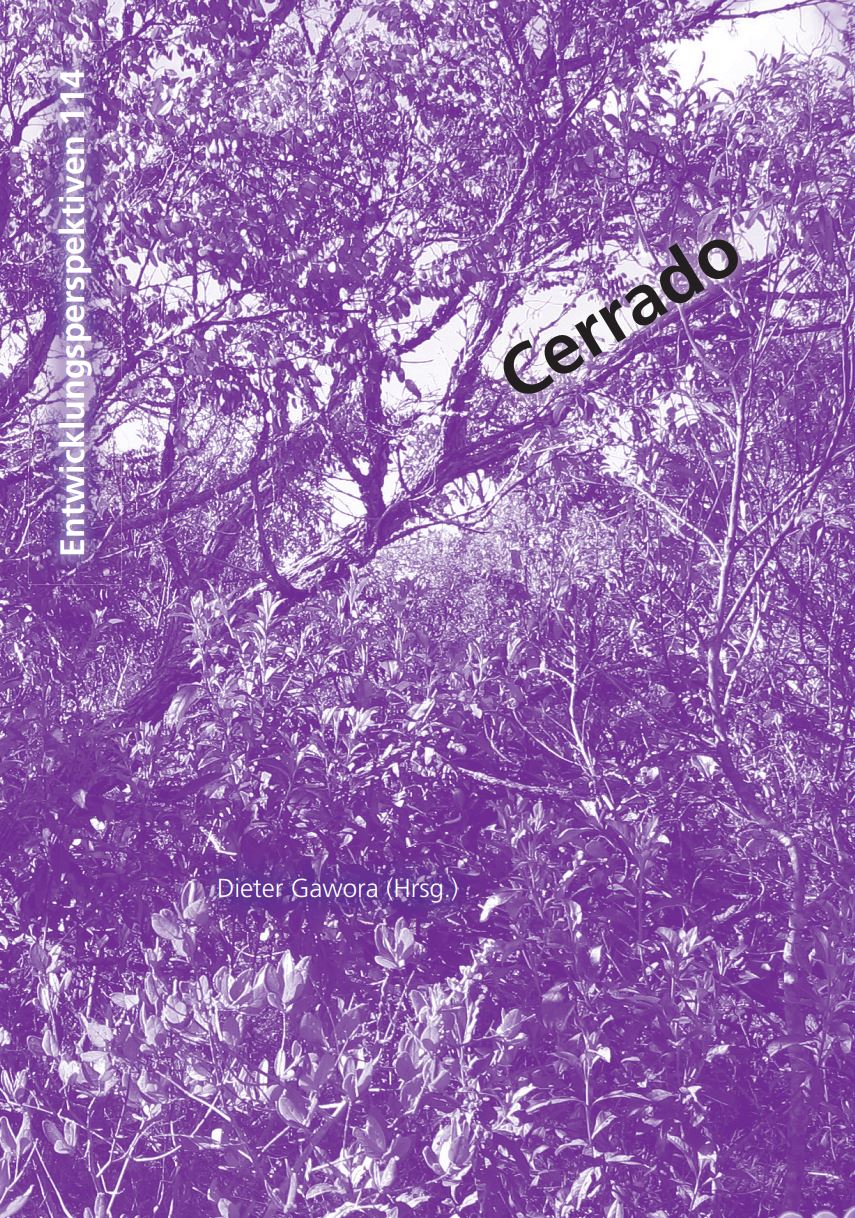
For the first time in German-speaking countries, there was a "Cerrado Day" in November 2021. The publication of this conference is now being published by "kassel university press".
This book aims to initiate nothing less than a broad scientific, political and social debate in German-speaking countries about the Brazilian Cerrado.
The Cerrado is the most species-rich savannah in the world with a very high level of biodiversity and is around five times the size of Germany. Its importance is beyond question in the ecological sciences. The Cerrado is also a habitat and economic area for many traditional peoples and communities, whose importance is gaining increasing attention in the social sciences. Both areas of diversity are interlinked and both areas are under threat in the Cerrado, more so than in other regions. The levels of diversity are opposed by national and international economic interests, which have degraded the Cerrado to a central region of exploitation in Brazil. This social and ecological destruction has been largely ignored for decades, both at home and abroad, and has also met with tacit political acceptance.
The result is that around half of the Cerrado's natural vegetation has been destroyed and that the traditional peoples and communities with their sustainable ways of life and farming on the remaining areas are increasingly under threat due to persistently high deforestation rates.
Unlike tropical rainforests, the Cerrado has not yet received any international attention.
This book aims to help counteract this dynamic of destruction, which continues unabated to this day and is no longer acceptable for many reasons. In eleven contributions, 16 authors from various scientific disciplines and traditional communities explain this important but largely unknown region of the world from different perspectives.
The German-speaking authors Anna Abrahão, Ana Carolina Brugnera, Thomas Fatheuer, Klemens Laschefski and the editor Dieter Gawora will jointly present the book. The book launch will be moderated by Carolin Holtkamp from the University of Innsbruck.
Cerrado
Dieter Gawora (ed.)
Development Perspectives 114
kassel university press, Kassel 2022
196 p., 21,00 €