
This page contains automatically translated content.
"Standortbestimmung": A Change of Perspective
After a long period of major shifts marked by budget cuts and structural changes, the University of Kassel is looking ahead with its “Standortbestimmung” series. On June 22 around 50 students, staff members, and faculty gathered at UNI:Lokal for the kickoff event: The focus was on the question of what defines the university’s history today and what stories it would like to tell in the future.
The first part of the event was designed as a participatory workshop. Participants discussed the values, experiences, and unique aspects they associate with the University of Kassel, as well as the visions for the future that should shape its continued development.
The discussions were accompanied by a professional improvisational theater group. The group took up the discussions and distilled the central ideas and perspectives into an artistic interpretation during the second part of the event. In this way, the results of the assessment were reflected upon in a creative manner and brought to life for the audience.
The University of Kassel Today: Open, Adaptable, and Socially Relevant
Participants described the history of the University of Kassel as a story of diversity, interdisciplinarity, and change, driven by the people who study, conduct research, and work here. At the same time, the university’s role as a pioneer in the field of sustainability — which has significantly strengthened its profile in recent years — was highlighted.
Many contributions referred to the university’s roots as a reform university. Characteristics such as accessibility and openness to new approaches stem from this to this day. The university is perceived as approachable: it opens its doors to people from diverse backgrounds and educational paths. The term “community” came up frequently. Participants experience the university as a strong community and emphasize its role in urban society and the region. Furthermore, the close connection between academia and practice was cited as a defining feature.
The University of Kassel Tomorrow: Sustainable, Visible, and Connected
Looking to the future, participants hope that the University of Kassel will showcase its unique strengths even more clearly and confidently. This includes, in particular, its research achievements and its contribution to society.
Sustainability should remain a central defining feature: Participants view the university as a place that not only supports societal change through research but also actively helps shape it. The university’s societal impact should become more visible in the region and in the city of Kassel.
Other visions for the future emphasize the University of Kassel as an open, diverse, and inclusive community that brings together people from different backgrounds and educational paths, combats discrimination, and shares knowledge in an interdisciplinary, transdisciplinary, and international manner. To foster a sense of community at the university, participants expressed a desire for stronger networking within the university. The campus should be perceived as a place of exchange and encounter.
Graphic Recording
In addition to the improvisational theater, the event was accompanied by an artist who graphically documented the discussions and their artistic interpretation. We present Jiaqi Hou’s work in the gallery below.
Stay tuned!
The “Standortbestimmung” series will continue in the winter semester of 2026/2027. Information on participation and further reports will follow across all of the university’s channels.
Graphic Recording. Author: Jiaqi Hou
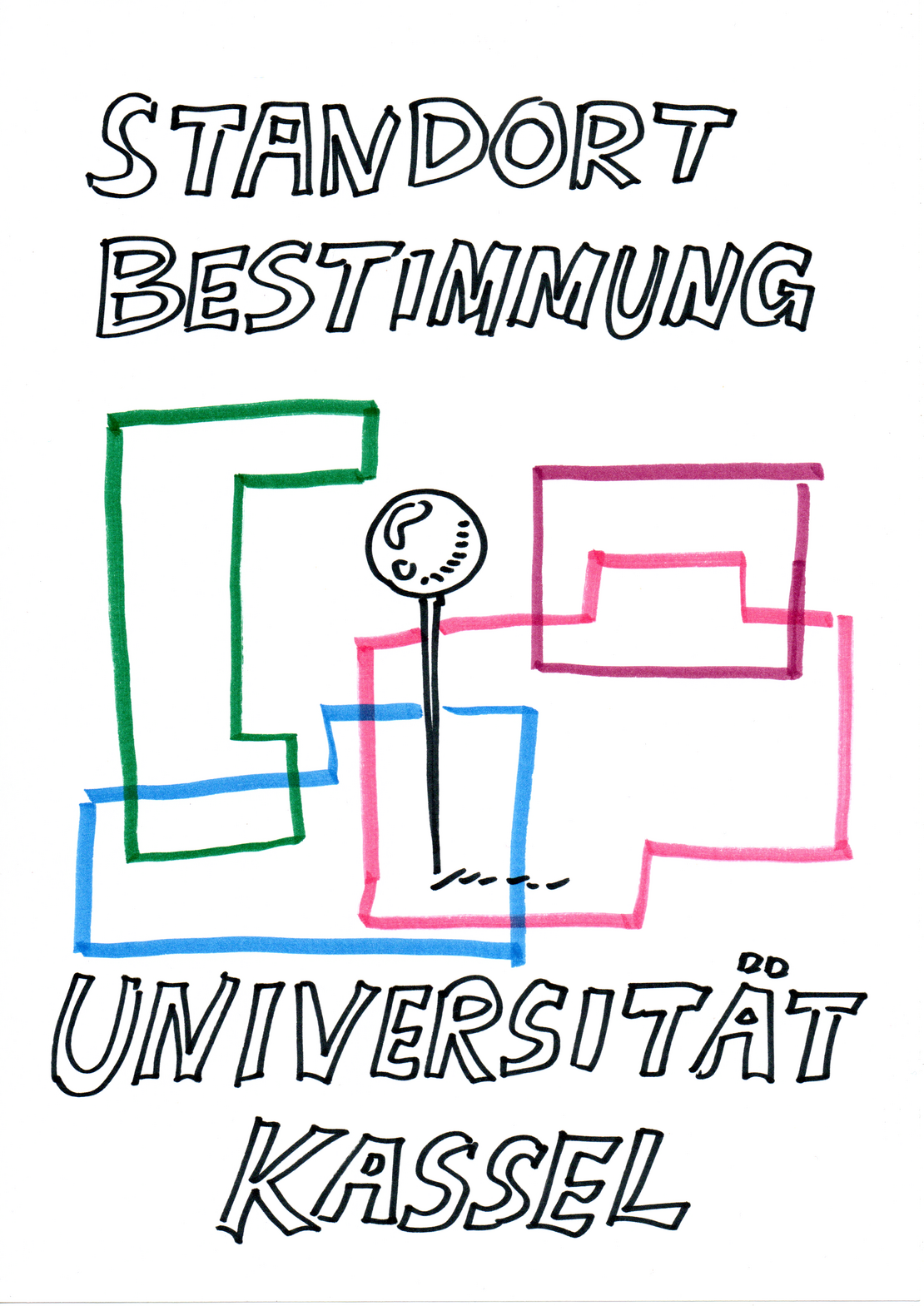
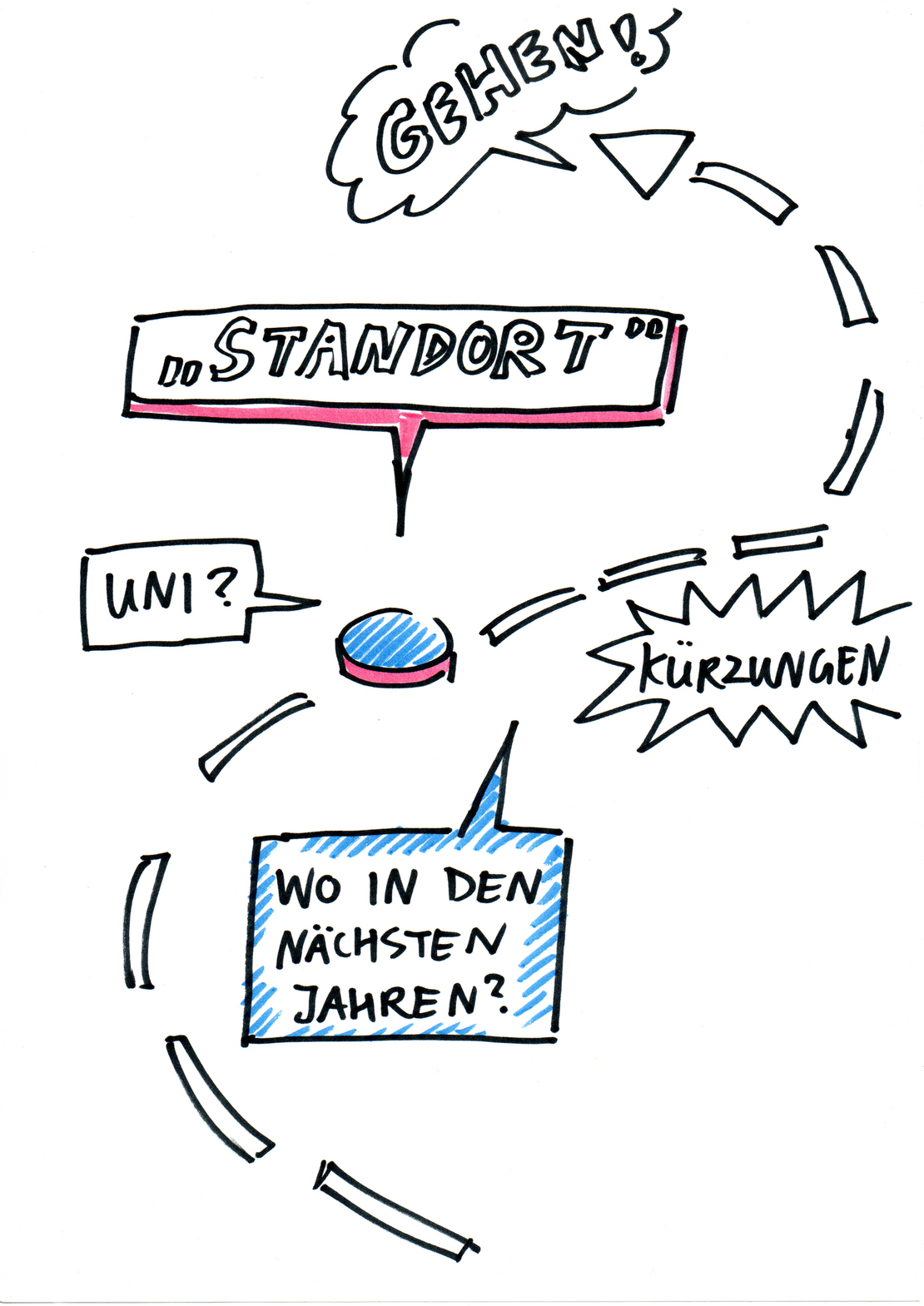
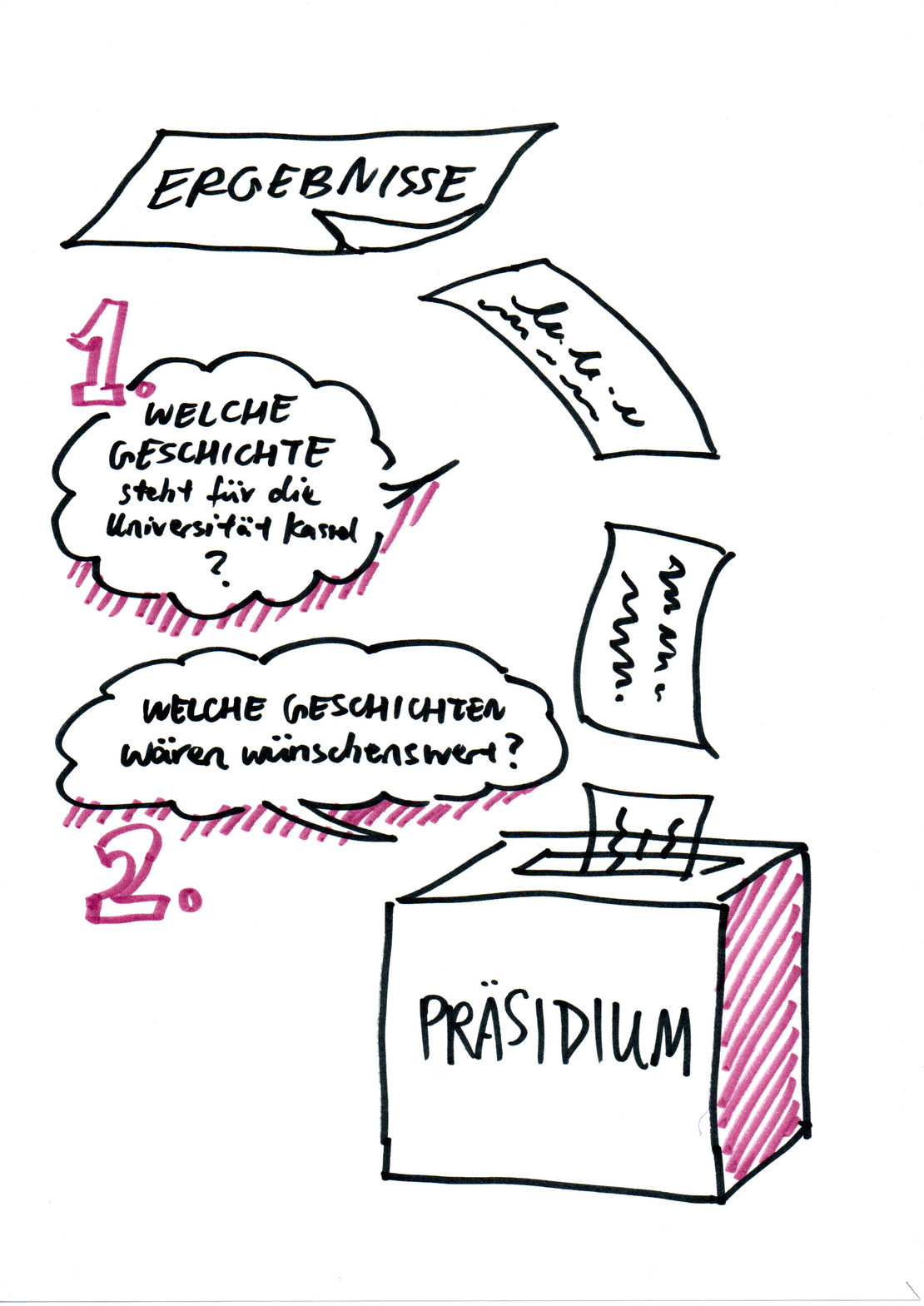
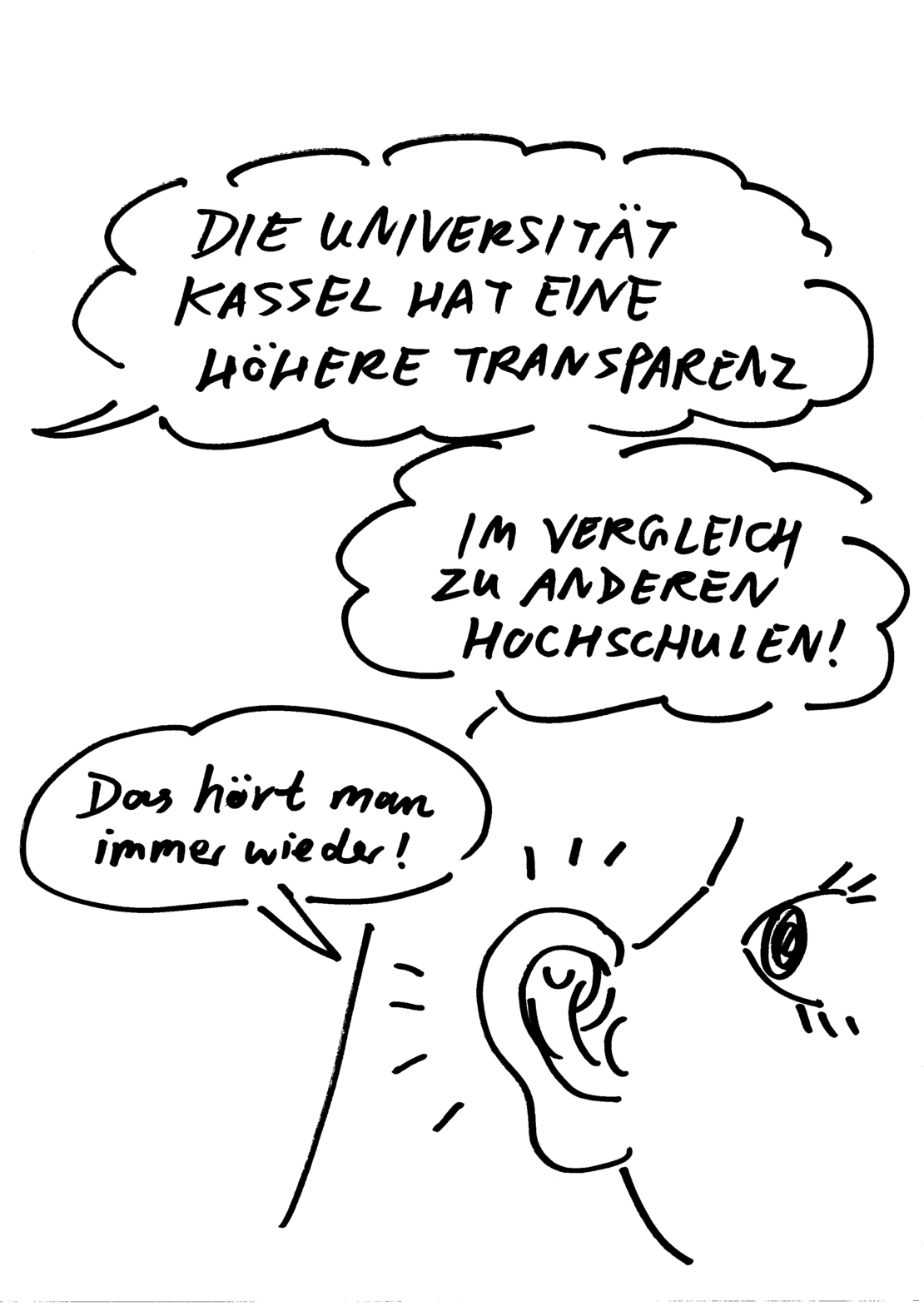
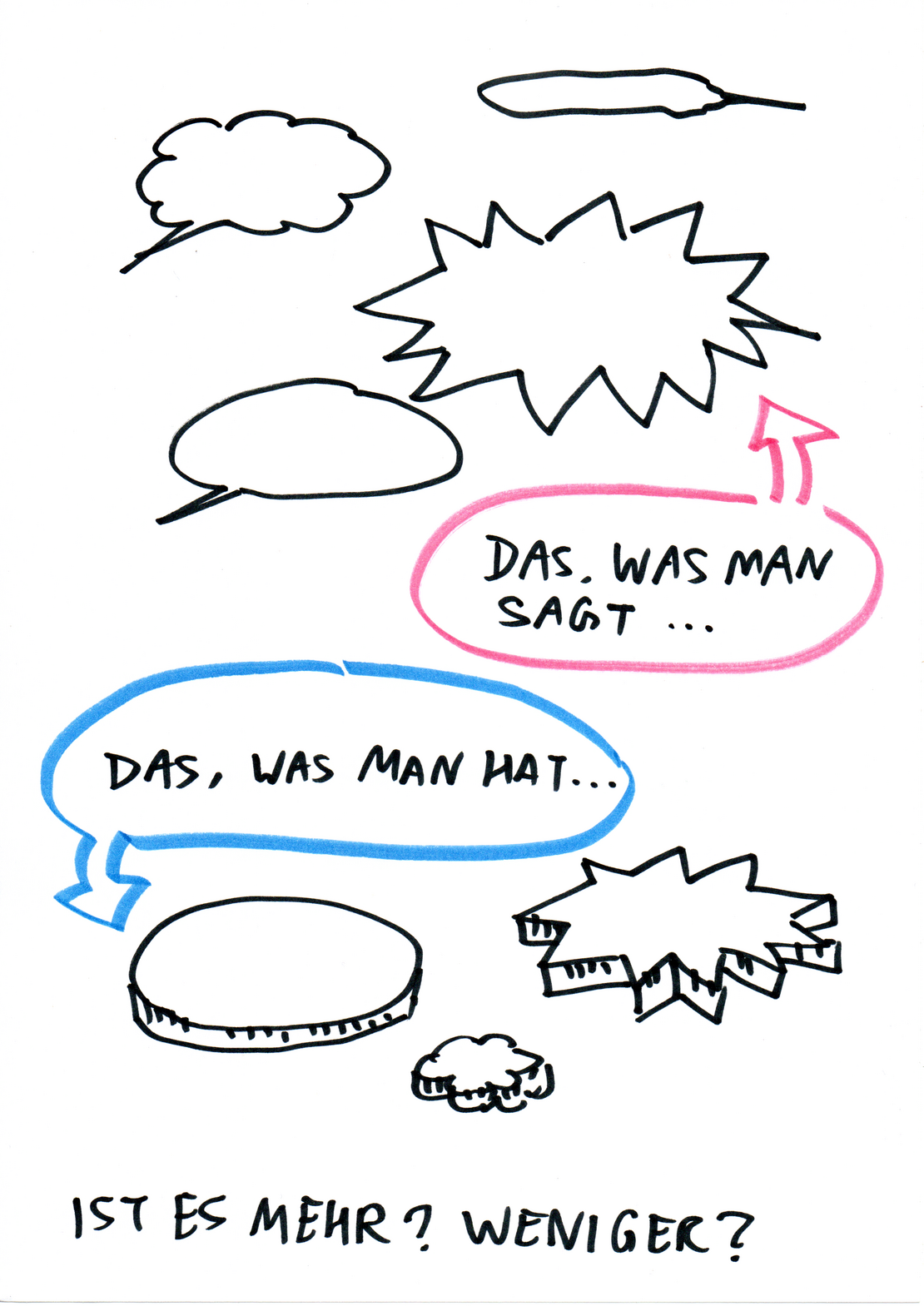
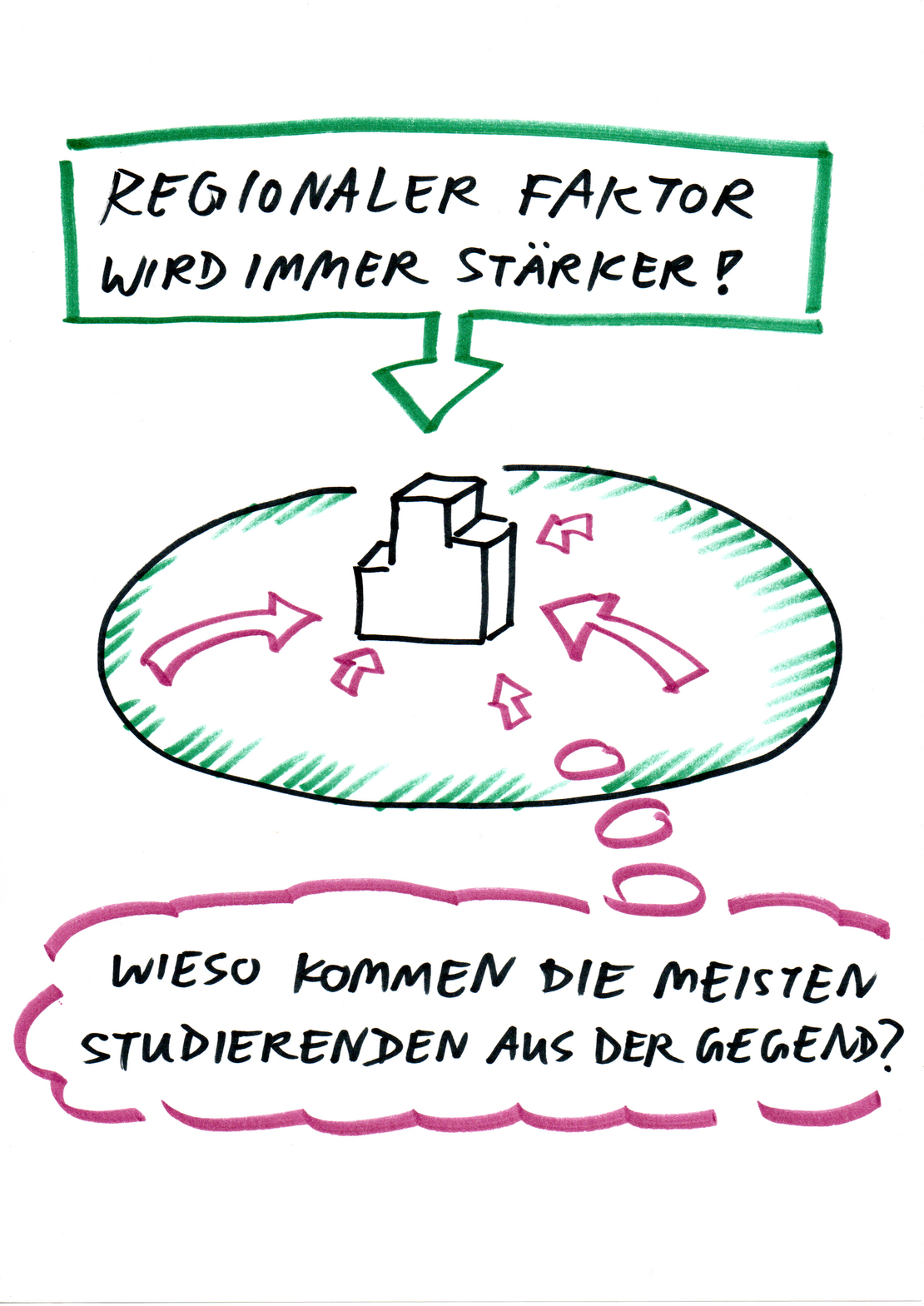
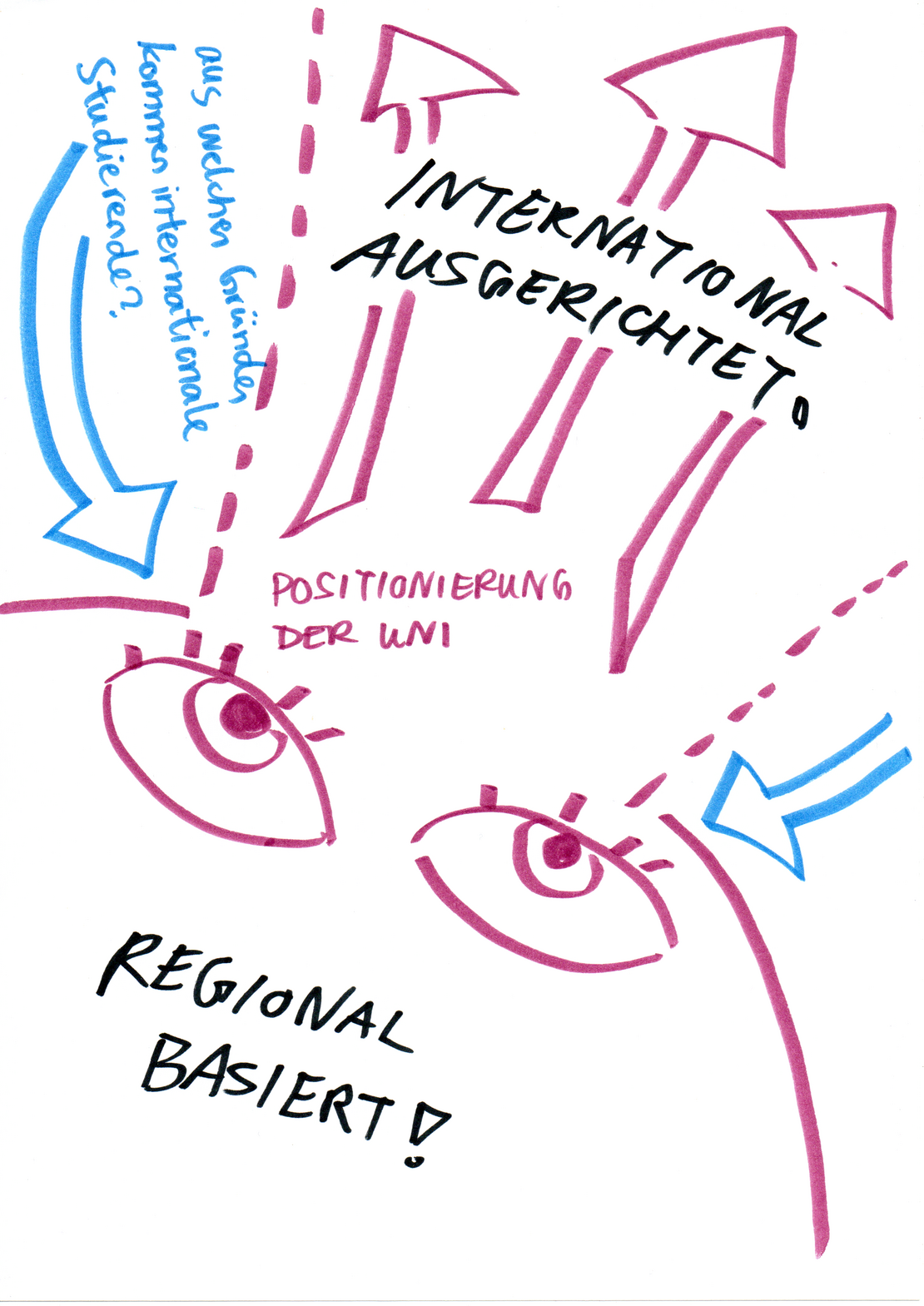
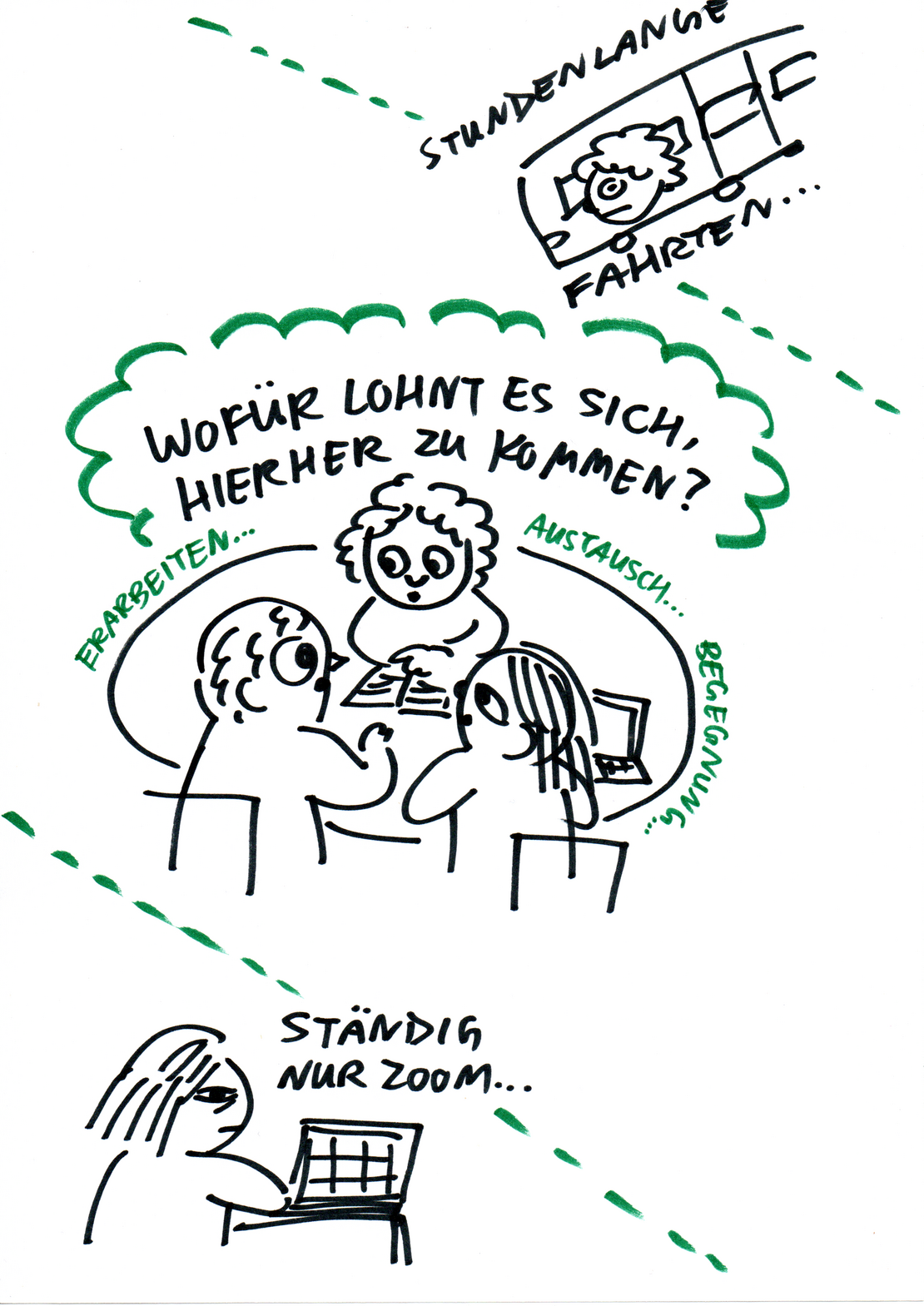

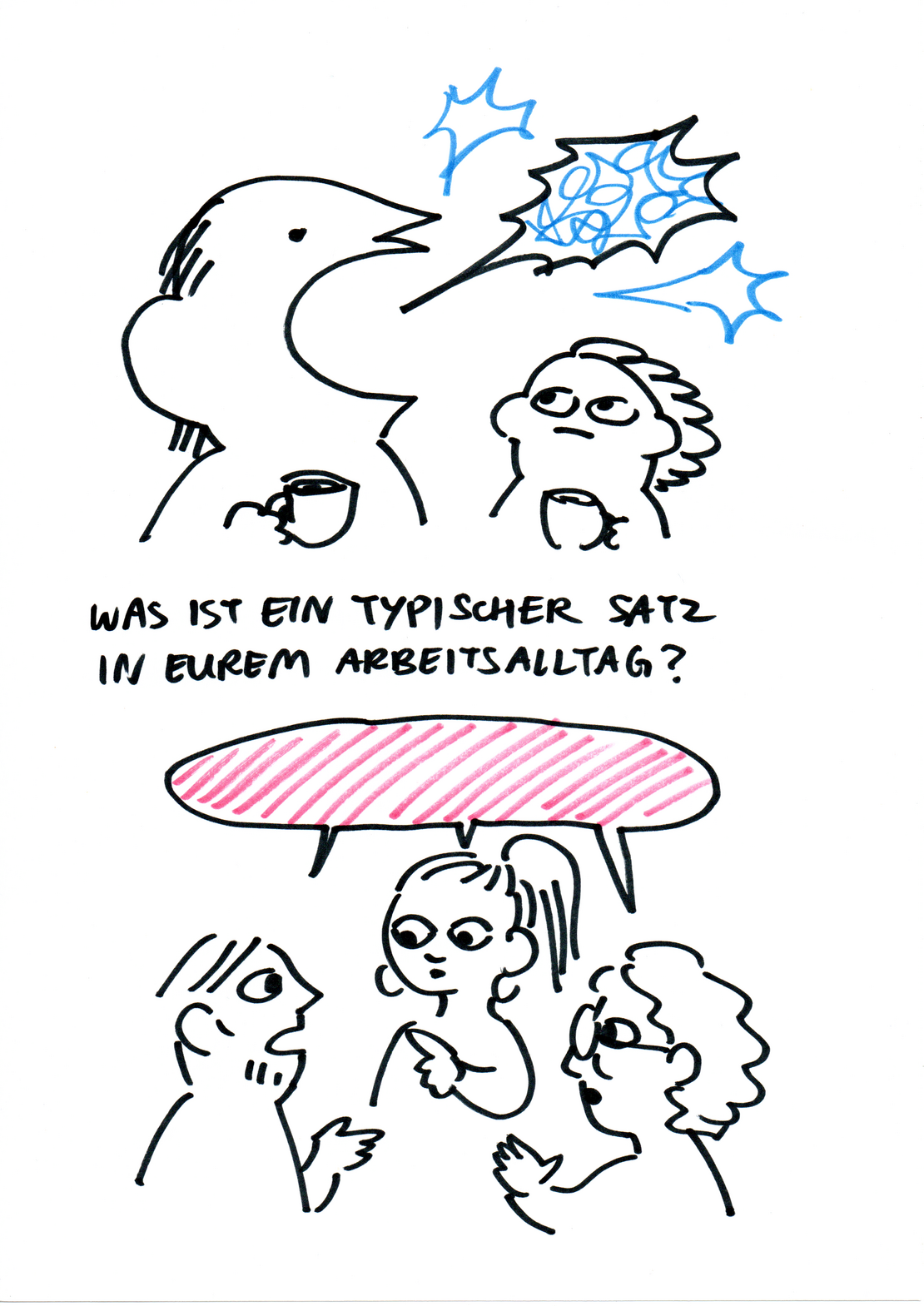
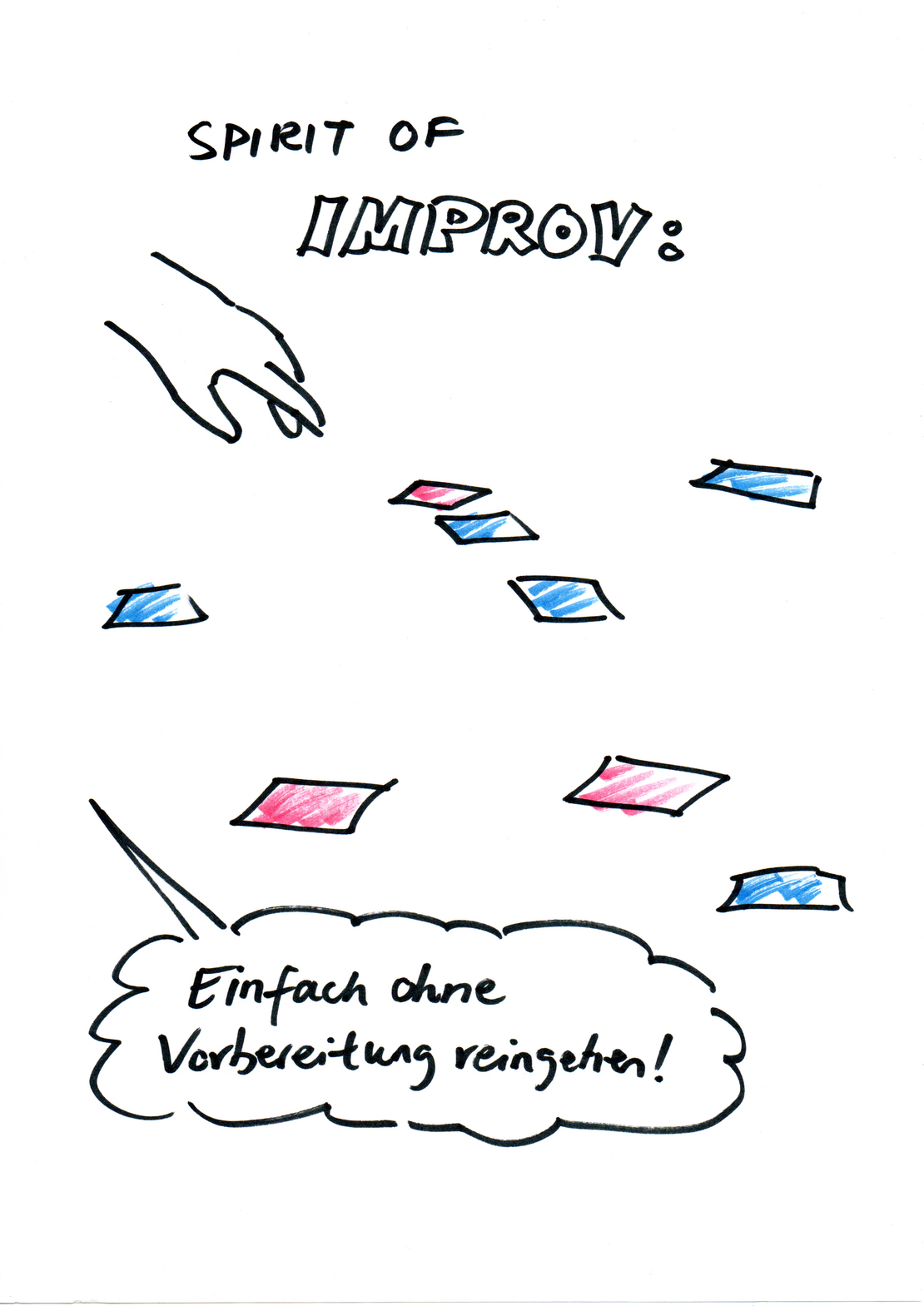
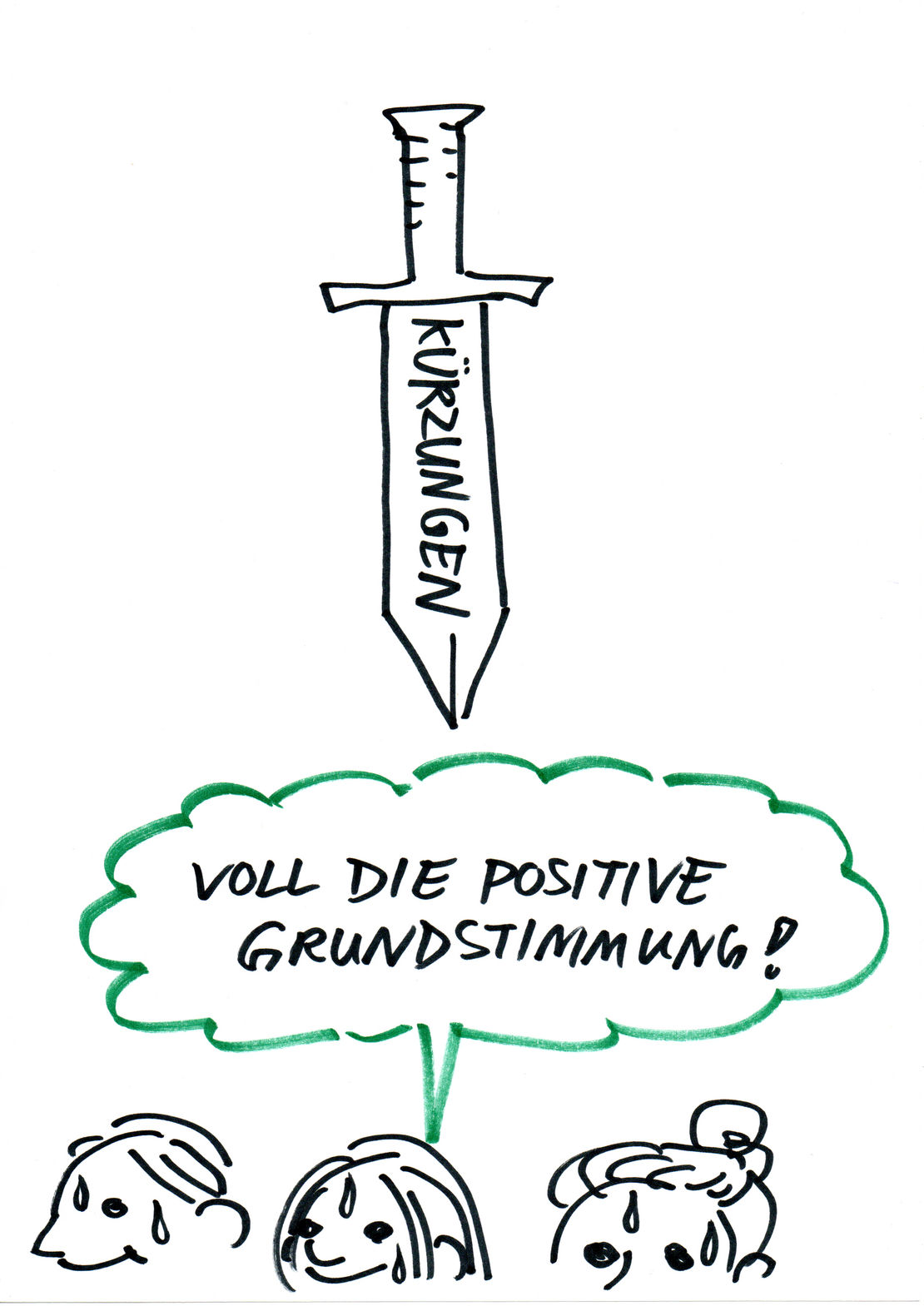
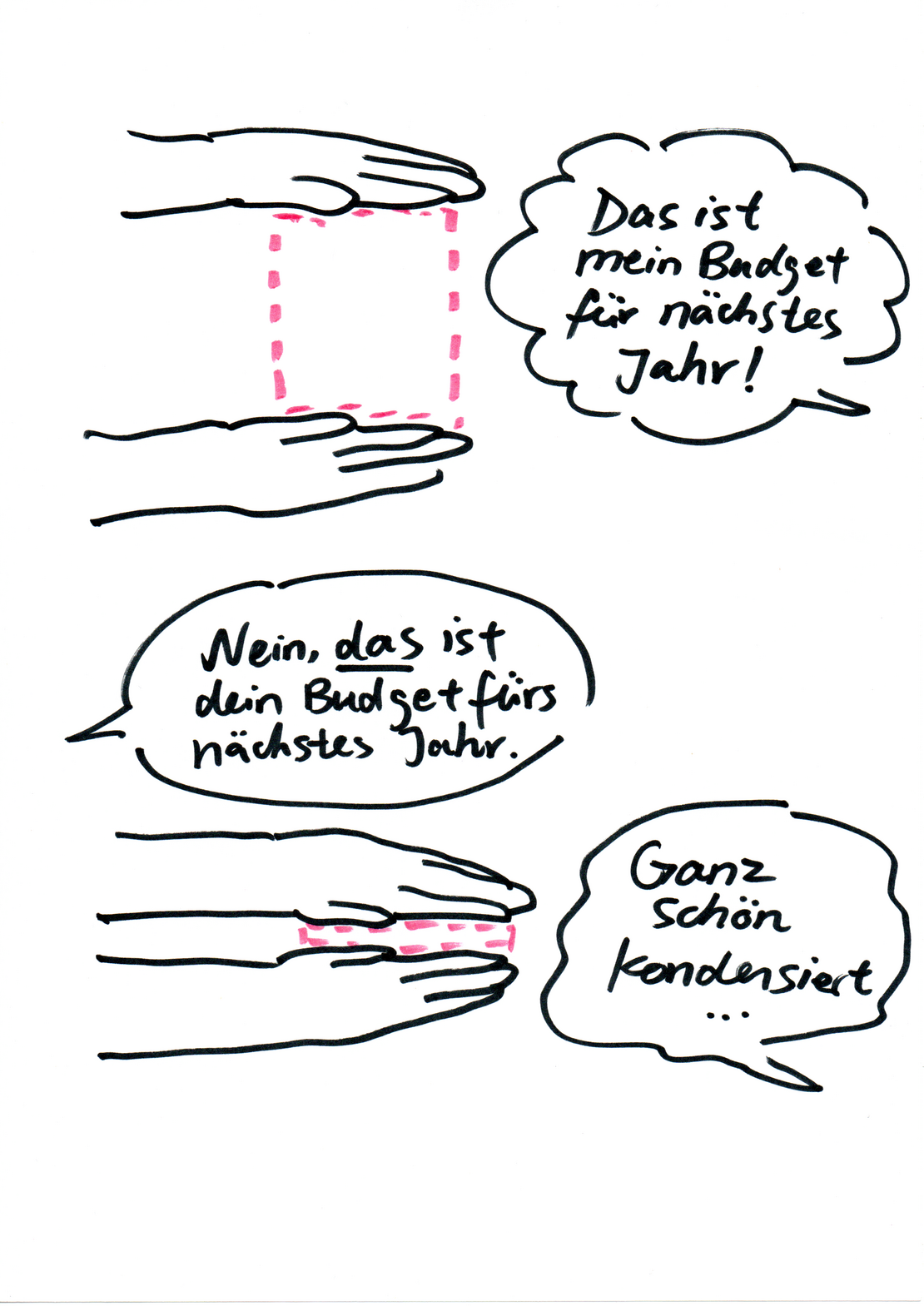
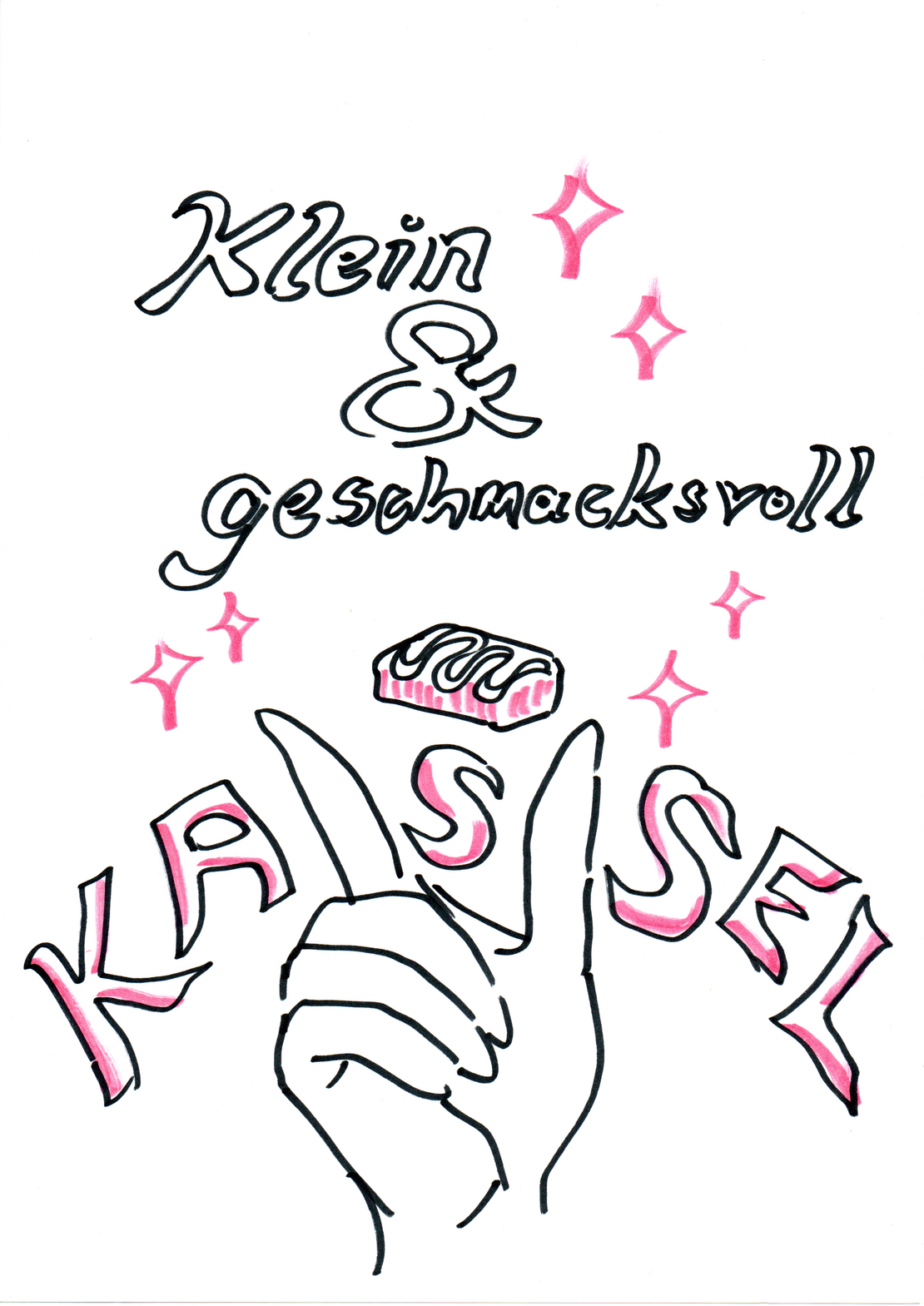
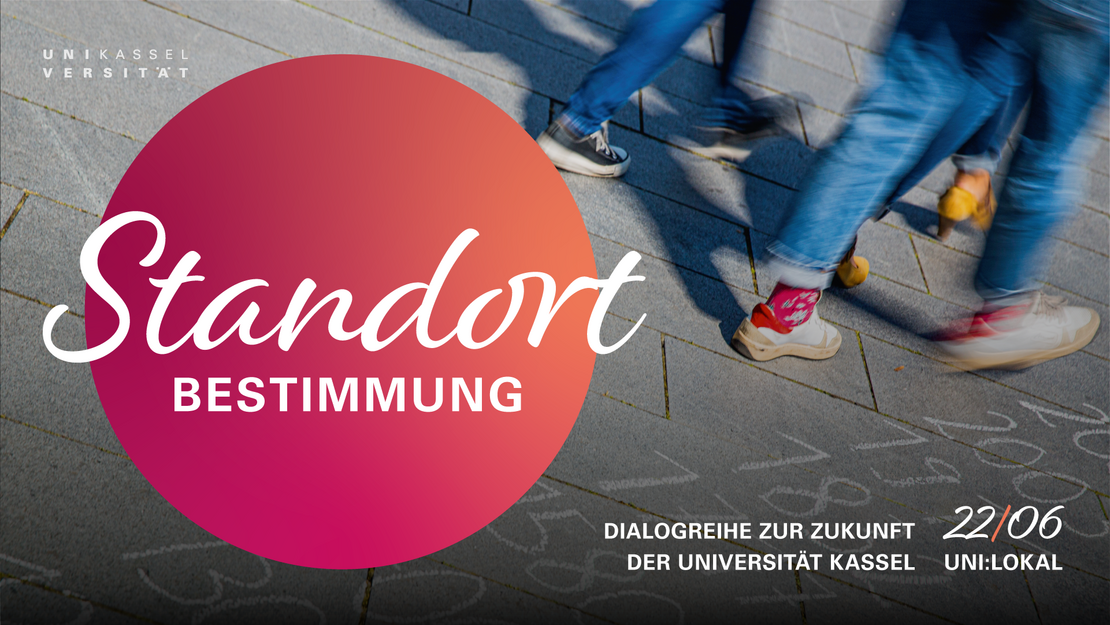 Image: University of Kassel