
This page contains automatically translated content.
More Targeted Water Protection: Measurement Method Developed in Kassel Detects Hidden Pollutants
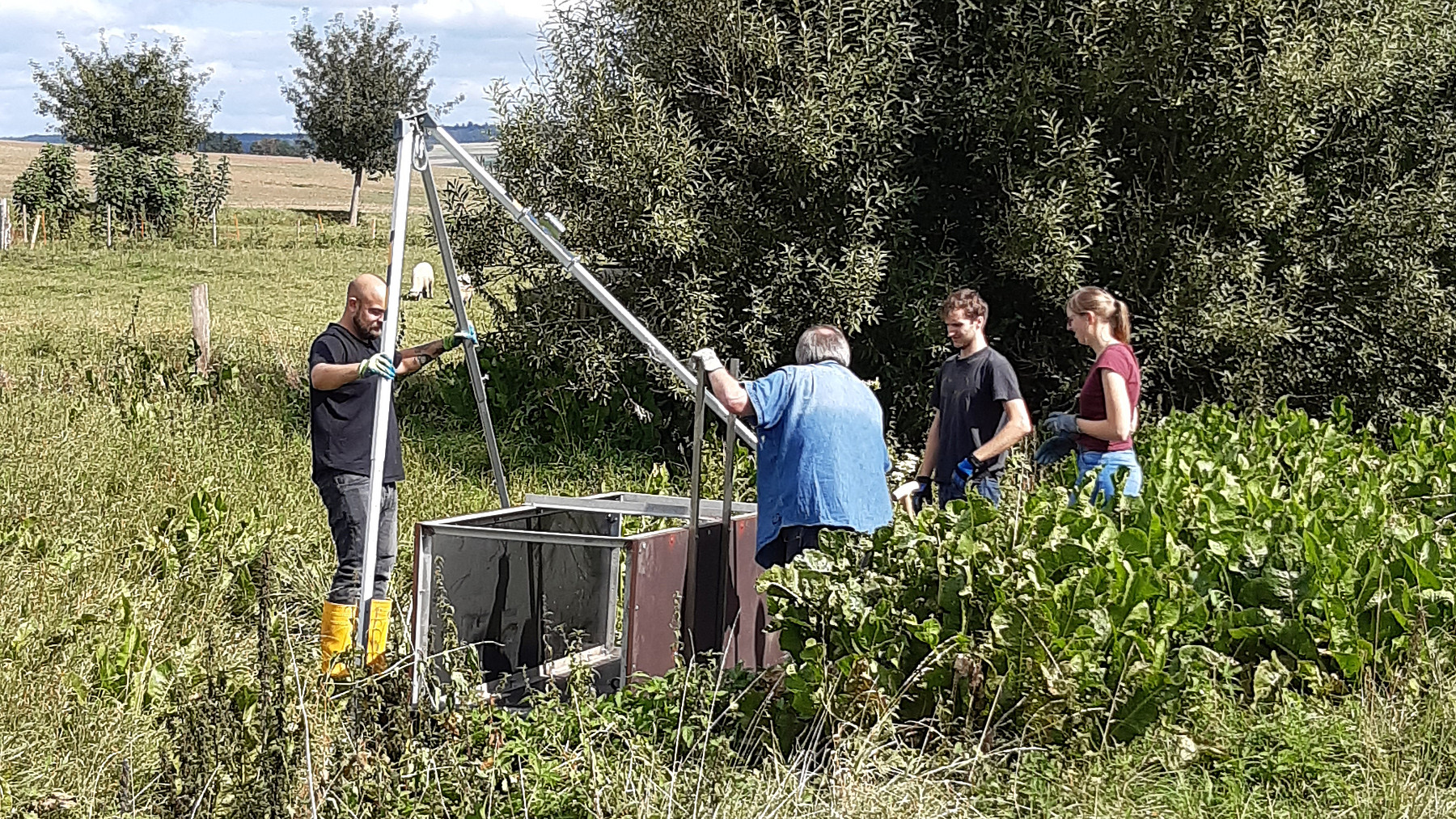
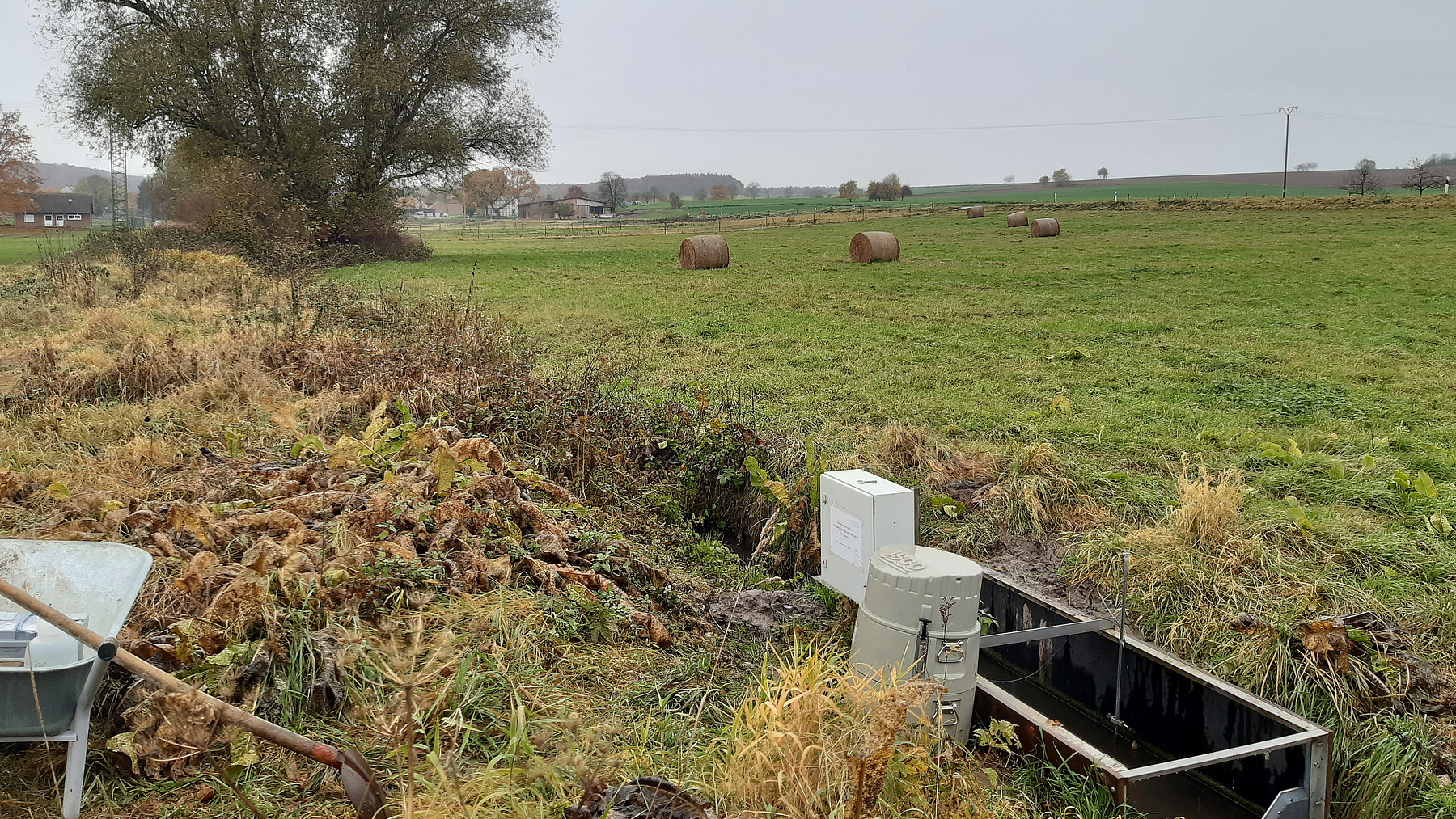
How do nutrients such as nitrate and phosphorus behave in streams during rainfall? A study by the University of Kassel shows that conventional measurement methods overlook key pollutant flows. Over a period of 18 months, researchers from Kassel studied an agriculturally dominated headwaters area in Germany’s low mountain ranges. Using natural tracers, they separated fresh rainwater from existing surface and groundwater and analyzed both components separately for nitrate, total phosphorus, and major ions.
The result: While the total water flow in the stream showed a nearly constant concentration of pollutants (coefficient of variation: 0.13), distinct flushing and dilution patterns emerged in the filtered rainwater (coefficient of variation: 0.36).
“Previous measurements simply masked these dynamics because all the water volumes mix in the stream,” explains lead author Lukas Ditzel, a doctoral student in the Department of Hydrology and Material Cycle at the University of Kassel. “The measurement results for the total water give the false impression of stable behavior, even though massive surges of pollutants are present in the fresh rainwater.”
Hidden Causes and Widespread Benefits
The measurements revealed unexpected similarities in the transport of nitrate and phosphorus. The researchers attribute these spikes in pollutants to the fact that heavy rain likely causes drainage pipes to open, releasing old reserves of these substances from the soil. When fresh rainwater is analyzed separately, transport pathways that were previously hidden become visible. This applies not only to fertilizers but also to pesticides, microplastics, and pharmaceutical residues.
The measurement method requires a comparatively small budget, uses only a few parameters, and can be flexibly adapted to different regions. “If water management agencies tailor their protective measures specifically to fresh rainwater rather than to the total water volume, this enables significantly more precise and cost-effective pollutant reduction,” Ditzel emphasizes.
To facilitate broader application, the scientists now recommend follow-up studies using datasets from different regions as well as measurement series with high temporal resolution.
About the Publication
The methodology for analyzing dissolved substances in small rivers was developed by lead author Lukas Ditzel as part of his dissertation at the Department of Hydrology and Material Cycle at the University of Kassel. Dr.-Ing. Caroline Spill and department head Prof. Dr. Matthias Gassmann also contributed to the research.
The study “Combining traditional nutrient load analysis with storm hydrograph separation reveals concealed patterns in event-driven nutrient export in a rural headwater catchment” is freely accessible in the journal *Hydrology and Earth System Sciences* at: hess.copernicus.orgarticles/30/4209/2026/hess-30-4209-2026.html
Contact:
Lukas Ditzel,
Department of Hydrology and Material Cycle,
Email: lukas.ditzel@uni-kassel.de
What does this mean in summary?
- The new measurement method distinguishes fresh rainwater from residual moisture in the stream, thereby making short-term, massive surges of pollutants visible in the first place.
- Thanks to the more precise data, environmental agencies can identify exact transport pathways—such as through drainage systems that suddenly become active—and initiate protective measures directly at the source.
- The method requires only a few measurement parameters, is cost-effective for water management agencies, and can be flexibly adapted to other regions.