
This page contains automatically translated content.
More Than Just Efficiency: AI Meets Social and Recreational Needs in the Workplace
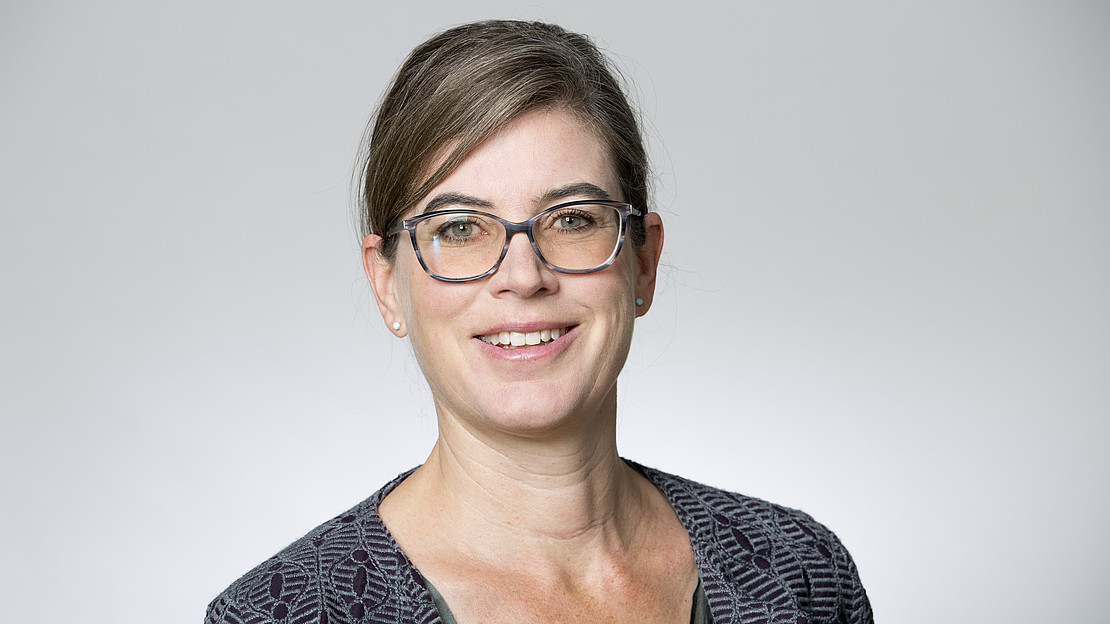 Image: Sonja Rode.
Until now, research has mostly focused on how frequently AI is used or how instructions—known as prompts—are formulated. A team led by Kassel-based business psychologist Prof. Dr. Sandra Ohly has now developed the scientific measurement tool “WHAI-w” (Why Humans Use GenAI at Work) and validated it using two German samples. The nine-part questionnaire specifically captures the psychological motivations behind AI use and provides managers and HR professionals with concrete practical guidance.
Three reasons drive AI adoption
For the study, the team surveyed employees in Germany who work with generative AI on a weekly basis. The analysis reveals three key motives. First, employees use AI in a very pragmatic way to complete tasks more quickly and solve problems efficiently. Second, the technology facilitates collaboration. Many employees use AI to phrase texts more sensitively, avoid misunderstandings in emails, and improve communication within the team. Finally, the joy of experimentation also plays a major role. A playful approach to AI sparks curiosity and brings variety to everyday office life.
Freedom to Experiment and Communication Boost Motivation
When AI is used as a tool for daily communication, employees rely on it significantly more often and consistently in their day-to-day work. This holds true regardless of the extent of their own AI knowledge. While the mere desire for greater speed in daily work fluctuates greatly, the desire for better collaboration remains stable over months. Furthermore, all three motivations are linked to higher motivation and engagement at work.
“Anyone who views AI in companies solely as a means to boost performance overlooks its greatest potential,” explains Ohly. “When employees use AI to communicate more effectively, they are more likely to rely on it. This can lead to noticeable improvements within the team.”
About the study:
In addition to Ohly, the study involved Katharina Neufeld, a researcher from Kassel, as well as researchers from the University of Mainz and the Leibniz Institute for Resilience Research. The study is based on surveys of German employees (N = 355 and N = 162). The measurement method developed demonstrated high reliability and validity in the analyses.
Link to the publication: https://psycnet.apa.org/fulltext/2028-32442-001.html
Contact:
Prof. Dr. Sandra Ohly
, Department of Business Psychology
, Email: ohly[at]uni-kassel[dot]de
What does this mean in summary?
- In addition to efficiency, employees use generative AI at work primarily to improve team communication and for playful experimentation.
- The “WHAI-w” tool, developed by the University of Kassel, is the first to specifically capture the psychological motives behind AI use.
- Social aspects and a willingness to experiment firmly anchor AI in everyday work life and increase work engagement.