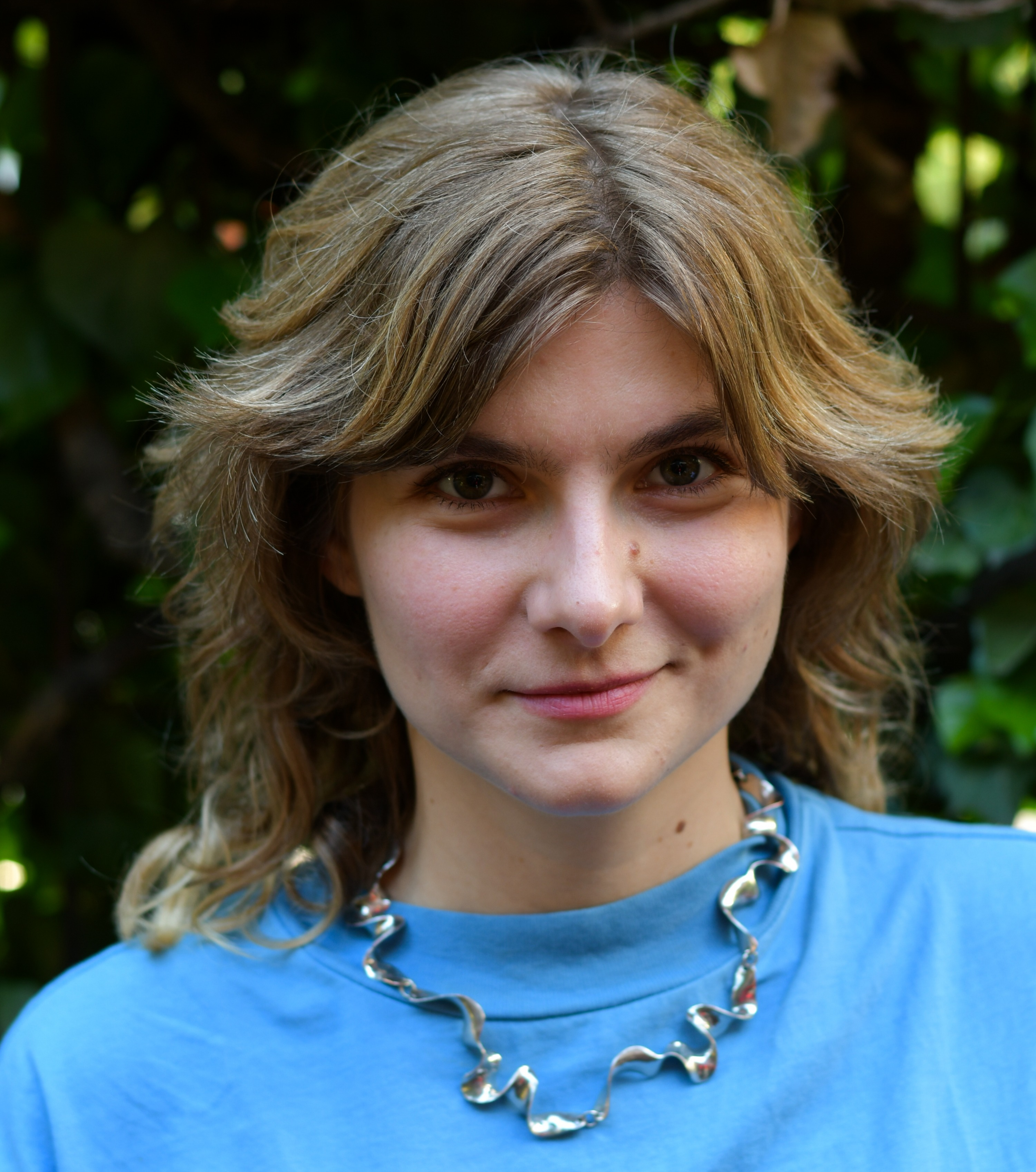
Alexandra Adamescu
I conduct research [...] not only on sustainability transformations, but also for(!) them.
Interview
What is your most important research project right now, and why?
I work as a research associate on the LEVER project. Here, I conduct transformative sustainability research. So I’m not just researching sustainability transformations—I’m also working toward them (!). In other words, I’m trying to drive the sustainability transformation forward. My case study focuses on a Bucharest district’s initiative—as part of the EU Mission Cities project—to become climate-neutral by 2030. To this end, I am developing system knowledge (knowledge of what is), future knowledge (knowledge of what could be), and transformation knowledge (how do I get from A to B?) together with the stakeholders. Using participatory and transdisciplinary methods, I am working with stakeholders in Bucharest to develop the research question, an understanding of the problem, and visions for the future.
What challenges do you face in your research?
Right now, I’m deeply engaged with the question of how to create inclusive systems knowledge. Through observation, interviews, and workshops, I’ve found that not everyone affected by the climate neutrality initiative has a say in the matter. In particular, marginalized groups such as Roma, migrants, or people with disabilities—as well as some citizens’ initiatives—are less involved. For this reason, I have started conducting interviews with other stakeholders who may not be directly involved in the transition but are affected by it. This is proving to be slower and more difficult than I had hoped. Nevertheless, I believe this is important work and will prove beneficial in later phases of the process.
What methods do you primarily use in your research?
I use methods from the social sciences and anthropology, such as interviews, participant observation, and autoethnography. In addition, I also employ participatory and transdisciplinary methods in which knowledge is created collaboratively with the participants, often in the form of a workshop. Examples of such methods can be found here on our website.