
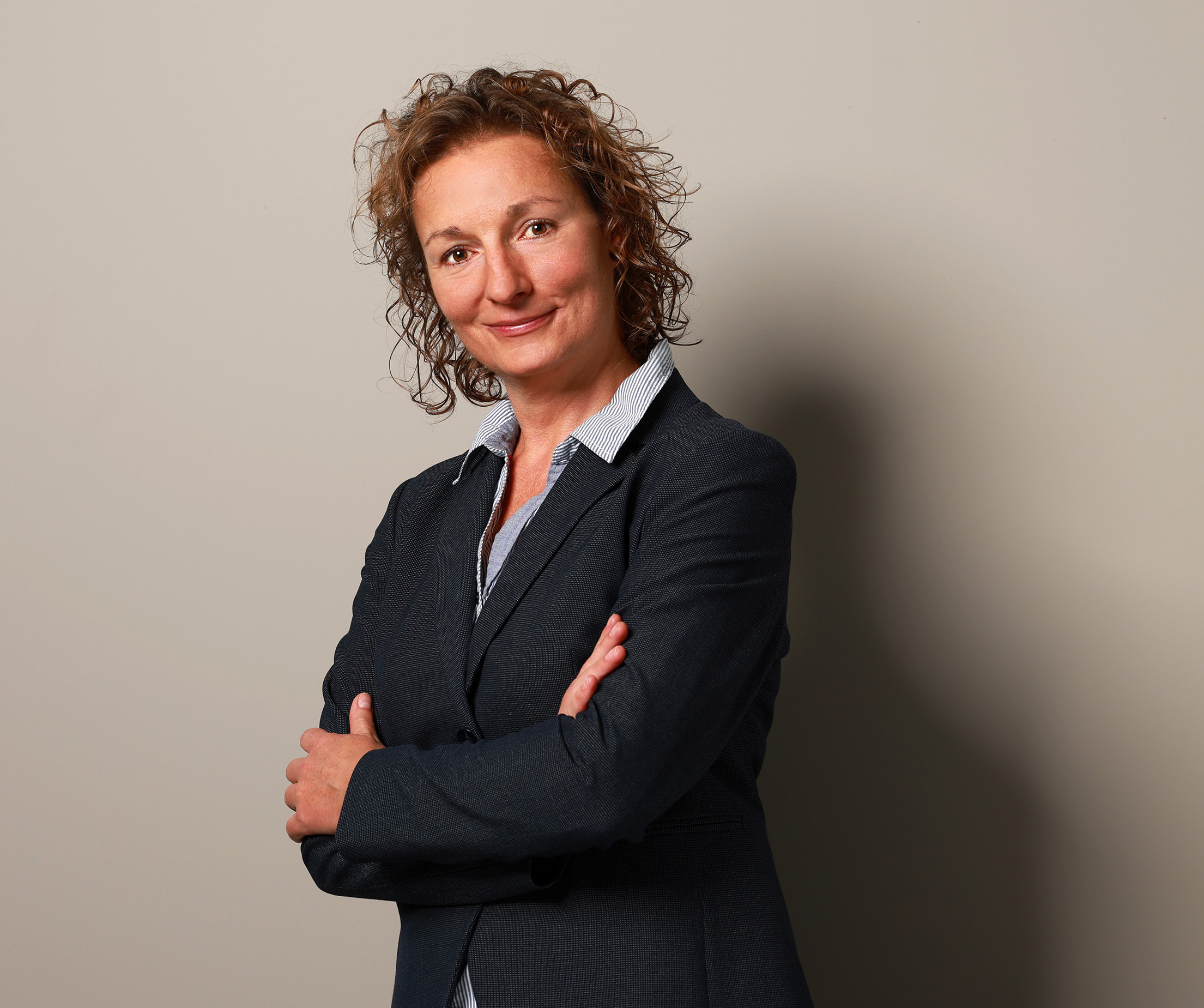
Prof. Dr. Kathrin Theissinger
As a conservation scientist, what particularly stands out to me about the sustainability research at the Kassel Institute for Sustainability is its interdisciplinary and transdisciplinary approach. The focus is not merely on the study of ecological systems, but on a comprehensive analysis of human–environment relationships. In this context, natural science perspectives are deliberately integrated with social science and systems analysis approaches.
Interview
What exactly is your field of research?
As a professor of Global Change Biology, I study biodiversity at many different levels—from molecules to individual species to entire species communities—to understand how freshwater ecosystems function under anthropogenic influences, such as climate change, habitat loss, pollution, or biological invasions. In collaboration with government agencies, conservation organizations, industry, and academia, I develop socially supported management solutions to promote public awareness and engagement in the protection of freshwater biodiversity. In my experimental conservation research, I use state-of-the-art molecular ecological and multi-omics methods (qPCR, metabarcoding, metagenomics, [sc]RNAseq, ddRADseq, genome [re]sequencing) to address questions regarding the management of these ecosystems and the protection of biodiversity. I conduct socio-ecological and action-oriented research and teaching with the aim of bridging the gap between science and society. In doing so, I aim to contribute to the necessary socio-ecological transformation of our society.
What specific questions or problems are you currently trying to solve?
I develop practical, socially supported management solutions for sustainable nature conservation. One of my goals is to identify socio-ecological drivers and patterns underlying the success and failure of wetland restoration projects. To this end, we are developing standardized integrated resilience indicators that can be applied across regions to create a comprehensive socio-ecological framework for defining restoration goals and evaluating the success of restoration initiatives. Furthermore, we are also developing and testing novel passive environmental DNA sampling methods for effective genomic biodiversity assessments in wetlands. In standing waters, turbidity often hinders standard active water filtration because particles clog the filters. My goal is to use this passive environmental DNA sampling method, based on citizen science, to develop early warning systems for the occurrence of invasive species.
In addition to my socio-ecological research and genomic biomonitoring, my research focuses on the field of ecoimmunology. This is an interdisciplinary field of research within the “One Health” framework that examines how environmental factors (such as biodiversity, climate, and nature) influence the function of the immune system in humans and wildlife by studying both disease resistance and health promotion, and by shedding light on the interactions between ecosystems and immune defense. This is precisely where my research comes in: The goal of my Heisenberg Program is to identify the key factors that could increase the resistance of crayfish to the invasive crayfish plague. Over the past few decades, the crayfish plague has eliminated a large portion of all naturally occurring crayfish populations across Europe, causing significant ecological and economic damage. I therefore aim to develop a vaccine against the crayfish plague pathogen that is administered to female breeding crayfish and then passed on to their offspring through transgenerational immune priming. Such a novel crayfish plague vaccine can increase the crayfish’s tolerance to the disease and thus protect valuable wild populations, marking a milestone for their conservation and management.
What is your most important research project right now, and why?
The results of my Heisenberg Project and the availability of a vaccination method against crayfish plague could be directly integrated into species conservation and restocking projects. Due to the risk of crayfish plague transmission by the widespread invasive American crayfish, only water bodies that are not connected to other surface waters have been selected for noble crayfish restocking efforts to date. Stocking with noble crayfish that are resistant to crayfish plague would protect newly established populations from the introduction of the pathogen A. astaci and also enable reintroduction into waters that are locally colonized by invasive crayfish species. Given the nearly widespread distribution of invasive crayfish, this applies to the vast majority of surface waters, underscoring the great importance of breeding crayfish resistant to crayfish plague for the long-term conservation of the species.
What characterizes sustainability research at the Kassel Institute for Sustainability?
For the sustainable protection of biodiversity, we need to reconnect people and nature, which is one of the biggest and most important challenges in modern nature conservation. This requires close cooperation across disciplines and is the reason why I am here now. For me as a nature conservation researcher, sustainability research at the Kassel Institute for Sustainability is characterized in particular by its inter- and transdisciplinary approach. The focus is not only on the investigation of ecological systems, but also on the comprehensive analysis of human-environment relationships. Natural science perspectives are specifically combined with social science and systems analysis approaches. A key focus is on socio-ecological transformation, i.e. the question of how social and economic systems can be changed so that they are ecologically sustainable in the long term.
The research is both normative-critical and solution-oriented: On the one hand, existing sustainability concepts are reflected upon in terms of justice, power relations and global inequalities, while on the other, concrete options for action are developed. The focus on global sustainability goals expands traditional nature conservation to include social, economic and political dimensions. Biodiversity is therefore not viewed in isolation, but in the context of issues such as food security or climate change.
It is also characterized by a holistic systems view that takes into account complex interactions in socio-ecological systems. Finally, research is strongly practice-oriented and aims to translate scientific findings into concrete transformation processes, for example through cooperation with political and social actors. From basic principles to application; from diagnostics to therapy; from disciplinary to transdisciplinary research - the breadth of my experimental sustainability research makes me, as a GCB professor, ideally suited to build a bridge between the KIS and the Institute of Biology, both in terms of research and teaching in the context of sustainability.