
Training as a farmer
This page contains automatically translated content.
Overview
What are you doing as part of your training to become a farmer at the University of Kassel?
Farmers—as you might expect—work primarily outdoors in the fresh air. This is meant literally, because they must be ready to go out in any season and in any weather to tend to the fields or the livestock. During your training as a farmer, you’ll learn to recognize the needs of plants and animals and to care for the fields or livestock accordingly. Of course, you’ll also need to keep business management in mind at all times to help a farm grow and ensure it remains financially stable throughout all seasons.
In crop farming, timing is everything: from tilling the soil to planting and tending the crops, all the way through to the fall harvest. In the winter, machinery is maintained and the harvest is sold—ensuring the farm is fully operational again by spring.
The animals are cared for at the Frankenhausen estate. These include dairy cows and their offspring, along with several breeding bulls and laying hens. The focus is on feeding, caring for, and raising the animals—and, of course, on producing goods such as milk and eggs. This also includes maintaining pastures and producing hay and silage.
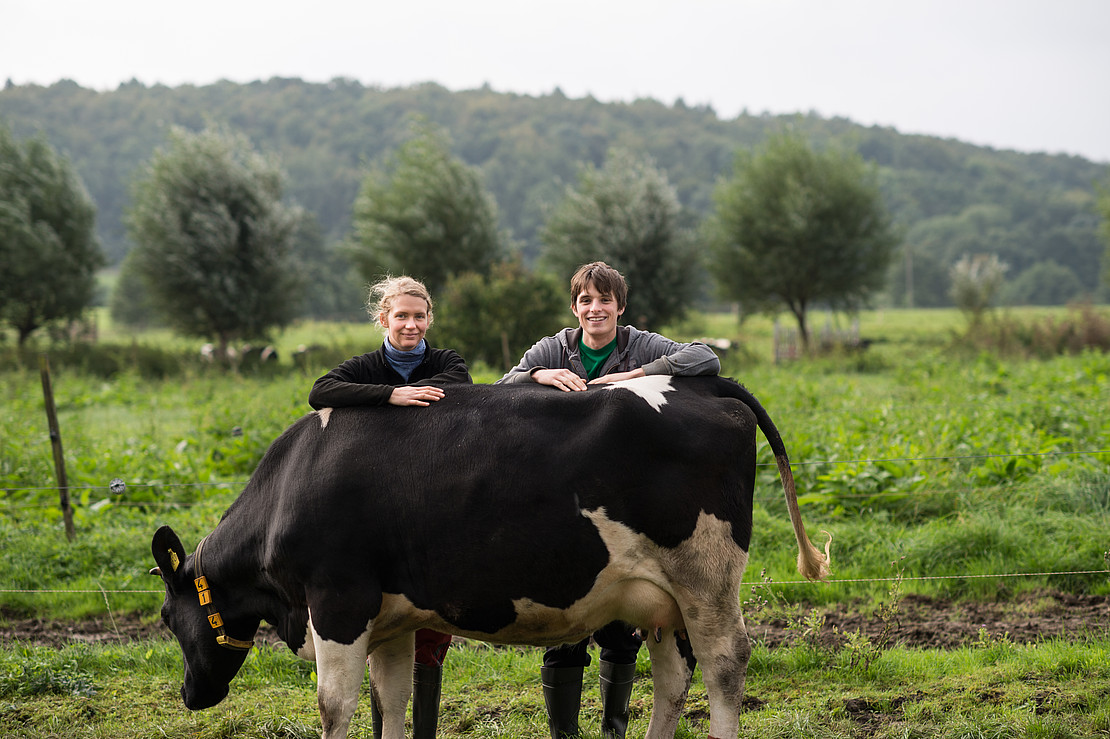 Image: Paavo Blåfield
At a Glance
How does the training program work?
This career is a good fit for you if ...
- you enjoy working outdoors
- physical work is right up your alley
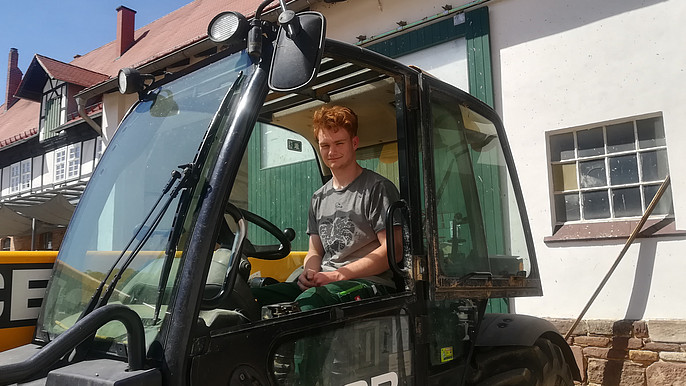
- you enjoy working with tractors and machinery
- You consider farmland and manure to be valuable natural resources
Here are the benefits for you
Salary based on the collective bargaining agreement (TVA-H BBiG)
30 days of vacation
Fixed working hours or flex time
Affordable membership in university sports (starting at €2.50/month)
Free public transportation throughout the state of Hesse
Free professional development courses & language classes
Meals at student rates: cafeteria, cafés
University education
Good opportunities for permanent employment and career advancement
Secure career prospects in the public sector
Frequently Asked Questions About Training
By the time the training program begins, you should have at least a secondary school diploma and a Class B driver's license. Ideally, you should also already have obtained a T license (tractor).
A monthly training stipend is paid in accordance with Section 8(1) of the Collective Bargaining Agreement for Trainees in the State of Hesse (TVA-H BBiG). This currently amounts to
- 1,356.85 EUR in the first year of training
- 1,411.43 EUR in the second year of training
- 1,461.51 EUR in the third year of training
The workweek is 40 hours. There are set working hours. In animal husbandry, employees are regularly required to work on weekends. In return, they receive compensatory days off the following week. In crop farming, there are peak periods around planting in the spring and harvesting in the fall, but things are quieter in the winter.
Upon completion of the training program, there is the possibility of an initial fixed-term position. If a position becomes available, a permanent position may also be considered.
Many farmers are also sought after at other farms and by agricultural contractors.
Apply now!
Contact
| Name, Forename | Contact | |
|---|---|---|
| Mittelstraß, Katharina Domäne Frankenhausen: Ausbildungsleitung Landwirt:in | Telephone +49 561 804-1414 |
Tips and Notes
Other Apprenticeship Programs at the University of Kassel
Go-Link of this page: hhttps://www.uni-kassel.de/go/ausbildung-landwirt