
This page contains automatically translated content.
The will is there, and so is the plastic waste
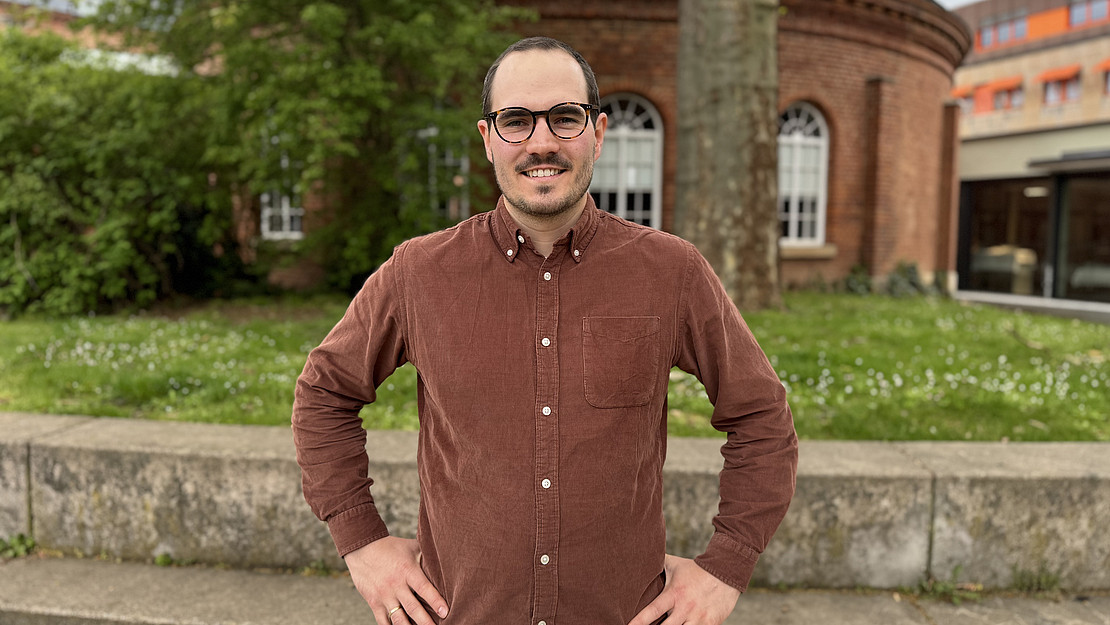 Image: University of Kassel.
Crime Scene: An Apartment Building—When Anonymity Makes Breaking Up Harder
For a large-scale study, Bachmann examined the trash from 181 households in three Kassel neighborhoods, including Wehlheiden, Nord-Holland, and the Vordere Westen. The results provide a sociological map of waste. Despite similar types of housing, the inner-city areas performed the worst in terms of waste separation. “Where the residential environment becomes more anonymous, discipline at the trash bin also seems to wane. Even a single improperly filled organic waste bin can render an entire batch unusable,” warns Bachmann. The study was a true team effort: While he analyzed the bin data, the Sustainable Marketing department provided the psychological context through in-depth interviews.
Social Control Instead of Appeals
Bachmann wanted to know whether behavior could be changed in the long term. In a field trial, he distributed recycling bins and paper bags, but the success was short-lived. As soon as the free materials ran out, people’s willingness to participate waned. His conclusion: Campaigns fizzle out without continuity.
What does work, however, is the visibility of one’s own actions. The city sanitation workers in Kassel rely on a two-step system here: If a bin is filled incorrectly, a yellow warning sticker is first affixed to it. If nothing changes, a red dot follows—the bin remains in place and is emptied as residual waste only at an additional cost. “Making misconduct so visible is one approach that seems to contribute to behavioral change,” says the researcher. This increases social pressure, especially in large residential complexes. When the observant couple on the ground floor keeps an eye on waste disposal, waste separation becomes a social corrective.
Bachmann applies this concept of social control to technology: one key solution could be lockable organic waste bins that are accessible only to households that comply with the rules. Such systems, which already exist to protect against raccoons or unauthorized dumping, could—if implemented on a widespread basis—permanently ensure the quality of collection and replace social control with a smart technical solution.
From the Backyard to the Lab
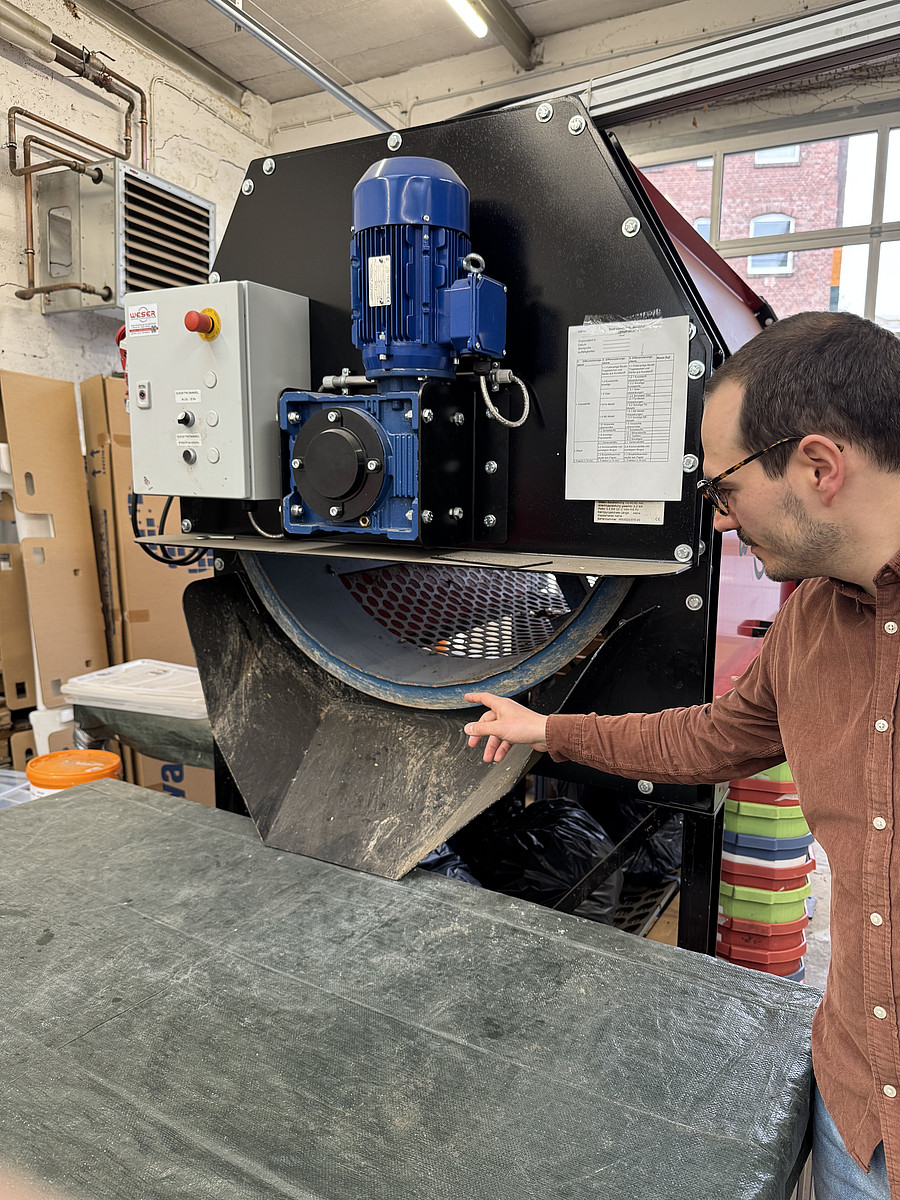
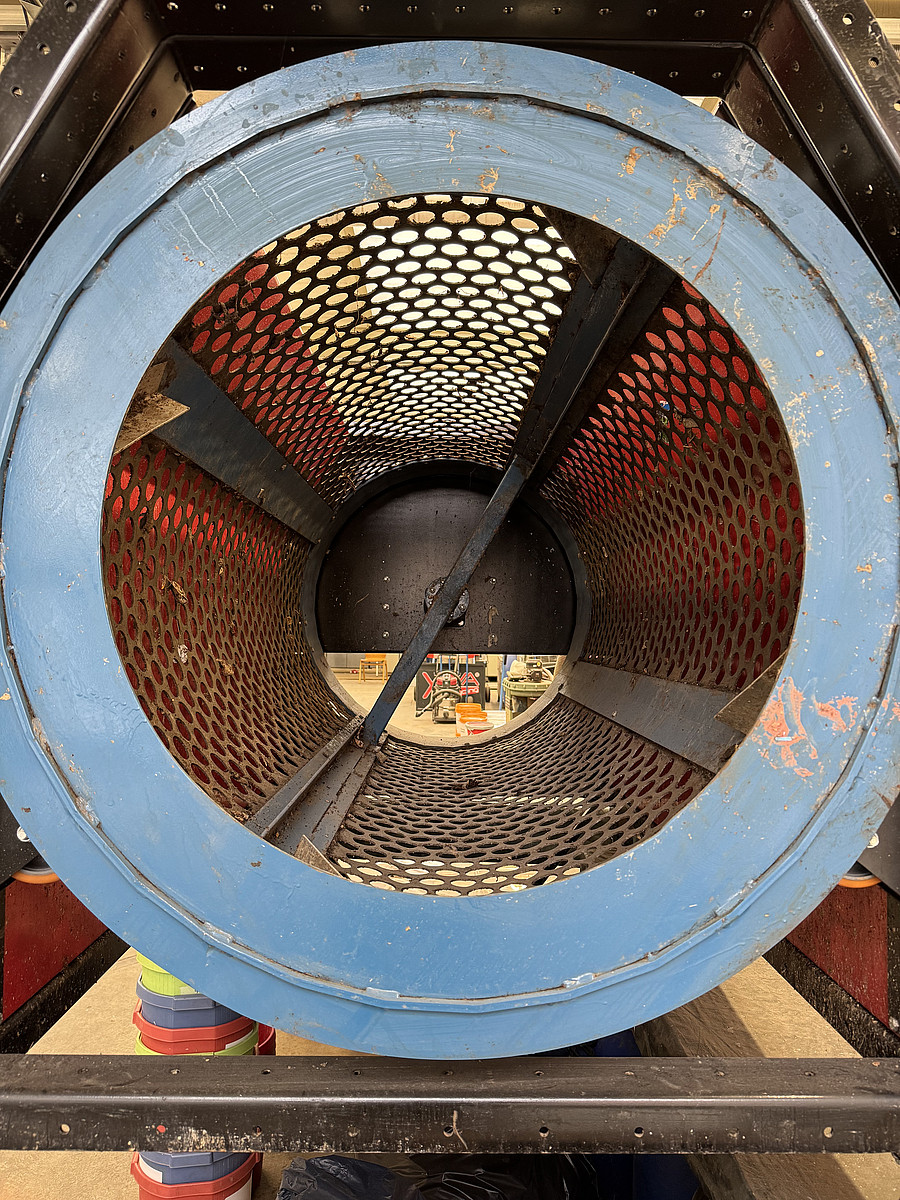
But why is this meticulous cleanliness in the trash can so crucial? “I’m not just interested in how we sort waste, but what happens to it afterward,” explains Bachmann. He is part of the “CirCles” graduate research training program, in which researchers from various disciplines are collaborating to investigate how new valuable materials—such as activated carbon—can be produced from organic waste. Bachmann’s work focuses on collecting organic waste with as few contaminants as possible and on the ecological and economic evaluation of subsequent recycling options.
After all, only organic waste that is as pure as possible can be put to high-value use, such as in activated carbon, which protects our waterways. It acts like a highly porous filter material: Through adsorption, even the smallest micropollutants—such as drug residues—adhere to the vast surface area of the carbon particles and are thus permanently removed from the water. Until its completion in August, Bachmann demonstrates that a circular economy requires both—people who sort their waste and technical solutions such as lockable organic waste bins, which use controlled access systems to prevent the disposal of foreign materials right at the bin’s location.
A fascination with what nobody wants
His interest in waste as a resource was sparked during an internship at the Witzenhausen Institute, where he worked directly at the sorting table conducting sorting analyses. “I was fascinated by all the things people throw away and why items end up in the organic waste that absolutely don’t belong there.”
Today, he draws on this experience to change the way people view waste. For him, one thing is clear: “What we throw into the organic waste bin doesn’t just disappear. It determines what can be made from it.” When waste separation works—supported by an optimized infrastructure—so-called waste is transformed into valuable compost or even activated carbon, which reduces the burden on our environment. In this way, the tedious trip to the trash can becomes a small but crucial contribution to a cycle that extends far beyond one’s own backyard.
This article will officially appear in the summer issue of the university magazine “publik” (2026/2) in July 2026. Text and photos: Bastian Puchmüller.