
This page contains automatically translated content.
Researchers call for strengthening the Natura 2000 network through a biocultural approach
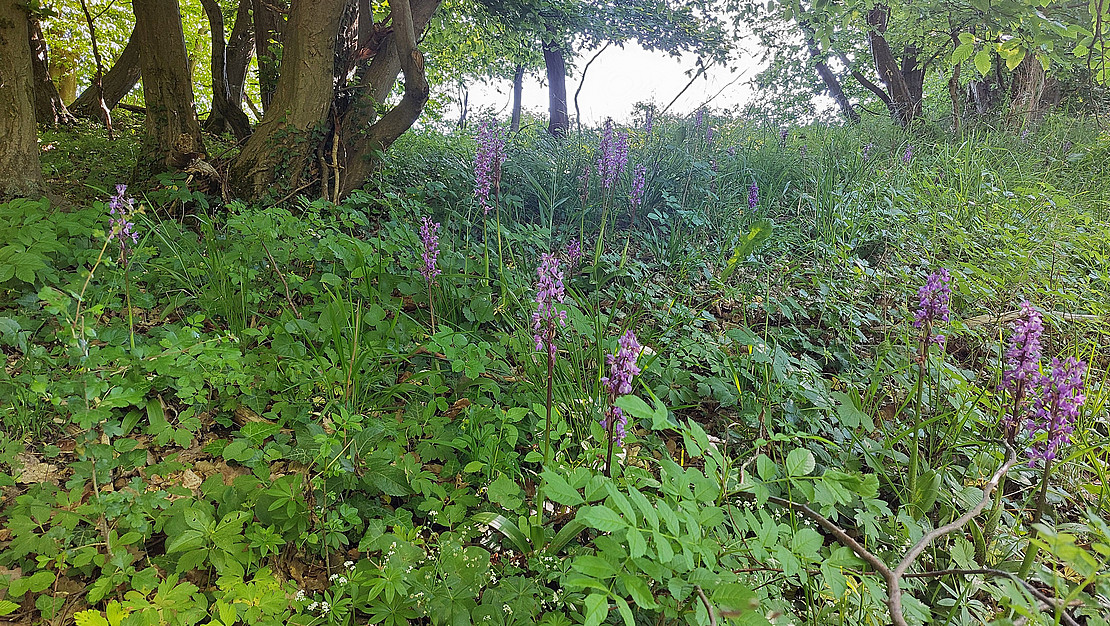 Image: Plieninger.
With the EU aiming to protect at least 30 percent of land and sea areas by 2030, this could contribute to the further development of the Natura 2000 network. In an article, the researchers present measures for thinking about natural and cultural landscapes together and involving people. It was published in the journal Conservation Letters.
The researchers highlight five fields of action in their article: the role of local people, the design of the protected area network, monitoring, financial support and research. Using case studies from Germany, Romania and Spain, they make it clear that many protected species are dependent on traditional practices of extensive land use. "Numerous habitats of European importance, such as orchard meadows and orchid-rich calcareous grasslands, have been created through centuries of agricultural use. They can only be preserved if the farming methods are continued," explains lead author Prof. Dr. Tobias Plieninger. A biocultural approach makes this interplay between land use and nature conservation usable for protected areas. It follows the principle that nature and culture are closely linked and influence each other in landscapes. Effective nature conservation is therefore only possible in cooperation with local people.
"The change in perspective does not require a fundamental change in nature conservation laws, but it does require a rethink in implementation," says co-author Dr. Marion Jay. For example, plans for the management of a protected area could be developed together with the local community and biocultural aspects could be incorporated into monitoring - such as people's ecological knowledge and the animal and plant species they use. Funding programs could also increasingly support cooperative and results-oriented nature conservation. Involving society is important, as Plieninger emphasizes: "If people see themselves as part of the landscape and take responsibility, this strengthens nature conservation in the long term."
Original publication: Plieninger, T.; Jay, M.; Hartel, T. Future-proofing Natura 2000 through a biocultural approach. Conservation Letters (2026). DOI:10.1111/con4.70038