
This page contains automatically translated content.
Sustainable shipping: Study shows great potential for reusable tubs in the book trade
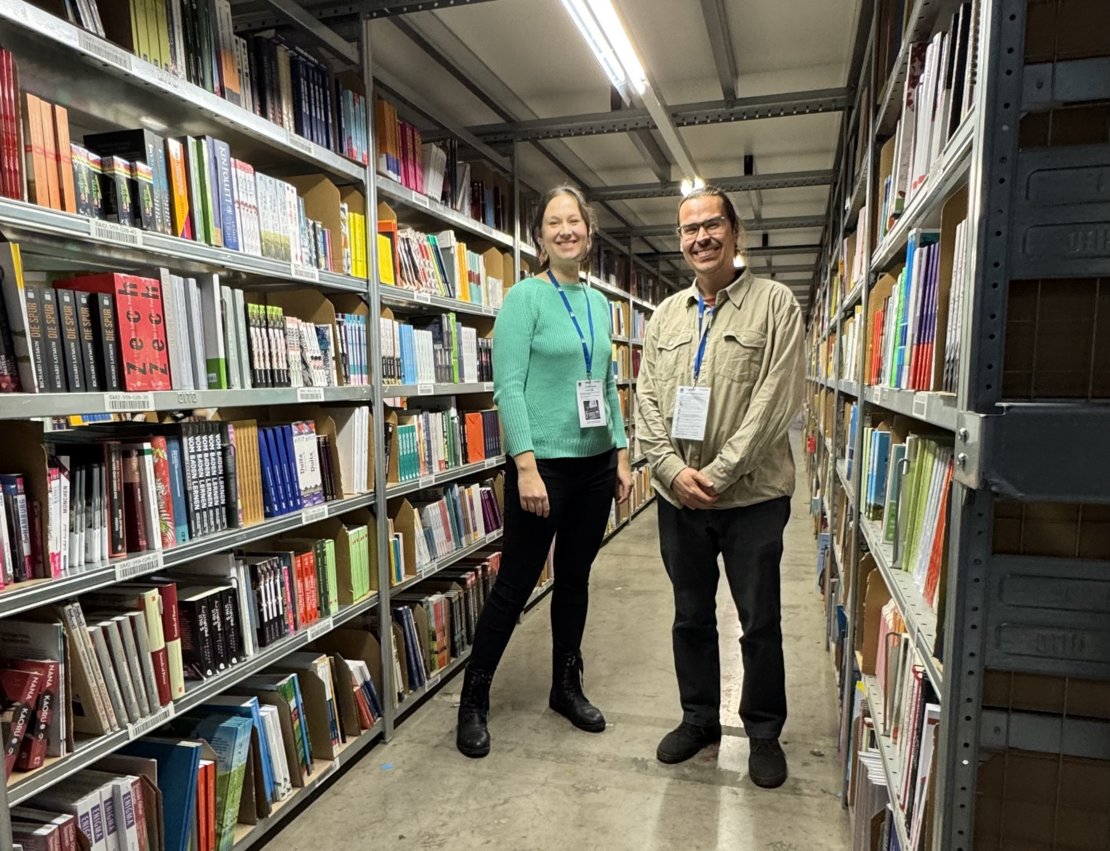 Image: University of Kassel
The study was initiated by the logistics research group of IG Nachhaltigkeit in the German Publishers and Booksellers Association. For the first time, the researchers systematically investigated the ecological and economic advantages and disadvantages of various packaging systems in the German intermediate book trade. The intermediate book trade acts as a logistical link between publishers and bookshops; although reusable plastic tubs are already being used here, they have not yet been used across the board and predominantly only within the intermediate book trade, i.e. not between publishers and wholesalers or between wholesalers and bookshops. The potential has therefore not yet been fully exploited.
The University of Kassel's analysis was based on the life cycle assessment (LCA) method, which evaluates the environmental impact of a product over its entire life cycle - from production to use and disposal. In addition, the life cycle cost analysis (LCC) was used, which takes into account all costs incurred over the entire life cycle of a product.
Key results
The key results of the study show that Even simple measures can save costs and resources in book logistics, for example by reducing cardboard packaging or increasing the use of reusable tubs. In the short term, it is advantageous to use less cardboard. In the medium term, it makes sense to use reusable tubs for small consignments too. However, the most effective lever for more sustainable logistics in the long term is to use reusable systems along the entire supply chain.
"Our analysis shows: Reusable tubs are not only ecologically superior, but can also be economically attractive in view of the rising costs of disposable cardboard packaging," says project manager Dr. Anna Schomberg from the University of Kassel. "However, this is an initial model study - in practice, other factors such as investments, market mechanisms and logistical framework conditions also play a role."
Need for research remains
The study also points out limitations: Model simplifications, upstream chains not taken into account and a lack of data on specific environmental impacts - such as microplastics caused by plastic abrasion - show that there is a need for further research. The aim of the project was therefore not to provide ready-made recommendations for action for individual companies in book logistics, but to create orientation and directional certainty.
Relevance for the book trade
The book trade in Germany is dependent on efficient logistics. The intermediate book trade plays a key role in this by bundling orders and enabling fast, cost-effective deliveries. With a view to sustainability and increasing demands on resource conservation, the EcoBookPacks project is now providing the first scientifically sound findings on how packaging systems can be optimized here.
Summary:
- Switching to reusable tubs can save up to 52% of resources and emissions in book logistics.
- The greatest lever for sustainability lies in the widespread use of tubs along the entire supply chain.
- The study by the Sustainable Technology Design department at the University of Kassel provides valid findings for more sustainable packaging logistics.
Contact:
Dr. Anne Schomberg
University of Kassel
Department of Sustainable Technology Design
E-mail: anne.schomberg[at]uni-kassel[dot]de
https://www.uni-kassel.de/forschung/cesr/personen/schomberg.html
Anne Schomburg has published on supply chains, among other topics.