
When Plants Explain Politics
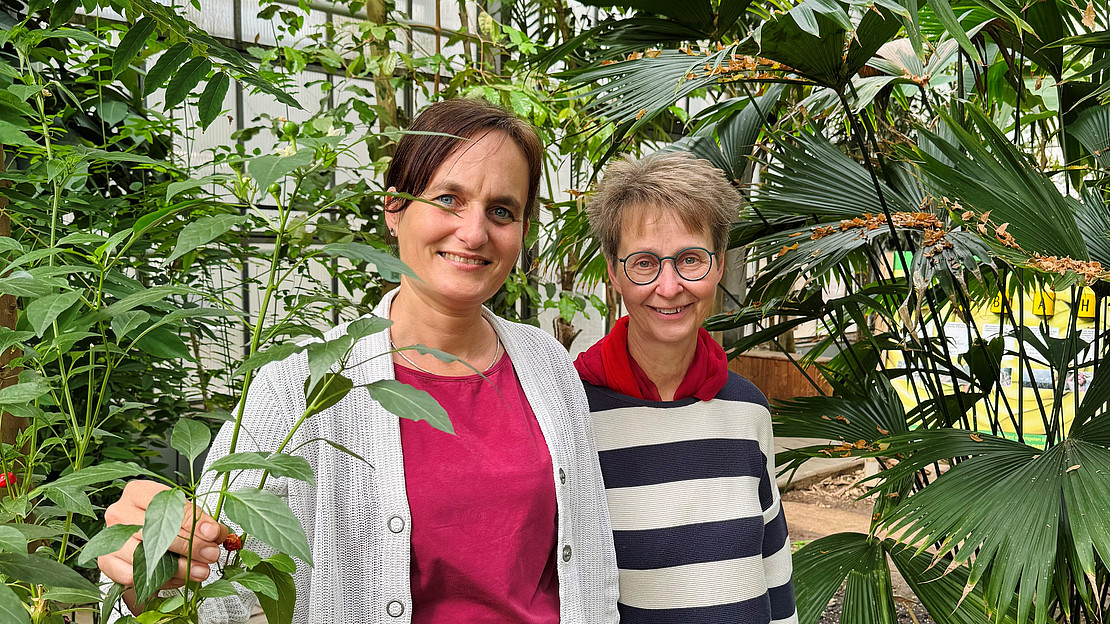 Image: University of Kassel.
Anyone who steps into the tropical greenhouse at the Witzenhausen site immediately leaves the North Hessian weather behind. You can feel the humid warmth on your skin, and the scent of soil and lush greenery fills the room. A narrow path winds like a corridor through the dense foliage, from which heavy cacao pods hang. From the outside, this world appears compact, but inside it expands into a tropical “jungle.” With nearly 500 species, this is home to Germany’s largest collection of tropical crop plants. But anyone looking here merely for beautiful plants is missing the point. “Every plant has a political aspect,” says Eva-Maria Kohlmann, who heads the greenhouse’s educational programs. Together with Catherina Merx, who is responsible for collection management, they form a co-leadership team that views the greenhouse as a place of global learning. The goal is to look beyond the greenery to see the often-invisible connections between plants, global production, our own actions, and political responsibility. As a botanical garden, it serves as the green showcase of the University of Kassel and builds a bridge between science and the public.
Wonder as a Door Opener
The visit often begins with a simple “aha” moment. “Ah, so that’s how a pineapple grows,” is a phrase Merx hears often. Many people are familiar with the fruit only as bite-sized pieces from a can or as shimmering slices in a jar. In the greenhouse, you see them as part of a mixed crop, embedded in agricultural systems that demonstrate how cultivation really works. The diversity is particularly impressive: While we usually find only one variety of bananas in stores, here red bananas stand out brightly among the leaves. And then there are the botanical curiosities like the devil’s tongue. When it blooms once a year, it’s no treat for the nose: it smells intensely of carrion. “People find this off-putting, but within the plant’s ecosystem, it serves the purpose of attracting flies for pollination,” explains Merx. Moments like these spark curiosity. Once people are amazed by biology, they’re more willing to engage with the difficult questions of global justice.
Cocoa and the Question of Power
The example of cocoa shows that plants have their own political history. In educational programs, participants—ranging from elementary school students to college students—reconstruct the entire production chain. They take on different roles: cocoa farmer, exporter, chocolate manufacturer, and supermarket chain. Why does the majority of the value added remain in the Global North, while producers often can barely cover their costs? “Some people react with anger when they see the injustices in black and white,” observes Merx. “But these are precisely the emotions we want to evoke. Understanding often only comes when you shift your perspective and realize that there are no simple answers to complex questions.”
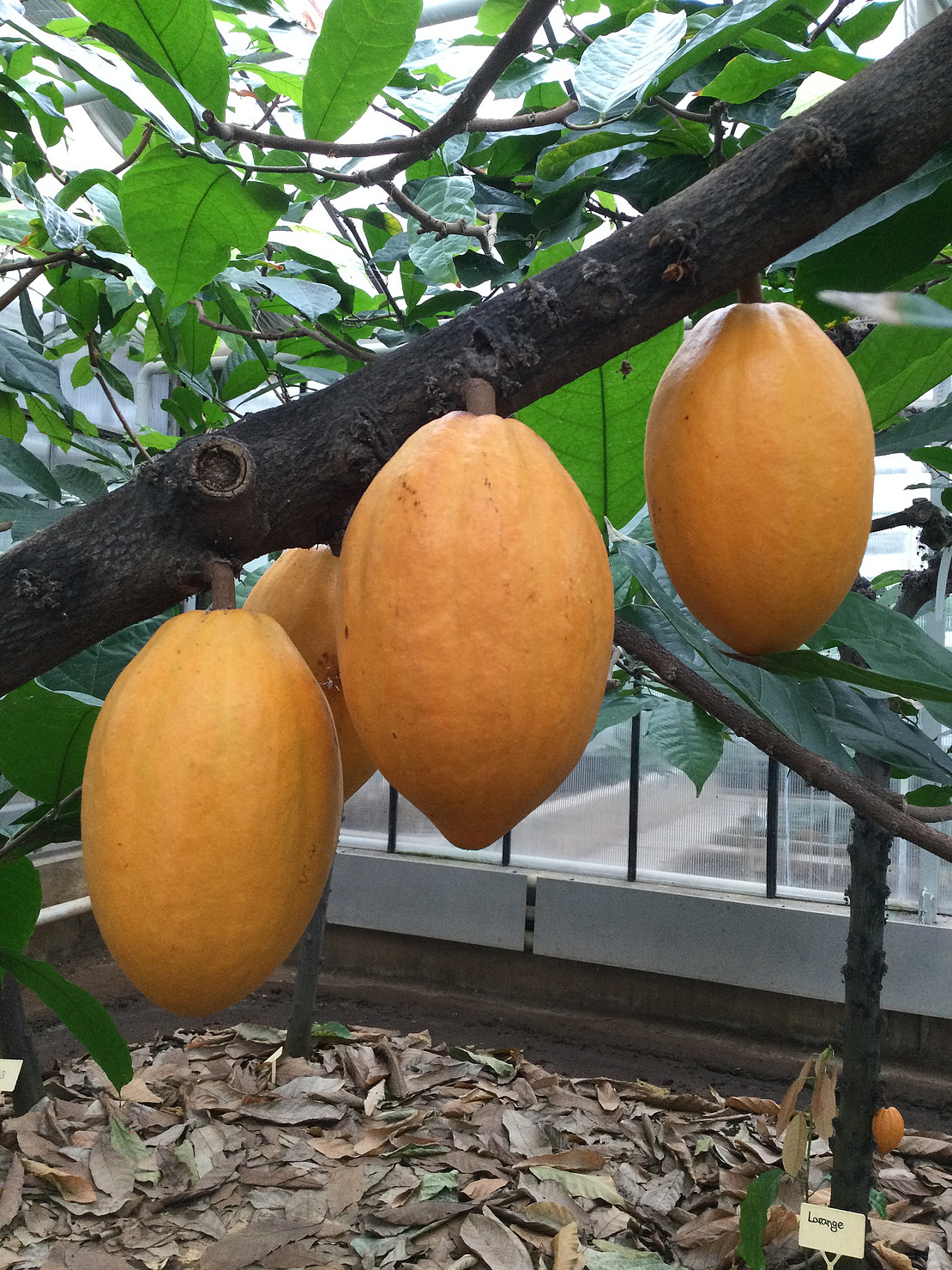 Image: University of Kassel
From Papaya to Quinine: Storytelling with Depth
To bring these connections to life, the team uses stories. Every plant tells a story. The papaya, for example, demonstrates just how versatile nature is: its fruit is edible, its seeds taste as spicy as cress, and its enzyme, papain, is even used in textile processing. Historical references build a direct bridge to the city. For instance, the history of the global brand “Schweppes” leads directly to Witzenhausen, the birthplace of the company’s founder, Johann Jacob Schweppe. A trained watchmaker, he was the first to develop a process for trapping carbon dioxide in a bottle—the foundation of lemonade production. Soon after, the company launched quinine-containing lemonades, made from the bark of the cinchona tree. Prior to that, during the colonial era, quinine was primarily known as a remedy for malaria. Examples like these make it clear: The tropics are embedded in our beverages, our medicines, and our history.
For younger audiences, fairy tales are told in which plants become active characters. For the specialist audience, literary texts by female plantation workers are incorporated, recounting the harsh social realities behind coffee as a luxury commodity. This makes learning multisensory: Visitors can see, smell, and taste the plants, and hear about their stories. Most recently, visitors could even experience them acoustically through the “Plant Music” format. In this installation, the plants’ electrical impulses were translated into sounds, transforming the greenhouse into a pulsating soundscape.
Teaching as a Space for Student Experience
For the University of Kassel, the tropical greenhouse is an essential learning environment. Students in the Department of Ecological Agricultural Sciences don’t just attend seminars here—they get hands-on experience. In internships, they learn about plant management, and in courses, they develop their own programs for school classes. “It’s about putting theory into practice,” says Kohlmann. Those who learn to guide a group through the “jungle” while clearly explaining topics such as biopiracy or climate change hone their own communication skills.
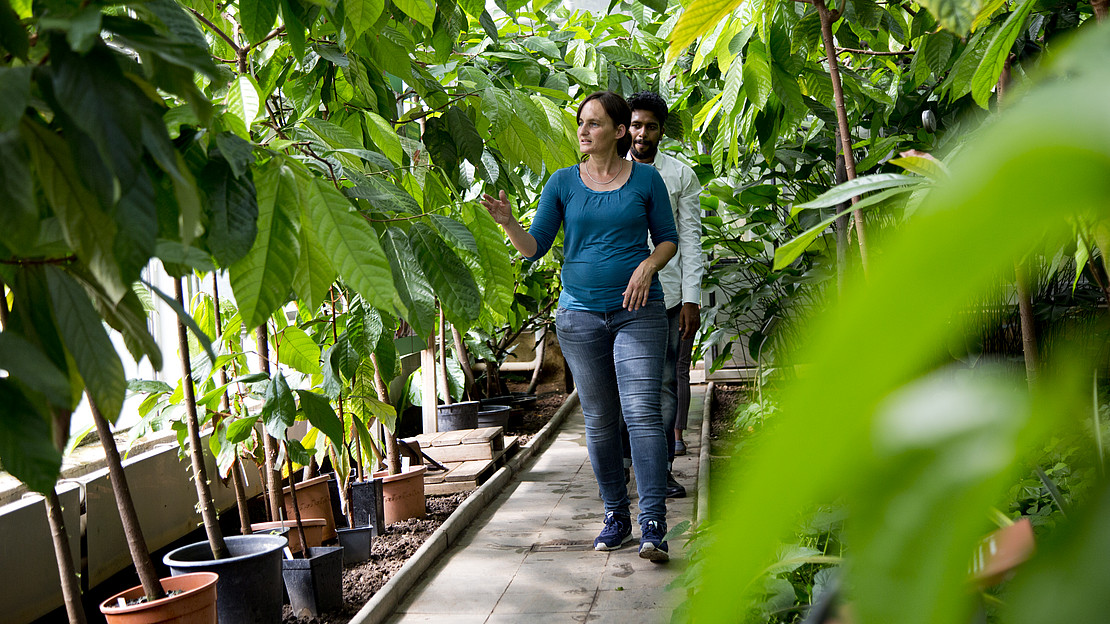 Image: Sonja Rode.
Connected in the “World Garden”
Witzenhausen offers a unique combination found nowhere else in Germany. The Tropical Greenhouse is part of the “Center for Global Learning – WeltGarten Witzenhausen,” where six partners pool their expertise in development education. This collaboration informs educational programs for all age groups, which are carried out at three extracurricular learning sites: the tropical greenhouse, the Weltladen, and the museum. While the greenhouse highlights biological processes, the museum provides historical context, and the Weltladen demonstrates practical options for everyday life. “We don’t want to stop at analyzing the problem,” Kohlmann emphasizes. The goal is to engage the senses and encourage reflection: Where does my responsibility begin? What can I change? Where do others bear responsibility and have the power to bring about change?
A Bright Future
This work has now been officially recognized. On April 16, 2026, the Tropical Greenhouse received the “National Award for Education for Sustainable Development,” presented by the Federal Ministry of Education and Research and the German Commission for UNESCO. It is recognition for a place that embraces complexity rather than simplifying it. And the focus is on the future. The curators are already thinking beyond the greenhouse walls. One idea is to forge closer ties with the field of cycling: A bicycle route between Kassel and Witzenhausen could be established as an “educational trail” to make the connection between the main campus and the university’s Witzenhausen location physically tangible. Issues such as climate change and the necessary agricultural transition will continue to shape the work in the greenhouse in the future. The collection is continuously being updated; new coffee varieties, for example, are being added to demonstrate how global agriculture is changing under pressure. The Tropical Greenhouse remains what it is: a place of wonder and learning, a window that opens onto the world in ever-new ways.
This article will appear in the summer issue of the university magazine “publik” (2026/2) in July 2026. Text/Photos: Bastian Puchmüller.