
Sustainable Learning Instead of “Cramming”: DFG Extends Funding for Successful Research Group
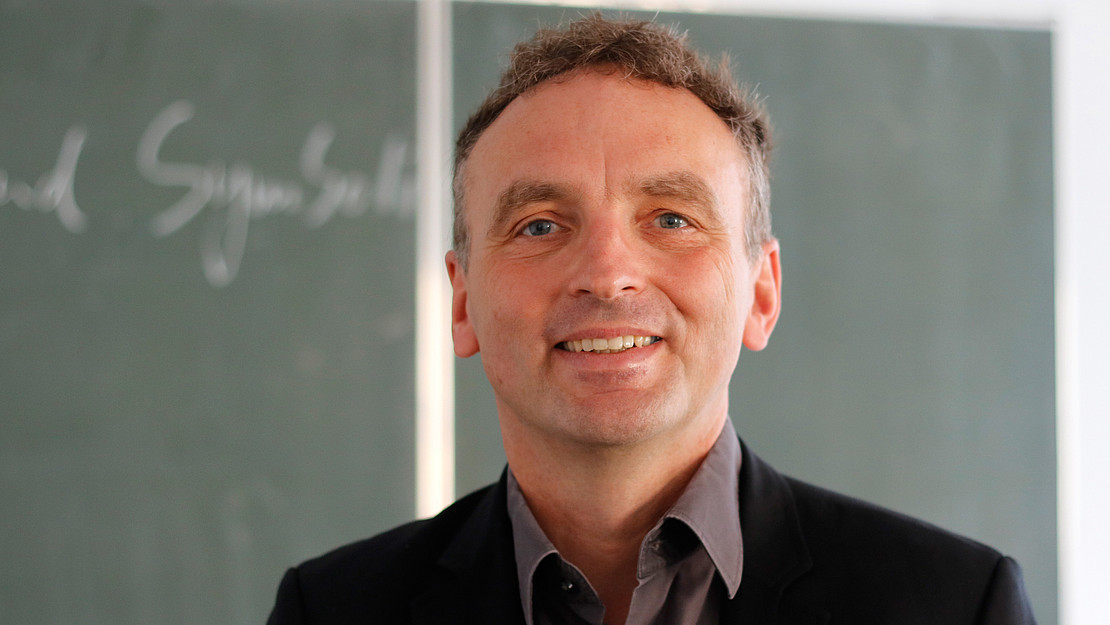 Image: University of Kassel.
Many people are familiar with this phenomenon from their own school or college days: Just before an exam, they study intensively—usually by reading through the material over and over again—but shortly afterward, much of what they learned is forgotten—a behavior known as “cramming.” Since 2022, the Research Group—led by Würzburg psychologist Prof. Dr. Tobias Richter—has been investigating alternative approaches and the conditions necessary for learning to result in lasting and flexibly applicable knowledge.
Success for Kassel’s Teaching and Learning Research
The DFG’s renewed funding commitment has also been welcomed by the Presidential Board of the University of Kassel. “The fact that the University of Kassel is represented in this nationwide consortium with three subprojects confirms the continuity and quality of our empirical educational research,” explains Prof. Dr. Michael Wachendorf, Vice President for Research. “This continued funding enables the participating researchers to continue their successful work over the long term and to provide important impetus for the design of future teaching and learning scenarios.”
The collaboration is coordinated on site by Prof. Dr. Ralf Rummer, head of the Department of General Psychology. “We are very pleased that the DFG has placed its trust in us once again. The past four years have shown just how fruitful the interdisciplinary collaboration among the various disciplines at our institution is. And, of course, conducting our research was only possible thanks to the cooperation of the regional school community,” says Rummer.
The Cognitive Foundations: Three “Challenges” for Learning Success
In the first funding phase, the consortium primarily investigated the effects of three so-called “desirable challenges”: spaced learning (exercises spread out over several phases instead of cramming all at once), interleaved learning (content presented alternately rather than in rigid blocks), and retrieval practice (repeated testing during the learning phase).
Kassel had already contributed to this effort with a subproject that examined the extent to which actively retrieving the material during the learning phase (so-called retrieval practice) affects learning with texts. A so-called testing effect was observed: Learning performance was better when such a retrieval exercise took place than when the text was merely read repeatedly. In recent years, there has been increasing discussion about whether this method is also effective with complex learning materials. The research conducted in Kassel and Erfurt now confirms that this is indeed the case.
The first funding phase has thus shown that the desirable difficulties examined can effectively support long-term learning—especially when combined with learning methods that promote comprehension. The second phase will now focus on deepening this understanding: “After examining the fundamental mechanisms of sustainable learning over the first four years, we now want to gain a more precise understanding of the cognitive processes underlying the individual desirable challenges,” explains Rummer. “A particular focus is on self-regulated learning and the question of how learners independently develop, apply, and combine sustainable strategies with other approaches. Another goal is to integrate these methods more deeply into real-world classroom situations.”
Interdisciplinary Approach
All subprojects are grounded in experimental studies conducted in various types of schools across the subjects of Biology, Mathematics, German, and Physics. Researchers from the fields of psychology, education, and various subject-specific didactics are working closely together on these projects.
In addition to three subprojects at the University of Kassel and the coordinating Julius Maximilian University of Würzburg, researchers from the universities of Duisburg-Essen, Erfurt, Freiburg, Giessen, Munich, Münster, Osnabrück, Potsdam, and Tübingen are involved in other research projects.
Contact:
Prof. Dr. Ralf Rummer
Tel.: +49 561804-3592
Email: rummer[at]uni-kassel[dot]de
What does this mean in summary?
- The nationwide “Lasting Learning” Research Group will receive funding for a second phase through 2030.
- During the second funding period, the University of Kassel is contributing a total of three subprojects to the consortium.
- The research examines how school knowledge can be anchored in long-term memory through targeted “desirable difficulties” in learning, rather than being learned solely for the next exam (“cramming”).
- Following the cognitive foundations established in the first few years, the new funding phase will focus on the effectiveness of these methods directly in real-world classroom and school settings.