
What drives me - Fabian Popp
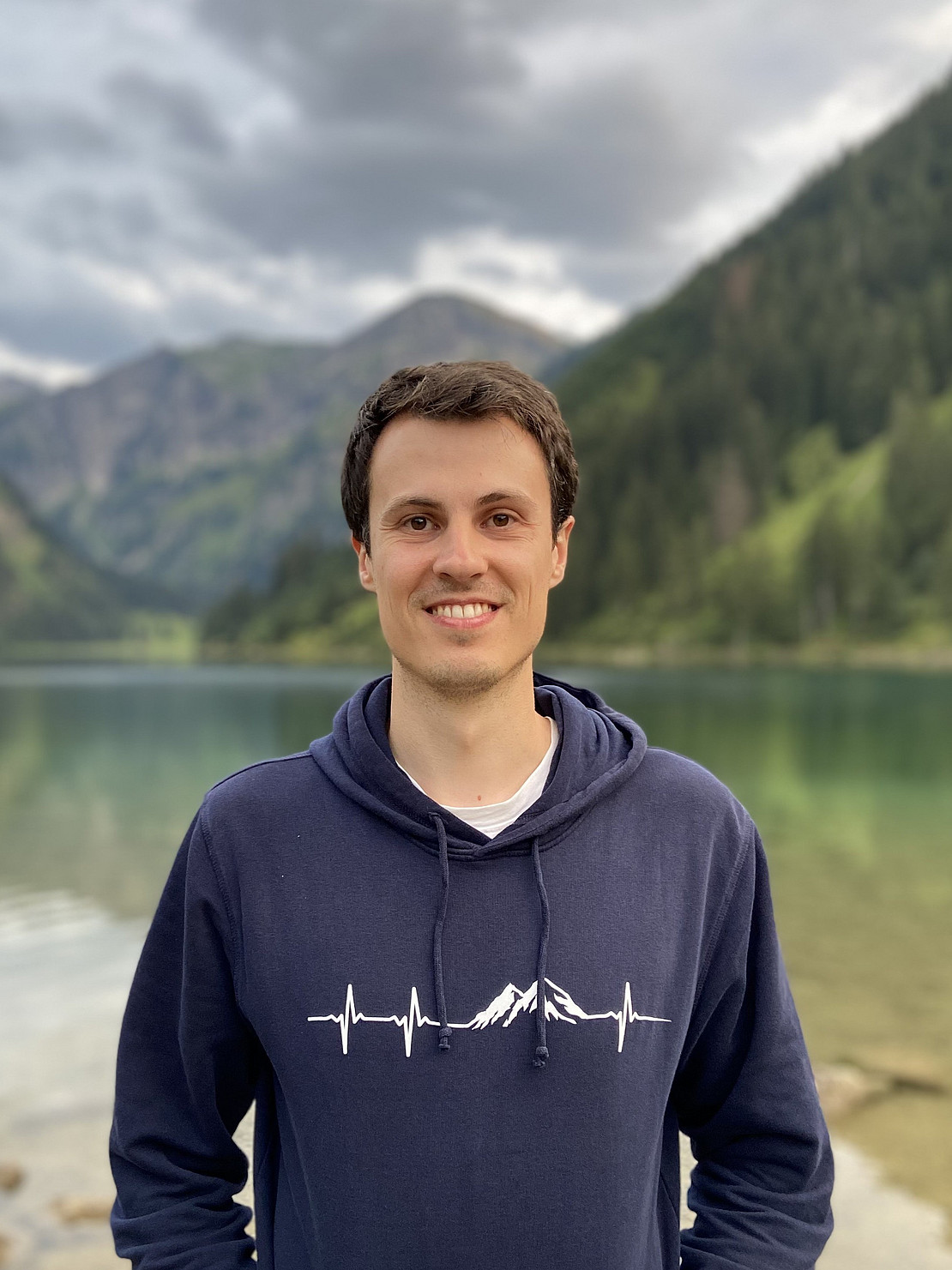 Image: Fabian Popp
Rivers have always been an important source of livelihood for people. They serve as transportation routes, for irrigation, for fishing, for leisure activities and for power generation. They continuously change their beds through morphodynamic processes, i.e. erosion, transportation and deposition of sediments such as sand and gravel. Humans can influence these processes. One example is dams, where sediment transport decreases significantly. This can lead to sedimentation, which affects the flow to the turbines of hydropower plants and thus reduces their efficiency and service life.
In my doctoral thesis at the Department of Hydraulic Engineering and Water Resources Management, I am investigating the feasibility and limits of modeling morphodynamic processes in the vicinity of complex hydraulic structures. One of the largest run-of-river power plants in Germany serves as a case study. There, sedimentation occurs in the power plant intake during floods. The practical part of my work deals with the question of how this sedimentation can be reduced. This requires complex model investigations.
Up to now, model investigations have mostly been carried out experimentally in hydraulic engineering laboratories. This approach is tried and tested, but is subject to certain limitations. For this reason, laboratory models are increasingly being used together with computer models, so-called 3D MN models, in the course of hybrid modeling. However, these have hardly been researched for modeling complex hydraulic structures. In my investigations, I combined a laboratory model, a computer model of the laboratory model and a natural-scale computer model. This allows me to compare the model results not only with natural data, but also with each other. This makes the significance and limitations of the model methods and the influence of various parameters on the model results clear.
I work at the interface between powerful natural processes and technically sophisticated engineering structures. It is exciting to combine practical work in the laboratory with the use of state-of-the-art simulation methods. My aim is to provide researchers with a guideline for predicting morphodynamic processes in hydraulic structures more precisely in the future.
This article appeared in the university magazine publication 2025/3. Protocol: Hannah Eichenberg