
Digital role models influence choice of subject in unexpected ways
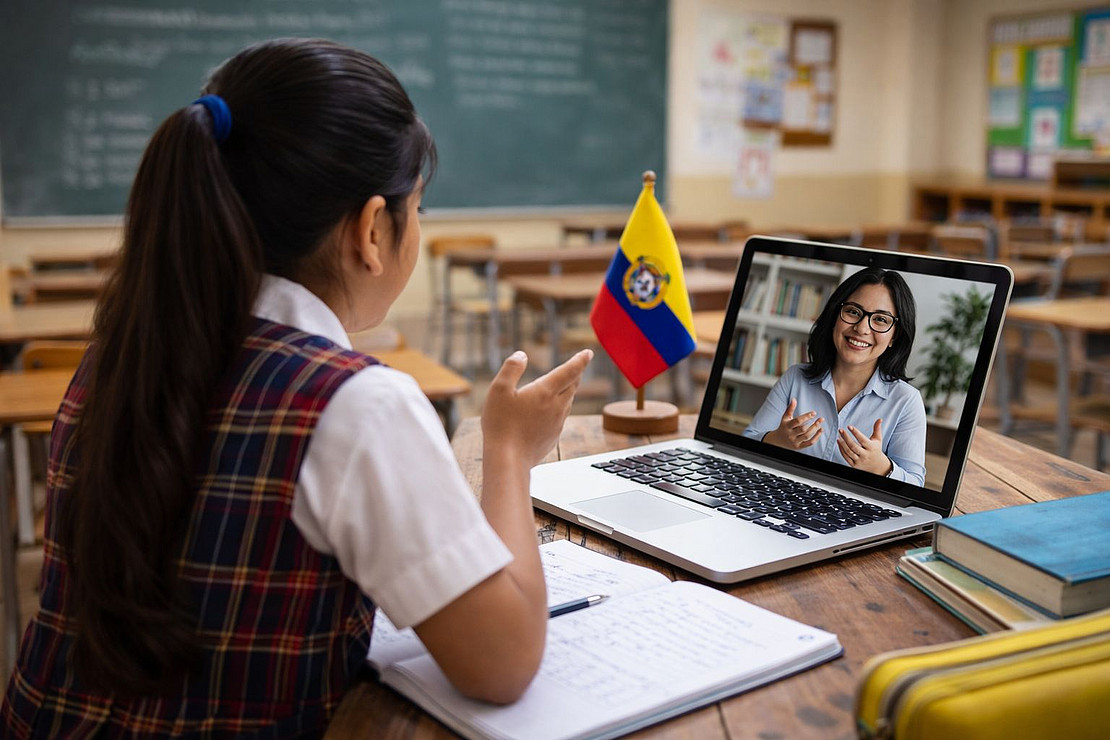 Image: Uni Kassel/KI-generated.
 Image: AdobeStock/Framestock
The research team asked itself how the potential of digital tools and technologies can be used to familiarize young people with a wide range of professions. Young people often choose to study without knowing the wide range of well-paid professions. Although personal role models can change career perceptions, they are severely restricted due to their limited reach and usually only bring young people into contact with one person from one profession.
In their study, the researchers found that students unexpectedly shifted their major preference away from STEM (Mathematics, Computer Science, Engineering and Technology) and into alternative career fields after watching online videos featuring STEM and entrepreneurship role models. Regardless of the gender of the role models, the results show that girls who were exposed to multiple role models were less likely to choose a STEM major and more likely to study business instead. Boys also shifted their fields of study away from STEM, opting instead for other fields such as agriculture. "We were very surprised by this result," says Asanov. "We suspect that this is partly due to the fact that students were presented with role models who demonstrated entrepreneurship as an alternative career option." They saw STEM role models as having professions that were more difficult, male-dominated and less socially desirable than entrepreneurship.
The "Showing Life Opportunities" project team conducted the nationwide randomized controlled trial with a participation rate of 94 percent among 29,243 students in 813 schools. The researchers tested the effectiveness of providing role models on a large scale by providing students in Ecuador with online video interviews with role models in STEM careers and entrepreneurship. In doing so, students were given access to role models of both the same and opposite genders.
"We are honored to present the results of the "Showing Life Opportunities" project in Nature Human Behavior. This publication is a milestone for the initiative and represents a highly successful international collaboration between INCHER-Kassel, the World Bank, Innovations for Poverty Action and others," emphasizes Asanov.
Background:
The promotion of STEM degree programs and innovative entrepreneurship are both components of Ecuador's national strategy to increase productivity. The study shows the feasibility of low-cost online delivery (86 cents per student) in a developing country.
The "Showing Life Opportunities" project at the University of Kassel is investigating how online courses can inspire young people for entrepreneurship and careers in science and technology. It forms the basis of the current study. INCHER-Kassel is carrying out the project in collaboration with the Ecuadorian Ministry of Education, the World Bank, Labex ECODEC ENSAE, HEC Paris and the University of Cologne.
The recent publication in "Nature Human Behavior" is not the only success for the project team. The SLO project had already won the prestigious "Path to Scale Award" in 2021 and in 2023 the article "System-, Teacher-, and Student-level Interventions for Improving Participation in Online Learning at Scale in High Schools" was published in the renowned Proceedings of the National Academy of Science (PNAS), one of the world's most cited and comprehensive multidisciplinary journals.
To summarize:
- Online videos featuring STEM and entrepreneurship role models are turning Ecuadorian high school students away from STEM degree programs.
- Girls are increasingly opting for business degree programs and boys for agricultural degree programs.
To the article: https://www.nature.com/articles/s41562-026-02421-8
Contact:
Dr. Igor Asanov
International Center for Higher Education Research
University of Kassel
E-mail: Igor.Asanov@uni-kassel.de
Website