
How is the course structured?
This page contains automatically translated content.
Contents
Basic planning and design skills are learned: an understanding of spatial thinking and causal relationships, the design of spaces and processes, the use of technical and communicative tools, whether by hand, computer or model making, and the successful presentation of one's own work.
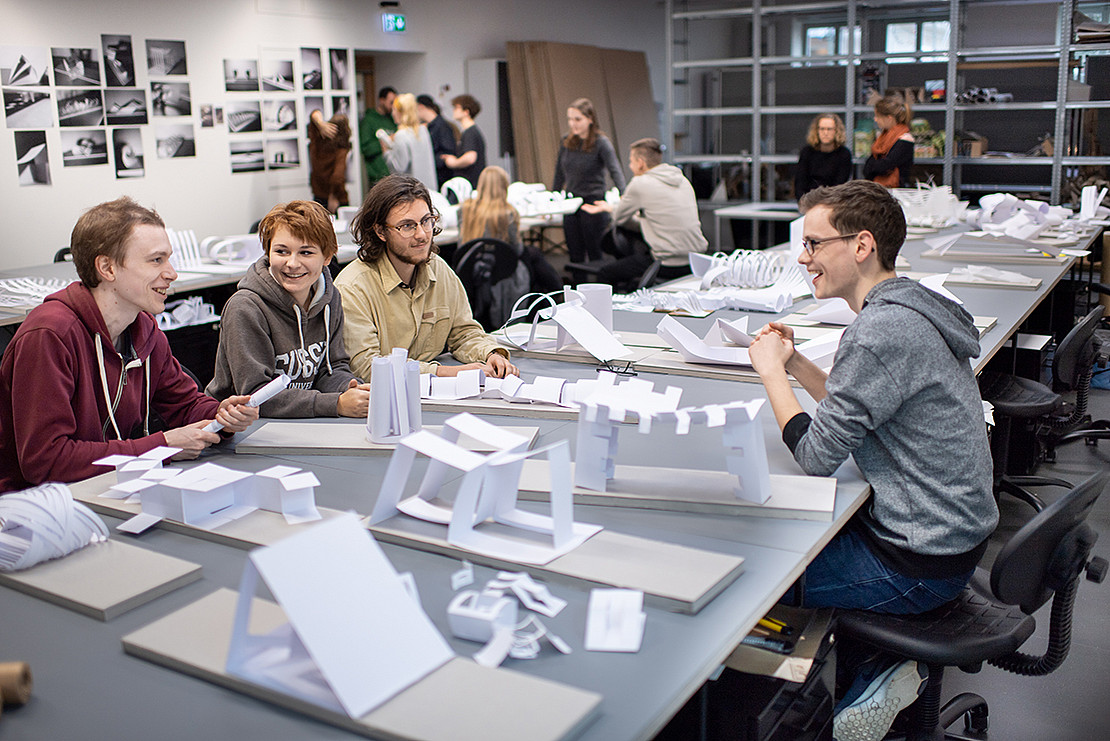
In 4 fields of study, the foundations for interdisciplinary thinking and action are taught across ASL:
- General sciences,
- Fine Arts,
- Design and representation,
- instruments, processes and technology, planning objects and planning levels.
Students are thus prepared for a career that is characterized by broadly diversified, interdisciplinary and constantly changing tasks.
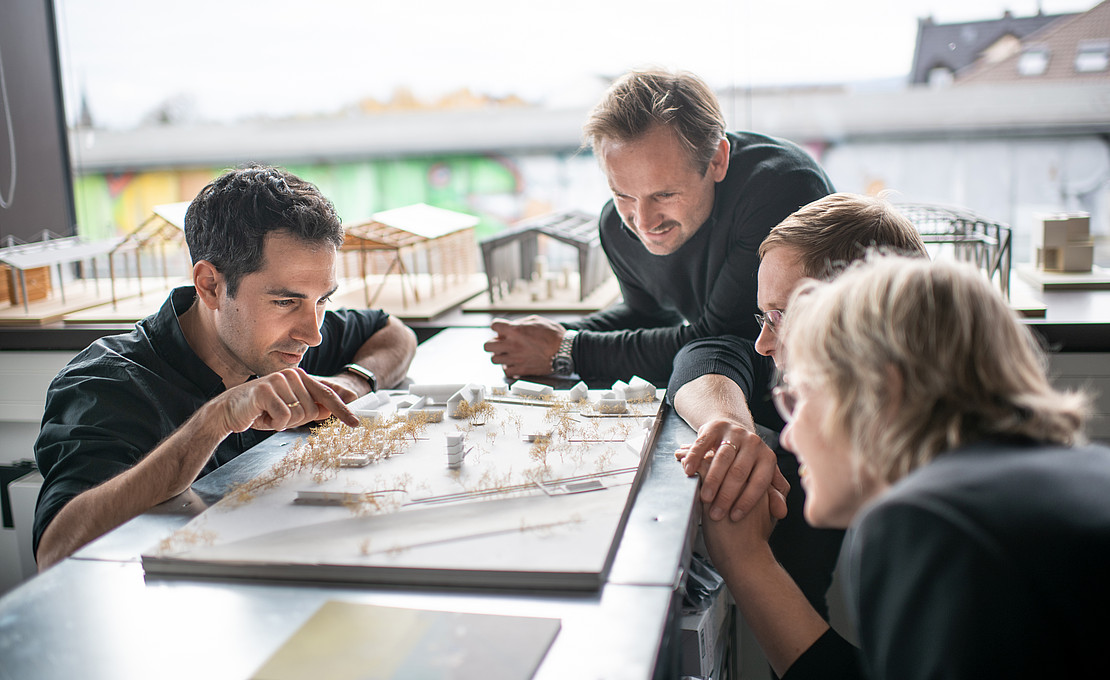 Image: Paavo Blafield
While the theoretical-systematic curriculum in the first three semesters of study consists mainly of compulsory courses, an increased proportion of compulsory elective modules after the third semester of the Bachelor's degree makes it possible to specify the course content with individually chosen areas of interest. Research, understanding and skills are thus combined in a meaningful way.
Key qualifications are taught in introductory studios and project modules: teamwork and time management skills, conceptual, creative and scientific work, communication, integration and presentation skills.
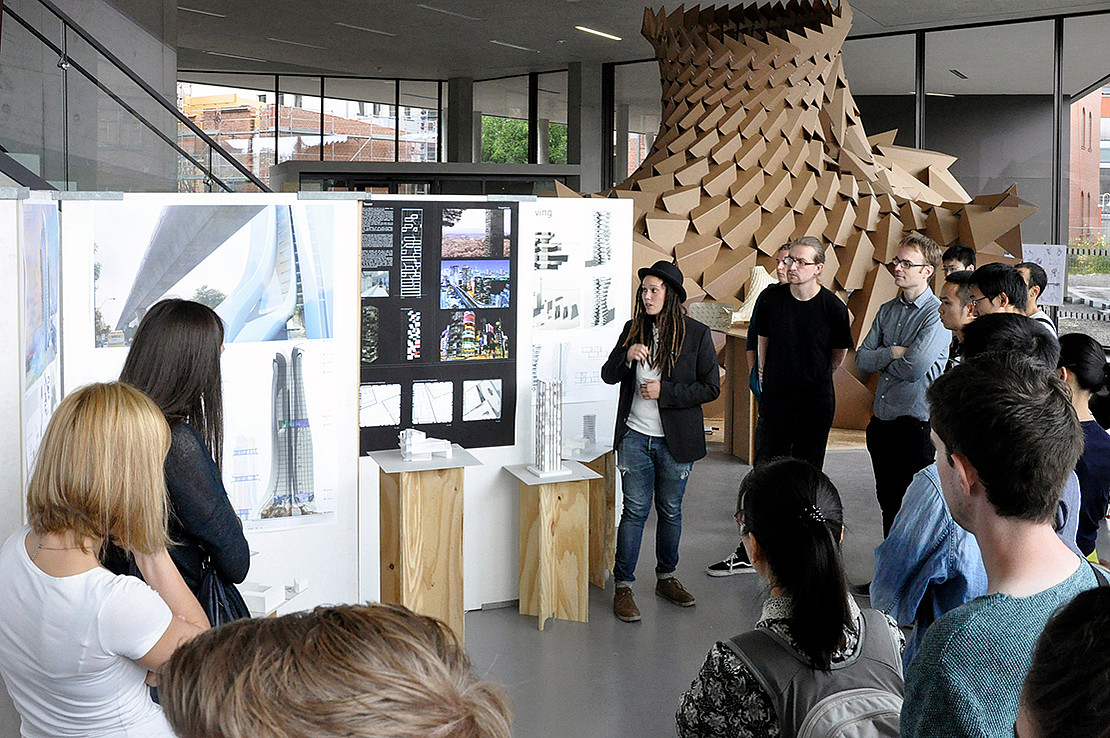
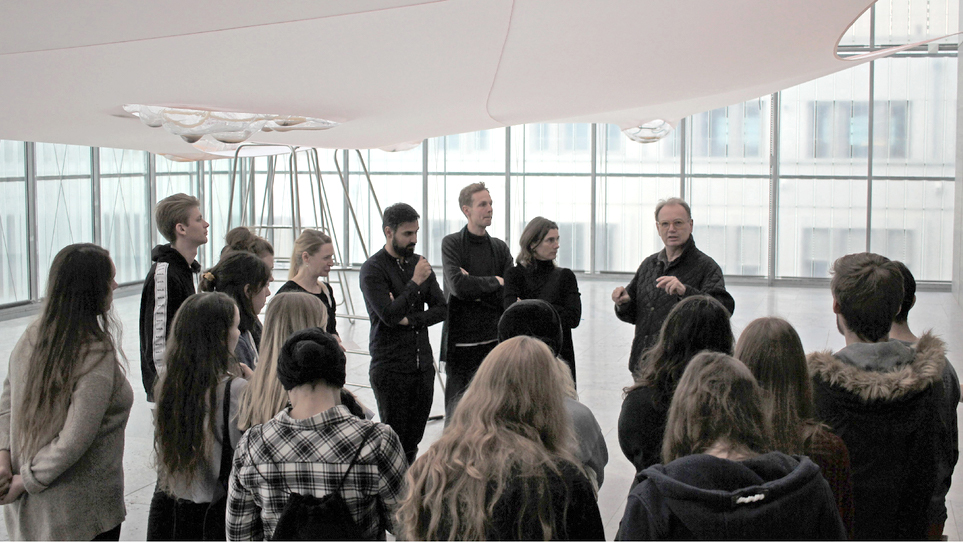
Excursions open up a critical view of practice. Exchange programs with international universities offer the opportunity to deepen your studies abroad and promote international relationships. The practical semester complements and deepens the training.
Sample study plan

Download
1st semester I Introductory studio
The interdisciplinary introductory studio introduces students to the basics and diversity of planning and design. The focus of the studio work is on conceptual and creative thinking, design and presentation as well as communication within the team and with the outside world.
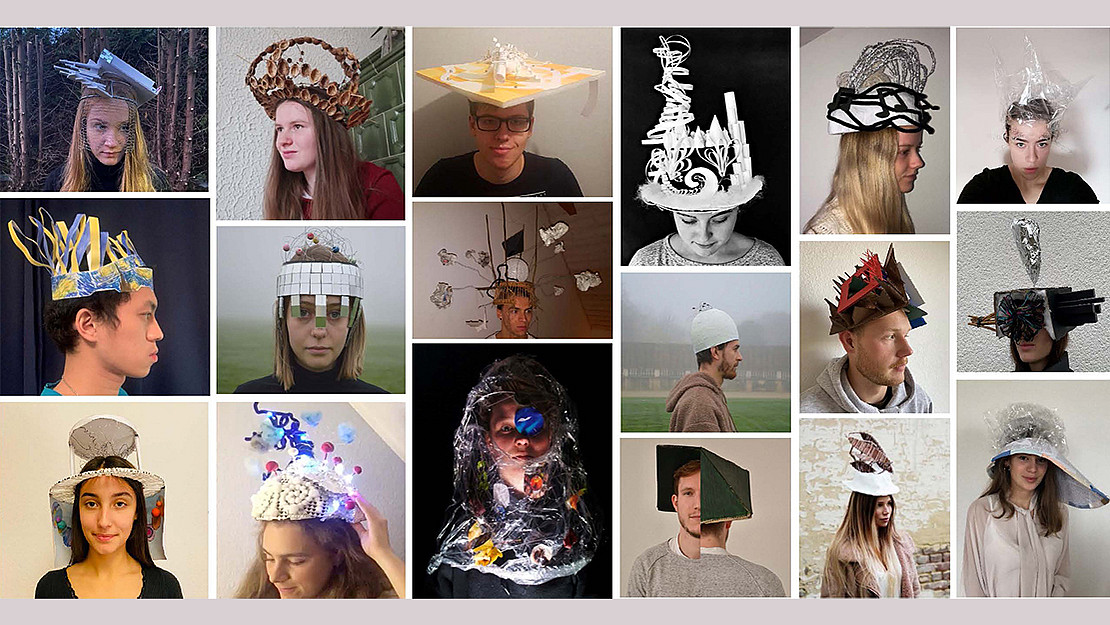
Introductory task in the introductory studio
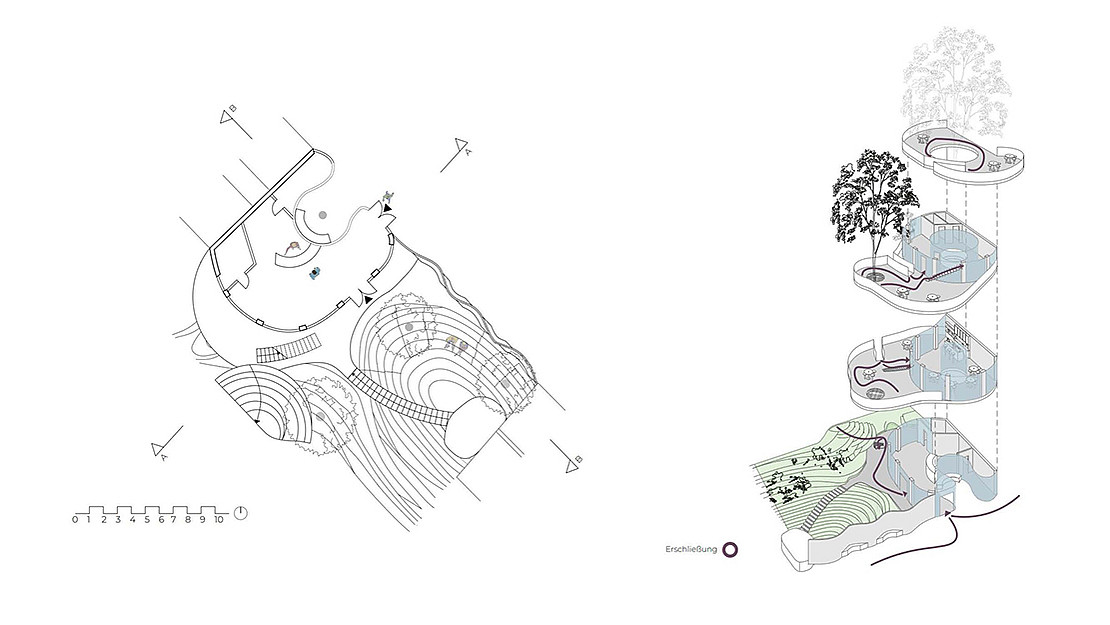
Florero I Laura Festor + Sara Reyhan
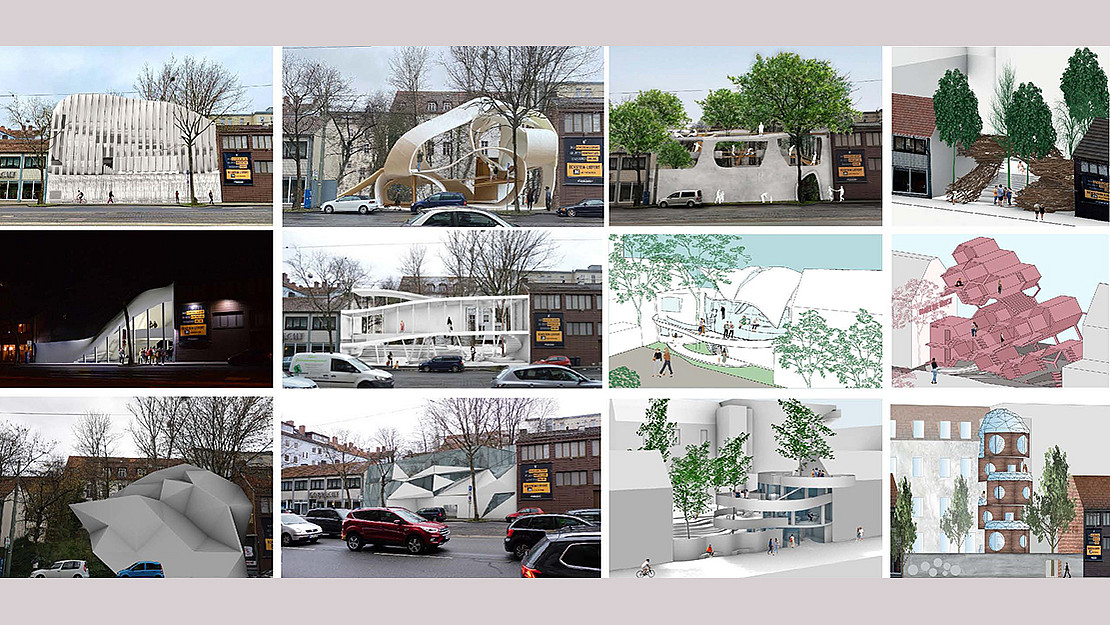
Exterior view of the Hugenottenhaus intervention, Fünffensterstrasse I Introductory studio
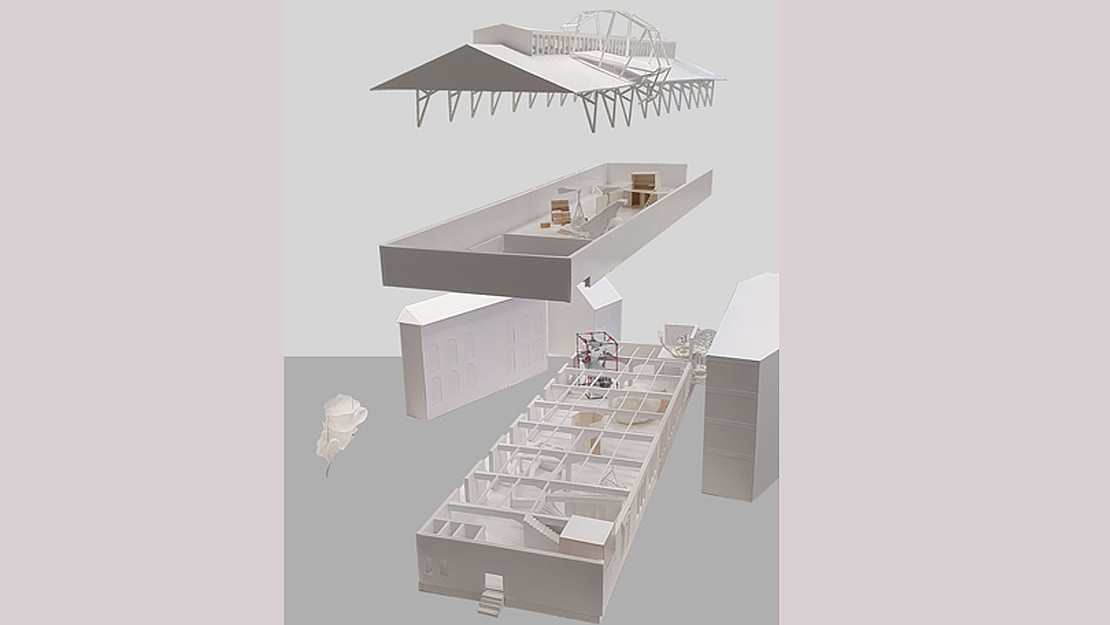
Kulturfabrik Kassel I Environment model
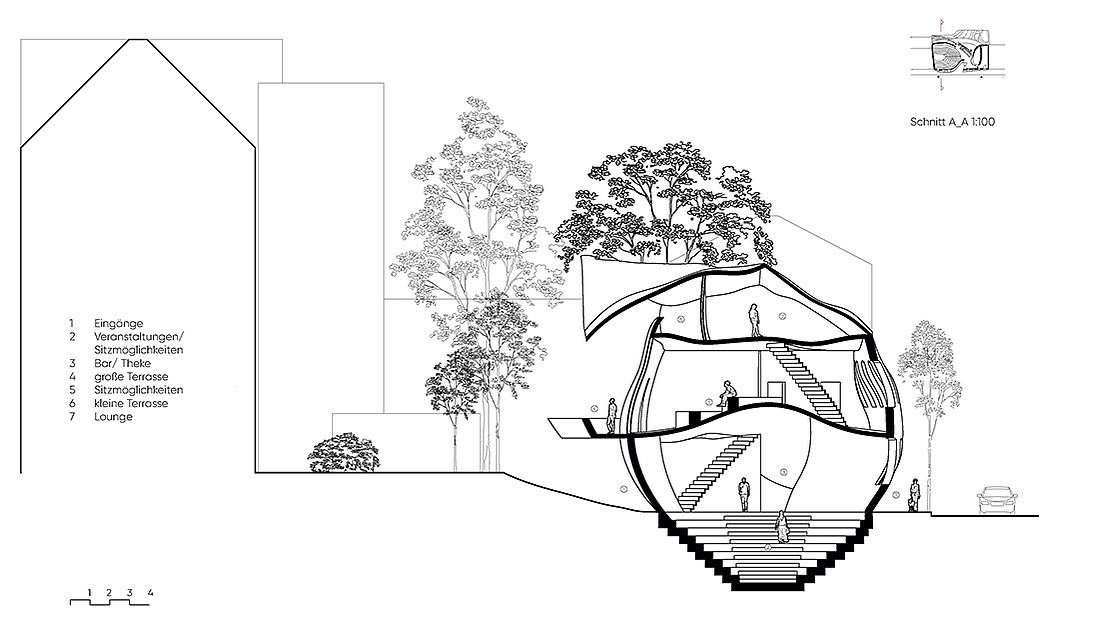
UnzerstörBar I Editing I Jenny Töws + Alicia Marasus
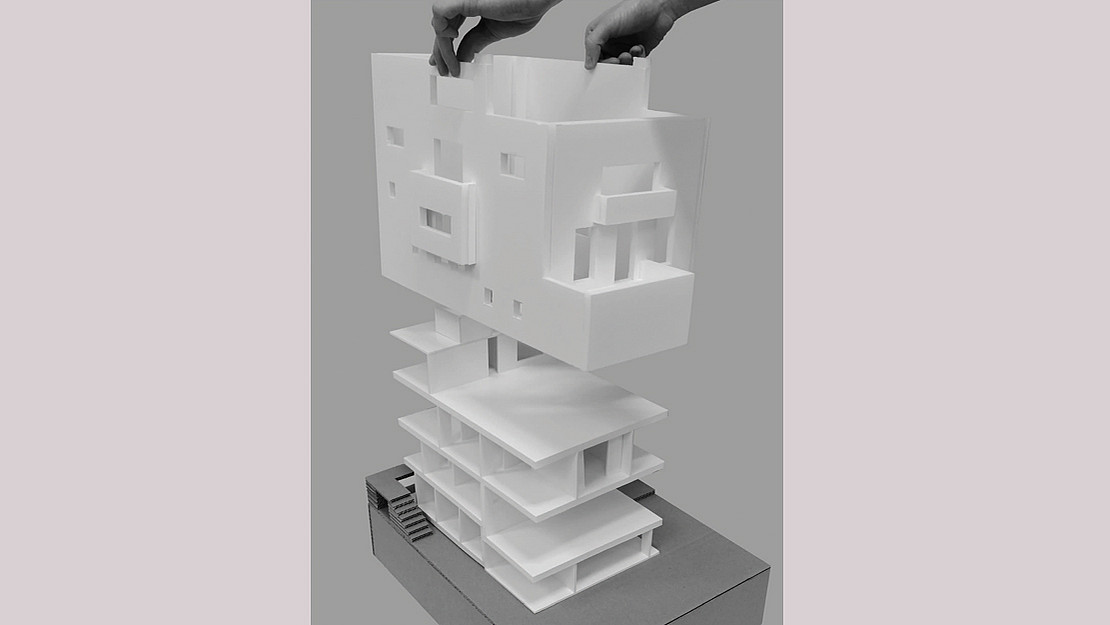
Villa Müller by Adolf Loos I Research I Janek Brinkschröder + Samuel Koch
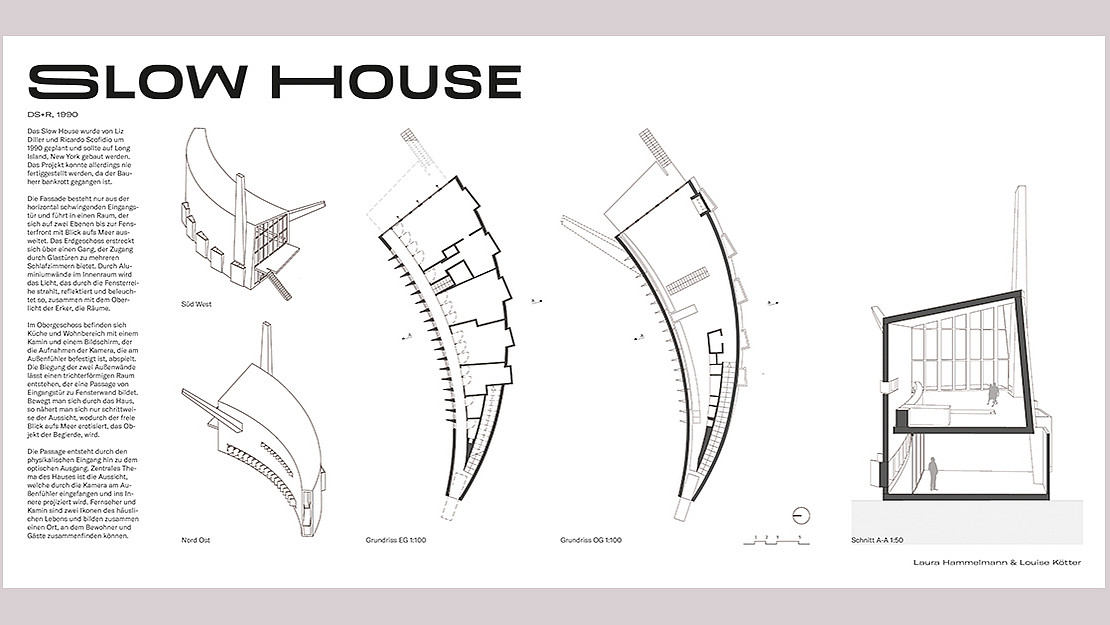
Slow House, Design Studio Diller, Scofidio + Renfro I Research I Louise Kötter + Laura Hammelmann
The aim of the introduction is to impart the common content fundamentals and initial methodological knowledge - such as perspective drawing or the basics of computer work in CAD or layout programs - for the three disciplines of architecture, urban planning and landscape planning.
2nd semester I Introductory project
The introductory project in the 2nd semester expands the skills learned on the basis of a subject-related task with comparatively simple structural-spatial or conceptual contexts.
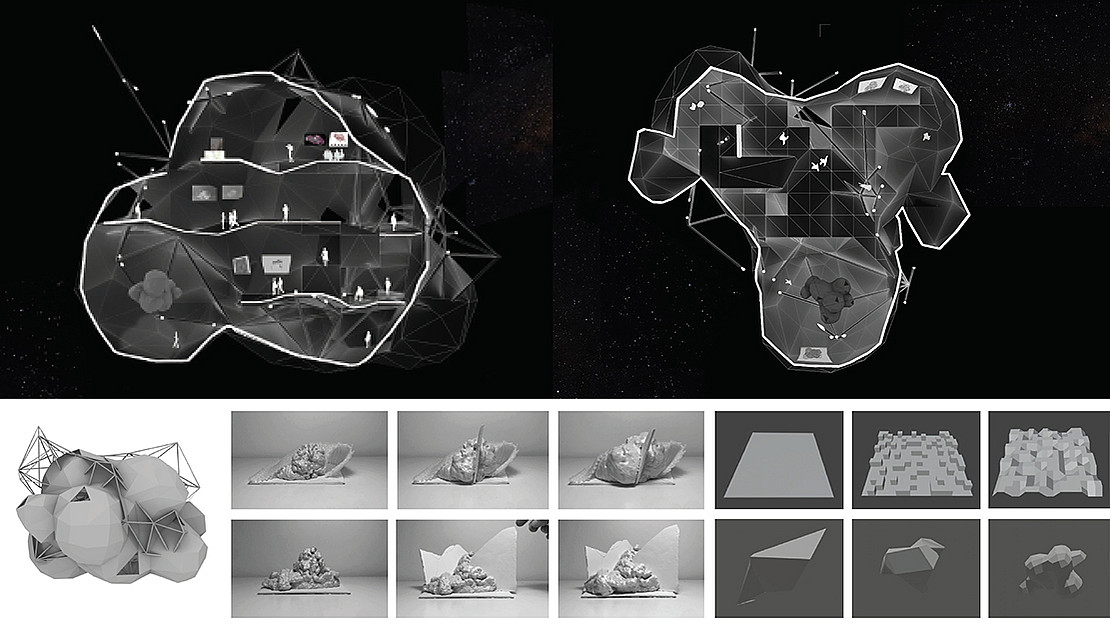
From 3rd semester I Project modules in the compulsory elective area
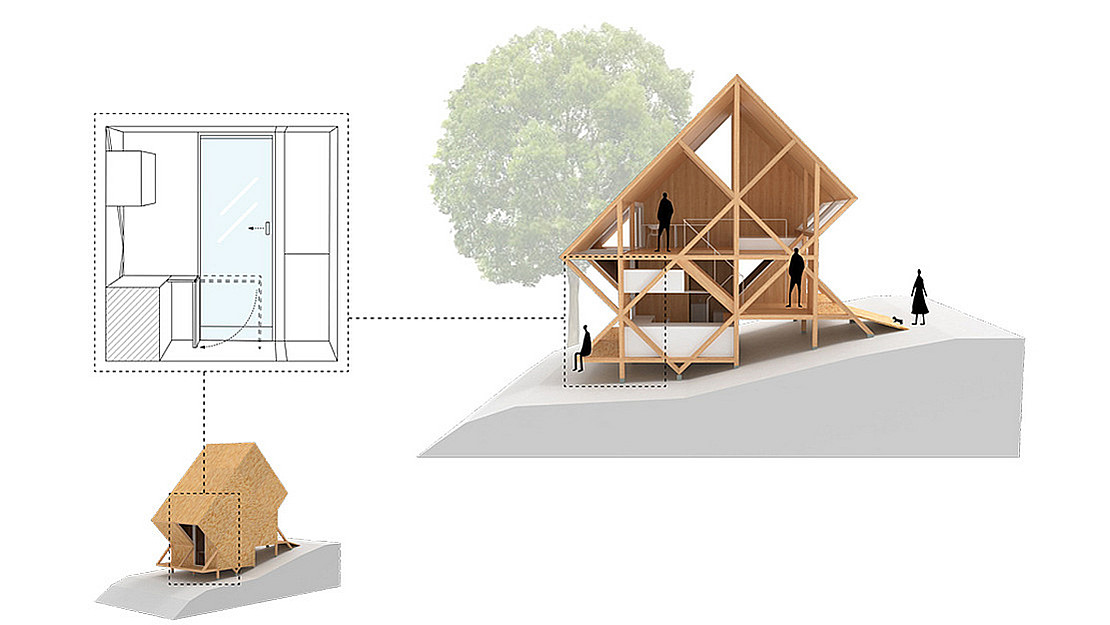
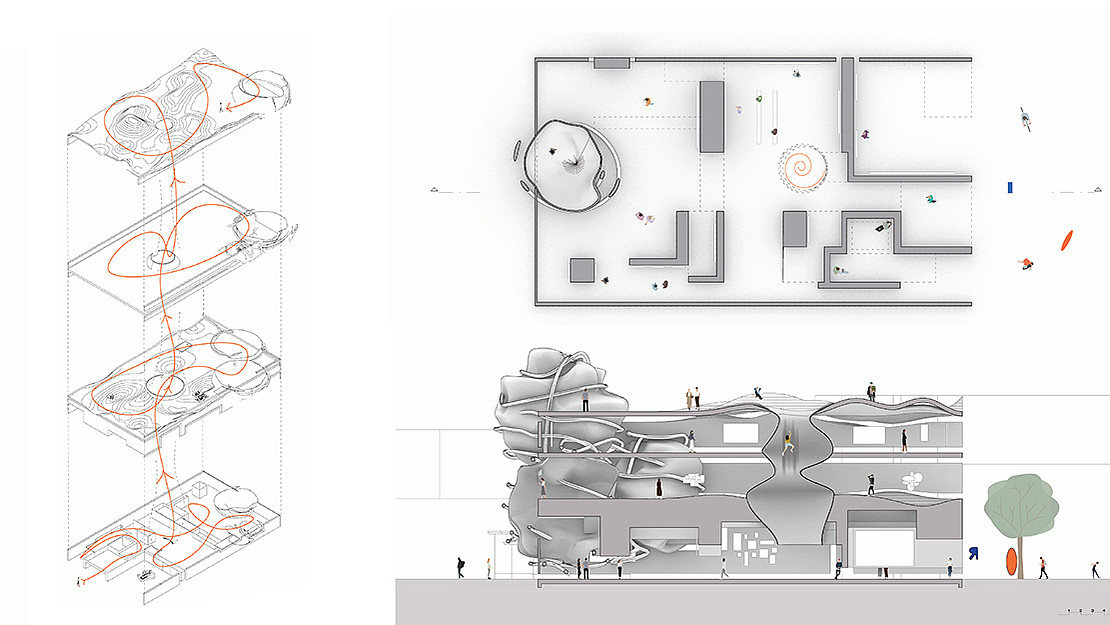
In the 3rd-6th semester, project modules are offered in the compulsory elective area, which combine the learning objective of design and planning skills with various subject-related focal points. Together we work on the continuous development of basic subject-specific knowledge in the current and future-oriented subject areas of architecture:
Design and technology (includes design and the design process as such at all task and scale levels with reference to structural, spatial and constructive implementation)
Environment and sustainability (includes questions of ecology, economy, sociology as well as technology and culture in the context of planning and building)
Construction industry and project development (includes the area of construction project management, relating to design, implementation planning and construction management)
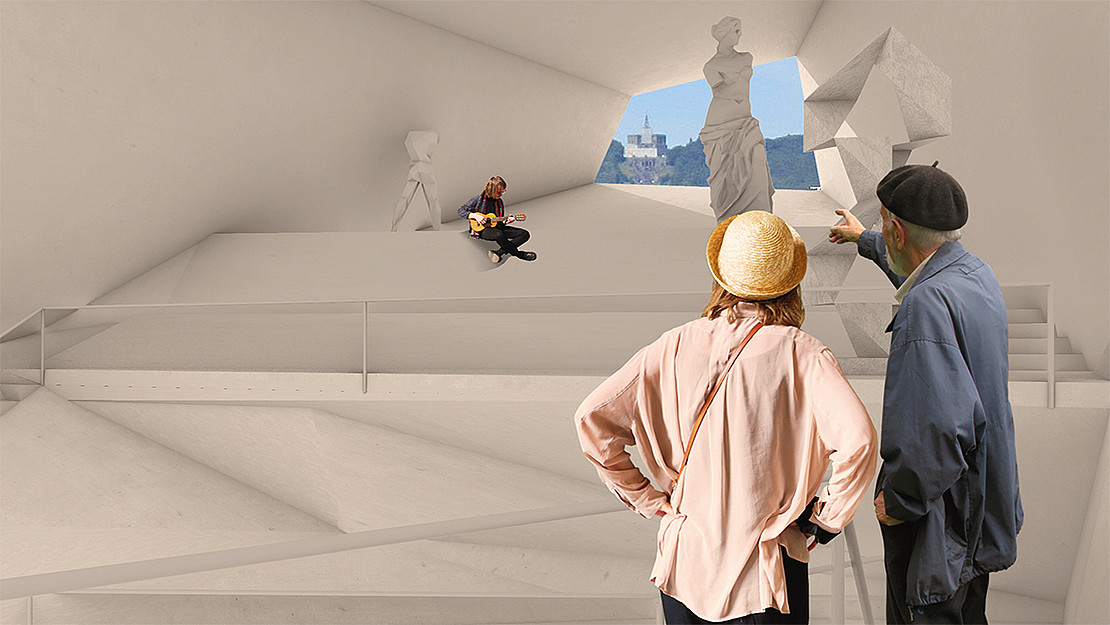
Rondell I Pascal Riemann + Niklas Kossmann
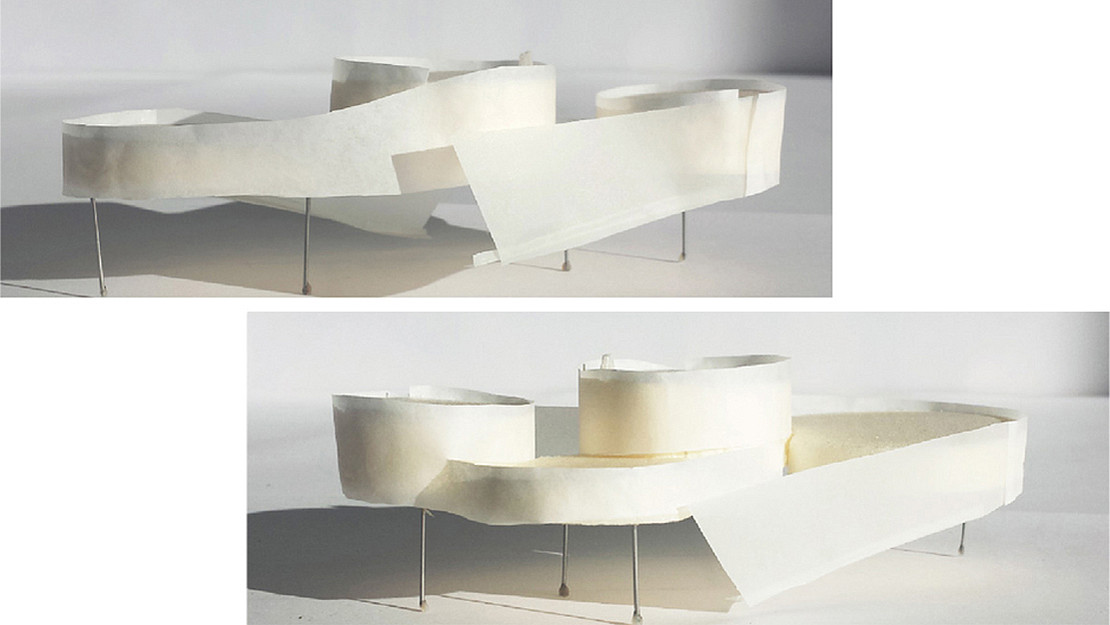
Rondell I Zhen Liu-Spieker
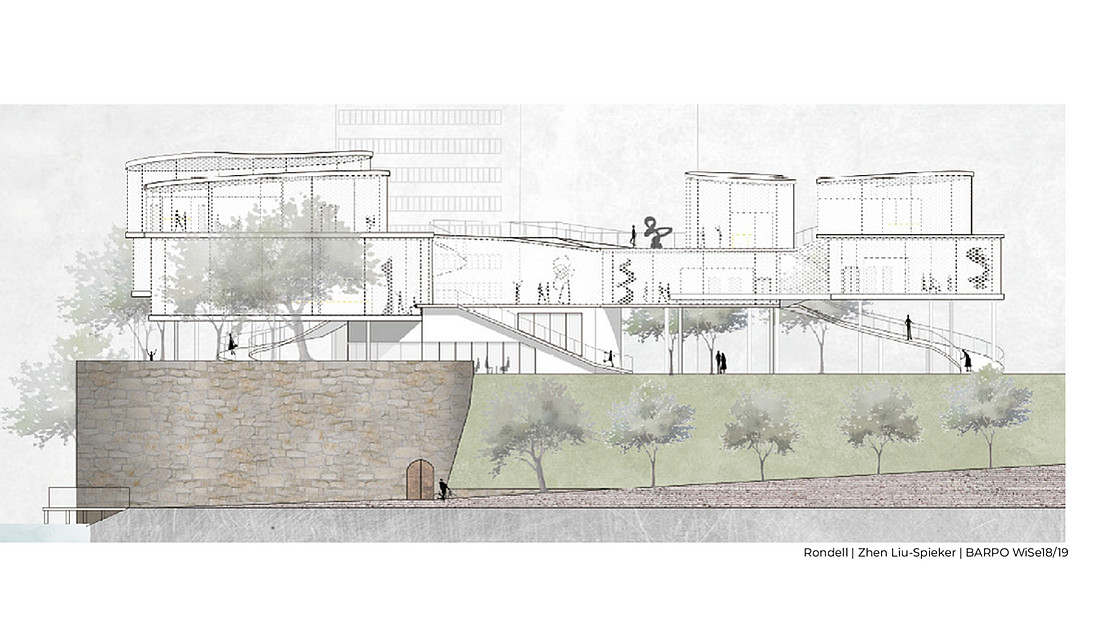
Rondell I Zhen Liu-Spieker
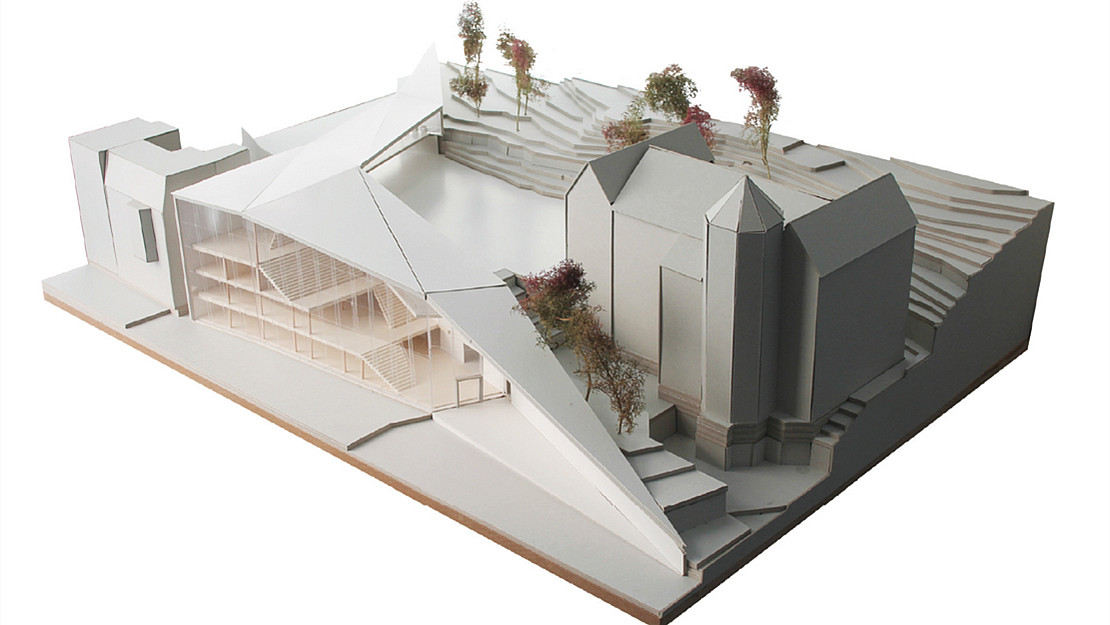
Design of an entrance building with gastronomy for the Bergzoo Hallo (Saale) using constructive glass construction I Maroc Przadka, Florian Kell
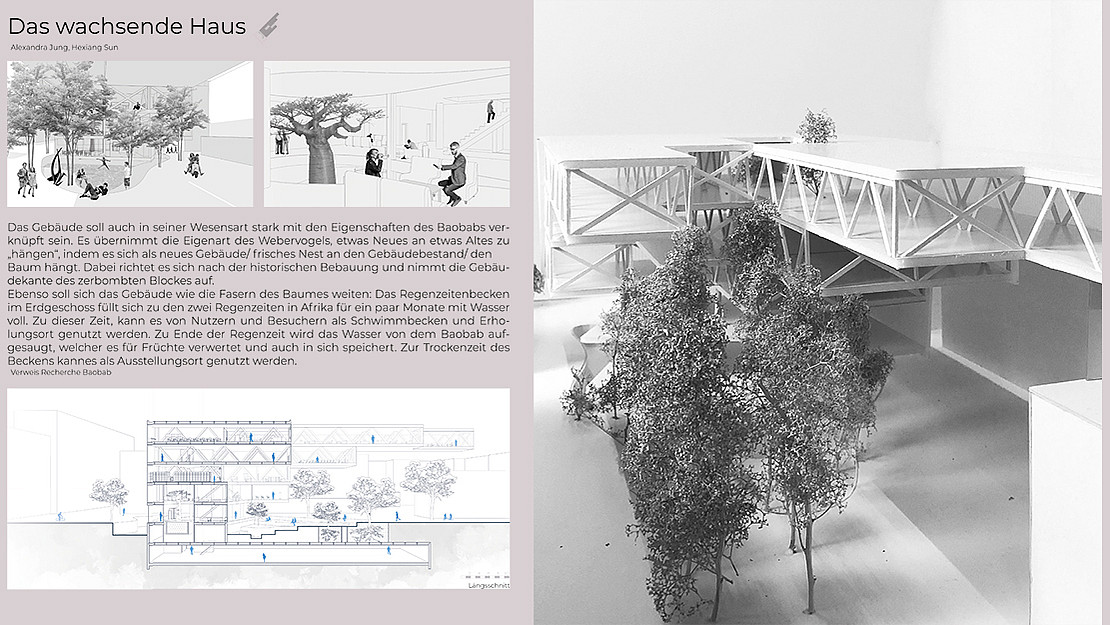
The Growing House I Alexandra Jung
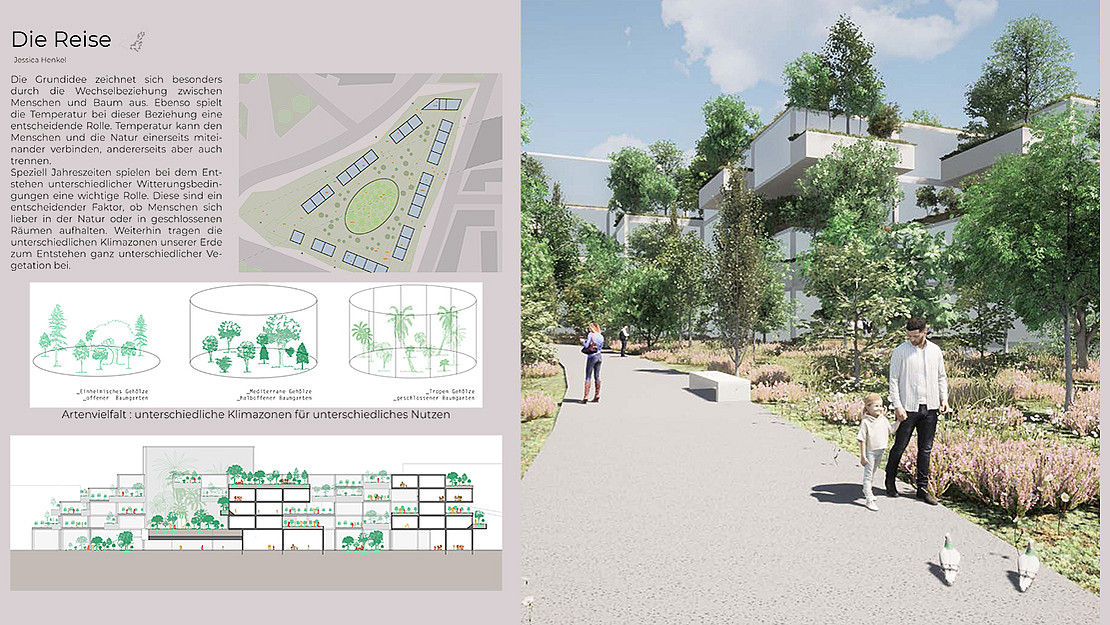
The journey I Jessica Henkel
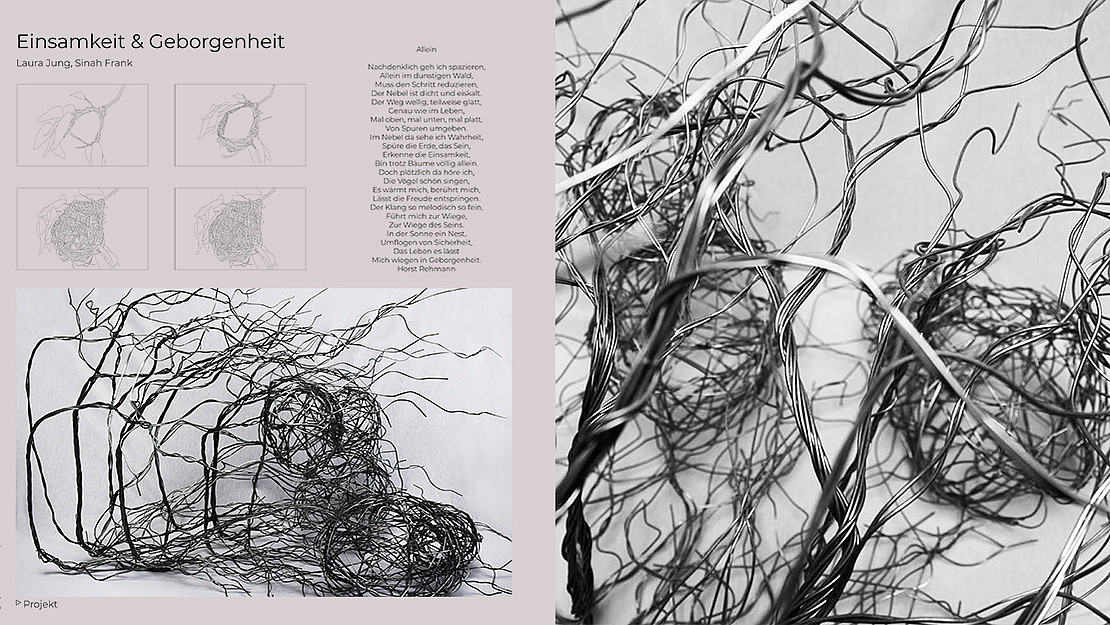
Loneliness, security I Laura Jung, Sinah Frank
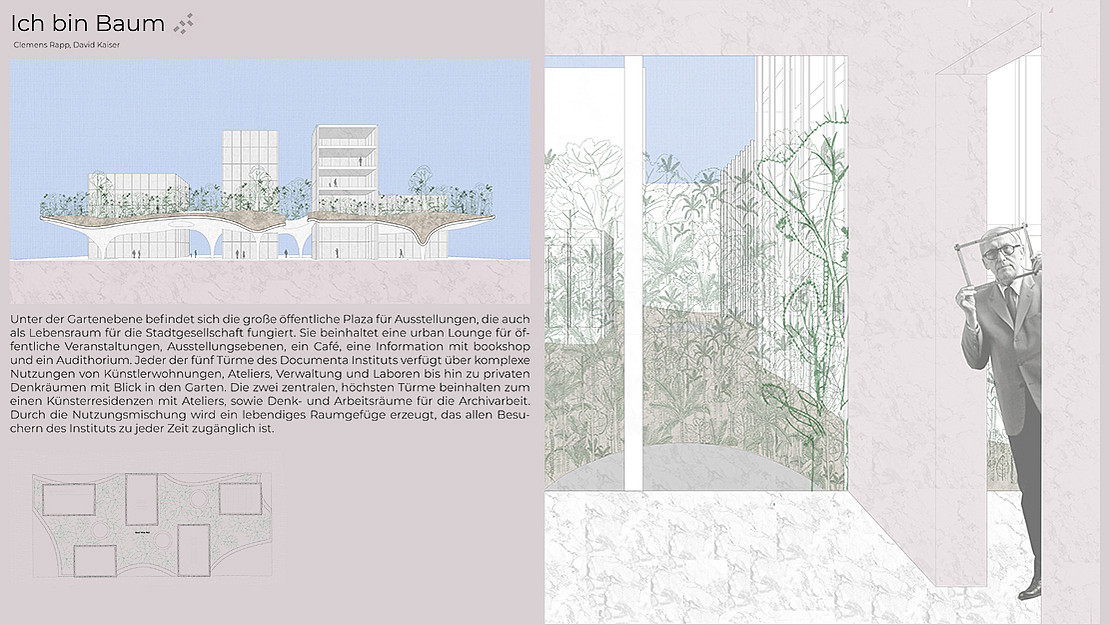
I am a tree I Clemens, Rapp, David Kaiser
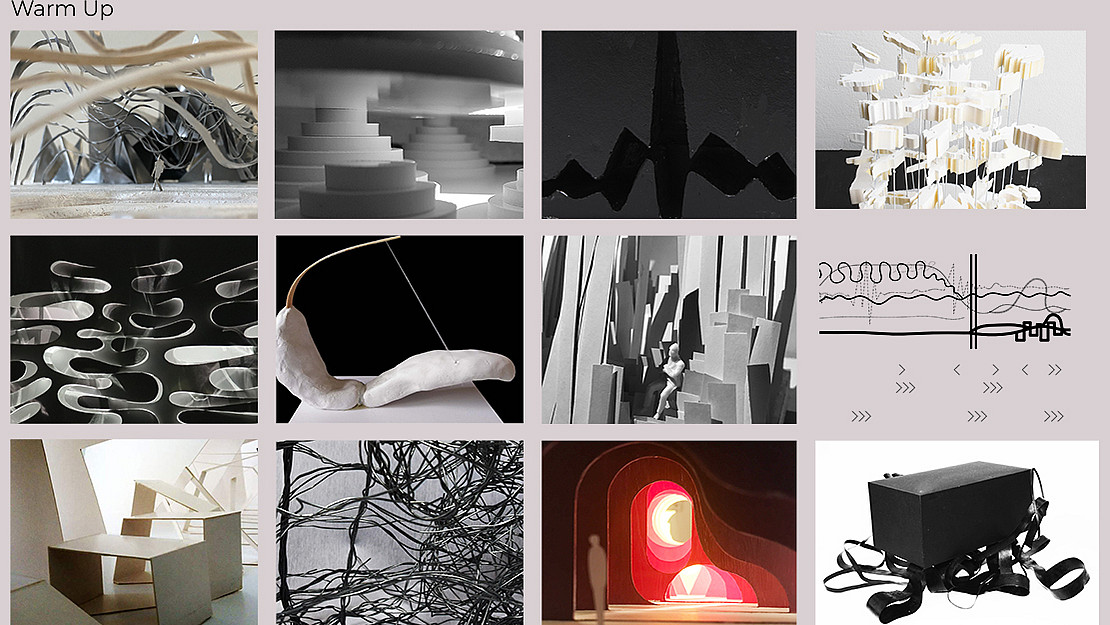
Warm Ups I All students
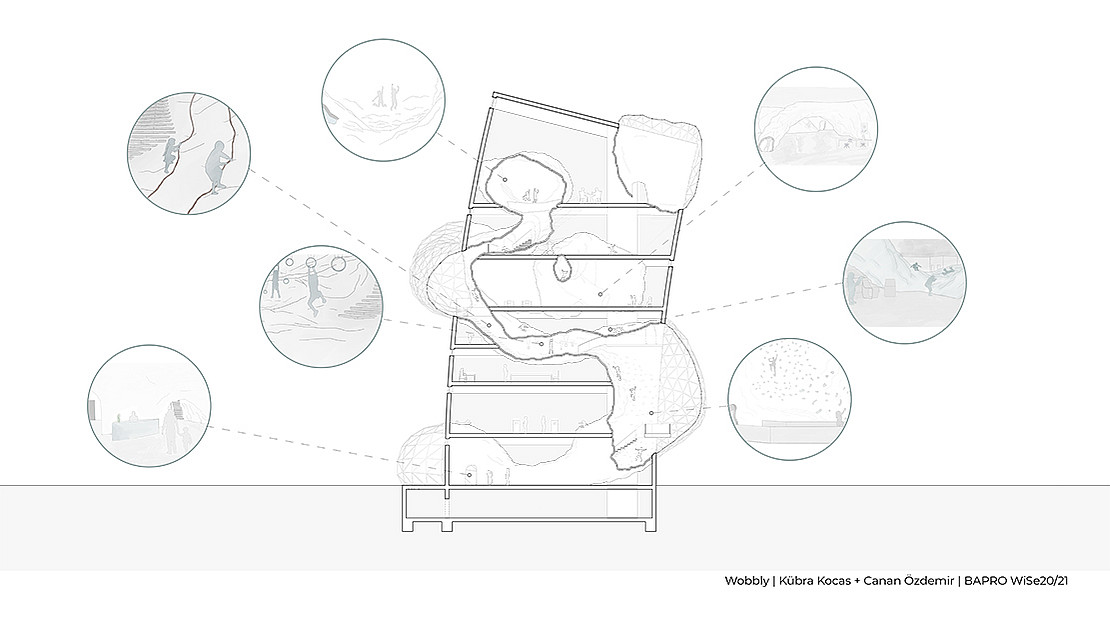
Wobbly Schnitt, Kübra Kocas, Canan Özdemir
5th semester I Practical project with "Professional practice studies"
In the 5th semester, a practical project supervised by the department combines theory and practice and offers the opportunity for a personal "strengths and weaknesses analysis". Students get to know the demands of practice by working in an office and make valuable contacts for the time after their studies.
At this point, the students have the experience and knowledge from four semesters of study at their disposal and can therefore also be entrusted with independent activities at the practical workplaces. Subsequently, as part of the Bachelor's thesis, there is the opportunity to specifically expand on the interests, deficits and potentials identified in the practical project.
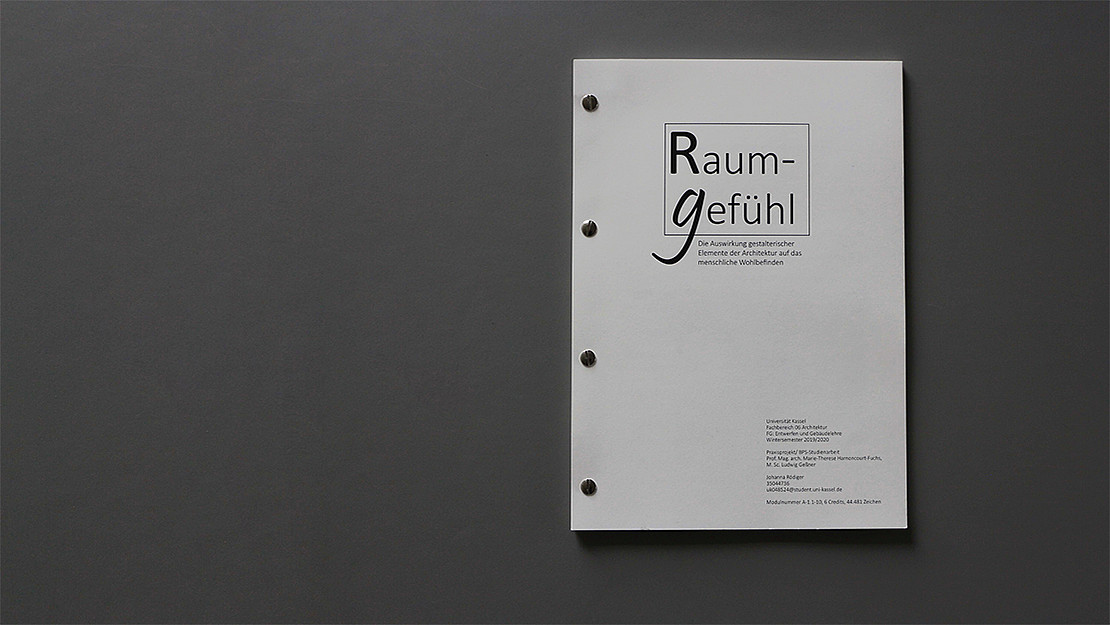
BPS student research project Johanna Rödiger WiSe19/20, FG Design and Building Theory
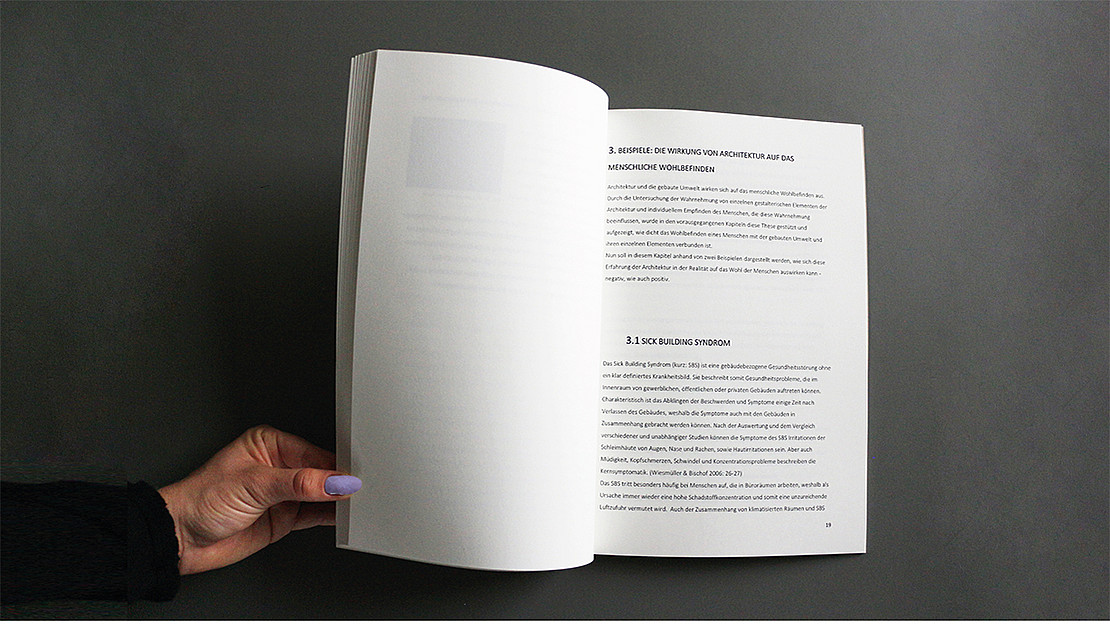
"Sense of space", The effect of design elements in architecture on human well-being human well-being
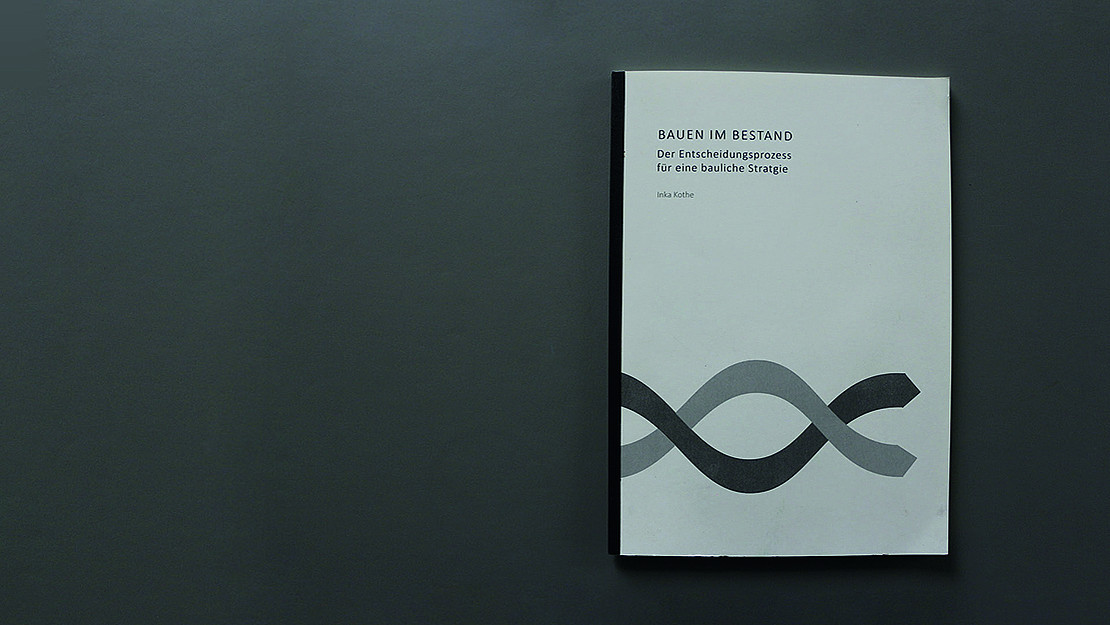
BPS student research project Inka Kothe SoSe19, FG Design and Building Theory
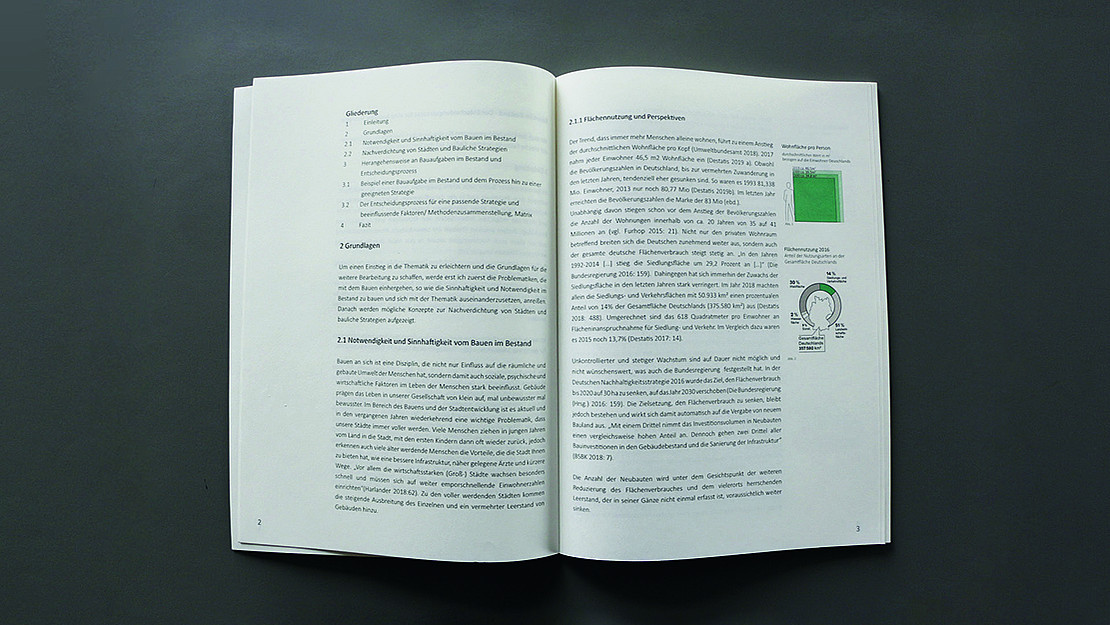
"Building in existing buildings", The decision-making process for a construction strategy
6th semester I Project module and preparation for the Bachelor's thesis
The project module in the 6th semester usually prepares students specifically for the topic of their final thesis (Bachelor's thesis). The further course of study and the final Bachelor's thesis are designed in such a way that the interests developed in the practical project can be intensified.
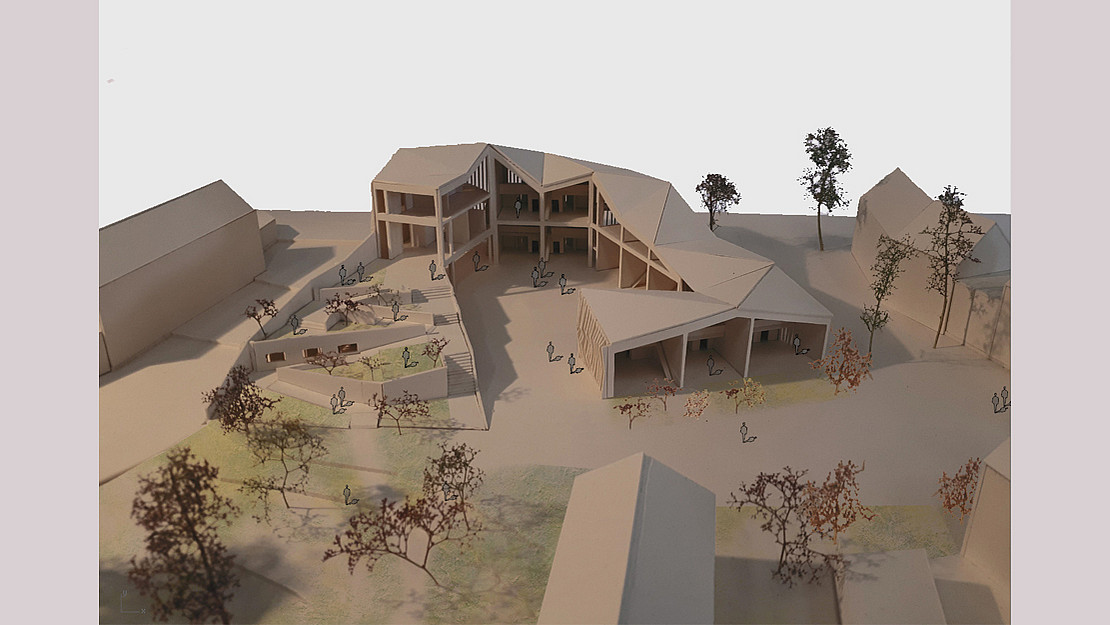
Art and cultural center "KaP - Kunst am Platz" I Pauline Gleichner + Katharina Mertens
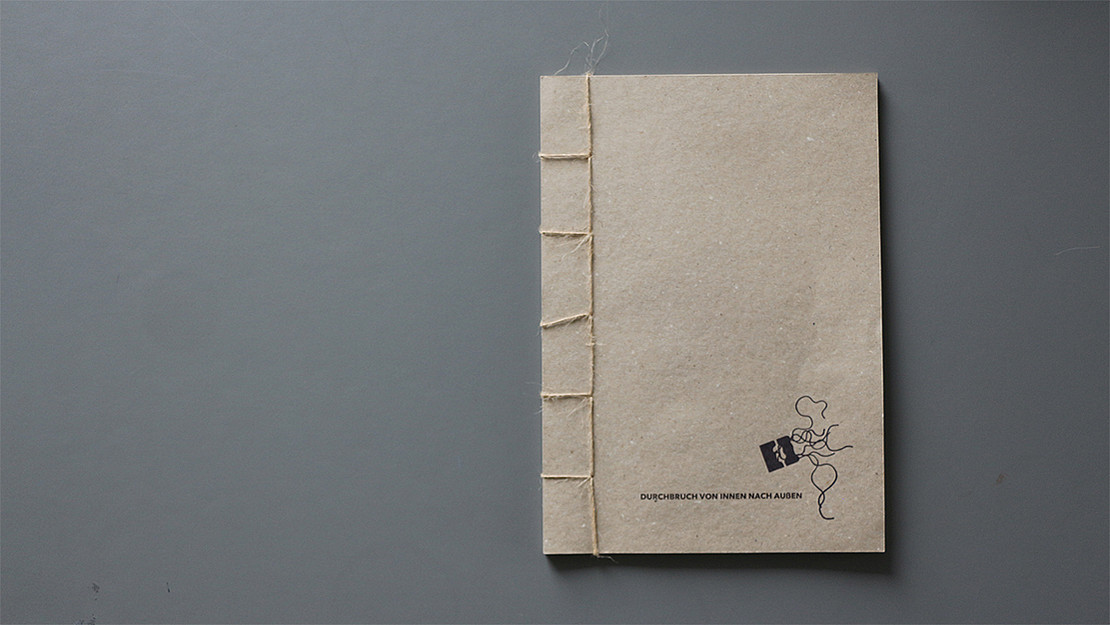
Bachelor thesis Büsra Yüksel SoSe19, FG Design and Building Theory
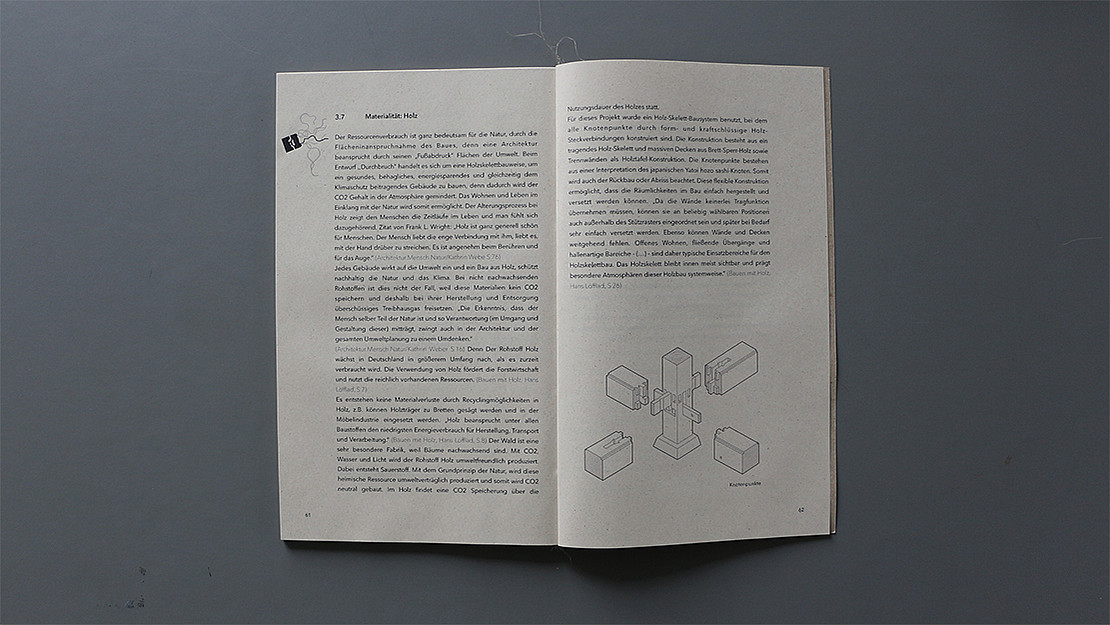
"Breakthrough from inside to outside", strengthening human well-being through the relationship of the interior to the outside world // linked to the "genius loci" psyche and space project
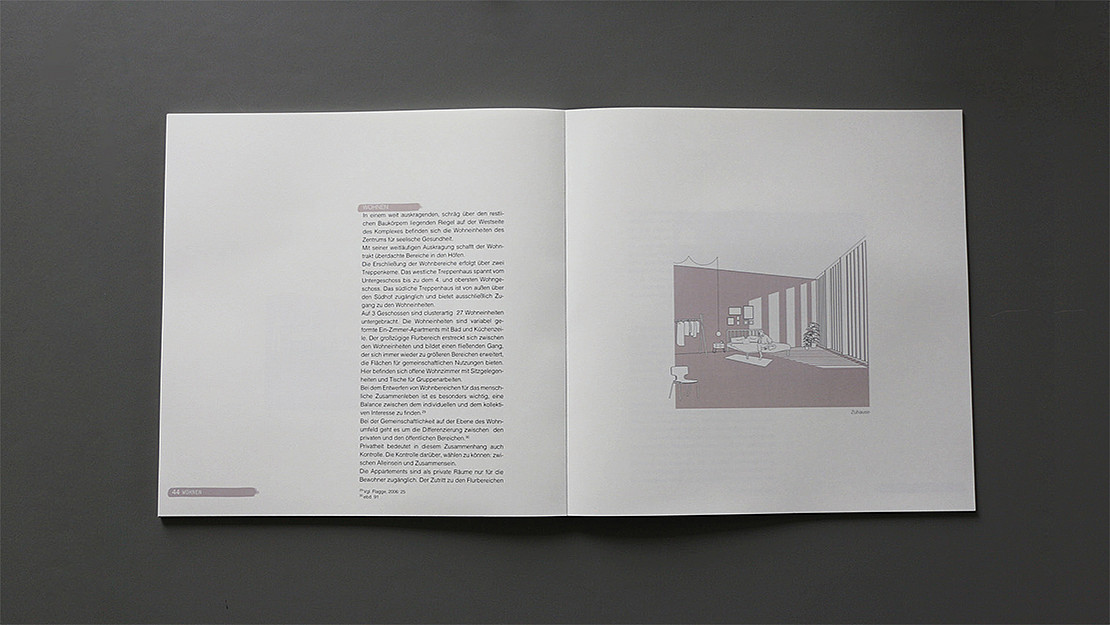
Bachelor thesis Mia Sehrt SoSe19, Department of Design and Building Theory
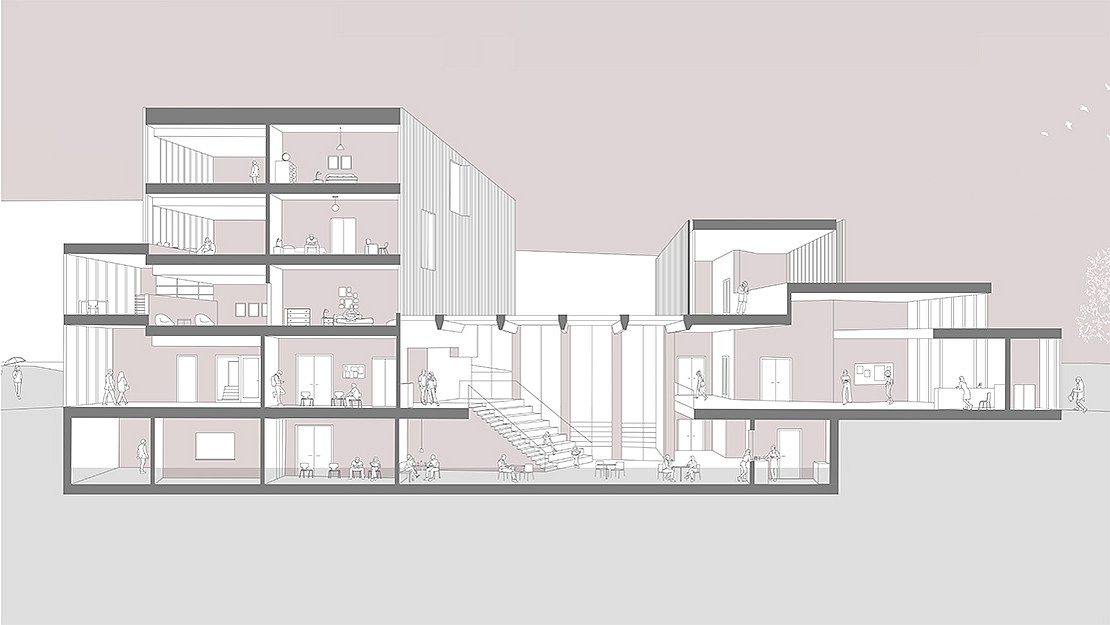
"The Third Place on Campus", A community center as an interface between the university and the psychiatry department
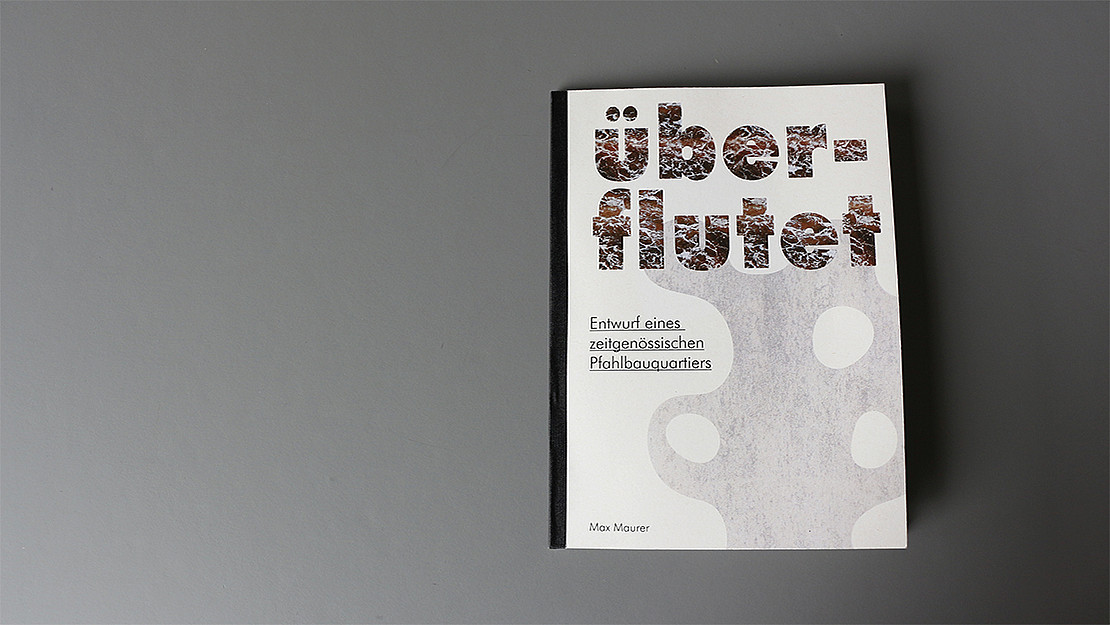
Bachelor thesis Max Maurer, "flooded"

Design of a contemporary pile dwelling quarter