
This page contains automatically translated content.
Whale hunting in the Faroe Islands - slaughter or cultural technique?
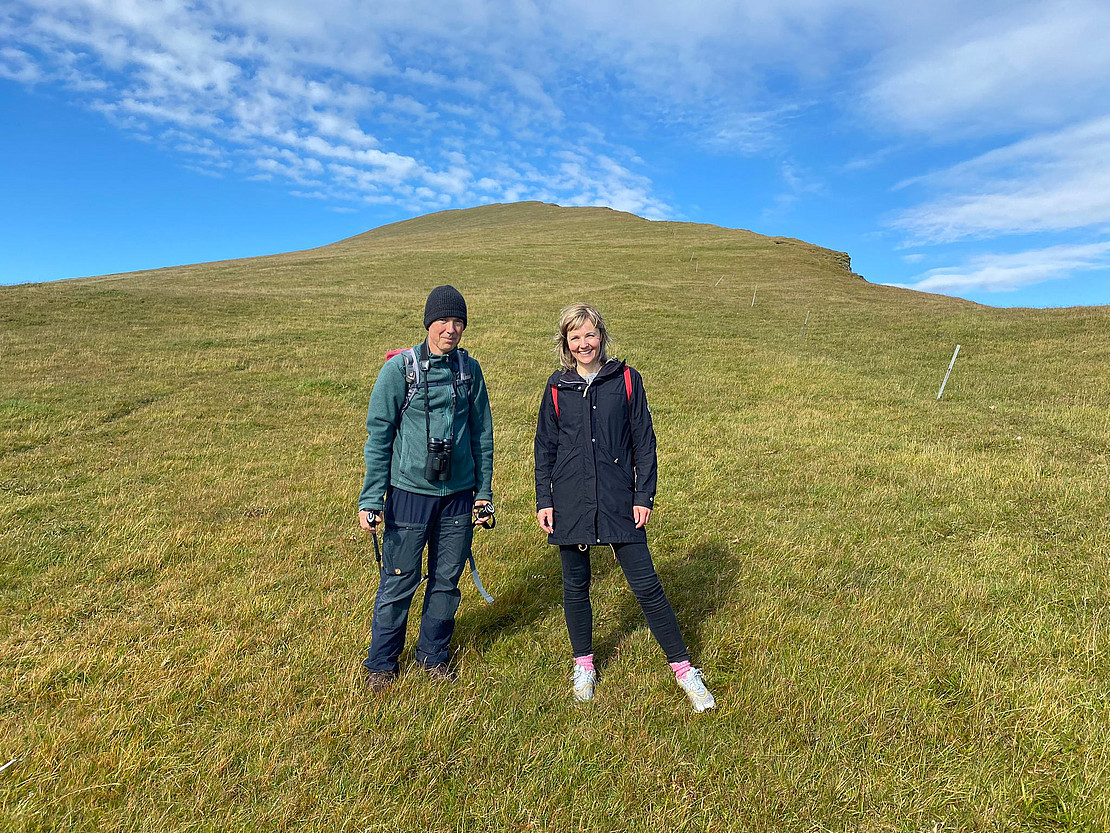 Image: Tobias Plieninger
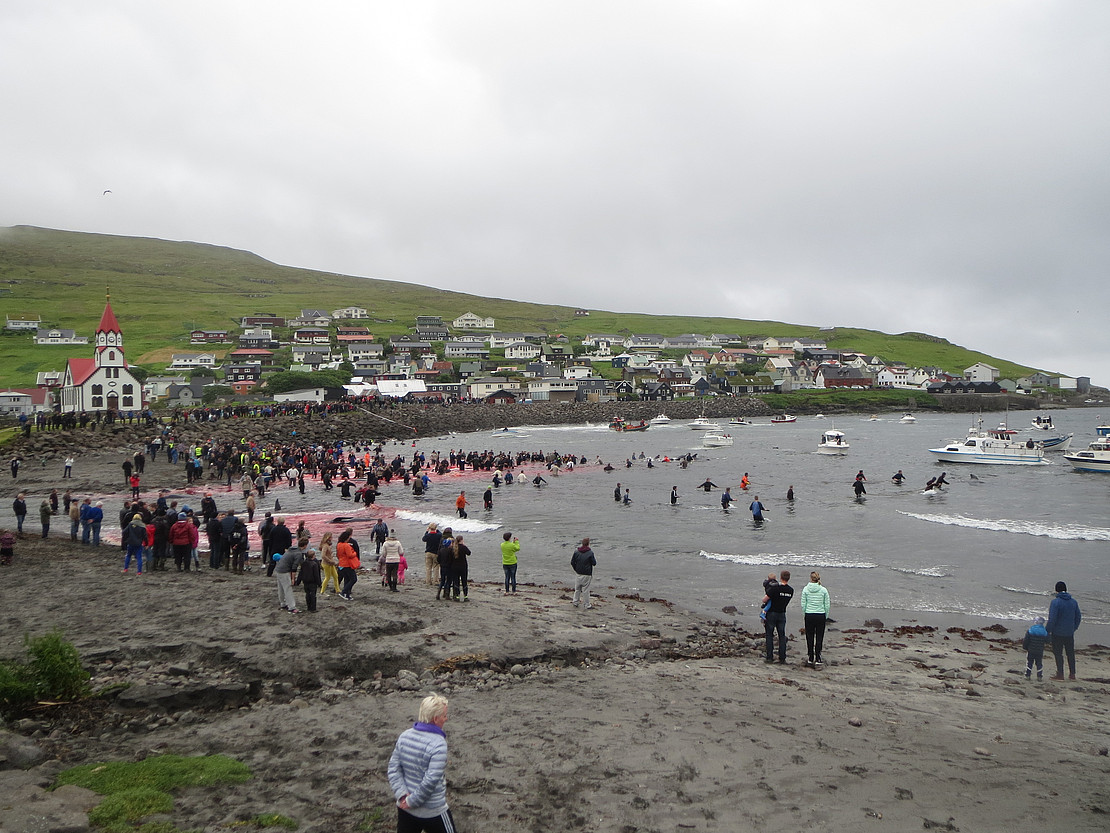
The water turns blood red when pilot whales are hunted on the Faroe Islands, men in rubber boots dismember the marine mammals at the harbor basin: Images like these regularly go around the world and often cause outrage. But the hunt on the remote archipelago in the North Atlantic is part of a centuries-old culture, an expression of collective identity - and a subject of research. Dr. Tobias Plieninger, Professor of Social-Ecological Interactions at the University of Kassel, has been working with an international team to investigate the values, rules and forms of knowledge that shape hunting on the Faroe Islands today. In this interview, he talks about what we can learn from this research about the relationship between humans and nature - and whether there is anything good to be gained from whale hunting.

publik: What prompted you to look into hunting on the Faroe Islands?
Tobias Plieninger: In my research, I am interested in the socio-cultural factors that influence land use: Traditions, world views, values. Especially in the context of sustainability and land use, we are increasingly recognizing how central they are. The Faroese hunting tradition is a fascinating case in this sense: it shows how closely cultural identity, relationship to nature and sustainable practice can be interwoven. In Germany, people's relationship with nature is becoming ever weaker - be it in agriculture or in everyday urban life. Many studies show that this disconnection is a key cause of the biodiversity and climate crisis. This is why there are increasing calls for reconnections between humans and nature.
publik: You say "fascinating case" - how do you deal with a topic like whale hunting as a scientist? Do ethical questions play a role?
Plieninger: Of course, you can never be completely neutral on such an emotionally and normatively charged topic, and science doesn't always have to be. It's more about being aware of your own perspectives and dealing with them openly. I myself have a background in forestry science, so I'm no stranger to hunting. Although I don't have a hunting license, I am a flexitarian and consciously consume mainly game meat - because I consider hunting to be one of the most ecological and sustainable forms of meat consumption, if it is done responsibly. Our position is not judgmental. We want to understand, not condemn. But what we can say is this: Hunting on the Faroe Islands is a far cry from the industrial hunting models we see in Japan or Norway, for example. It is organized collectively, not commercially, and the meat is consumed locally. The social cohesion around these practices is very strong. There are many issues to think about, not just the killing of marine mammals. For example, the fact that pilot whales, as apex predators, accumulate many harmful substances, which makes their consumption a health problem. The Faroese health authorities warn against this. The capture of fulmars, which are strictly protected in Germany, is also irritating from a Central European perspective. But that is precisely why this case is so interesting: it raises fundamental questions about how we deal with cultural diversity in sustainability, where we draw the line and what we define as "sustainable".
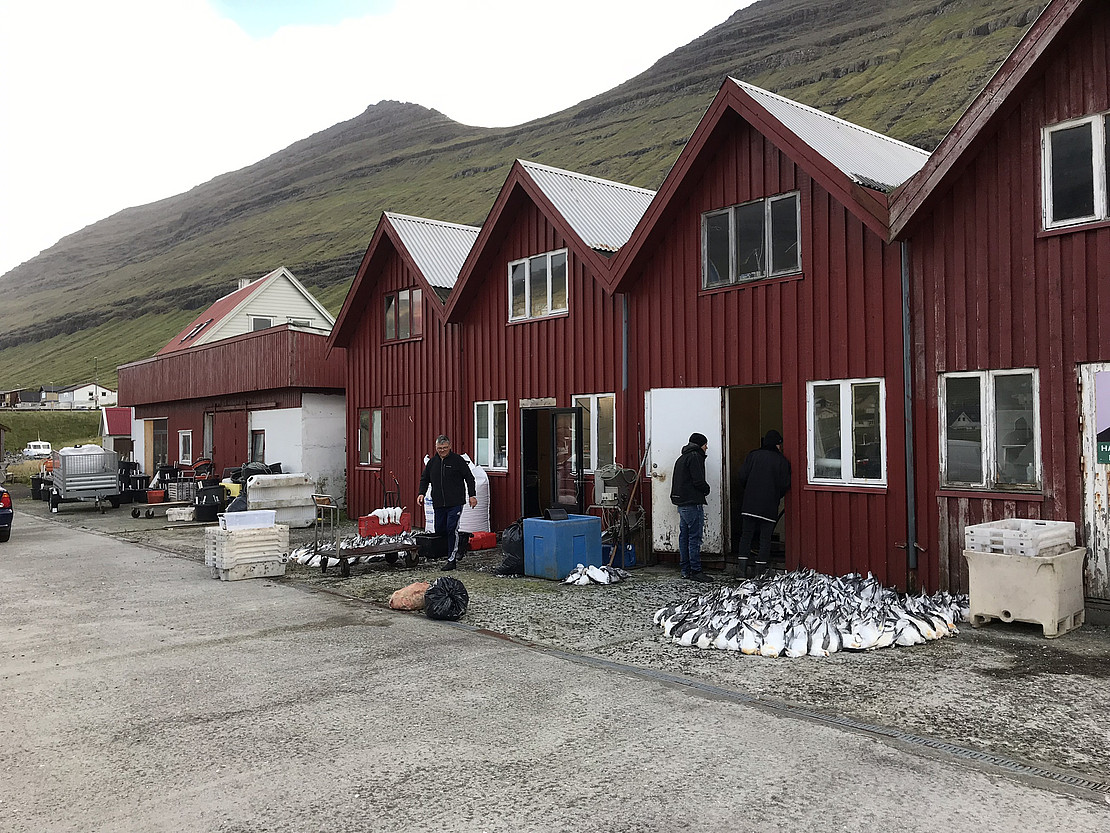 Image: Tobias Plieninger
publik: A key finding of your study is that hunting on the Faroe Islands has changed from a practice necessary for survival to a leisure activity. What impact has this change had on hunters and society?
Plieninger: Hunting hardly plays an economic role any more; nowadays no one is dependent on feeding on whales or fulmars. Nevertheless, it is rarely questioned. It is an expression of belonging to the family, the community and the island and a source of identity. Hunting is seen as a cross-generational experience that many people have been involved in since they were children. The sporting, sometimes even competitive aspect also plays a role. It is a ritual that strengthens social cohesion and creates a direct connection to nature. Despite all the social modernization, the population on the islands is very traditional, which can also be seen in religious and political beliefs. And hunting is an almost purely male affair there. It was hardly possible to find female hunters.
publik: Are there any laws on whaling?
Plieninger: Hunting is not very regulated. The first nature conservation law was only passed a few years ago. There are also no well-developed informal regulations. In many more traditional societies, community rules have been established that contribute to sustainability, such as agreements on upper hunting limits. We found relatively little on the Faroe Islands. This could be because the population is so small and the resources seem so plentiful.
publik: Was there no self-criticism among the hunters interviewed?
Plieninger: There are individual hunters who question whether certain animal species should continue to be hunted or whether the current form of hunting is still appropriate. But those are exceptions. The criticism comes from outside, for example from international animal welfare organizations.
publik: How do the Faroese react to this criticism?
Plieninger: Usually rather defensively. My impression was: now more than ever. Criticism, especially from international animal welfare organizations such as Sea Shepard, is often perceived as overbearing and insensitive, as an attack on identity and way of life. These organizations often show little understanding for the special situation of the island population, which then leads to isolation rather than change.
publik: The interviews show that interest in hunting is waning, especially among young people.
Plieninger: Yes, that is a clear trend. I stumbled across a study from Spain this morning that used demographic modeling to examine the development of the hunting population. The result was pretty clear: a dramatic decline and ultimately the extinction of these practices in the near future. We are seeing something similar in the Faroe Islands. Many young people are immersing themselves in digital worlds rather than in nature. But who knows? At the same time, there is a counter-trend, people are rediscovering old practices - also as part of the growing interest in regionality, sustainability and experiencing nature. It's difficult to predict how this will develop in the long term.
publik: So will hunting on the Faroe Islands be a living practice or a nostalgic tale in 50 years' time?
Plieninger: I'm not a clairvoyant. Many things have survived there for an astonishingly long time. Sheep farming is often no longer financially necessary, but almost every family still keeps a few sheep, simply out of tradition - and this is also reflected in the regional cuisine. There are fascinating methods of preserving or fermenting meat, which are also gaining new appreciation as part of the tourism boom and the "New Nordic Cuisine". I could imagine hunting becoming more of a hobby or a lifestyle, but not disappearing completely.
publik: To what extent are the results of your study relevant?
Plieninger: It's about understanding what role knowledge, practice and emotions play in the human-nature relationship and what these relationships can look like if they are not just based on consumption or benefit calculations. So what we take away is: Sustainability does not only mean minimizing harmful effects, for example by reducing emissions. It also means finding new - or old - ways for people to connect with nature. Our research asks: How can we promote knowledge of nature? How can we strengthen emotional ties to the environment? And what cultural forms contribute to this? These are not purely academic questions, but key challenges for a sustainable society.
publik: And what do you personally take away from the research?
Plieninger: It has shown me that we should listen more. Our Western perspective often tends to make moral judgments without really understanding what matters on the ground. The Faroe Islands hunt may be bloody and conflict-ridden, but it also represents a lived relationship with nature that we have lost in some ways. Perhaps we can learn from these contrasts.
This article appeared in the university magazine publik 2025/2. Text: Bastian Puchmüller