
This page contains automatically translated content.
Fighting ash dieback with microorganisms
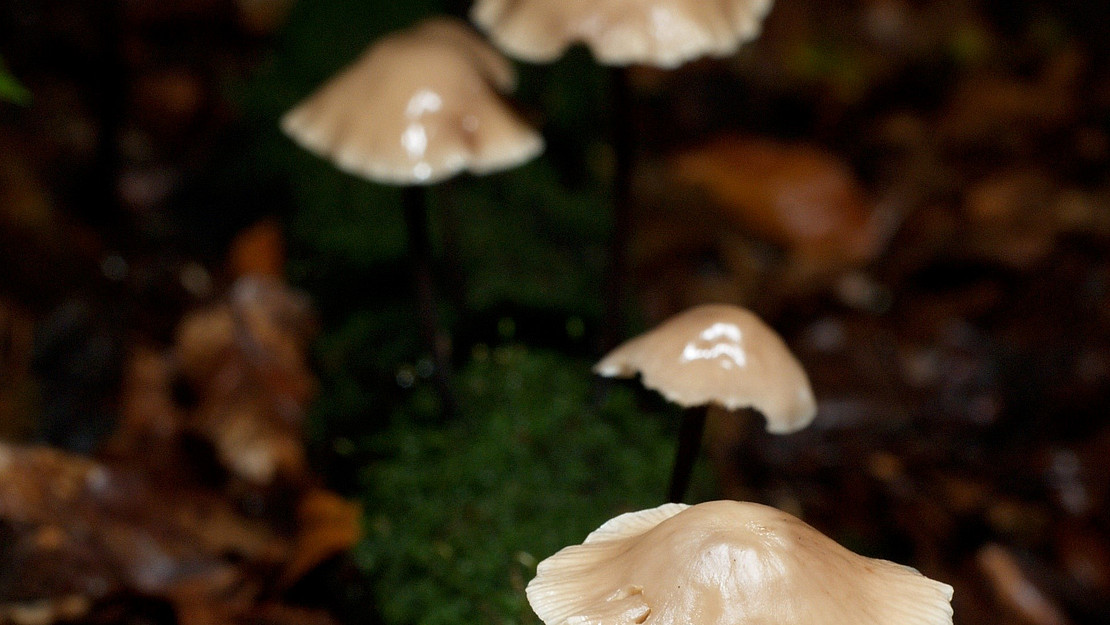 Image: University of Kassel.
Microbiome optimization is a biotechnological process that aims to strengthen the ash tree's natural defence mechanisms. Special microorganisms, so-called microbiomes, are introduced into the roots of the ash trees. These microorganisms form a beneficial relationship with the ash tree and help it to better fend off the fungus Hymenoscyphus fraxineus ( false white stem canker), which originates from Asia.
In the completed joint project "FraxForFuture", researchers have shown in multi-year experiments that ash trees treated with these microbiomes have a significantly higher survival rate. In controlled experiments, the mortality rate of ash trees was reduced by up to 70 percent. The new joint project FraxForFuture 2 - FraxRecovery is now following on from FraxForFuture in an application-oriented manner. Project Leader is the Northwest German Forest Research Institute in Göttingen.
As part of FraxForFuture 2 - Frax Recovery, the eighth sub-project "Microbiome optimization with beneficial fungal species" is located at the Institute of Biology-Ecology (Department 10 Mathematics and Natural Sciences). The duration of the project is 1.10.2025 to 30.9.2028. Project Leader is Prof. Dr. Ewald Langer.
For FraxForFuture 2 - FraxRecovery, the Federal Ministry of Agriculture, Food and Home Affairs (BMLEH) is providing funding totaling 7.2 million euros from the "Renewable Renewable Resources" program. Six research alliances with a total of 26 sub-projects were previously involved in FraxForFuture. It was funded with a good 10 million euros via the Forest Climate Fund of the Federal Ministry of Agriculture and the Federal Ministry for the Environment, which expires in 2024.
Promising methods for the conservation and reintroduction of the common ash(Fraxinus excelsior) are to be further developed with FraxForFuture 2 and made practicable. Three fields of action have emerged:
1. protection of the ecosystem and reintroduction of tolerant ash trees into forest ecosystems: the interactions in ash ecosystems are being investigated in order to derive and test courses of action for the recovery of individual trees and ash stands. Among other things, seeds from less susceptible ash trees will be collected. The seedlings will be grown in the tree nursery and used for various experiments, such as the reintroduction of ash trees to suitable locations.
2. practical transfer of the knowledge gained in the FraxForFuture project and broad implementation of rescue measures: The development of biological plant protection methods such as microbiome optimization or therapy will be expanded. The safeguarding of the genetic potential of healthy or tolerant ash trees in gene banks and seed orchards will also be continued. The recommendations for action from the previous FraxForFuture project and the training courses for forest owners based on them will be evaluated and adapted to current practical requirements.
3. monitoring of further damage and monitoring of success: project participants are documenting and analyzing the damage caused by ash dieback in the intensive observation areas identified in the previous FraxForFuture project. The aim is to establish a long-term monitoring procedure, to compare damage patterns and countermeasures and to derive optimal strategies against ash dieback.
Link to the sub-projects in the FraxRecovery joint project:
https://www.fnr.de/fileadmin/Projekte/2025/Projektbl%C3%A4tter/Verbundvorhaben_Frax_Recovery.pdf
Summary:
Ash trees that are treated with certain microorganisms are better able to fend off the fungus Hymenoscyphus fraxineus ( false white stem canker), which originates from Asia, and have a significantly higher survival rate. The fungus is responsible for the mass death of ash populations in Europe. The Federal Ministry of Agriculture, Food and Home Affairs (BMLEH) is providing funding of 7.2 million euros from the "Renewable Resources" program for the joint project FraxForFuture 2 - FraxRecovery. This will continue the completed FraxForFuture project, not least to implement broad rescue measures for the endangered ash populations in practice.
Contact:
Prof. Dr. Ewald Langer
FB 10 (Mathematics and Natural Sciences), FG Ecology
Mail: elanger[at]uni-kassel[dot]de
Tel. +49 (0)561 804 4215 (secretary, Mon, Wed, Fri 11-15, Tue, Thu 8-11)
Tel. +49 (0) 561 804 4364
www.ecology.uni-kassel.de