My university is doing something
The content on this page was translated automatically.
Did you know that the University of Kassel ...
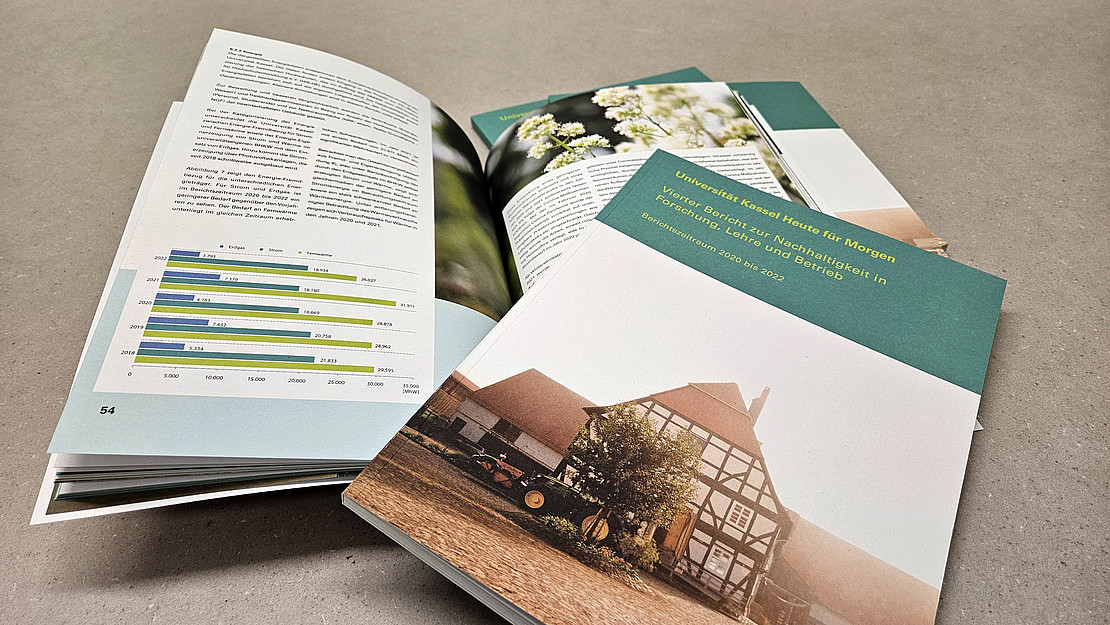
... has already produced its fourth sustainability report?
... uses 100% green electricity?
... has already equipped its fleet with 7 electric vehicles and one hybrid?
... has purchased 15 e-bikes?
... has made a binding decision to use paper with the Blue Angel label ?
Measures and projects are explained in more detail here:
Waste

Waste separation
- A color-coded system makes it easier to separate and assign the different waste fractions: Paper (blue), light packaging (yellow), organic waste (brown) and residual waste (black) .
In the offices
- The paper bins in the offices are only intended for waste paper. They are emptied weekly as part of the cleaning process.
In the tea kitchens
- There are bins for lightweight packaging (DSD/green dot), organic waste and residual waste. They are emptied daily as part of the cleaning process.
In the copy rooms
- Larger bins for waste paper are available here. They are emptied daily by the cleaning service provider.
Building entrances/foyers
- Triple collection systems for paper, lightweight packaging (DSD/green dot) and residual waste are available in the foyers and entrance areas of buildings with high fluctuation.
Outdoor areas
- Residual waste containers are available throughout the outdoor area. Bins for lightweight packaging (DSD/green dot) and waste paper are also provided near cafés and lecture halls.
Deposit rings:
Pilot project with three deposit rings for collecting deposit bottles from garbage cans in front of the canteen. The idea is that no deposit bottles end up in the residual waste bin (principle of waste separation), but are recycled, which is economical, ecological and social! Join in!
Drinking water dispenser:
Drinking tap water instead of mineral water also reduces waste and conserves resources. Several drinking water dispensers have been set up in the Campus Center and in the BiB at Hopla, in Witzenhausen and in Wilhelmshöher-Allee for the free use of drinking water. More are planned.
Building

Procurement

Paper reduction measures(UBA, 2020):
- Digitization of documents and scan-to-email save paper and archive space.
- Information on the internet makes some archiving superfluous.
- Take waste paper to its destination on foot or by bike and save additional costs, e.g. by transporting it by car.
- The same applies to recycled paper: use it sparingly.
- If you have a printer, use the duplex function (double-sided printing) and the reduce function (print 2 pages on 1 page).
- Green printing software removes blank pages and unnecessary information from the file to be printed.
In addition:
- Look out for seals such as Blue Angel for recycled paper
- Use public bookcases
University goals in the area of procurement:
The university is aiming to amend its procurement regulations.
Biodiversity

Take part in our ideas workshops and sustain groups. By participating, you can get involved in the participatory process from idea development to the conception, planning and implementation of measures and contribute to finding innovative solutions for the sustainable development of university operations and campus life.
The university's outdoor areas are to be increasingly developed in an ecologically high-quality and climate-adapted manner. To this end, a concept for sustainable open space management is being developed. Wherever possible, the microclimate and quality of stay are to be improved and biodiversity increased.
Where possible, areas are to be gradually unsealed and greened with vegetation that has a cooling effect. To this end, guidelines will be drawn up which, among other things, contribute to the reduction of sealed surfaces. This basis is binding and must be taken into account when planning new buildings and conversions.
Energy

Saving energy
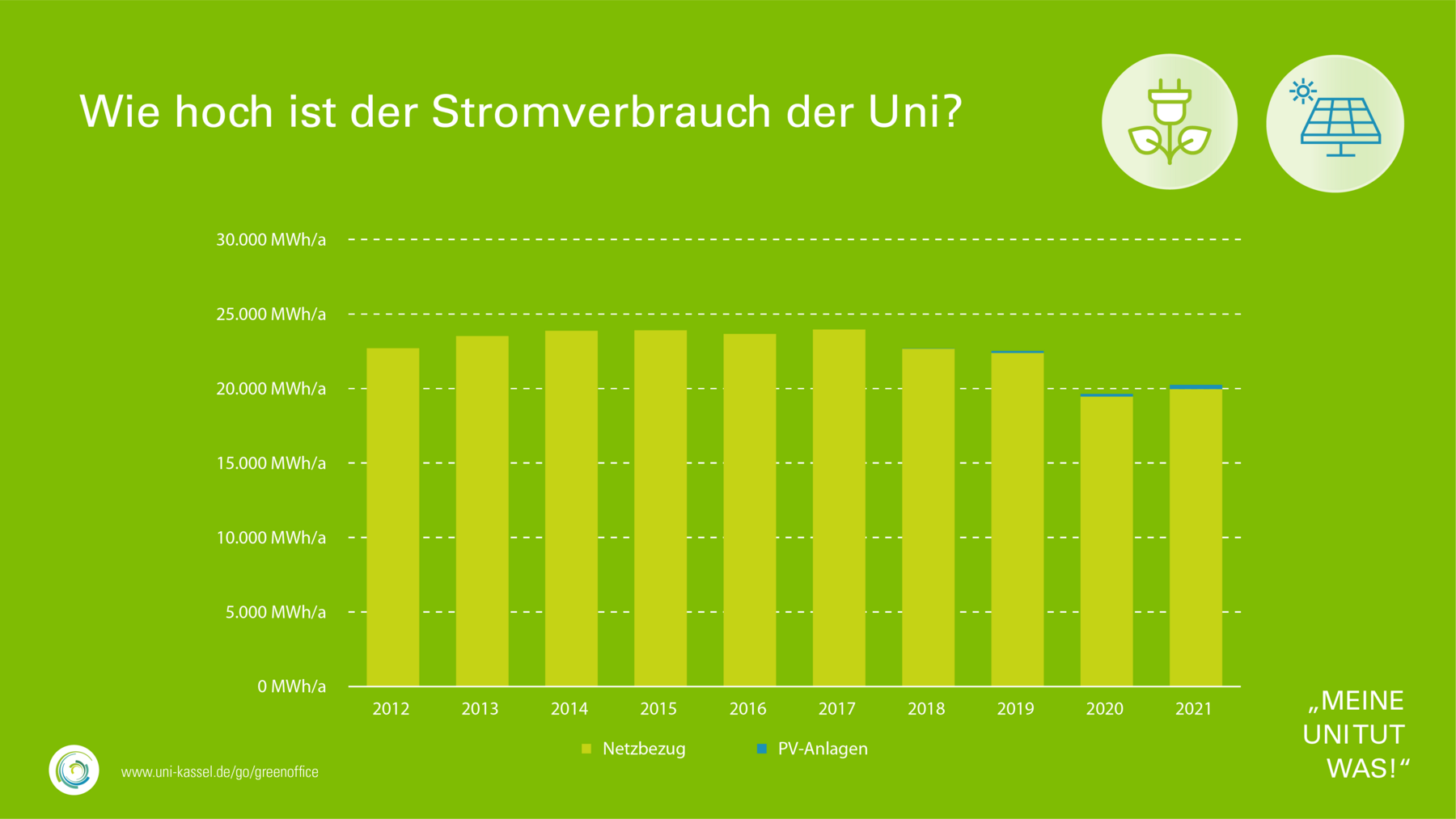
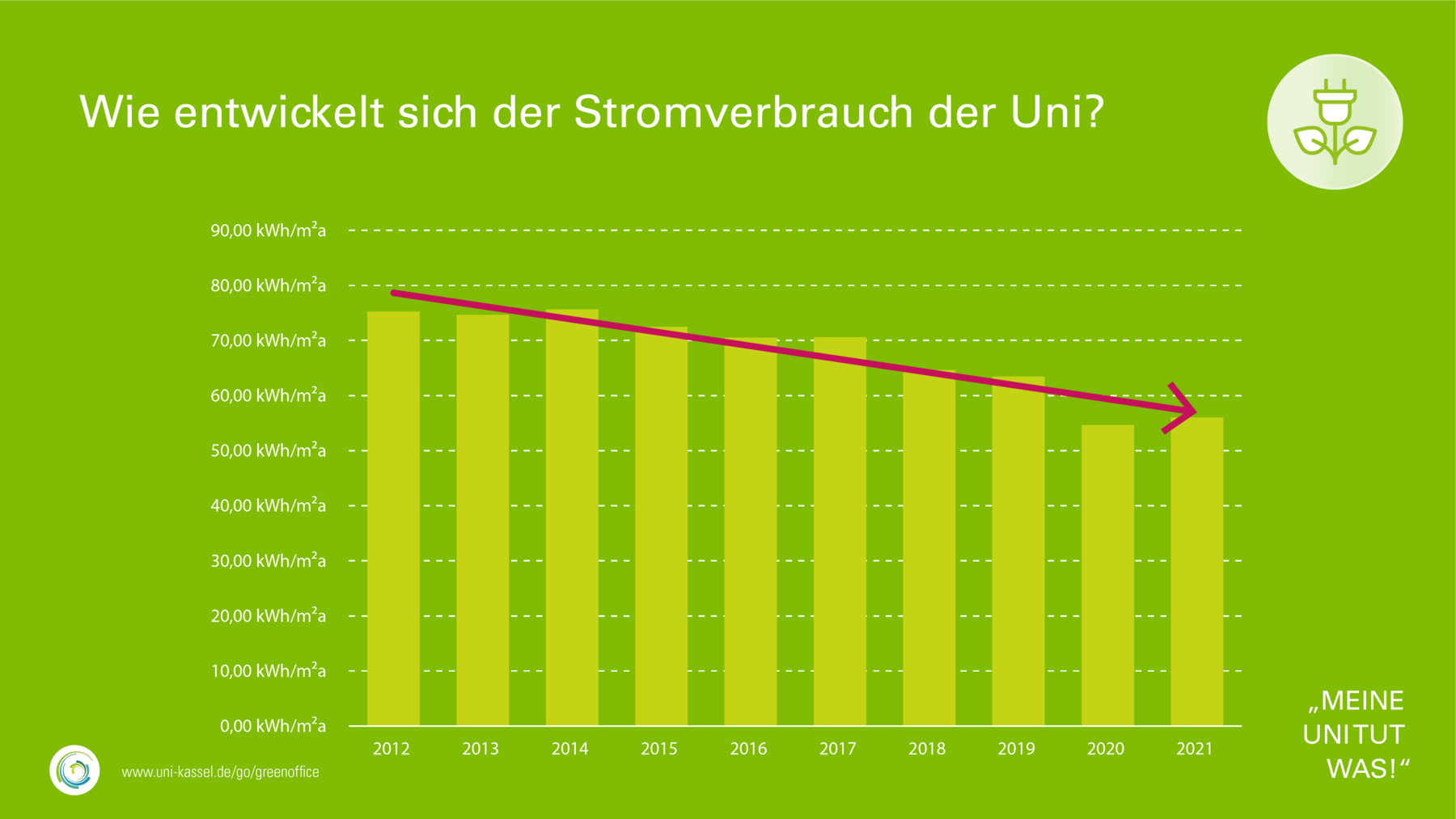
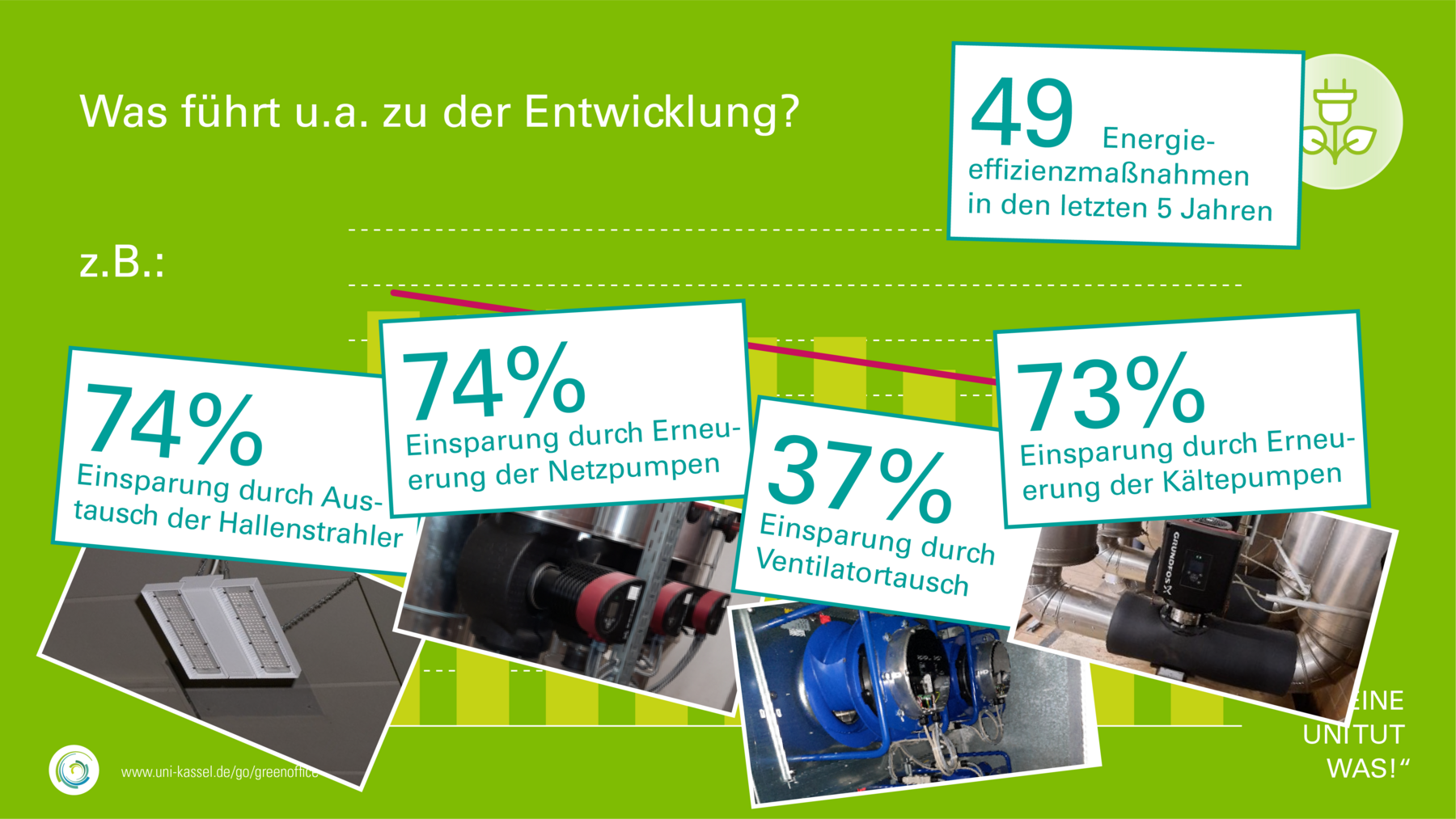
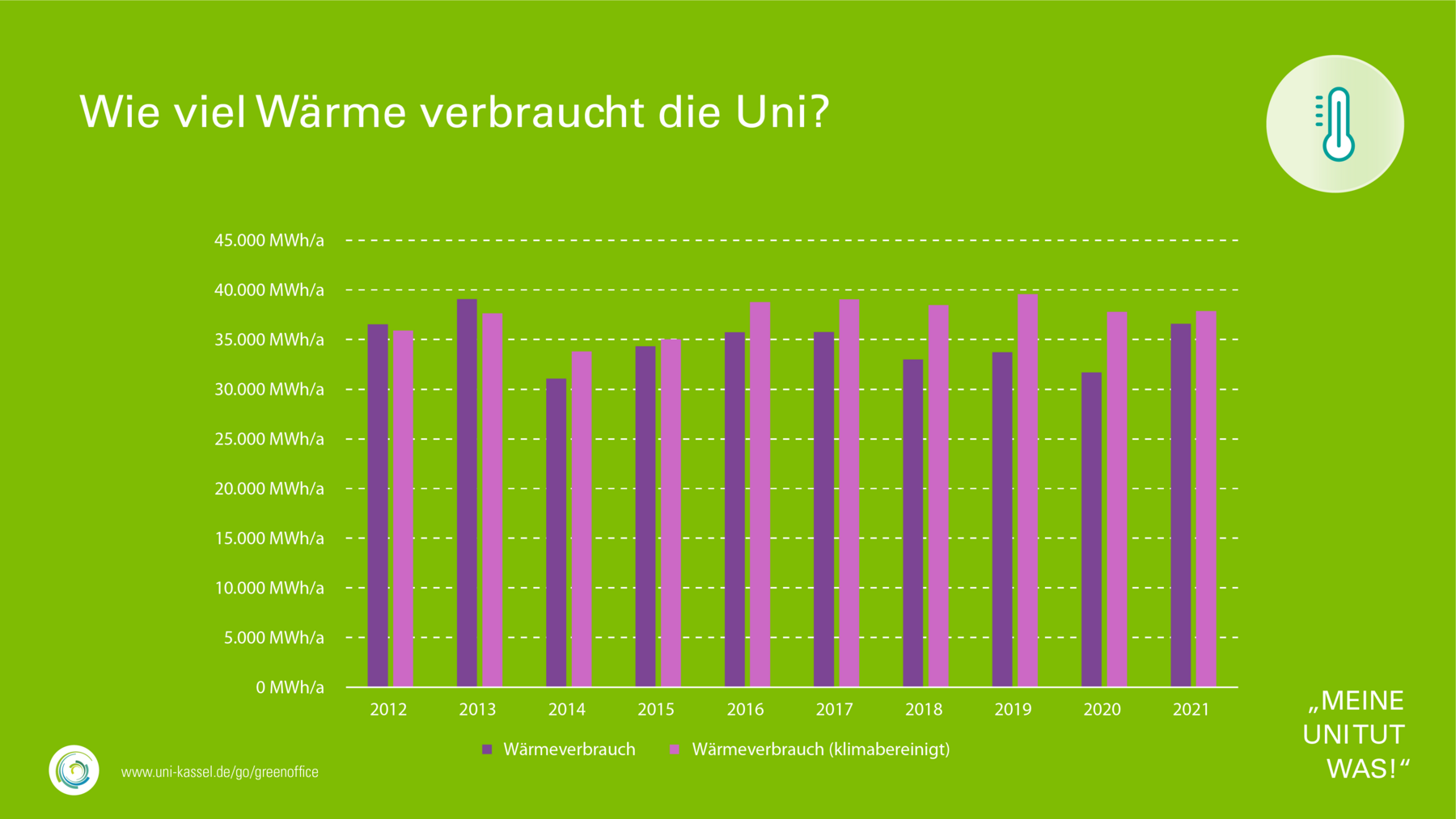
Together, we reduced our electricity consumption by 6% and our heat consumption by 22% in the winter of 2022/2023 through energy-saving behaviour and targeted technical and organizational measures. We therefore exceeded our savings targets and also made an important contribution to climate protection.
The following checklists and information show how everyone can not only save electricity (e.g. in the office, kitchenette or lecture hall), but also heat, e.g. through correct ventilation. They also show how to make your own mobility more sustainable and thus save energy.
Energy targets by 2025
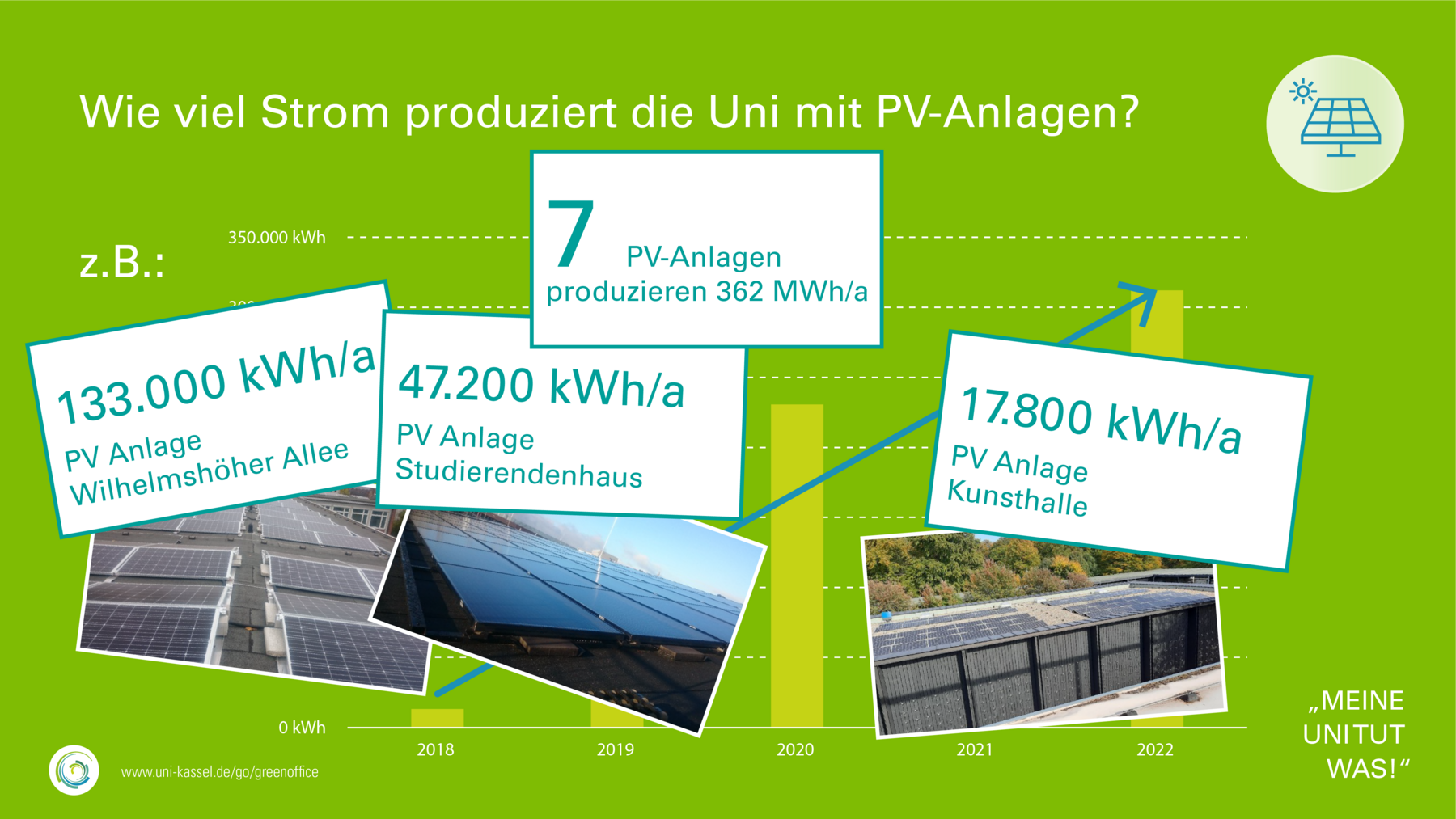
- Further expansion of renewable energies by a further 400 kWp
- Further reduce energy consumption, by a further 5% for electricity and a further 10% for heat
- energy consumption should be presented in an easily understandable way and made transparent for all university stakeholders
- the installation of heat pumps in all central water heaters at the University of Kassel should lead to a reduction in natural gas consumption and contribute to heating the buildings



Mobility
The cargo bike rental service VELOAD at the Green Office ends on 01.08.2025.
The opportunity to borrow a large cargo bike for employees of the University of Kassel met with a great response and was very successful. The test period of originally 6 months was extended by a further 6 months until the end of July 2025, but unfortunately cannot be extended again.
As a consolation for all those who would still like to borrow a cargo bike: in cooperation with the AStA and "KARLA - KAsseleR LAstenrad " , there will soon be a cargo bike in the Nordstadt district, which will be available on campus in front of the student house.
There are three places on campus where you can park your bike safely. The bicycle parking facilities are located in the underground parking garage of the library (access via Georg-Forster-Straße). A fourth parking facility has been set up for employees in front of the administration building at Mönchebergstraße 19. The facilities work with an electronic door lock system, which allows access via the campus card. The campus card can be activated for the respective bicycle parking facility in the key depot without an application.
For the time being, three bicycle boxes have been completed at Hopla; these are located at the Institute of Music, the Engineering Sciences I building and the K10 building. A further box will be installed in Georg-Foster-Straße once the construction work has been completed. In addition, another lockable area is to be set up in Arnold-Bode-Straße, between WiSO C and the Campus Center, by the end of October. Further bicycle boxes are already being planned for all other locations (Kunsthochschule, AVZ, Damaschkestraße, Witzenhausen Steinstraße, Wilhelmshöher Allee).
The bike boxes can be used via the Campus Card, which must be activated at the key depot. No application is required for activation.
Bicycle repair stations are being set up at every university location. This has already been done at some locations and the stations are in operation. The other stations (Witzenhausen Steinstr. Kunsthochschule, Wilhelmshöher Alle and Nordcampus) will be set up soon.
Michael Müller-Görnert, VCD Transport Policy Officer
Cars are responsible for 40 percent of transport-related greenhouse gas emissions in Germany. Ambitious CO2 limits are a key lever for reducing these emissions. The current requirements for new cars must therefore be continuously developed.
- Give preference to climate-friendly means of transportation (buses and trains are superior to cars and domestic flights in terms of their carbon footprint)
- Prefer telephone and video conferences to business trips
The AStA also has a wide range of offers:
Use nextbike and borrow a bike free of charge for 60 minutes.
Location Witzenhausen:
Through infrastructure and behavioral change measures, the university is helping to increase the share of walking, cycling and public transport in the commuting behavior of university members to ideally at least 85% by 2029 (currently 67% for employees, 69% for students). It also promotes an electromobility-friendly design of the campus. When employees travel on business and students travel abroad, awareness should be raised for the choice of sustainable travel options in the interests of greenhouse gas neutrality. Domestic flights should be avoided, and public transport and rail should be preferred for intra-European flights. Awareness is to be raised for the increased organization of and participation in virtual conferences. When purchasing new vehicles, the vehicle fleet is to be gradually converted to cars with electric drives; from 2025, electric drives are to be preferred for all new car purchases. Where reduction is impossible, compensation will take effect.
Furniture exchange

Material exchange "remnant"

Sustainable catering

Environmental research

Environmental science

events

Water

Save water and conserve resources, e.g. by drinking tap water instead of buying bottled water and using our drinking water dispensers.
The university wants to reduce its fresh water consumption by using gray water and rainwater and is striving for a rainwater management system that includes a wide-area infiltration of rainwater from general pavement areas.