
This page contains automatically translated content.
Bridge construction and wastewater treatment: Construction industry sponsorship award
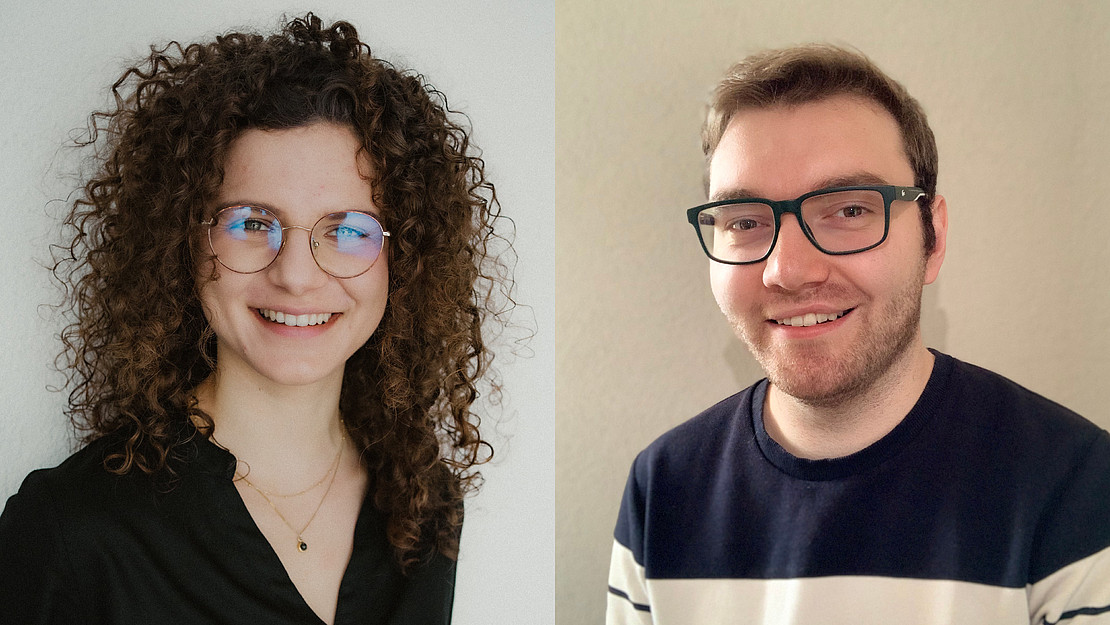 Image: LenaCharlotte Photography/ private
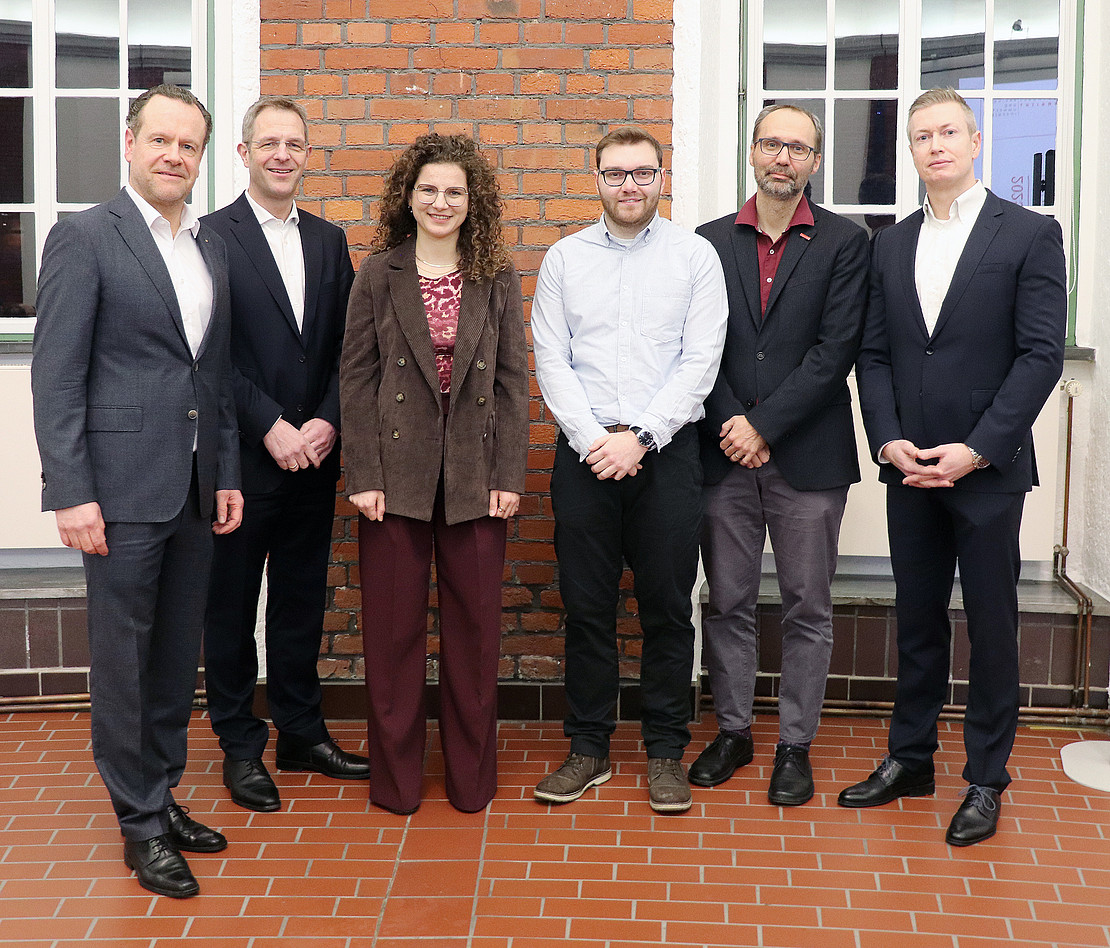 Image: Krümler.
Jonas Umbach (24) deals with the greenhouse gas emissions caused by wastewater treatment plants in his bachelor's thesis. Based on real operating data, he draws up a carbon footprint for the Kassel wastewater treatment plant. This shows that the majority of climate-damaging emissions are not caused by electricity consumption or the chemicals used, but directly during wastewater treatment itself. More than half of the total climate impact of the wastewater treatment plant is attributable to nitrous oxide emissions. This indicates that there is potential for optimization in biological nitrogen purification, particularly in the conversion and degradation of nitrogen compounds. Based on his results, Jonas Umbach develops concrete proposals for measures and their prioritization. These include, for example, better control of aeration, stabilization of biological processes and targeted handling of highly nitrogen-laden partial flows. Measures to reduce methane losses, for example by sealing open plant components, can also help to further reduce emissions.
Mareike Schaake (26) is investigating the fatigue behavior of weld seams in steel bridges in her master's thesis. Fatigue describes the gradual failure process of weld seams due to changing stresses, especially as a result of truck traffic flowing over the bridge. Fatigue is therefore one of the key challenges in the design and construction of steel bridges, as it has a significant impact on both the safety and service life of a structure. One detail that needs to be considered in this context is the hem plate connection, which is located inside non-accessible box girders. Box girders are the main load-bearing members of many steel bridges.
The aim of Mareike Schaake's work is to improve the prediction of the fatigue safety of welded hem plate connections. To this end, she is developing a numerical calculation model. She then compares her method with the simplified regulations for the design of welded sheet metal connections prescribed by the federal authorities. The comparison of results shows that the simplified regulations underestimate the service life by a factor of three. Instead, the calculation method developed by Mareike Schaake allows a more reliable prediction of the service life while reducing the amount of material used.
The results of both prizewinners were very convincing and valuable, according to the jury. The work combined scientific standards with direct practical relevance in an outstanding way and fulfilled the assessment criterion "contribution to solving significant problems in engineering practice" very well. They also showed in an exemplary manner how the Faculty of Civil and Environmental Engineering generates concrete contributions to achieving climate protection and sustainability goals as well as the efficient use of resources in construction by closely linking university research, teaching and knowledge transfer.
Background:
The prize is sponsored by the Arbeitsgemeinschaft Stufenausbildung (Bau) Kassel - ASK and is endowed with a total of 3000 euros. It is awarded in cooperation with the Faculty of Civil and Environmental Engineering at the University of Kassel once a year in a public ceremony to students of the Faculty for outstanding theses. The selection criterion is that the work to be awarded makes a contribution to solving significant problems in engineering practice, taking into account cost-effective planning, design and construction.
The North Hessian construction industry sponsorship prize continues the tradition of the KBB prize, which was first awarded 38 years ago. It is therefore the longest-standing sponsorship award for student theses at the University of Kassel.
Jonas Umbach's bachelor thesis was supervised by Prof. Tobias Morck (Department of Urban Water Management). After completing his Bachelor's degree, Jonas Umbach is currently studying for a Master's degree in Environmental Engineering at the University of Kassel.
Mareike Schaake's Master's thesis was supervised by Prof. Mathias Clobes (Department of Steel Construction). Since completing her Master's degree, Mareike Schaake has been working as a research assistant at the Department of Steel Construction.
The ceremony took place in a festive setting in the university's Gießhaus. The evening was hosted by Prof. David Laner, Dean of the Faculty of Civil and Environmental Engineering. The sponsorship award was presented by the two ASK board members Thilko Gerke and Dr. Burkhard Siebert. The keynote speech was given by Prof. Thomas Mrokon, Mainz University of Applied Sciences, on the topic of "Disruptions in the construction industry - how will AI change the future of construction?"