
What drives me: Brain training and Drosophila
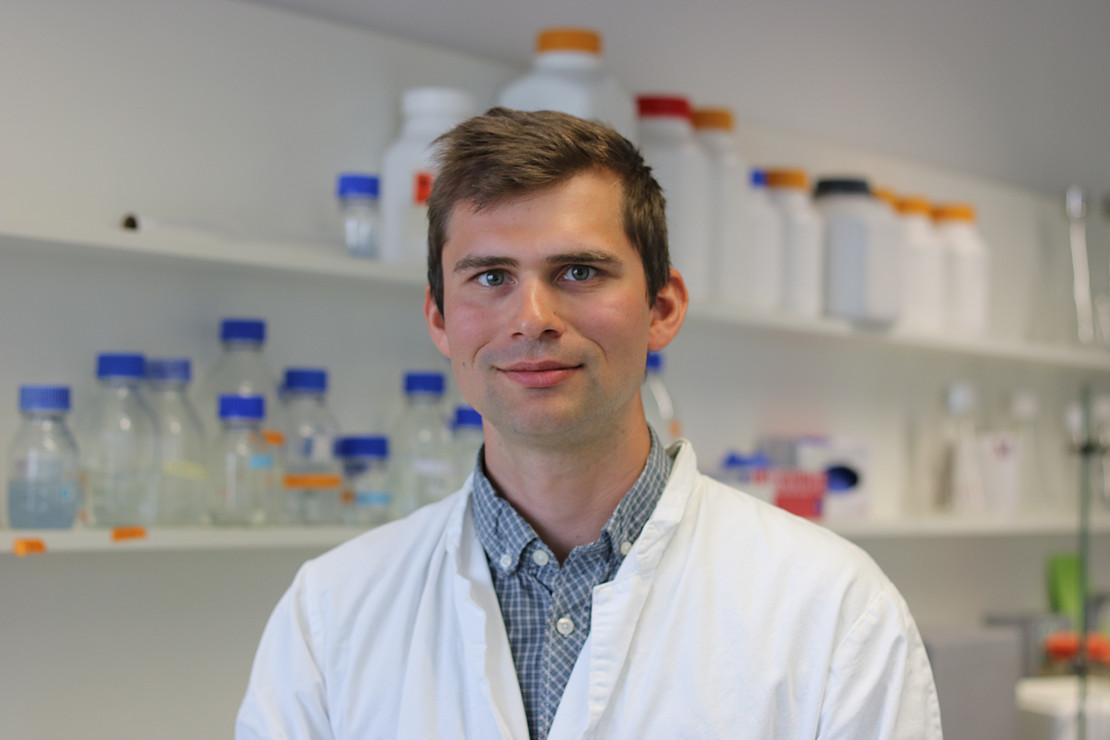 Image: Vanessa Laspe
In the early embryonic development of many insects, including the fruit fly Drosophila melanogaster, the fertilized egg cell goes through a special phase: the cell nucleus divides several times - without new cell membranes forming. The result is a so-called syncytium, a huge cell with thousands of cell nuclei. In Drosophila, around 6,000 cell nuclei with identical DNA are formed in a short period of time. Only then does cellularization begin: the cell membranes fold in synchronously and enclose the individual cell nuclei. In this way, 6,000 new cells are created in one fell swoop.
In my doctoral thesis, I am investigating precisely this crucial moment of cell separation. My project is part of the "Multiscale Clocks" research training group, which deals with biological timers. We are investigating how different "internal timers" - for example the cell cycle - are synchronized with each other. Synchronization is necessary for cells to be formed at the right time, to divide or to specialize for their function in the organism.
My research focuses on the protein "Drop out", a so-called MAST kinase. This protein plays a key role in cell division by activating the motor protein dynein. Dynein transports cell components and helps to position the cell membranes correctly around the cell nuclei. If drop out is missing, cellularization is disturbed - no individual cells can be formed and the embryo cannot develop normally.
Human cells also have MAST kinases, which are comparable to those of fruit flies. Mutations in these proteins are associated with various types of cancer such as breast or lung cancer. Basic research on fruit flies can therefore provide important clues as to where new anti-cancer drugs could be used in the future - this is particularly motivating for me.
I have been working with the fruit fly Drosophila since my biology studies in the field of developmental genetics. In this model organism, I can use genetic tools to specifically switch genes on or off. I can observe the effects in real time under the microscope, for example when the wing shape or eye color changes compared to the natural wild type. For me, this is scientific mental exercise - a bit like a living puzzle of genetics, cell biology and biochemistry.
This article appeared in the university magazine publik 2025/2. Protocol: Vanessa Laspe