How is the course structured?
The content on this page was translated automatically.
The Bachelor's degree course in Electrical Engineering is aimed at graduates of grammar schools and technical colleges. Previous knowledge in the field of electrical engineering is not expected. Technical understanding and a love of innovation are much more important.
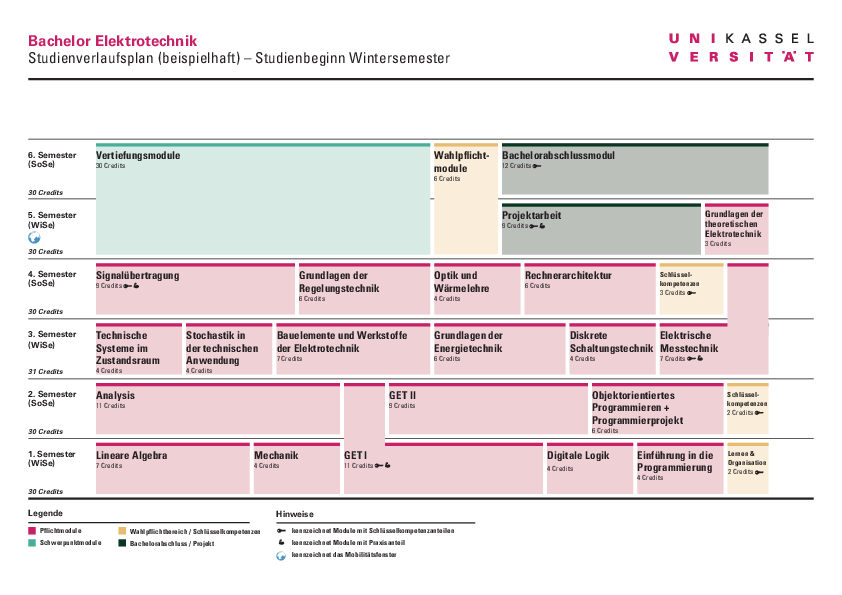
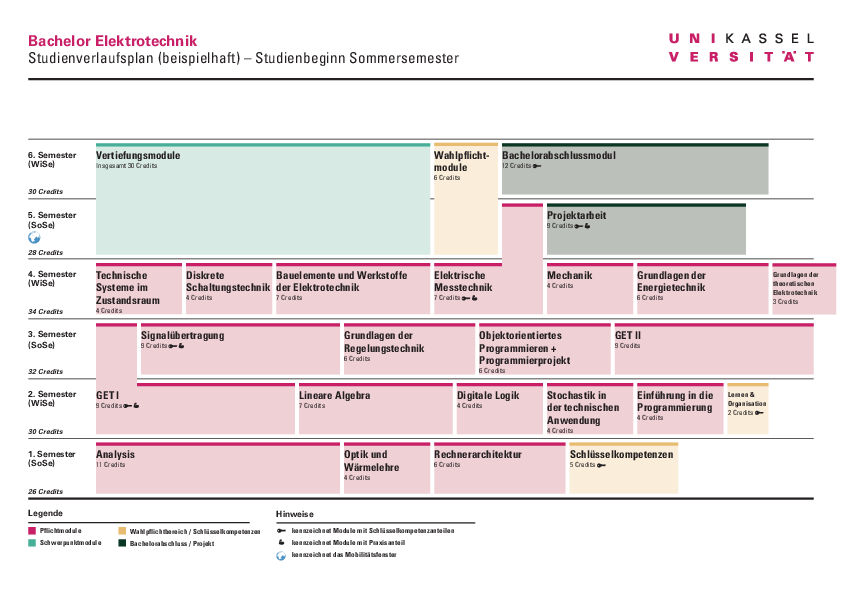
The aim of the course is to provide students with comprehensive basic knowledge at the beginning of the course and subject-specific knowledge and methods in the advanced semesters. Students can determine their subject focus by choosing a corresponding specialization; further individual specializations are possible.
The Bachelor's degree program teaches application-oriented specialist knowledge, practical skills and the basics of scientific work. Projects play an important role from the beginning of the course to the final thesis.
The majority of courses are accompanied by internships in the department's laboratories or by independent student teamwork.
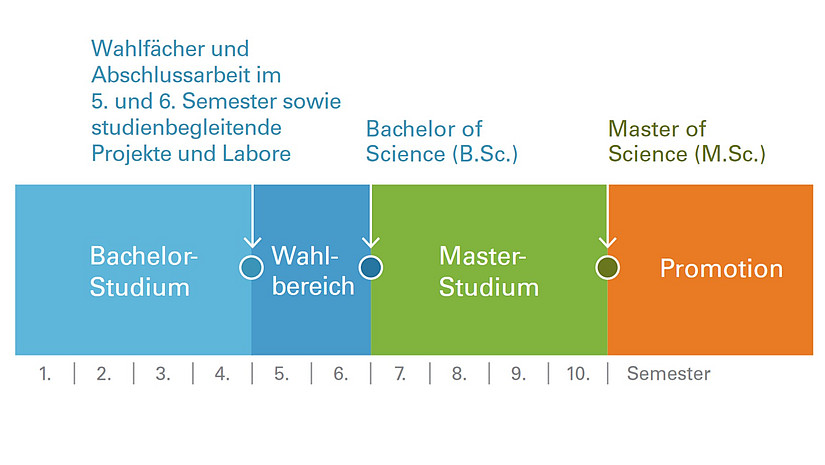
This ensures constant direct contact between students and lecturers. As part of the Bachelor's degree course in Electrical Engineering, students focus on one of the following specializations from the 5th semester onwards:
- Automated Systems (Automation Technology)
This specialization focuses on automation in technical systems. Complex digital control and regulation methods are used here in addition to the classic sub-areas of "measurement, control and regulation". - E-Mobility (electric mobility)
The basic structure of electric vehicles, the requirements of electrical systems in vehicles and efficient drives are the topics of this specialization. From winter semester 2025/26, you will also have the opportunity to significantly expand your specialization in the Master's degree course "Sustainable Electromobility". - Electrical Energy Systems
Electrical energy systems are essential elements of a modern energy infrastructure. This is why stationary systems for renewable energy generation, their networking and the topic of energy management are the focus of this specialization. - Electronics and Photonics
This specialization focuses on the physical principles, design and simulation as well as the numerous applications of modern microelectronic and photonic components and systems. - Information Technology (Information and Communication Technology)
Information and communication technology is a key technology in almost all modern technical products and systems based on the exchange of data and is the subject of this specialization. - Smart Sensor Systems (Sensor Systems Technology)
Sensors and sensor systems are a component of numerous modern technical devices and systems. They are designed as micro or nano sensors, for example, or are complex systems, e.g. with integrated lighting, cameras and image processing modules. Such systems form the basis for the use of AI (artificial intelligence) as well as for industrial automation. 30 CP are required for this specialization. All
specializations can be continued in the Master's degree course in Electrical Engineering. In addition to the projects provided for in the curriculum, there is also the opportunity to work as a student assistant on cutting-edge projects, gain know-how and earn money. The specialization modules, the project module, the compulsory elective modules and the modules for acquiring key skills together make up almost 30% of the flexible study components in the Bachelor of Electrical Engineering.
On completion of the Bachelor's degree, you will have a sound basic knowledge of the mathematical and scientific fields, the fundamentals of electrical engineering and other disciplines. The first degree already offers you excellent career prospects.