
This page contains automatically translated content.
University increases energy efficiency through district heating system separation
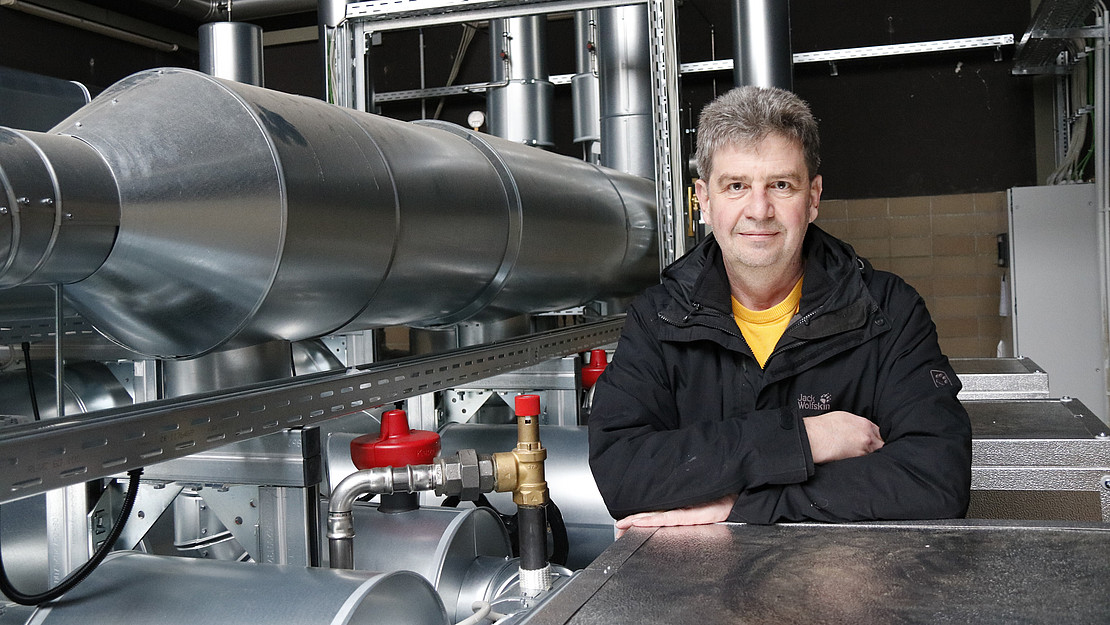 Image: University of Kassel.
Previously, the heating water from Städtische Werke Kassel flowed into the buildings on the southern Holländischer Platz campus without separation - at high temperatures and pressures. This made it difficult to increase efficiency and use renewable energies and was expensive to maintain and repair.
In 2022, a local heating concept therefore recommended technically separating the district heating supply and the internal distribution network. This was implemented in summer 2025. The university installed four heat exchangers and three network pumps in the operating technology building, which can now be used to regulate temperatures and pressures in its own network.
Initial evaluations show: The lower distribution temperatures reduce the heat consumption of the South Campus by up to 10 percent. As the new pumps require additional electricity, the exact cost savings cannot be quantified until spring. However, estimates suggest savings in the high five-figure range per year. The conversion was financed by the Hessian state government's PV & TGA funding program. The university's intracting cost center, which is used to implement energy efficiency projects, provided its own funds.
The university is also planning to connect the North Campus to the heating network in future, starting with the new natural sciences building. The new heat transfer system is already designed for this expansion.