
The content on this page was translated automatically.
Two new project seminars I Go:Green in SS 2026
Project seminar I Go: Green Applied research projects in the context of cycling
The project seminar aims to actively promote sustainability development in terms of cycling at the University of Kassel through student engagement. Building on previous Cycassel projects and the preliminary work in the project seminar in the winter semester 2025/26, students are to develop and implement practice-oriented measures that pass on the joy of cycling. A central sub-project is the presentation of the best cycle routes between the individual university locations. This is intended to promote sustainable mobility on the one hand and to increase the visibility and usability of climate-friendly alternatives in the everyday lives of employees and students at the University of Kassel on the other. The plan is to facilitate and promote resource-conserving behavior through a signage and route network for cyclists. The planning, design and implementation of a campus cycle path network with signage between the university locations is a concrete measure that students are developing and will be supplemented by surveys and evaluations. All student projects in the seminar will lead to the Kassel Bike Weeks, which will take place in May 2026. The project seminar is aimed at students from the sports teaching degree and the Master's degree in Mobility, Transport and Infrastructure (continuation from WS 2025/26).
Project seminar I Go: Green "Making blue - extracting raw materials yourself and using alternative photographic processes for art and design"
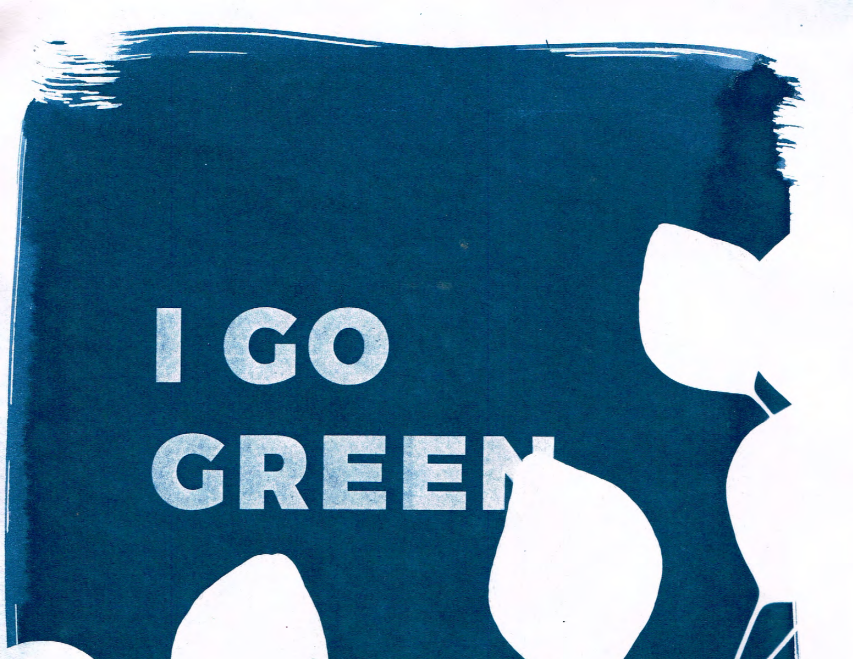
With this project seminar, the Photo and Textile Study Workshops at the Kunsthochschule Kassel would like to offer an interdisciplinary course that deals with sustainable raw material cycles, natural dyes and historical photographic processes that save energy and resources. The starting point and a unifying element of the seminar is the color blue. By tapping into local raw materials such as woad, hollyhock and red cabbage, students learn how to extract the plant-based dye for blue tones themselves and integrate them into creative processes such as dyeing textiles or paper. Cyanotype is a historically photographic printing process: a paper is coated with a UV light-sensitive emulsion, plants, objects or negatives are placed on top and, after exposure to sunlight and washing out, a deep blue appears in the areas in contact with light. In cooperation with the Department of Ecological Agricultural Sciences - who have planted a test field with woad - and with an external herbal expert and an artist, the students are exploring the potential of regional plants and the cyanotype as a means of color and design. On the one hand, the project combines artistic practice with sustainability education. On the other hand, students learn to try out new creative processes and at the same time develop a deeper understanding of ecological cycles and the use of resources. In addition, sustainable campus development is promoted, as the raw materials can be grown locally and used for their own teaching instead of procuring materials exclusively externally.
The project seminars will soon be available in the course catalog.