Open spaces
The content on this page was translated automatically.
More sustainability on campus!
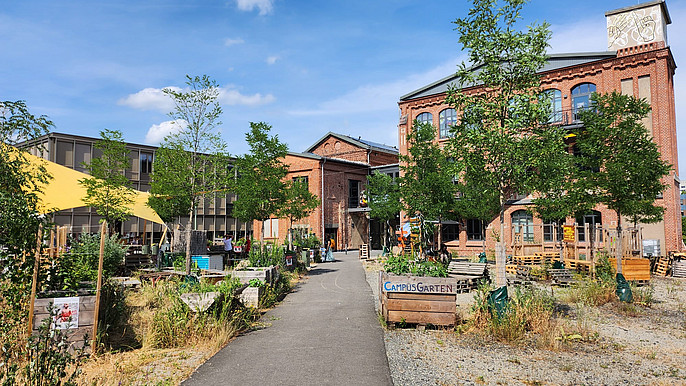
In the project "Development of an open space planning concept" (2021-2025), a concept was developed to increase biodiversity on the Holländischer Platz campus and at the external locations.
The first implementation measures began in spring 2026 - we are looking forward to the visible developments and a more diverse campus green!
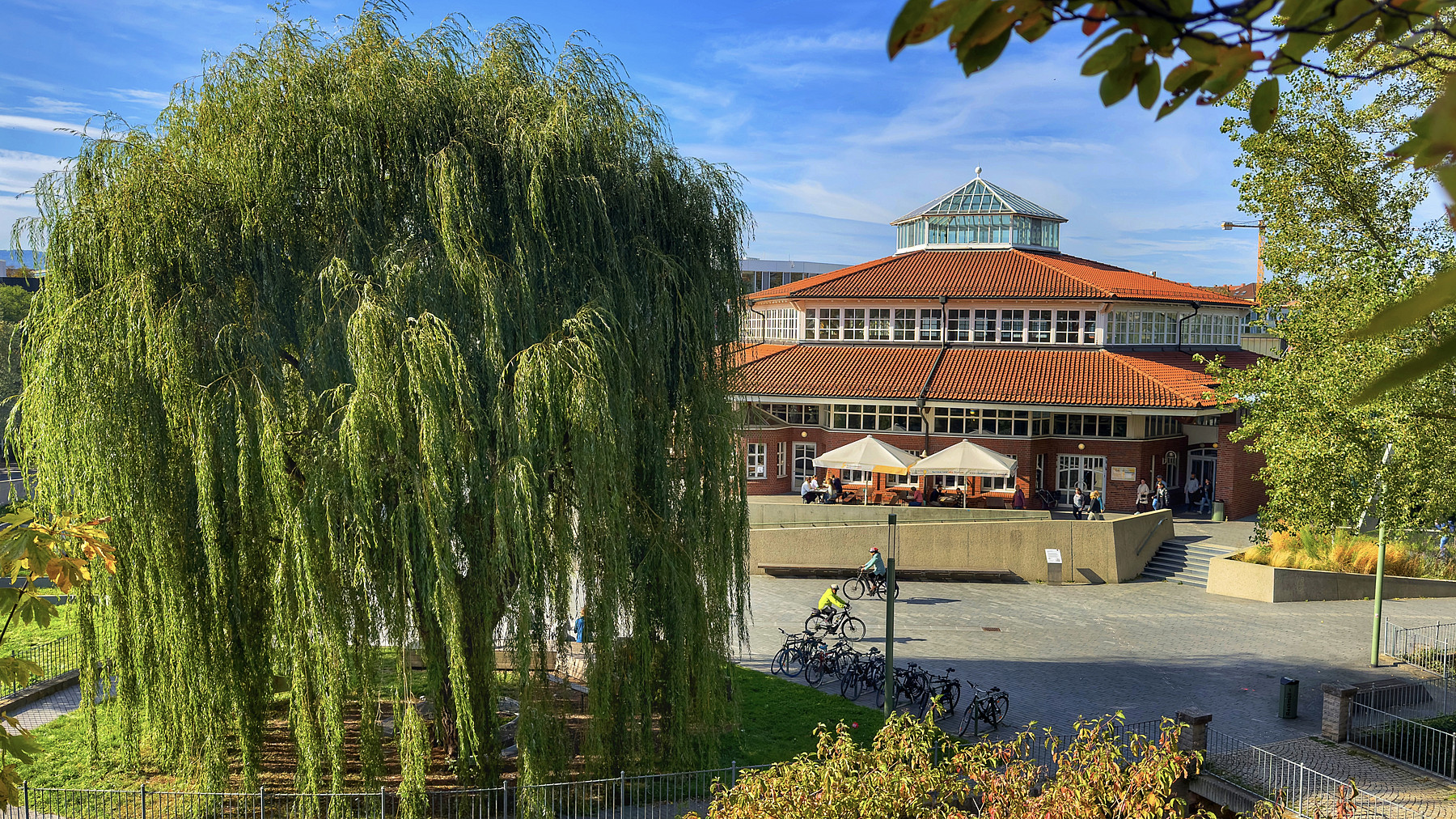
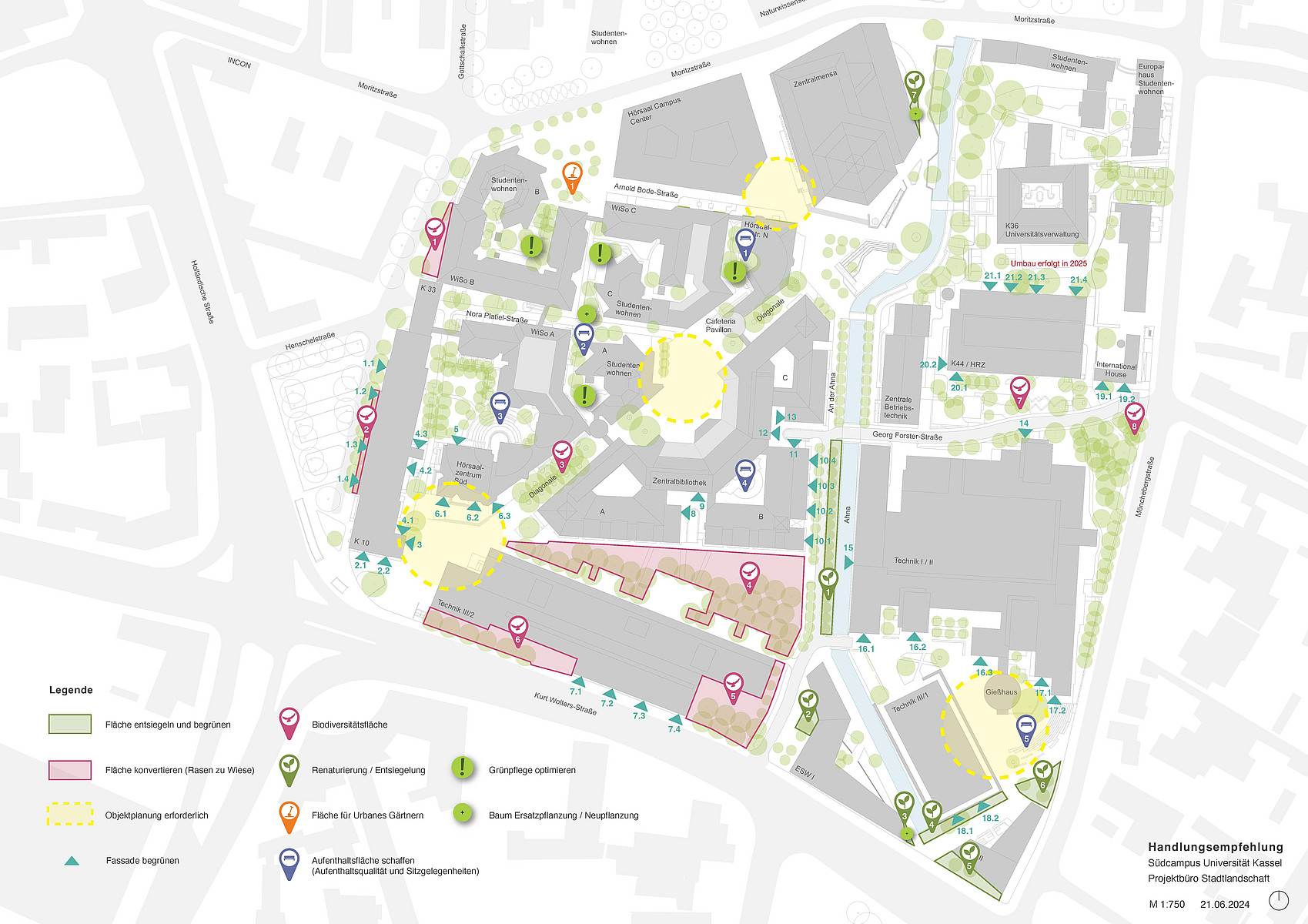 Image: Urban Landscape Project Office
Holländischer Platz - South Campus
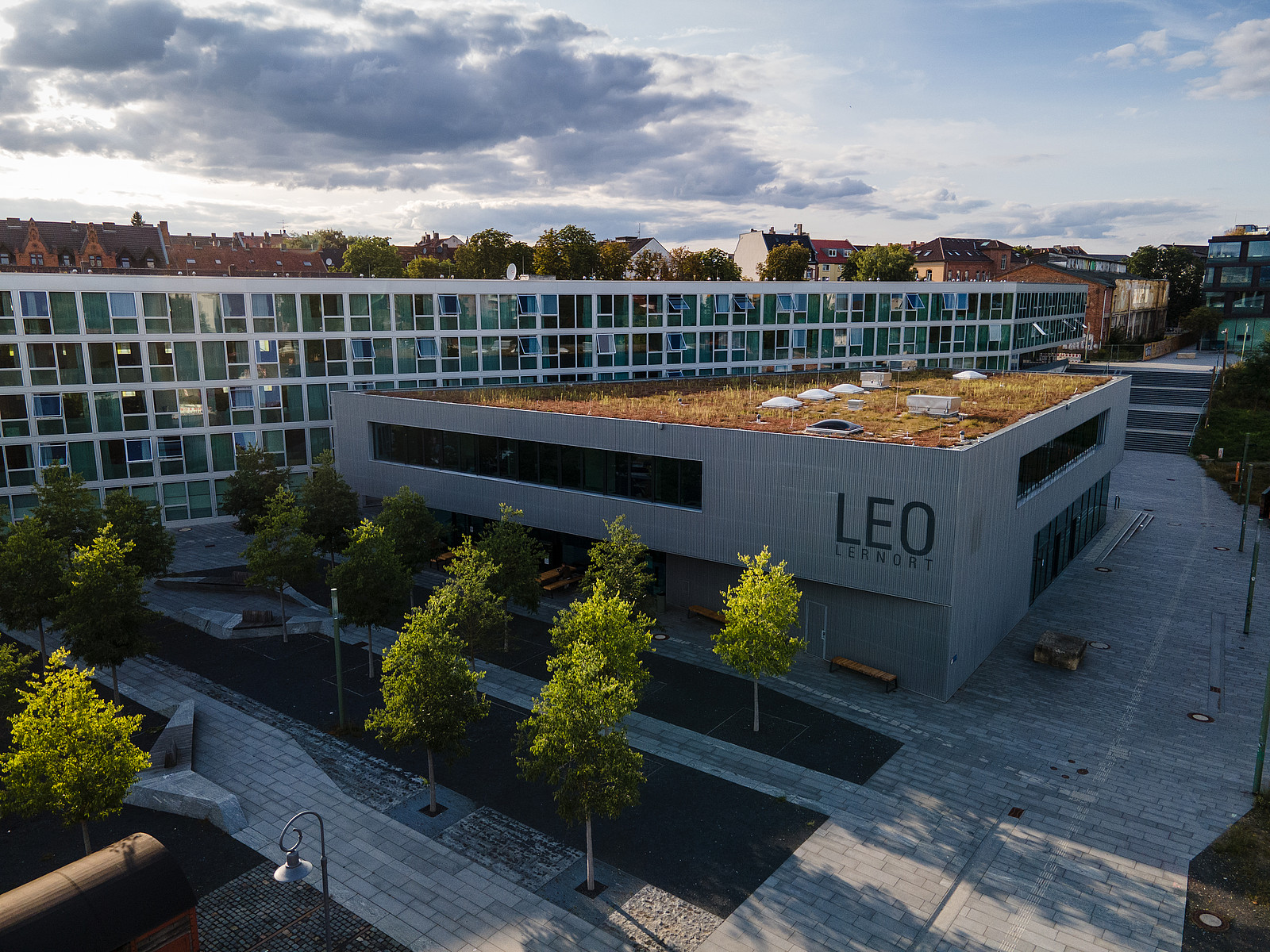 Image: Sascha Mannel
Holländischer Platz - North Campus
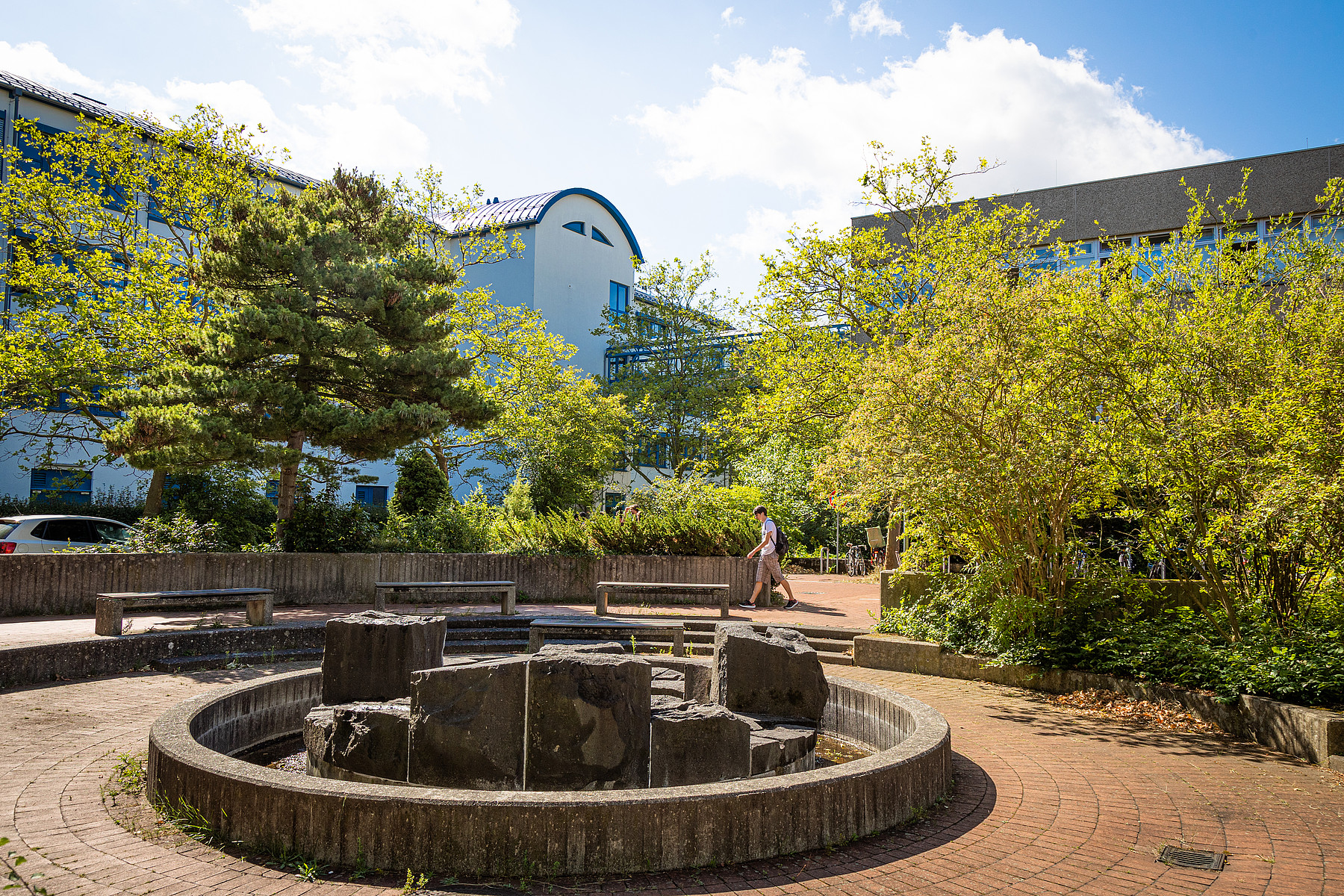 Image: Sonja Rode, Lichtfang
AVZ - Heinrich-Plett-Straße
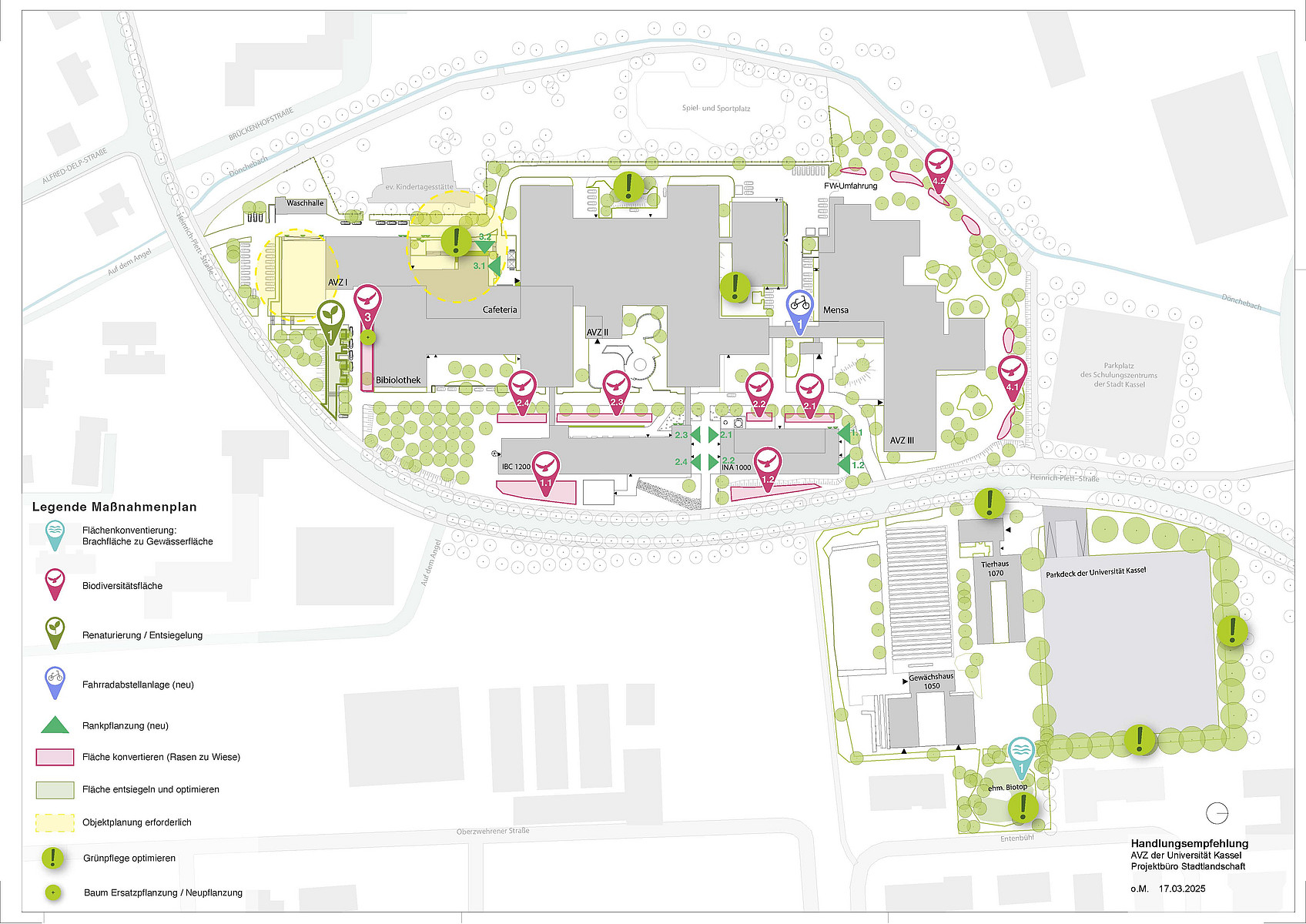
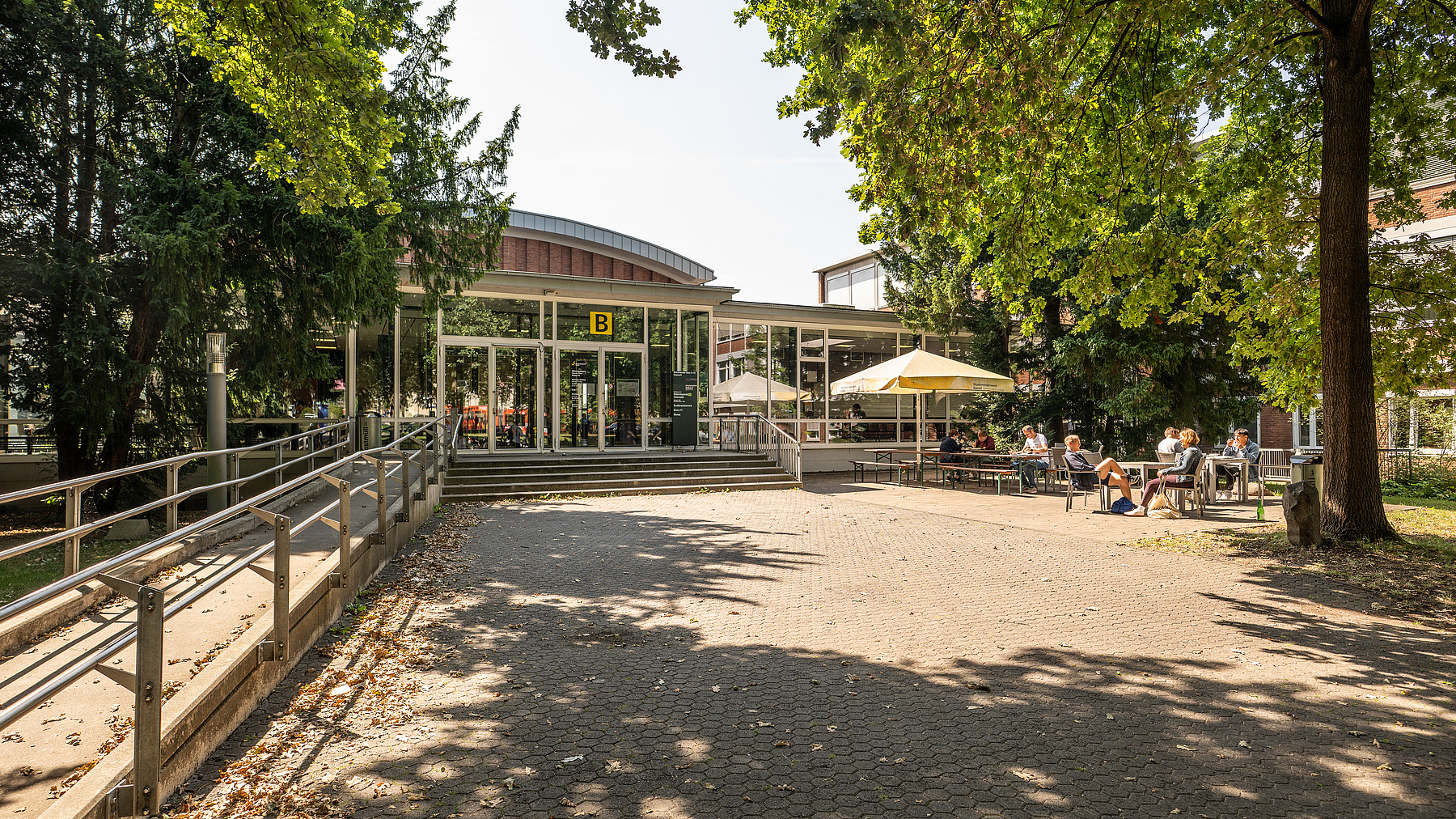 Image: Sascha Mannel
Wilhelmshöher Allee
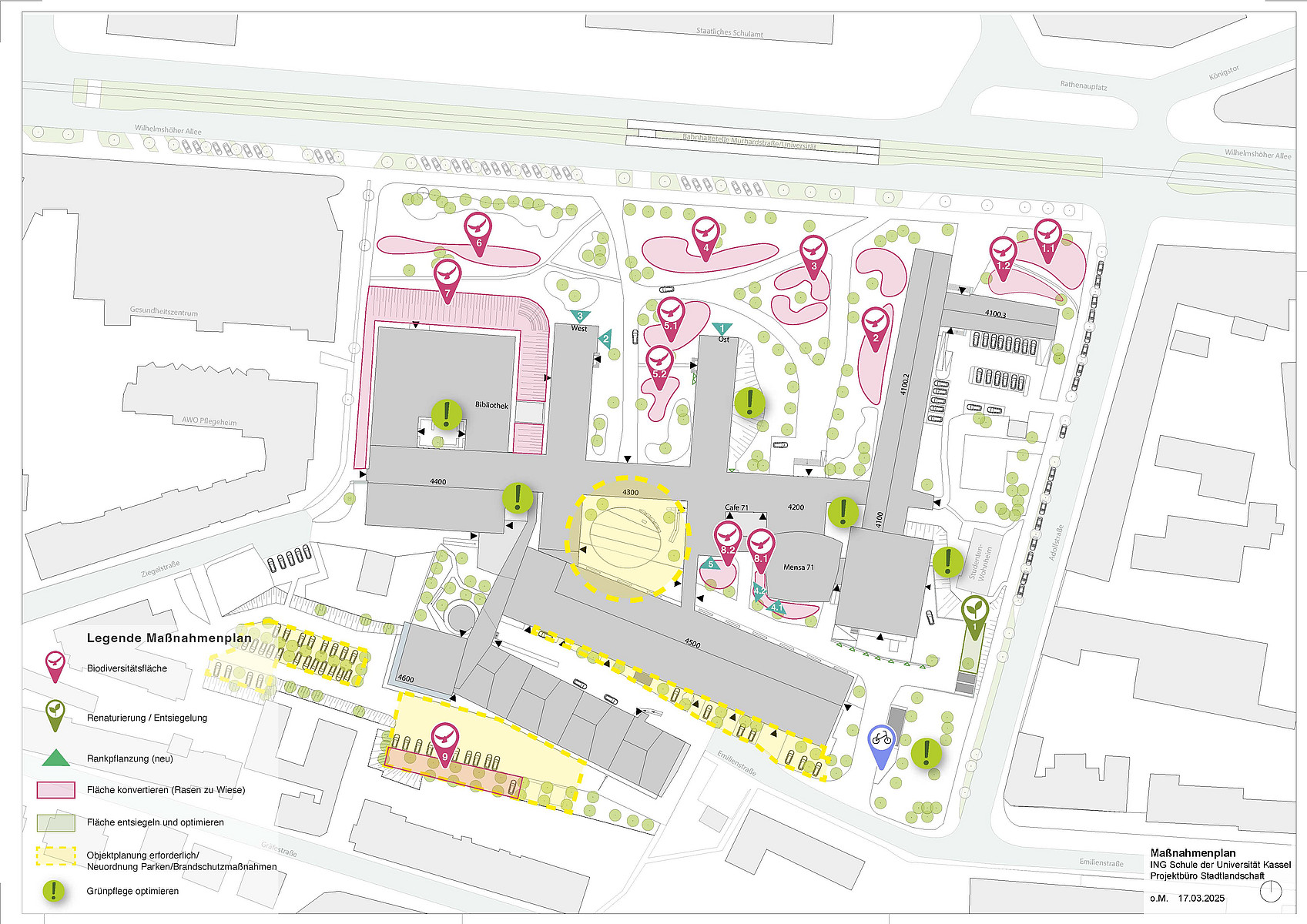
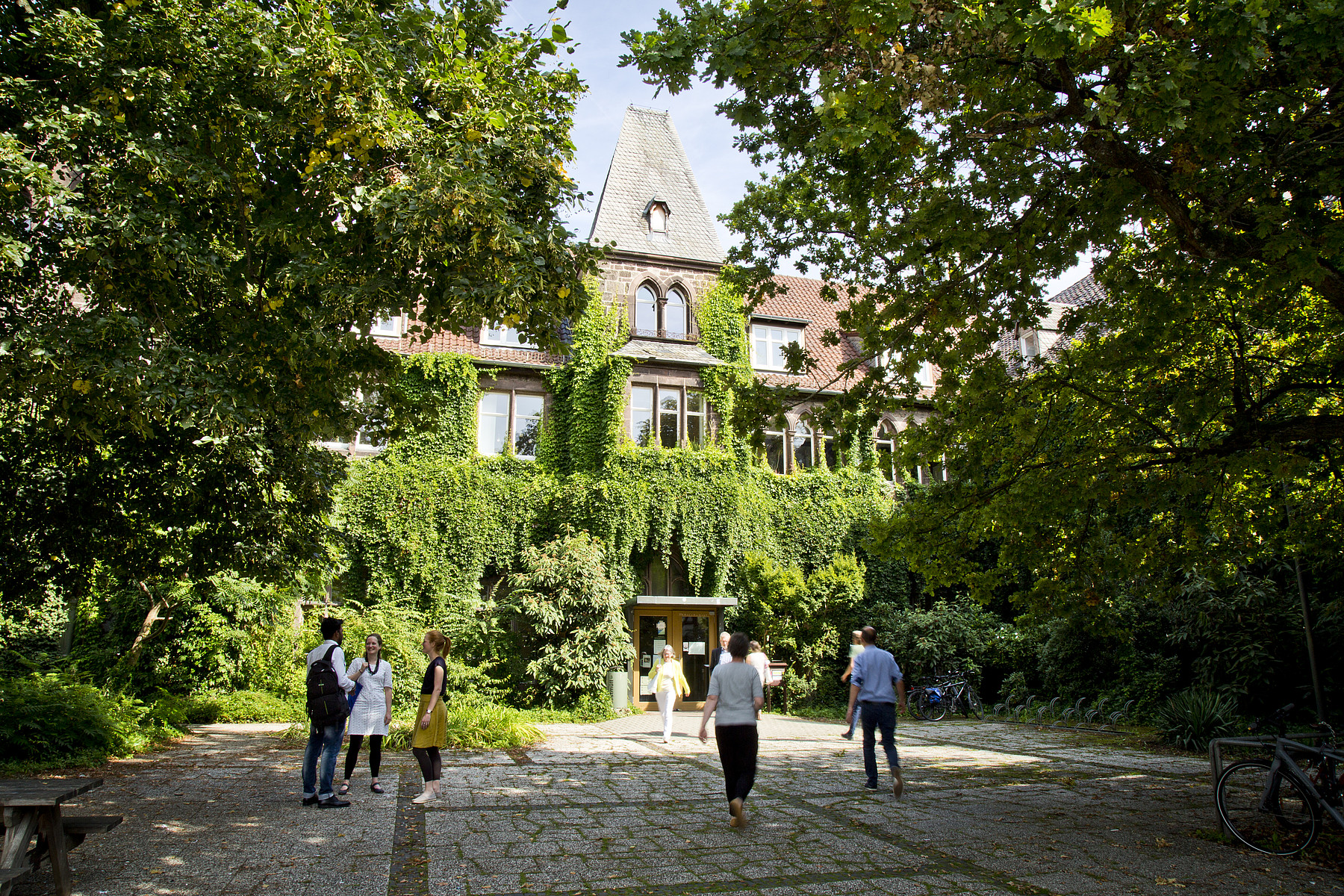
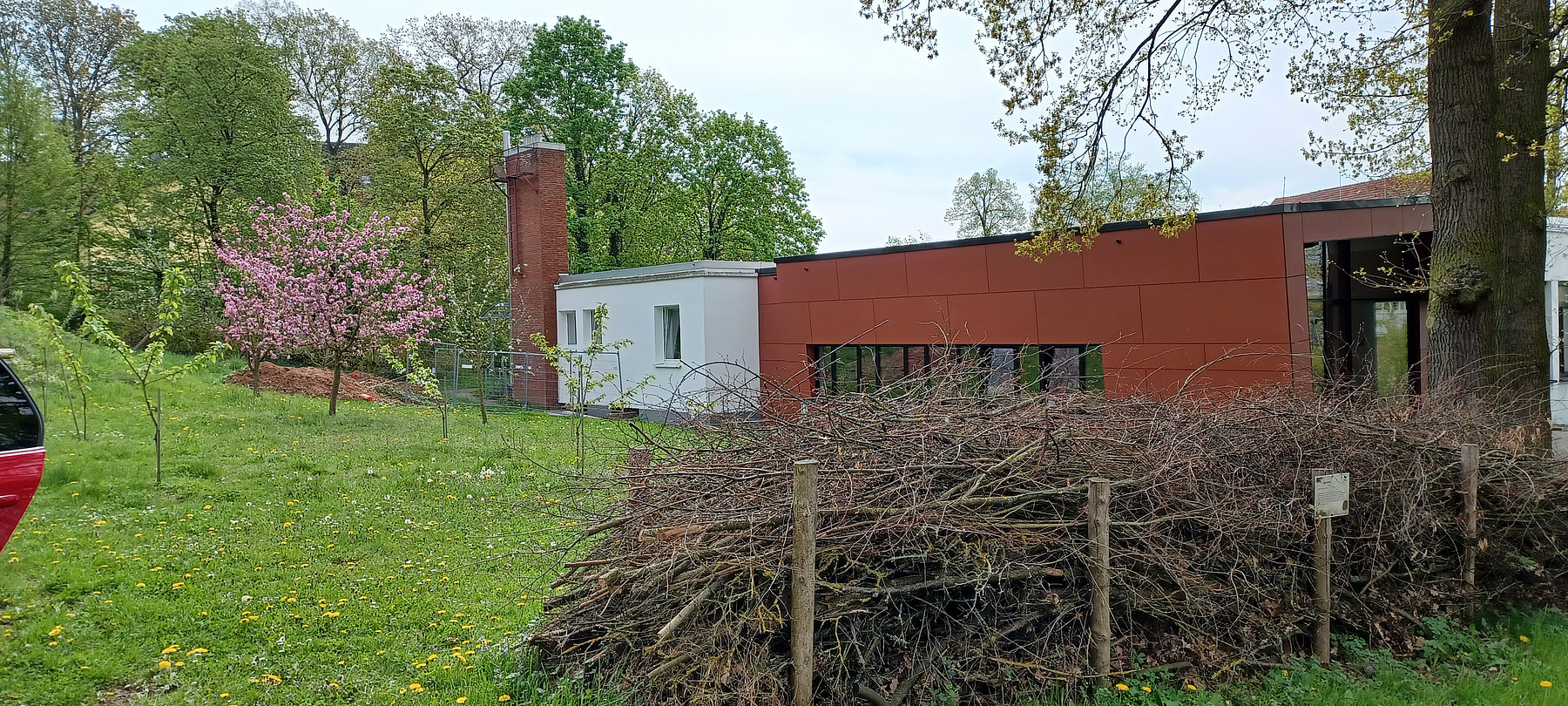
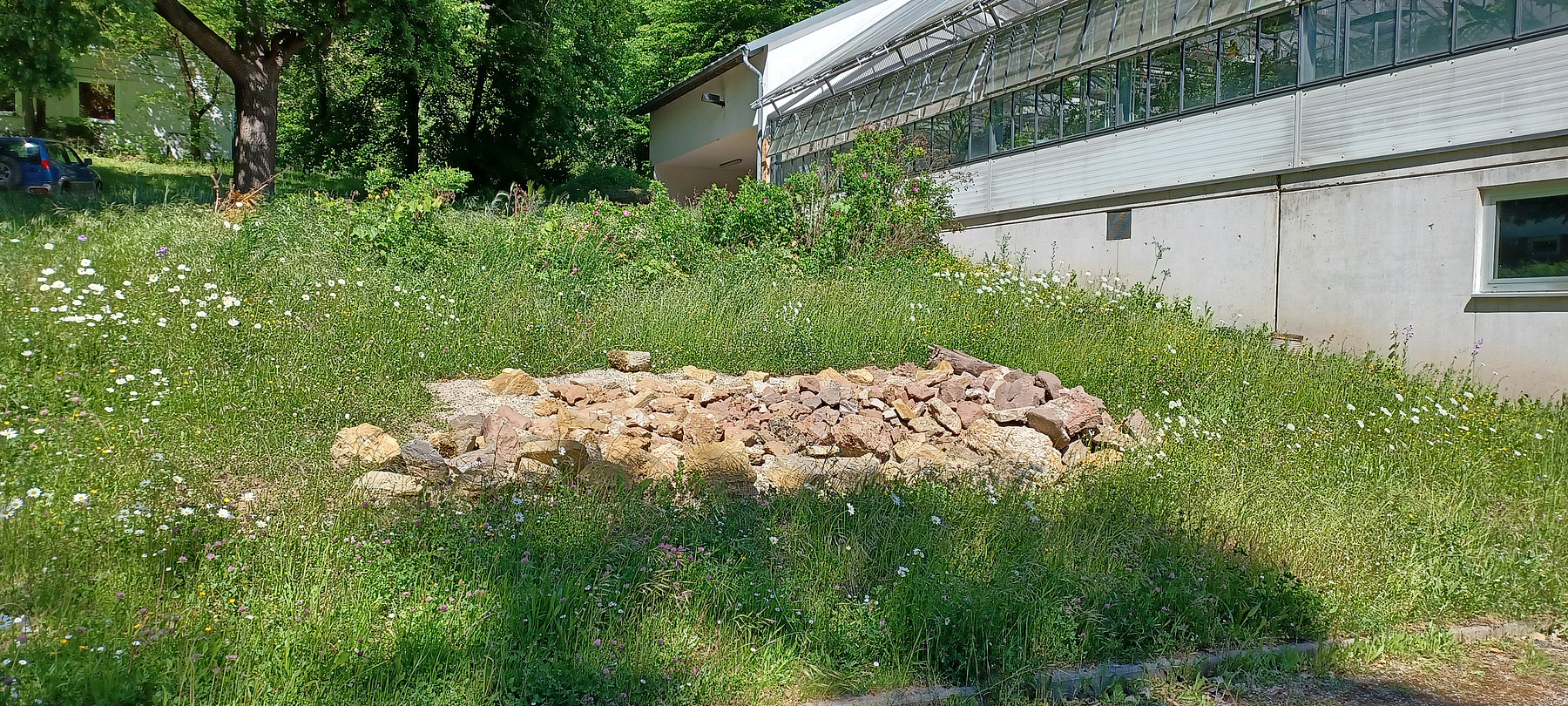
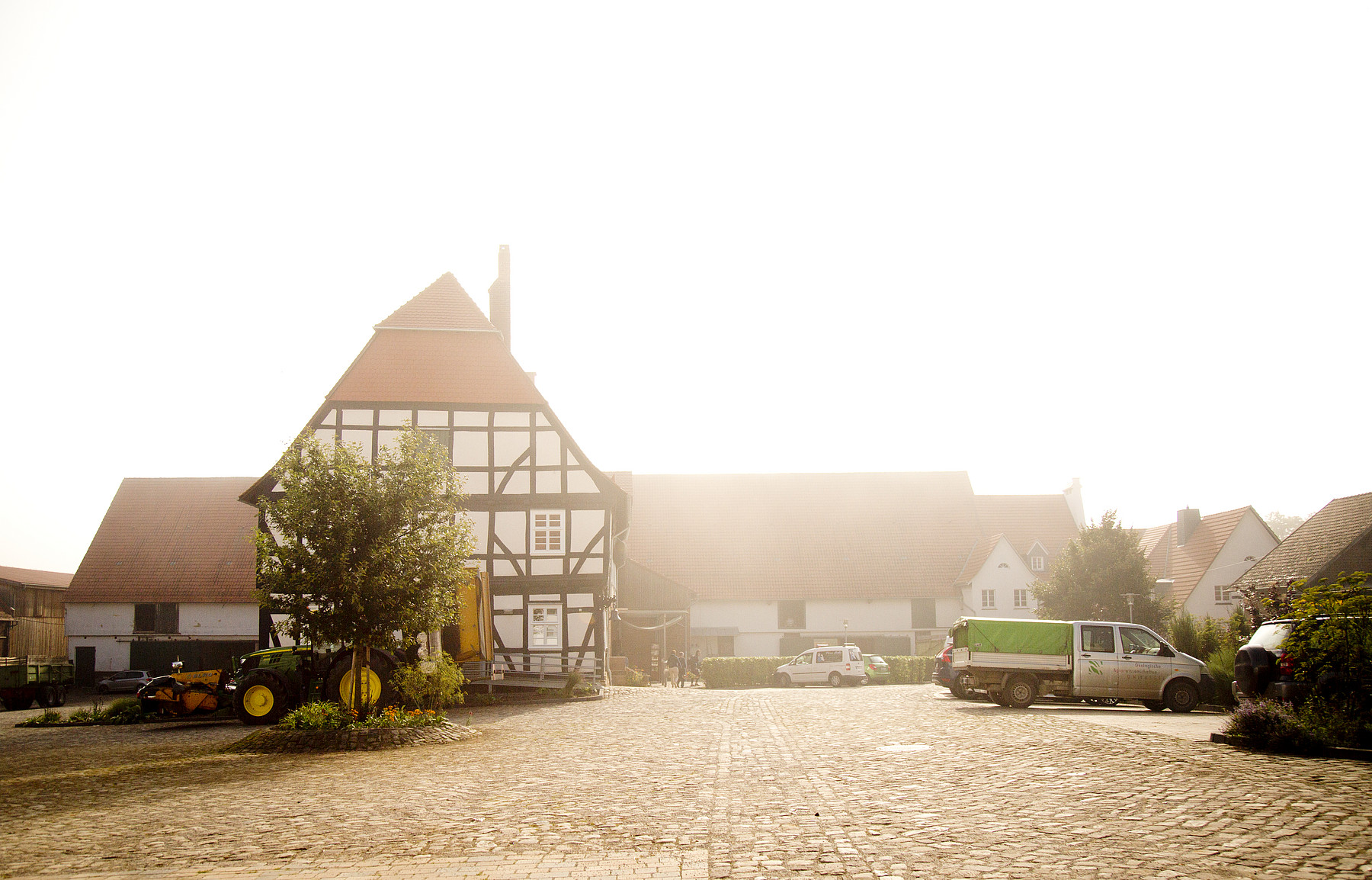 Image: Sonja Rode, Lichtfang
Domain Frankenhausen
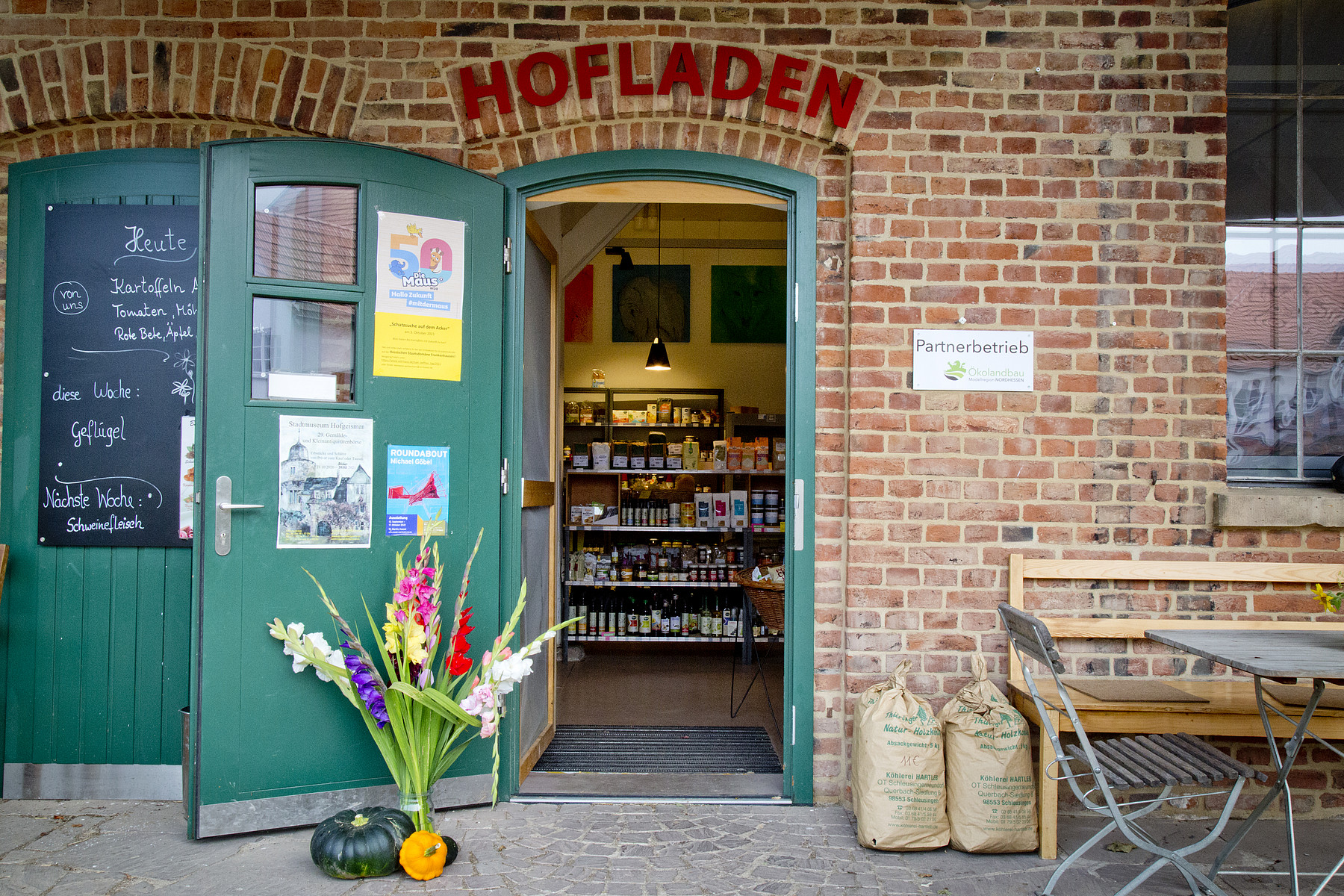
Open space concepts
The focus is on sustainable open space design through unsealing and permeable coverings in order to improve the microclimate and quality of stay, reduce heat islands and strengthen species and biodiversity protection. The project is based on vegetation and site-related inventories, inventory and conflict analyses and the resulting short, medium and long-term recommendations for action.
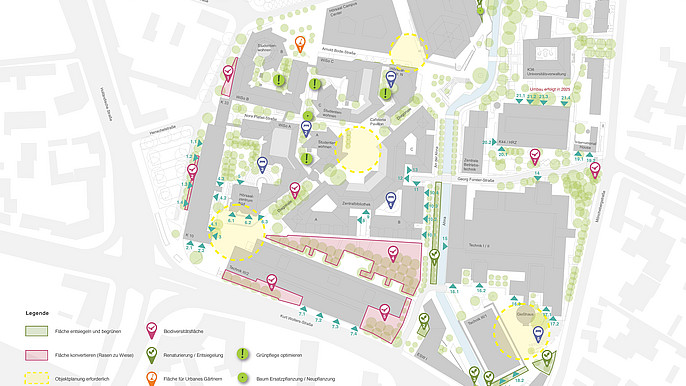 Image: Urban Landscape Project Office
Holländischer Platz - Campus South
41 measures were identified: 7 for unsealing and greening, 8 biodiversity areas, 5 recreational areas and 21 options for greening façades.

Heinrich-Plett-Straße
22 measures were identified: 1 unsealing and greening, 9 biodiversity areas, 7 optimization of green maintenance, 4 façade greening and 1 for reactivating a wetland biotope.

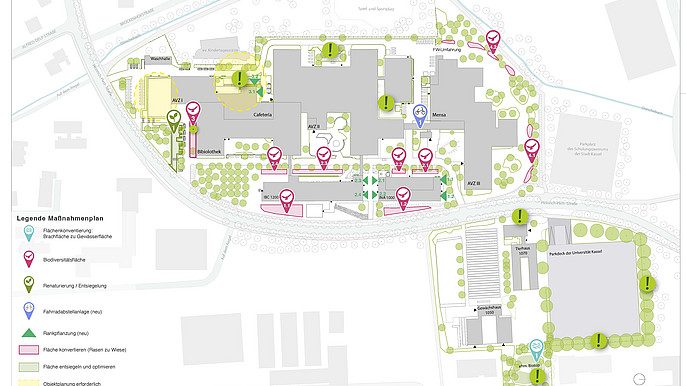 Image: Urban Landscape Project Office
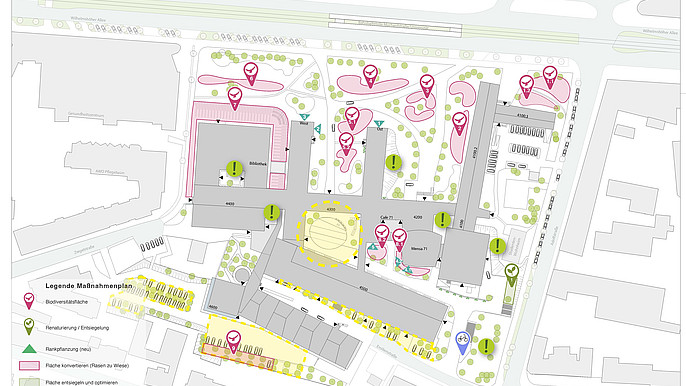 Image: Urban Landscape Project Office
Wilhelmshöher Allee
For the site, 21 measures were developed for unsealing and greening areas (1), biodiversity areas (9), optimizing green maintenance (6) and greening façades (5).

Holländischer Platz - Campus North
Guidelines were formulated for the North Campus to ensure the sustainable, structural development of the site for future construction phases. The concept also includes three unsealing measures.

Ongoing measures 2026
Holländischer Platz - Campus South
Several measures to unseal, green and ecologically enhance the open spaces on the south campus at Holländischer Platz were started in February 2026. The work was successfully completed at the end of April.
- Around the Engineering Sciences 1 building, around 1,500 m² of lawn was converted into species-rich meadow areas with the flower mixtures "Bienenwiese" and "Wildstaudenzauber".
- A gravel area in front of the Institute of Music was unsealed (approx. 35 cm of gravel removed) and newly laid out as a flowering area with a mixture of perennials.
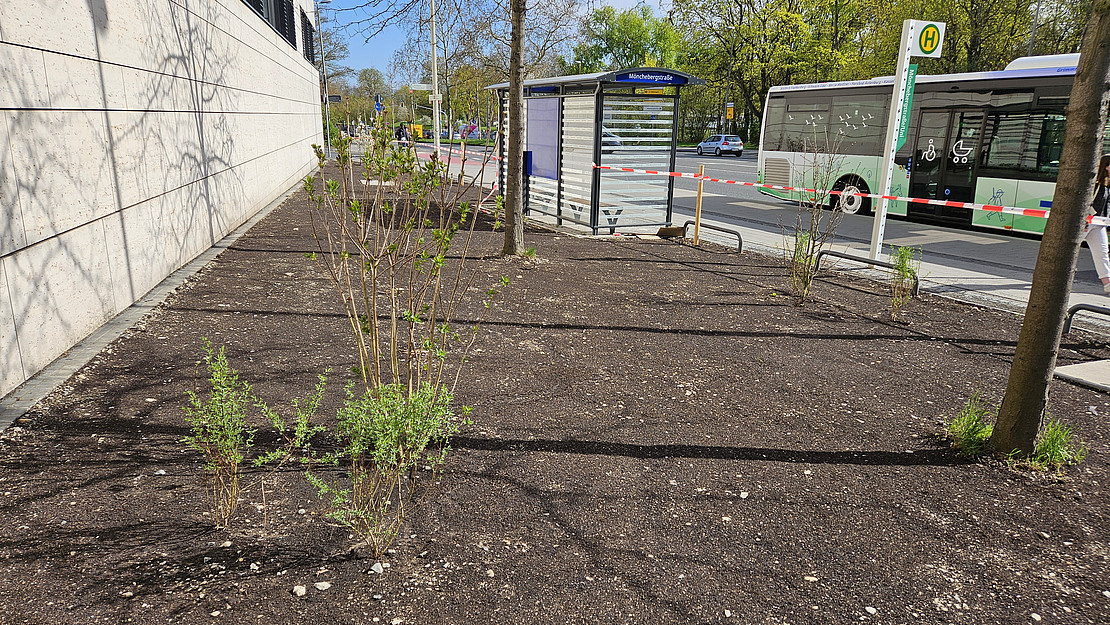
- At the central canteen, a previously unplanted wall was greened with a planting bed of climbing plants and ground cover.
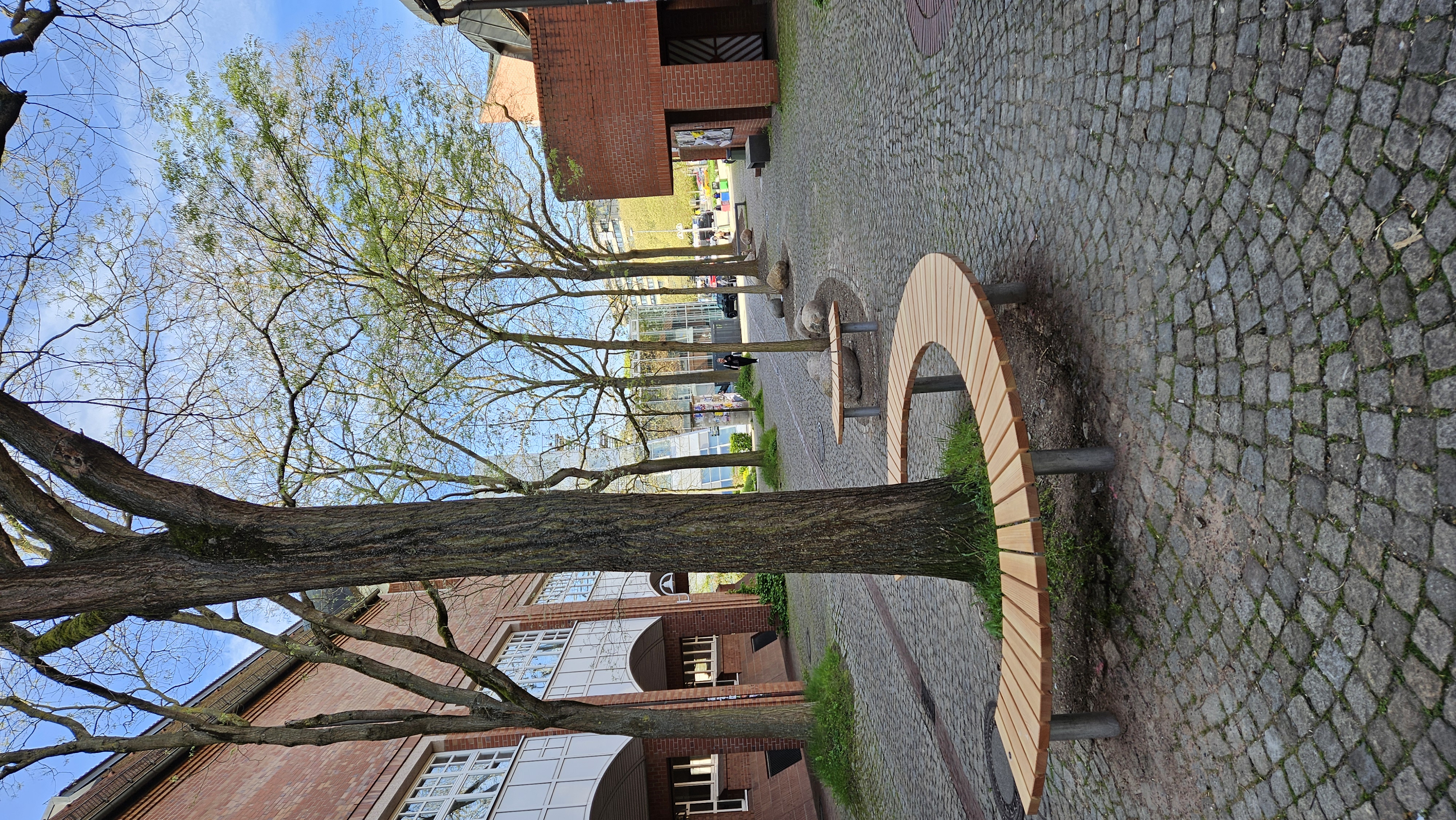
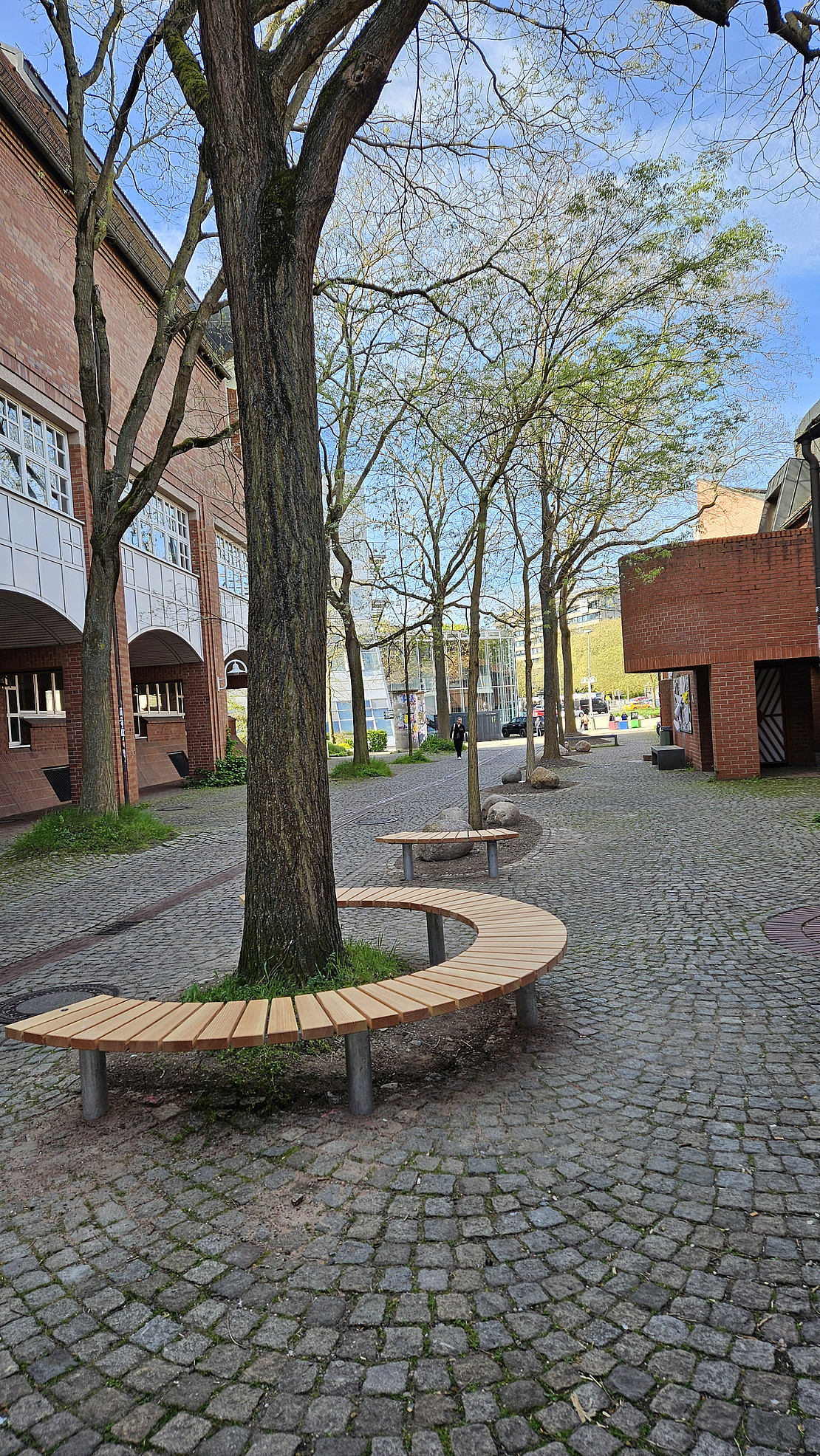
- In the diagonal, tree grates were enlarged, protected from traffic and sown with perennials; in addition, a new seating area was created with a segment of a round bench.
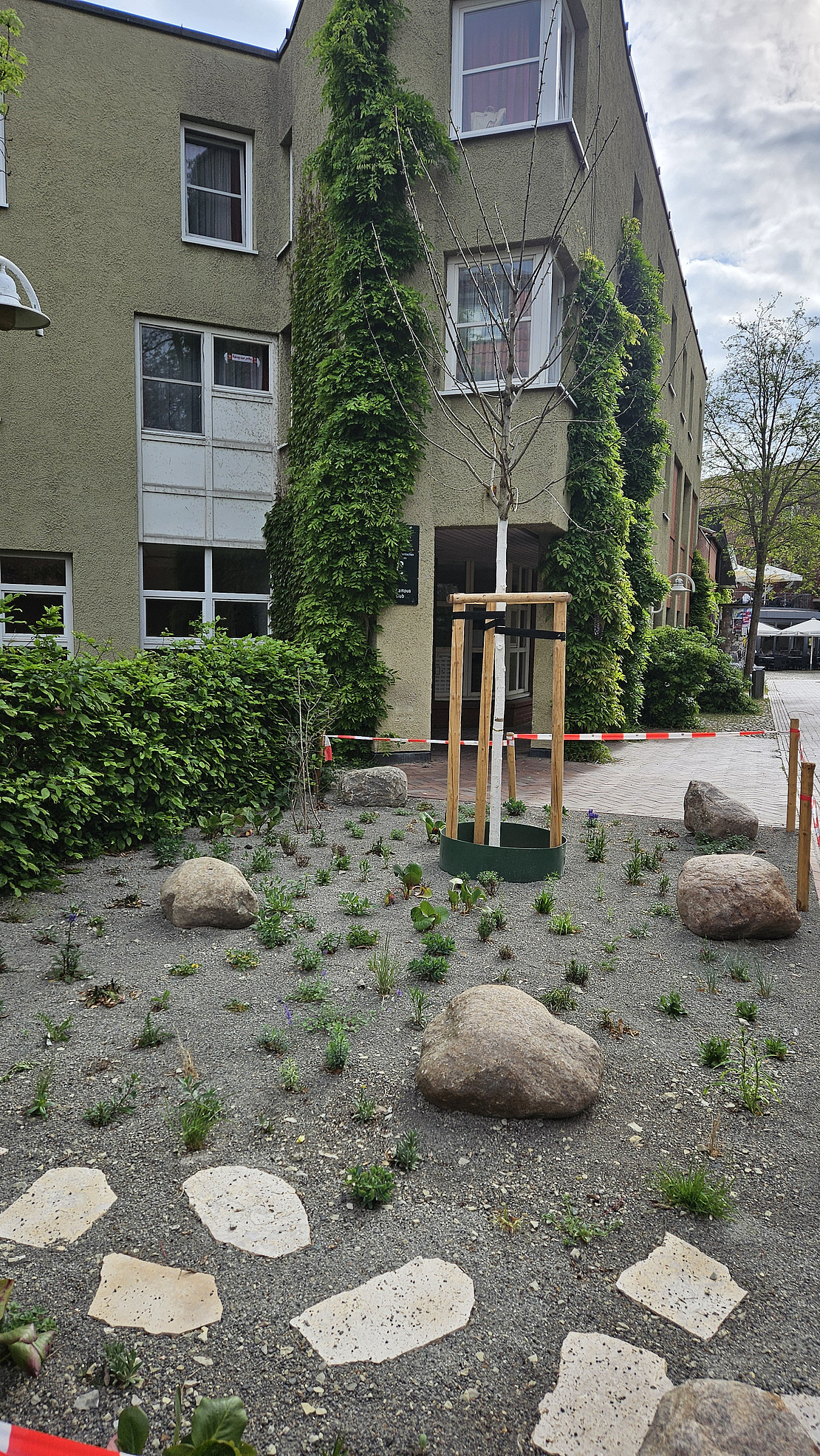
- In Nora-Platiel-Straße, a paved area was unsealed, a tree was replanted and the area was planted with perennials
Holländischer Platz - Campus North
(start of construction 05/2026)
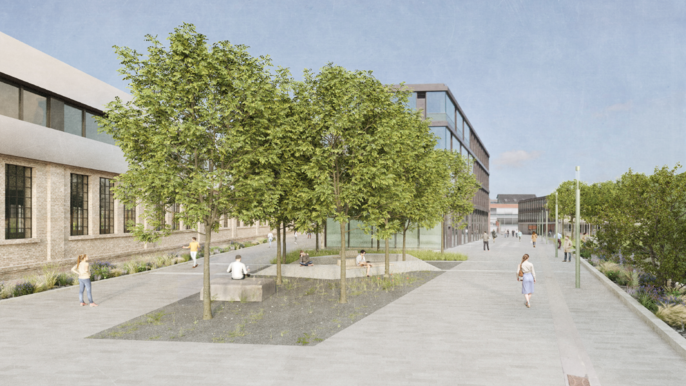
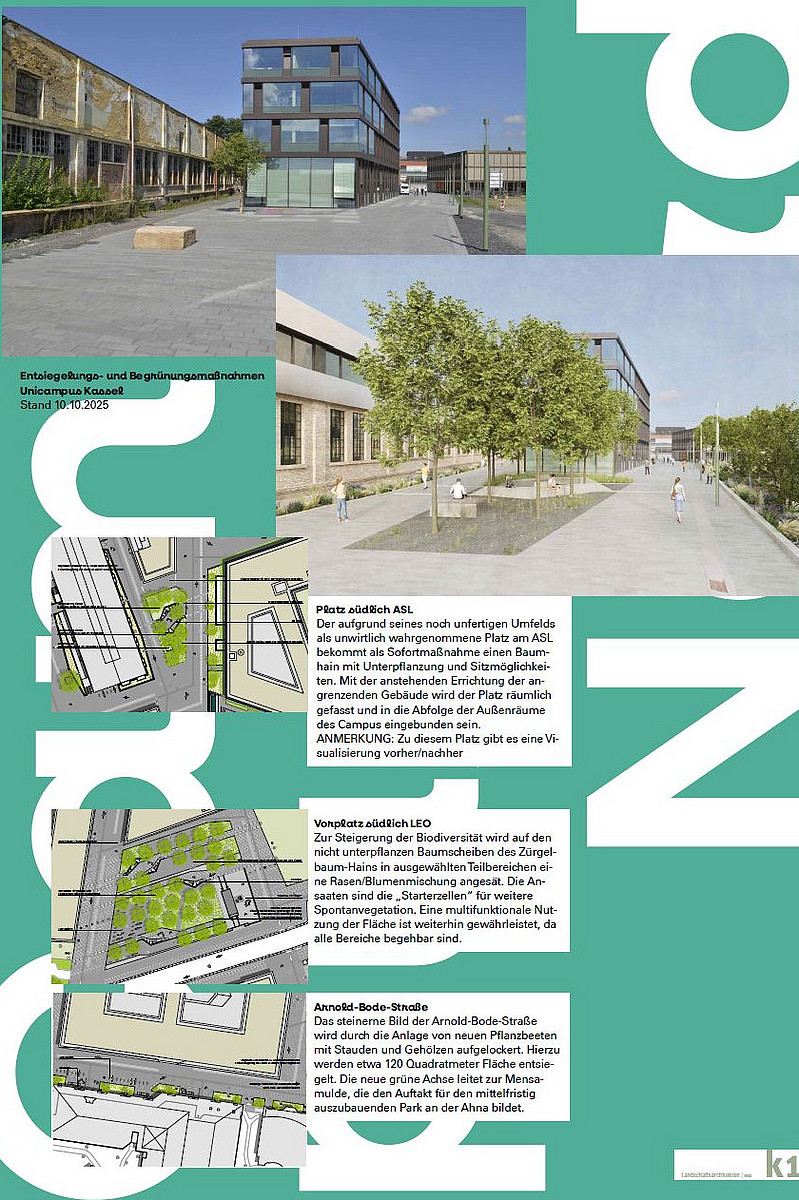
ASL forecourt: The paved area to the south of the ASL building will be unsealed and transformed into a small grove of trees with elms and red-flowering chestnut trees. The northern area will be laid out as an extensive wild meadow, the southern area as an accessible gravel lawn with wildflower underplanting. With the completion of the adjacent buildings, the square will be spatially defined and enhanced in future. The project is scheduled for completion by the end of the year.
Forecourt south of LEO: Individual tree grates will be merged into larger units and supplied with fresh substrate. A walkable gravel covering with a seeded lawn and flower mixture will be created as a surface; the existing water-bound surfaces will be retained in the remaining areas.
Arnold-Bode-Straße: To break up the stone streetscape, an area of around 120 m² will be unsealed and six planting beds of different sizes will be created. Their location is based on bicycle parking spaces, seating elements, entrances and pathways. Mixtures of perennials as well as small and solitary shrubs will be planted.
Completed projects
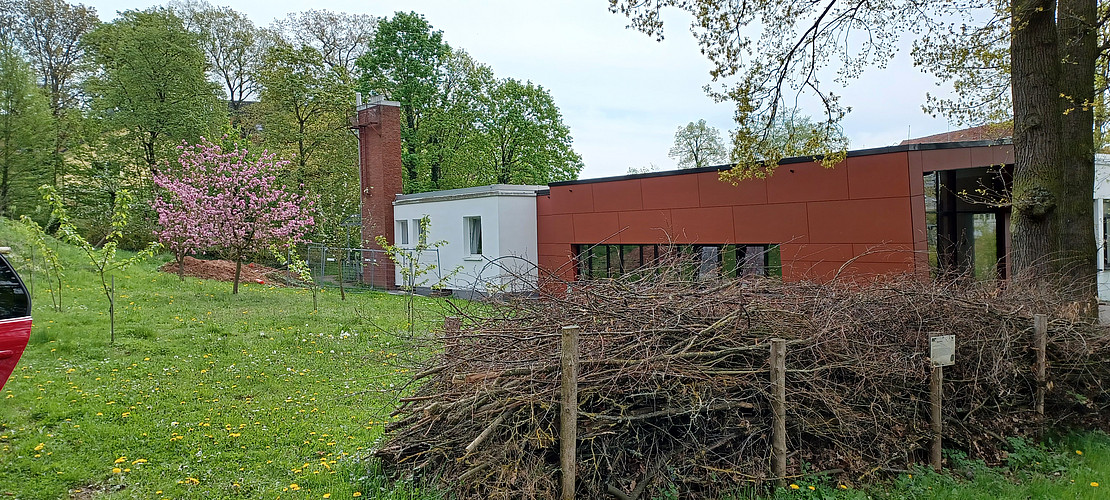
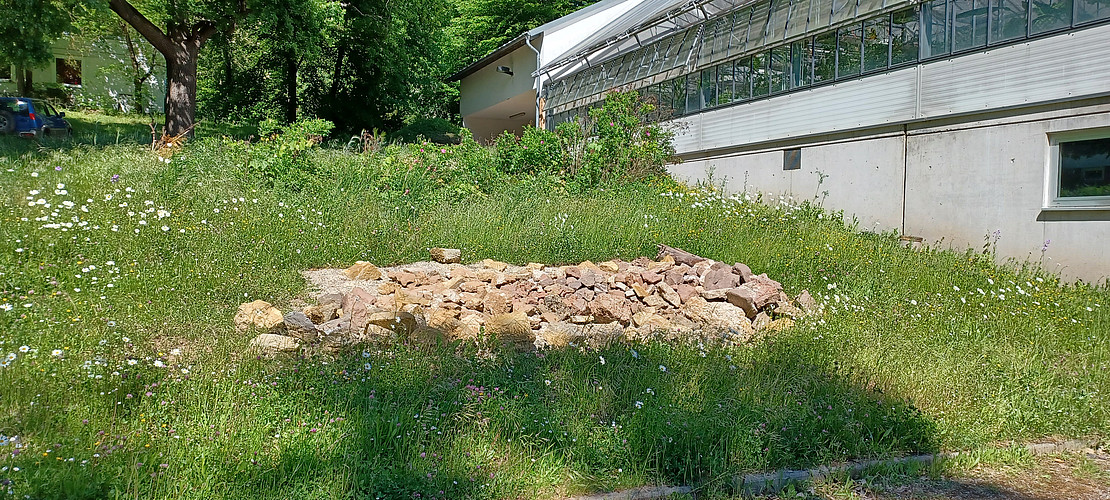
New habitats for more biodiversity - Benjes hedge and sandarium completed in Witzenhausen
Two projects to promote biodiversity on the Witzenhausen campus were completed in 2024: A Benjes hedge and a sandarium with a specially designed area for reptiles. The Benjes hedge provides valuable protection and nesting space for numerous insects, birds and small mammals. The sandarium creates important structures for wild bees, heat-loving insects, lizards and other reptile habitats that are increasingly being lost in our cultivated landscape.
In Witzenhausen, a measure was implemented on the Nordbahnhofstraße campus to improve the living conditions for the existing large trees. The Nordbahnhofstraße campus is characterized by large lawns with old individual trees. Old, large trees are also suffering from the effects of climate change and heat stress. To preserve them, seven trees at the Nordbahnhofstraße site were renovated and optimized using a compressed air injection process. This involved using purified compressed air to loosen the soil to a depth of 120 cm and injecting soil additives as air capacity builders, long-term water reservoirs and ion exchangers in the same operation. This improves the soil structure, promotes root activity and strengthens the health of the trees.
Several measures to unseal, green and ecologically enhance the open spaces on the south campus at Holländischer Platz were started in February 2026. Work on the first package of measures was successfully completed at the end of April:
- Around the Engineering Sciences 1 building, previous lawn areas were converted into more species-rich meadow areas. A total of around 1,500 m² was sown with flower mixtures such as "Bee Meadow" and "Wild Herb Magic" to promote biodiversity and create new habitats for insects.
- In front of the Institute of Music, a former gravel area was unsealed and transformed into a flowering area. To this end, around 35 cm of gravel was removed and replaced with a suitable gravel substrate, into which a mixture of perennials was then sown.
- A previously unvegetated wall on the central canteen building was planted with climbing plants and ground cover plants. The bed was given a steel edging and will contribute to the design and ecological enhancement of the area in future.
- In the diagonal, several tree grates were enlarged and protected against traffic. The extended areas were sown with a mixture of perennials. In addition, a segment of a round bench was installed above a tree slice at the eastern end, creating a new seating area in the open space.
- A measure was also implemented in Nora-Platiel-Straße: a previous paved area was unsealed, a tree was replanted and the extended area was planted with perennials.
In the process, 47 shrubs were planted, including monk's pepper, Malus tschonoskii and rock pear, and more than 20,000 perennials, flower bulbs and herbs such as oregano, mountain savory and sage were planted. These measures will reduce sealed surfaces, create new green structures and improve the quality of life on the campus.
Development plan 2025-2029
In the 2025-2029 development plan, the University of Kassel is focusing on future-oriented open space planning: new guidelines and specific measures are intended to increase biodiversity, improve the microclimate and enhance the quality of stay. Unsealing, climate-resilient façade and roof greening and more biodiversity on paved areas, for example through flower-gravel lawns, are planned. Existing outdoor areas on the North Campus will be optimized with permeable surfaces, green spaces, trees, planting strips and wall greening. The guidelines will form the basis of all future projects and focus on ecological and climate-ecological aspects.