
Substitute Professor Dr. Louisa Prause
A fair and sustainable future is not a utopia, but a question of political will and concrete action.
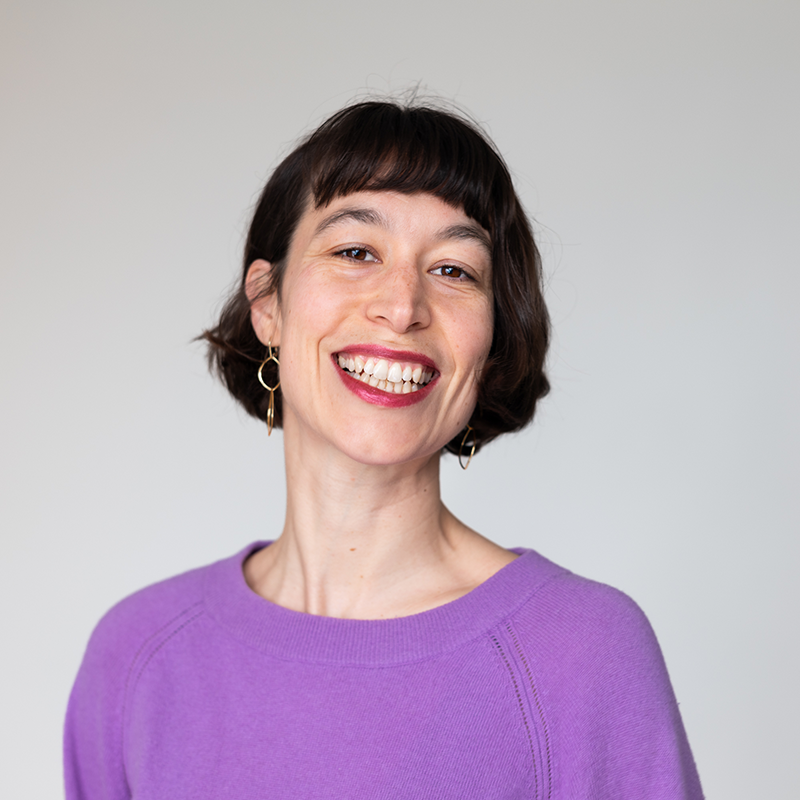
Interview
What exactly is your field of research?
I am a deputy professor for the subject area "Social conflicts in socio-ecological transformations". In this area, we analyze conflicts over the transformation of our economy and society towards more social and ecological sustainability. The starting point for my research is that social transformations are always contested. Sometimes this is very visible, e.g. in the FridaysForFuture protests, sometimes it happens more through different interpretations: is the combustion car an outdated technology that harms the climate or an expression of freedom and German inventiveness? Sometimes conflicts are more likely to take place in politics when it comes to the formulation of certain legislative projects or political strategies. A current example: I am currently working a lot on the question of how the ecological and digital transformation can be brought together in different policy areas - in the EU, this is known as the twin transition. The idea behind this is that climate protection and digitalization must be considered together - but how exactly, and whether digitalization really leads to greater sustainability, is the subject of heated debate.
The subject area also includes questions from the sociology of work. For example, I am researching how trade unions can help shape the digital-ecological transformation in companies. The field also deals with very local conflicts, such as the traffic calming of a street. But the field also has a strong global dimension. In the past, I have looked at conflicts along supply chains for critical raw materials such as lithium and cobalt, which are central to e-mobility. In short, we explore the big and small battles over what our future should look like - from the village street to the global supply chain.
What specific questions or problems are you currently trying to solve?
I am currently working in particular on the transformation of the agricultural food system against the backdrop of digitalization. This sector is responsible for almost a third of all greenhouse gas emissions globally and is a key driver of biodiversity loss. It is central to our health because, after all, it feeds us. And even if not many people in Germany are directly employed in agriculture anymore, there are still billions of people worldwide who earn their livelihoods directly from the agricultural sector. Despite this, the sector still does not play the same role in climate and environmental policy debates as the energy and transport sectors. This needs to change.
Parts of the sector are also pioneers of digitalization. Even if robotics is not the first thing you think of when you think of a farm, we now have high-tech robots in the field for sowing and harvesting, AIs create cultivation recommendations for farmers and you can use blockchain to trace the apples you buy in the supermarket back to the person who picked them. Whether these new technologies will help us to make the agri-food sector more ecologically and socially sustainable is debatable. I am interested in how these conflicts are played out at a political and social level and how certain values and norms are inscribed in the new technologies themselves. Whose interests are programmed into the algorithms - those of the large agricultural corporations or those of farmers and consumers? And, of course, I ask myself how digital technologies should be designed to make both agriculture and our food more socially and ecologically sustainable and fairer (and ideally even tastier). To this end, I am conducting research with female farmers in Germany and Spain, analyzing the EU's innovation and agricultural policy and looking at conflicts along global supply chains between South Africa and Germany.
What personal goals or visions drive you in your scientific work?
I firmly believe that a good life within planetary boundaries is possible if we don't shy away from the big questions such as redistribution and a restructuring of the capitalist economic system. I therefore find it incredibly enriching to keep exploring what such an alternative and the path to it might look like. What do we need to change so that we all have good food on our tables in the future, which perhaps tastes even better, but without putting our ecosystem at risk? Which players do we need to strengthen, which structures do we need to change, which new technologies can we use and which not? And what is already working really well and should remain as it is? A fair and sustainable future is not a utopia, but a question of political will and concrete action.