
Urbanization: DFG Research Group on "Sustainable Rurbanity"
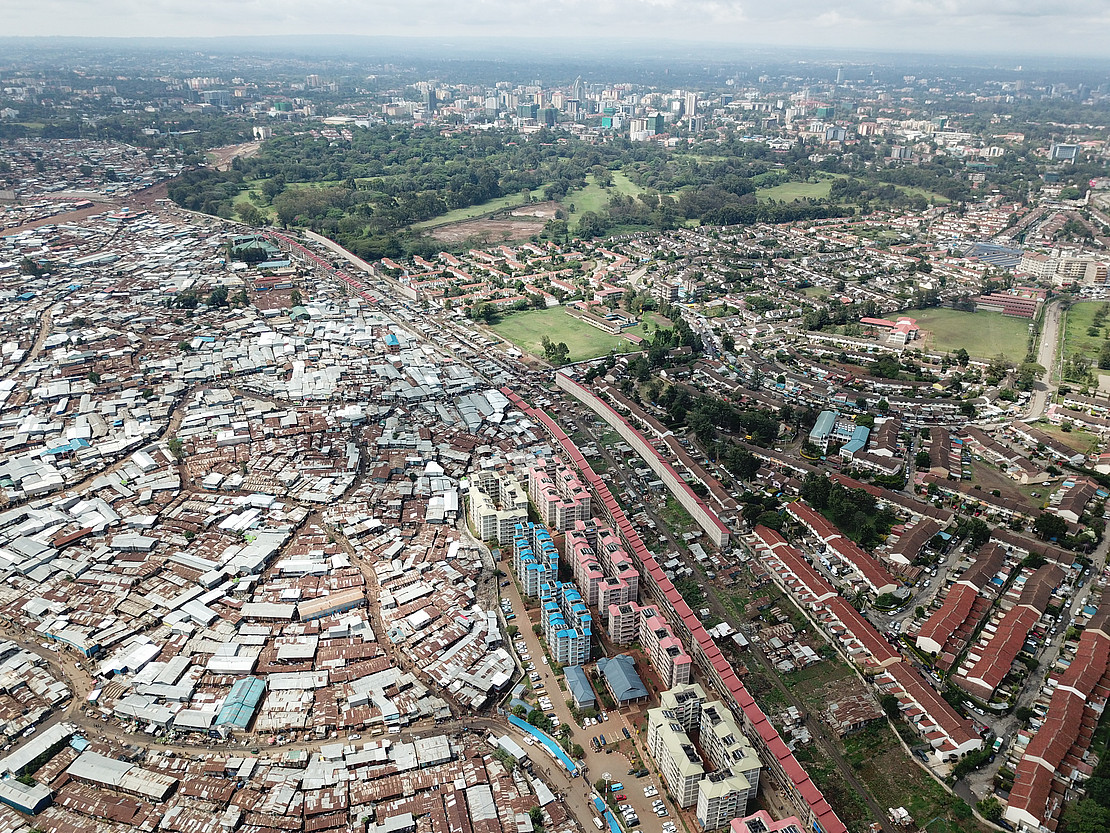 Image: University of Kassel.
Prof. Dr. Ute Clement, President of the University of Kassel, described the approval as a "great success": "This proves once again that the University of Kassel can also make visible contributions worldwide in interdisciplinary basic research on highly relevant topics, also and especially in cooperation with national and international partners. Science is showing ways in which our societies can meet the challenges of our time. It is more important than ever that sufficient funding is made available for such research." In addition to the Universities of Kassel and Göttingen, six other national research institutions and 15 partner institutions in India, Ghana and Morocco are involved in the network.
Urbanization processes unfold in the interplay of human activity, historically evolved spatial structures and eco-systemic processes. They are interwoven with social transformation and are constantly creating new habitats for people, animals and plants. Understanding such complex systems requires new research approaches that break down system boundaries, spatial scales and disciplinary ways of thinking and reveal innovative ways of gaining knowledge. The dichotomy of urban and rural, which has shaped both political planning and research into urbanization processes for decades, will be replaced by the new concept of "rurbanity" in the approved Research Group. This concept combines the rural and the urban in a conceptually new unit that reacts dynamically to changing conditions or creates them and constantly reinvents itself in this process.
The ten natural and social science sub-projects use case studies of peri-urban spaces in large cities in India, West Africa and Morocco to investigate the mechanisms, consequences and control processes of rurbanity . The planned field research ranges from agroecological issues such as rurban agroforestry systems and nutrient and waste cycles to the specific lifestyles that are designed in rurban spaces.
"We can already see today that urbanity is just as unsustainable without taking into account essential relationships with nature as rural idylls detached from urban purchasing power and culture," explains Prof. Dr. Andreas Bürkert, Head of the Department of Organic Plant Production and Agroecosystem Research in the Tropics and Subtropics, who is leading the project as part of a team together with Prof. Dr. Nikolaus Schareika and Dr. Ellen Hoffmann. "Urbanization is a millennia-old human phenomenon, and both well-being and sustainable, effective use of resources arise from ever new interdependencies of influencing factors that manifest themselves in different forms of urbanity. All over the world, metropolitan regions are experimental spaces in which rural and urban structures and practices meet, are tried out and abandoned again in a largely unpredictable manner." Understanding these urbanity phenomena, analyzing their mechanisms and drivers and evaluating them in terms of their sustainability is the subject of the research program that has now been approved. The aim is to identify the transformation paths and design options that will lead to a more sustainable urban future across countries and cultures.
In addition to Andreas Bürkert, Prof. Dr. Uwe Altrock, Prof. Dr. Andreas Christian Braun, Prof. Dr. Matthias Gaßmann, Prof. Dr. Christoph Gornott, Prof. Dr. Christine Wachendorf, Prof. Dr. Eva Schlecht, Prof. Dr. Tobias Plieninger, Prof. Dr. Michael Wachendorf, Prof. Dr. Tobi Weber and Dr. Jayan Wijesingha are the scientists responsible for the project at the University of Kassel. At the University of Göttingen, Prof. Dr. Nikolaus Schareika, Prof. Dr. Christoph Dittrich, Prof. Dr. Carola Paul and Prof. Dr. Stefan Siebert are also involved. They are joined by colleagues from Leibniz Universität Hannover, the University of Vechta, Leipzig University, Freie Universität Berlin, the German Aerospace Center and the German Institute of Tropical and Subtropical Agriculture GmbH.
Background:
A DFG Research Group is a working alliance of outstanding scientists who work together on a research task. The maximum funding period is generally eight years. The first funding period is usually four years. Further funding is decided on the basis of the results, methods and questions presented in follow-up proposals.
Contact:
Prof. Dr. Andreas Bürkert
University of Kassel
Department of Organic Crop Production and Agroecosystem Research in the Tropics and Subtropics
Tel: +49 5542 98-1229
E-Mail: for5903[at]uni-kassel[dot]de