
Maxim Biller
The content on this page was translated automatically.
"Walls that I ran into"
Grimm-P[oetikp]rofessor Maxim Biller is thoughtful
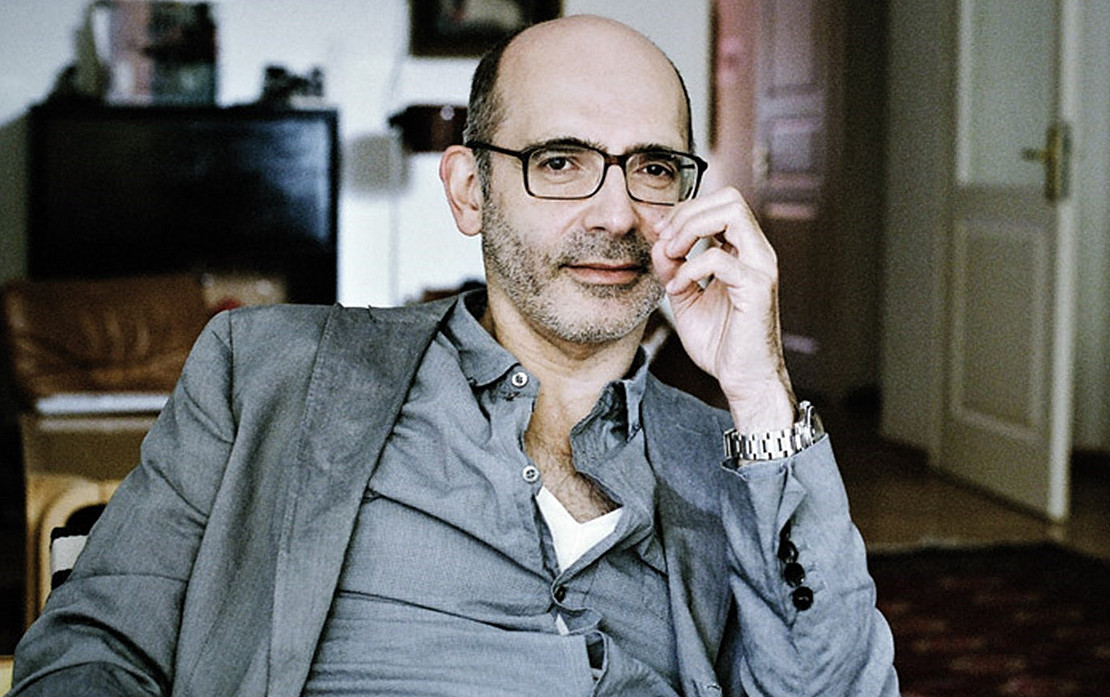
"The Used Jew" was the title of the lecture with which Grimm P[oetikp]rofessor Maxim Biller opened his series of events in the Eulensaal of the Murhard Library in December 2008.
However, anyone expecting the lecture and seminar to be a blazing polemic or a keynote speech on the (im)possibility of biographical writing was disappointed. The author, who has attracted more public attention with his columns than with his novels and, most recently, with the spectacular damages case surrounding his book Esra, was rather thoughtful and almost philosophical in this literary offering from the University of Kassel, where academic and urban audiences mingle for three days every year. He seemed to have left behind the sharp polemics for which he is famous, or did not find them appropriate for the role of temporary professor of literature. A consistent theme in his work is the relationship between Jews and Germans in all its aspects, from the historical to the elusive real life in Germany today, into the precise description of which he brings his very personal experiences. This issue was also the focus of his opening lecture and seminar. Above all, Biller described his relationship to Germany on the basis of his own life as a student in Munich and developing writer, in which he attempted to clarify his own position both in literature and in society. The definition of 'Jewishness', especially in contrast to anti-Semitism, took up a great deal of space. He was preoccupied with translating his experiences and insights into writing, describing the "walls I ran up against". As he explained, Philipp Roth became his literary inspiration and role model. But Biller also felt affected by his sister's comment: "Novels consist only of words, not of reality". Part of his critical distance to today's Germany may also lie in his early language experience: Biller initially read Czech until he was a teenager, only later did German become the language in which he thinks and writes. He sees history as a "quarry" for exciting stories that he wants to tell. The question posed to the seminar as to whether there is a specific "Jewish literature" in today's Germany ultimately remained unanswered.
Claudia von Dehn (Publik, January 27, 2009)