
Terézia Mora
The content on this page was translated automatically.
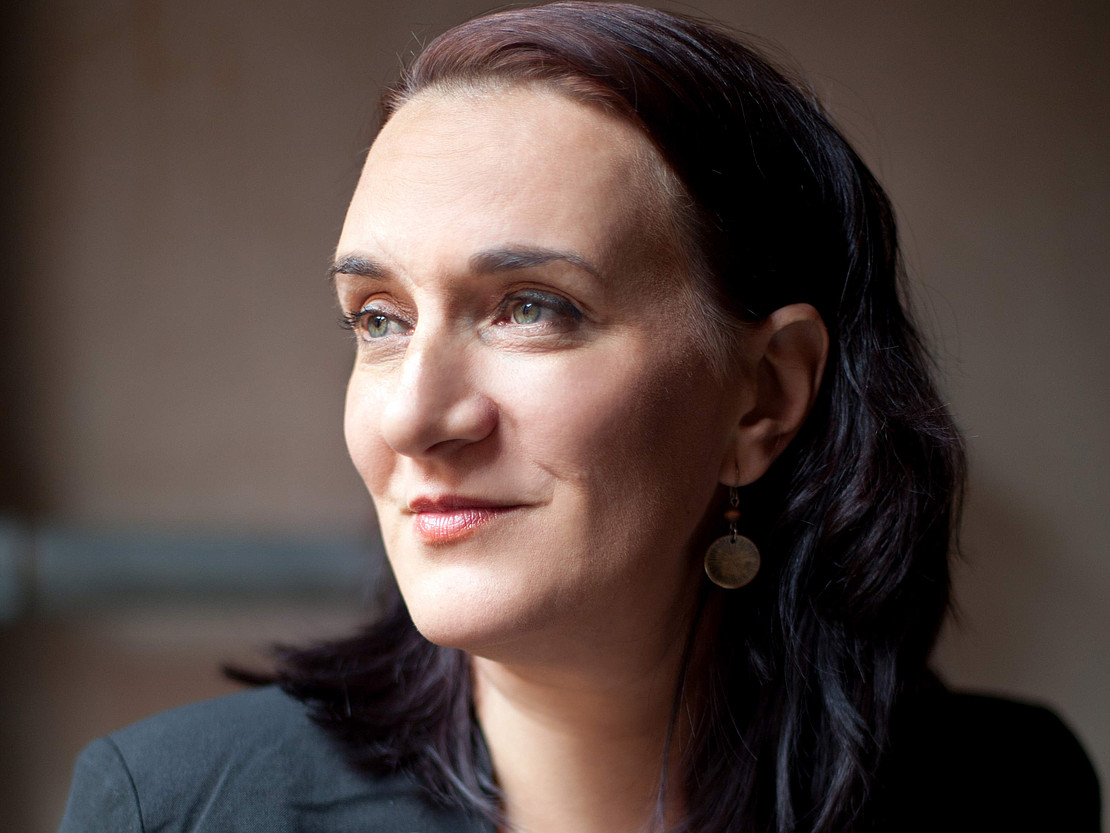
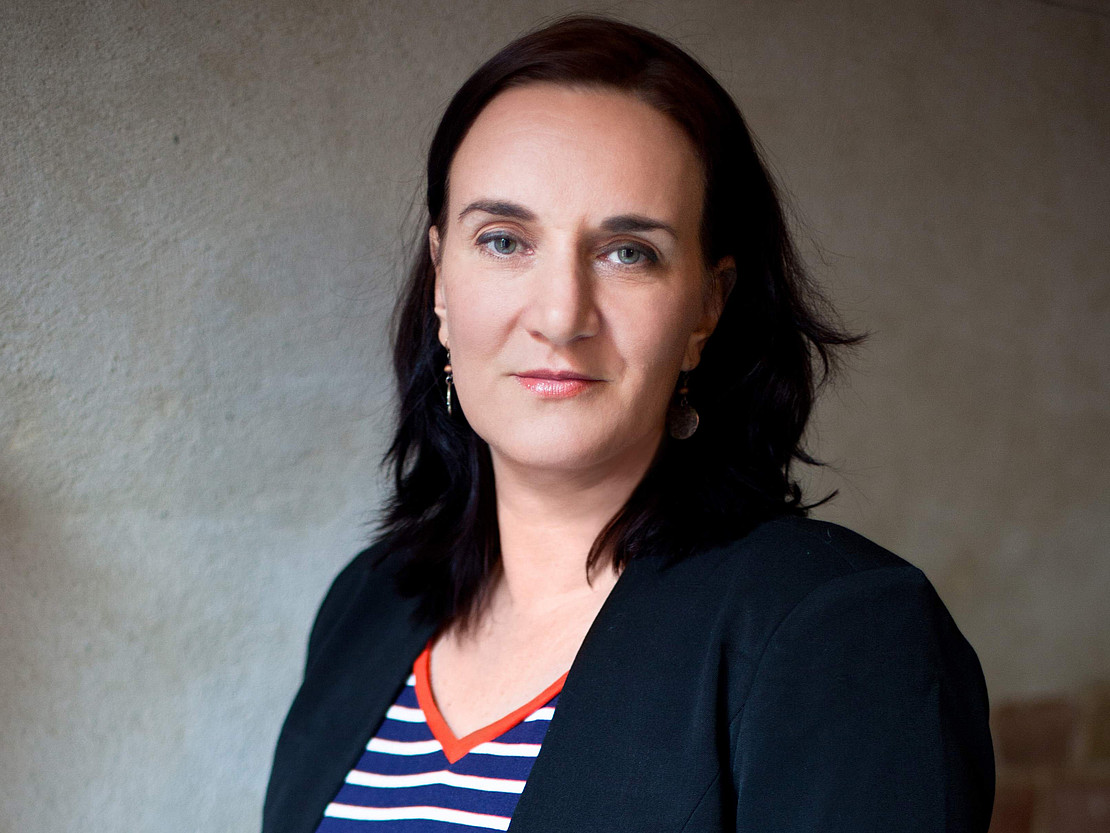
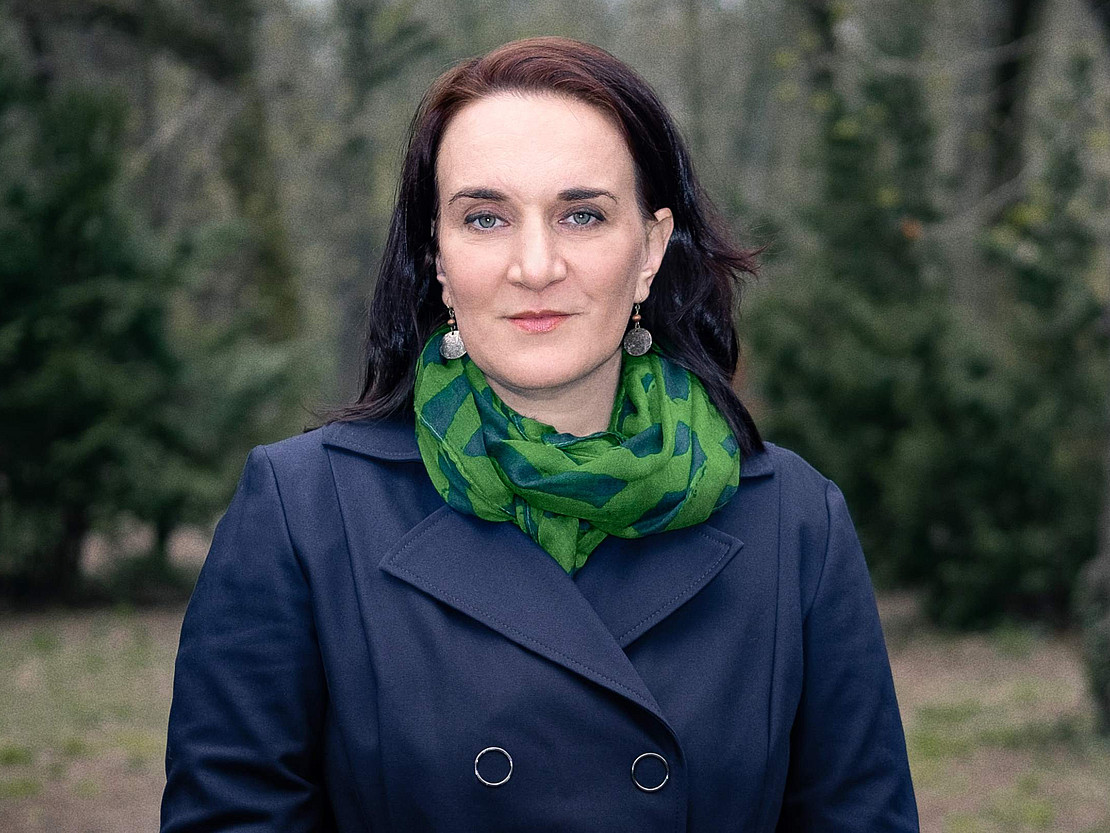
Terézia Mora in Berlin 2019 - Press photos for the publication of her novel On the Rope (2019)
- Stefanie Kreuzer | As of Nov. 2, 2021 -
Grimm Poetry Professor 2021: Terézia Mora
Terézia Mora (*1971) receives the Kassel Grimm Poetry Professorship in 2021.
Terézia Mora's fictional texts impress, as already emphasized in the context of the Büchner Prize award (2018), through "their eminent presence and lively linguistic art, which combines everyday idiom and poetry, drasticness and tenderness." Her textual worlds are populated by a cast of characters that often includes eccentrics, precarious existences, modern nomads, seemingly unhappy loners and quirky, likeable strangers. Terézia Mora's storytelling is characterized by vivid character descriptions and visually impressive worlds. Self-reflective moments and playfully experimental elements also emerge, sometimes ironically breaking the narrated worlds. Examples include simultaneous narrative strands and perspectives placed next to each other in the text, as well as different individual reading directions or crossed-out words and graphically structured text arrangements.
As a prose writer, Mora has now published two collections of short stories and four novels. After her early collection of stories Seltsame Materie (1999) and the novel Alle Tage (2004), a trilogy of novels followed over the course of a decade, telling the story of the extreme and curious life of IT specialist Darius Kopp. The trilogy ranges from Der einzige Mann auf dem Kontinent (2009) to Das Ungeheuer (2013) and Auf dem Seil (2019). The protagonist initially spends professionally successful and privately happy times in Berlin. When he is confronted with the suicide of his wife, who is of Hungarian origin, he experiences this as a blow of fate. He withdraws from his previous life and sets off on an aimless nomadic existence. With his wife's urn in his luggage, he sets off in search of her origins, traveling to Hungary and on through Eastern Europe. In the third part, he ends up penniless, working as a casual laborer, tourist guide and pizza chef in Sicily before setting off with his pregnant, underage niece back to Berlin to start a new life.
Like Darius Kopp, many figures in Mora's texts appear as quirky characters who more or less assert themselves in their lives or - like Darius' wife Flora - can no longer bear them. Examples include Abel Nehma, the protagonist of Alle Tage, or the main characters of the eponymous story from the collection Die Liebe unter Aliens (2015). Terézia Mora's narrative style is rich in action, makes use of very different subjects - from the academic life of a retired Japanese professor to the description of contradictory feelings during a rape - and offers a wide range of heterogeneous tones and styles in terms of language.
Before the Kassel Grimm Poetry Professorship, Mora held the Tübingen Poetry Professorship in 2006/07 together with Péter Esterházy and the Frankfurt Poetry Professorship in 2013/14. In 2014, she gave the Stefan Zweig Poetry Lecture in Salzburg.
GPP event series with Terézia Mora (summer semester 2021)
The public events in the context of Terézia Mora's Grimm Poetics Professorship took place in online formats from Mon. to Thu., June 7-10, 2021.
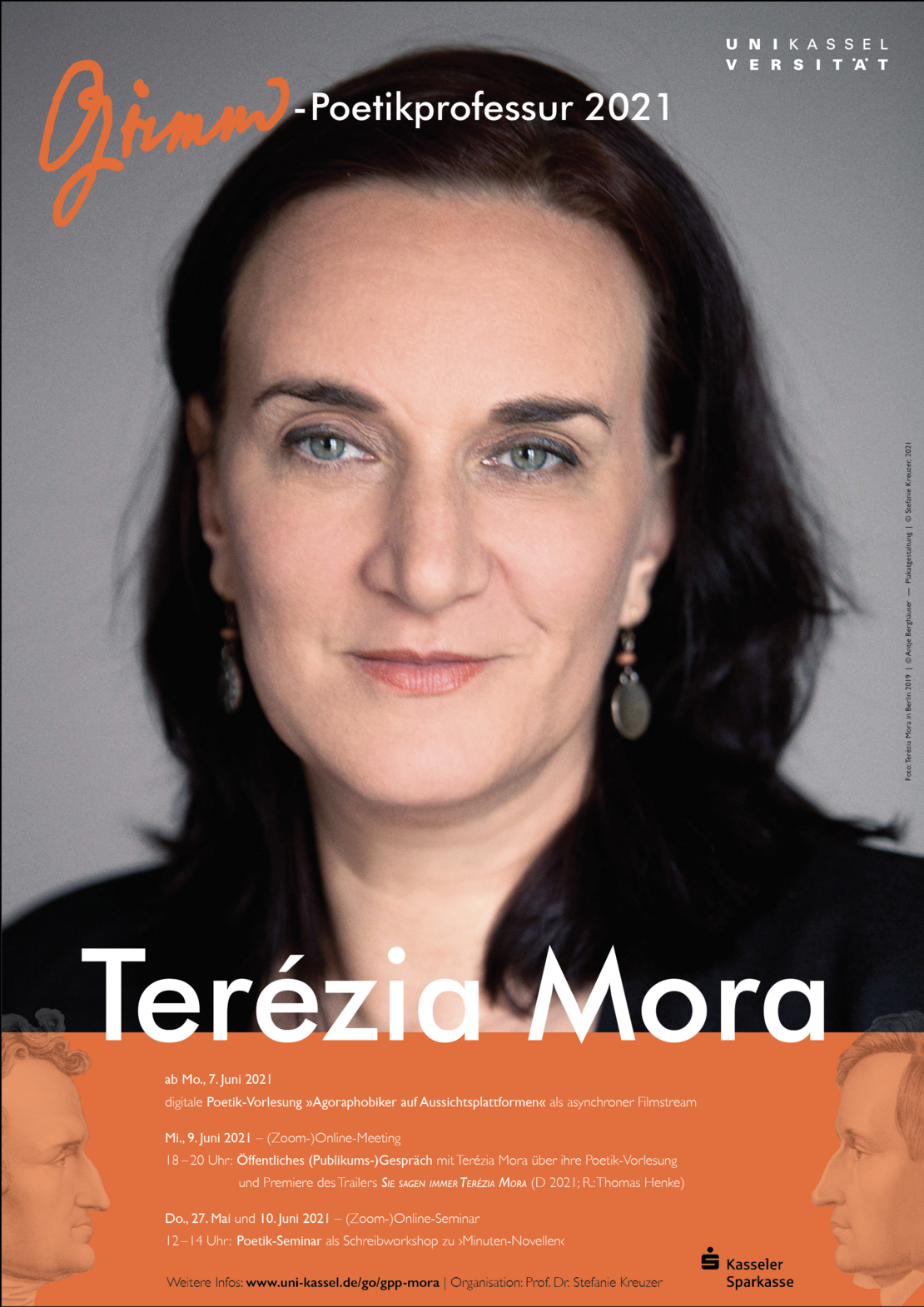
Overall, the series of events for Terézia Mora's Grimm Poetics Professorship consists of three parts: (1) a recorded digital inaugural lecture (asynchronous), (2) a live online conversation with Terézia Mora (via Zoom meeting) and (3) a poetics seminar for students at the University of Kassel.
Poster for Terézia Mora's
Grimm Poetry Professorship 2021
(Poster: Stefanie Kreuzer;
Photo: Antje Berghäuser)
Interview with Terézia Mora
In the run-up to the Kassel GPP event, an hr-2-kultur podcast (June 8, 2021) was produced to announce Terézia Mora's guest professorship, which also refers to the accompanying film SIE SAGEN IMMER TERÉZIA MORA (D 2021), directed by Thomas Henke.