Green:Campus
The content on this page was translated automatically.
Sustainable open space management
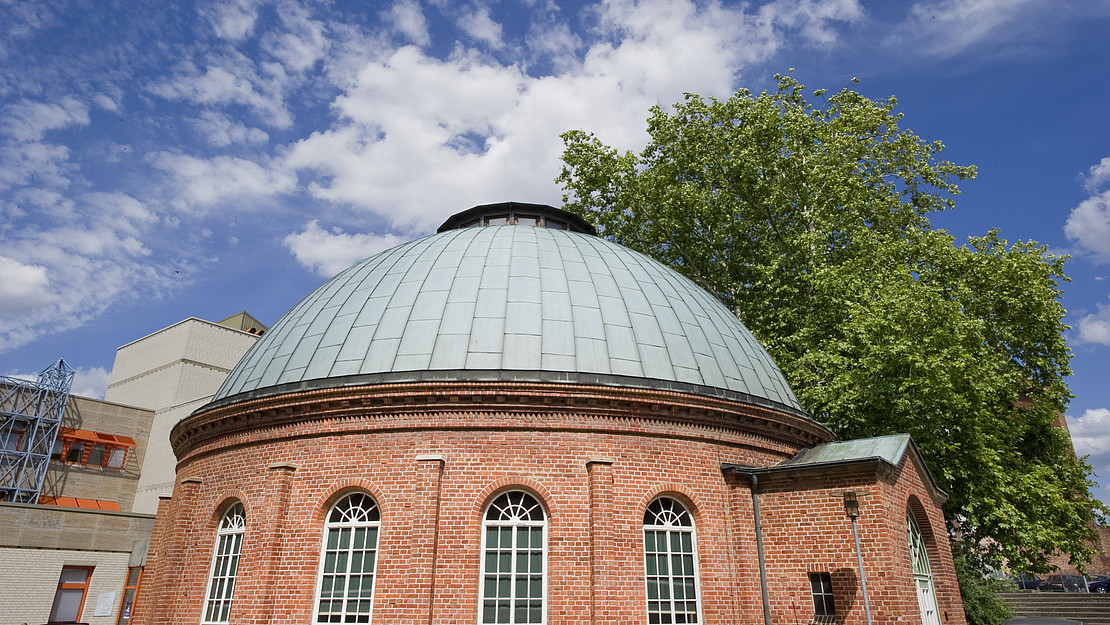
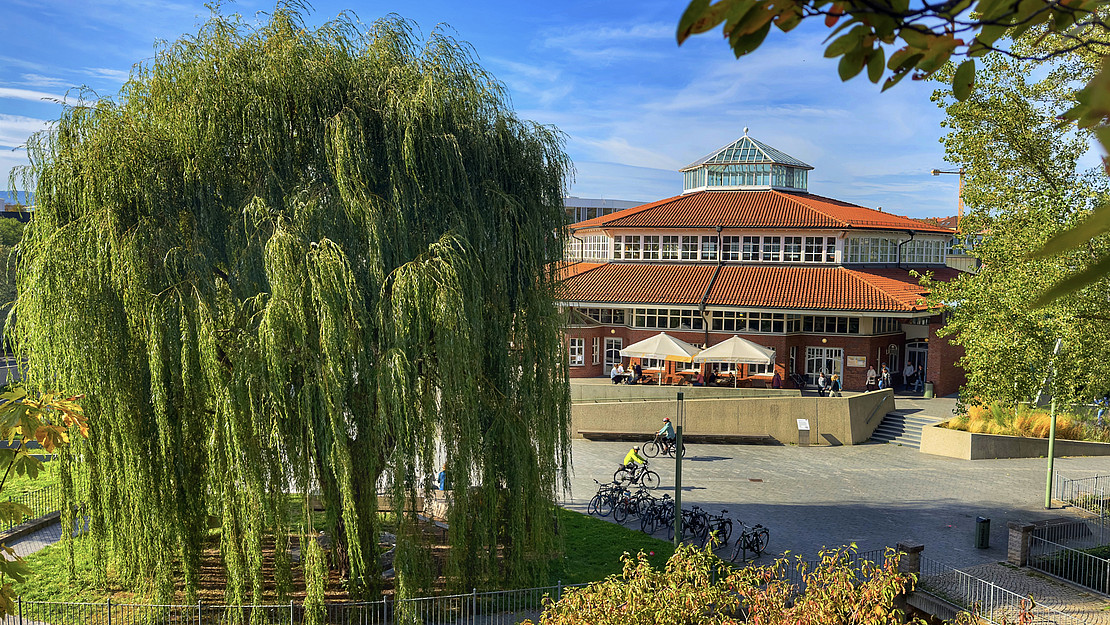
Review of the "Cool places - how more campus greenery can protect us from the heat" campaign days
The University of Kassel invited visitors to the exhibition in the Campus Center from 21.10. to 23.10.2025
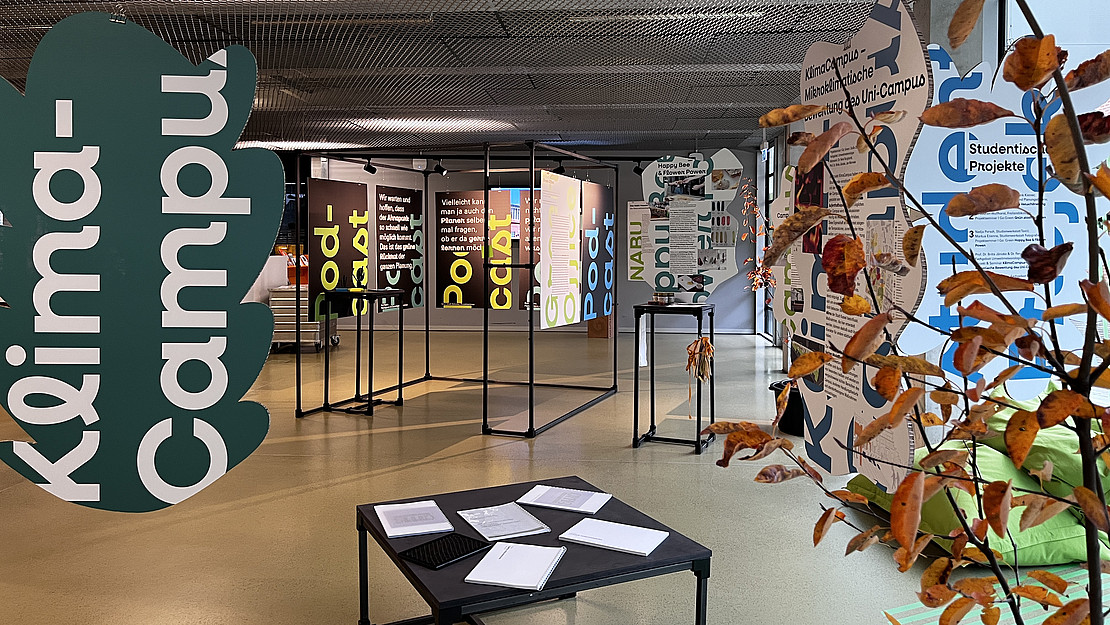 Image: Klaus Stach
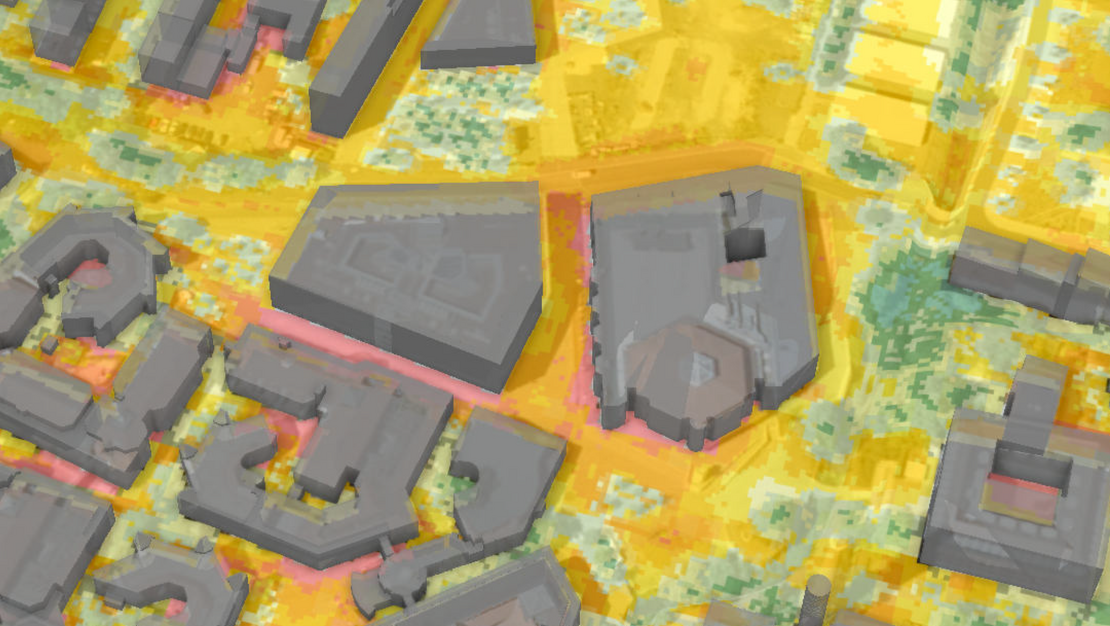
For three days, the planned optimization measures for the campus areas were presented in the Campus Center. University members learned about the plans to improve biodiversity, quality of stay and the microclimate on campus. In addition to an exhibition, there were and are podcasts (see below) to listen to and learn, for example, what the planners had in mind for their optimization measures. A microclimate analysis provided insights into the effectiveness of the planned measures. In addition, tours of the campus areas presented places where changes are planned and all participants were invited to discuss the sustainable development of the University of Kassel together.
The action days were initiated by the Green Office with the support of studiom2m3.
Interviews from the exhibition Cool Places
Prof. Axel Klapka, k1 Landschaftsarchitekten (responsible for the North Campus)
Timestamps:
- Intro
- Currently relevant plans - from 0:54 minutes
- Expected effects - from 03:33 minutes
- Stormwater management and biodiversity - from 05:14 minutes
- Possible optimizations & outlook - from 07:58 minutes
Birte Resow, StadtLandschaft project office (responsible for the South Campus)
Timestamps:
- Intro
- Currently planned measures - from 0:51 minutes
- Expected effects - from 02:27 minutes
- Timing - from 04:38 minutes
- Possible optimizations & outlook - from 05:45 minutes
- Use of materials - from 07:47 minutes
Project seminar I Go:Green Green city gravel by Dr. Jochen Wulfhorst, open-air ecologist
Timestamps:
- Intro
- Important criteria of the seminar - from 00:56 minutes
- Need for action - 03:09 minutes
- Ideas for public participation - 04:08 minutes
- Concrete implementation ideas & questioning the attitude towards land - from 04:58 minutes
- Outlook - 08:36 minutes
Project seminar I Go:Green "Happy Bee & Flower Power" by Nadja Porsch, Studienwerkstatt Textil
Timestamps:
- Intro
- Origin and important criteria of the seminar - from 01:04 minutes
- Special results - from 04:46 minutes
- Sequence of the dyeing process - from 06:55 minutes
- Intersection with the photographic field - from 08:42 minutes
- Outlook - from 09:50 minutes
Project & Seminar "KlimaCampus" by Prof. Dr. Britta Jänicke, Department of Environmental Meteorology
Timestamps:
- Intro
- Origin and important criteria of the seminar - from 0:58 minutes
- Methodology and results - from 02:06 minutes
- Consequences & wishes for the seminar - from 04:12 minutes
- Outlook - from 05:34 minutes
Project "Campus Beautification" by Prof. Dr.-Ing. Uwe Altrock & Frank Kistner, Department of Urban Renewal and Planning Theory
Timestamps:
- Intro
- Origin and important criteria of the project - from 00:49 minutes
- Results to date - from 04:41 minutes
- News from the project - from 05:51 minutes
- Outlook - from 06:54 minutes
Microclimate analyses:
The results of the following analyses serve as the basis for a climate-adapted campus development that sustainably improves the quality of stay and increases resilience to extreme climatic events.
The students of the "KlimaCampus" project have compiled their findings from the summer semester 2025 on heat stress on the Holländischer Platz campus in a story map, which can be viewed here.
At the same time, the Green Office invited Prof. Dr. Britta Jänicke (Department of Environmental Meteorology) to give a lecture as part of the Green:Campus exhibition "Cool places - how more campus green can protect us against heat". The contribution can be found here.
The microclimate analysis was carried out on behalf of the Green Office by the Institute for Climate and Energy Concepts (INKEK GmbH) and relates to the areas on the campus that are estimated to be heat spots.
At the same time, as part of the Green:Campus exhibition "Cool places - how more campus greenery can protect us from the heat", the Green Office invited Sebatian Kupski (INKEK GmbH) to give a talk on the climate crisis and the need to adapt. The article can be found here.
Initiatives for open space management
The development of future-oriented open space planning is of great importance, particularly in order to counteract the effects of climate change and the associated global warming. In order to increase biodiversity and improve the microclimate and quality of life at the university sites, guidelines are being developed and specific measures identified and implemented.
When converting and redesigning existing areas, emphasis is placed on ensuring that existing open spaces are unsealed and that facades and roofs are planted with resistant and cooling vegetation wherever possible. In addition, wherever possible, biodiversity should be increased on sealed surfaces, such as water-bound path surfaces, by sowing flower-gravel lawns.
Traffic & Mobility
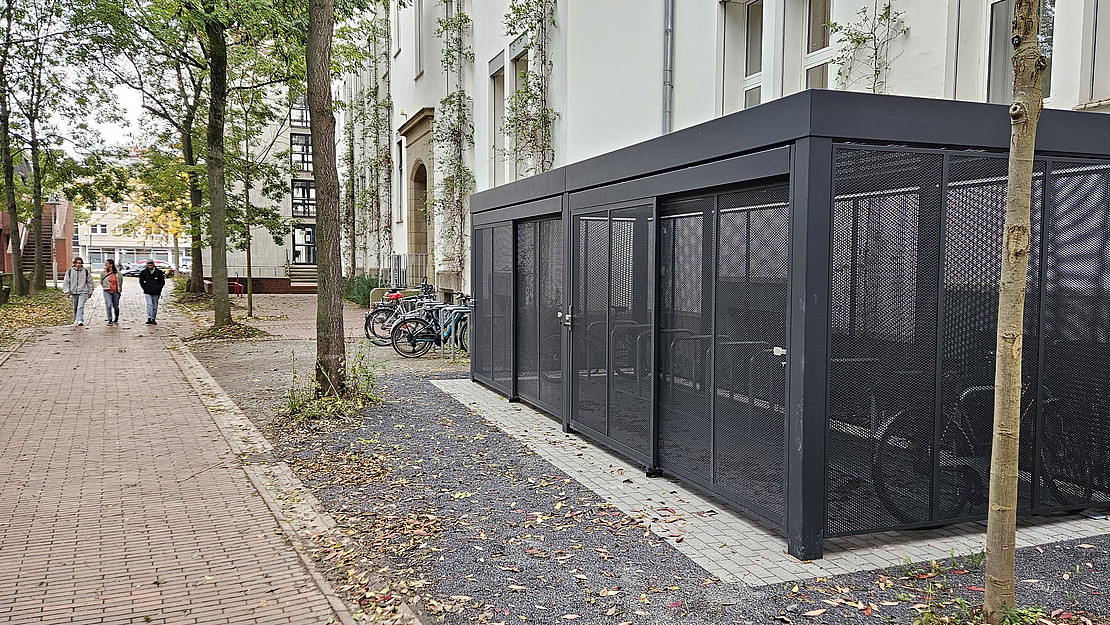

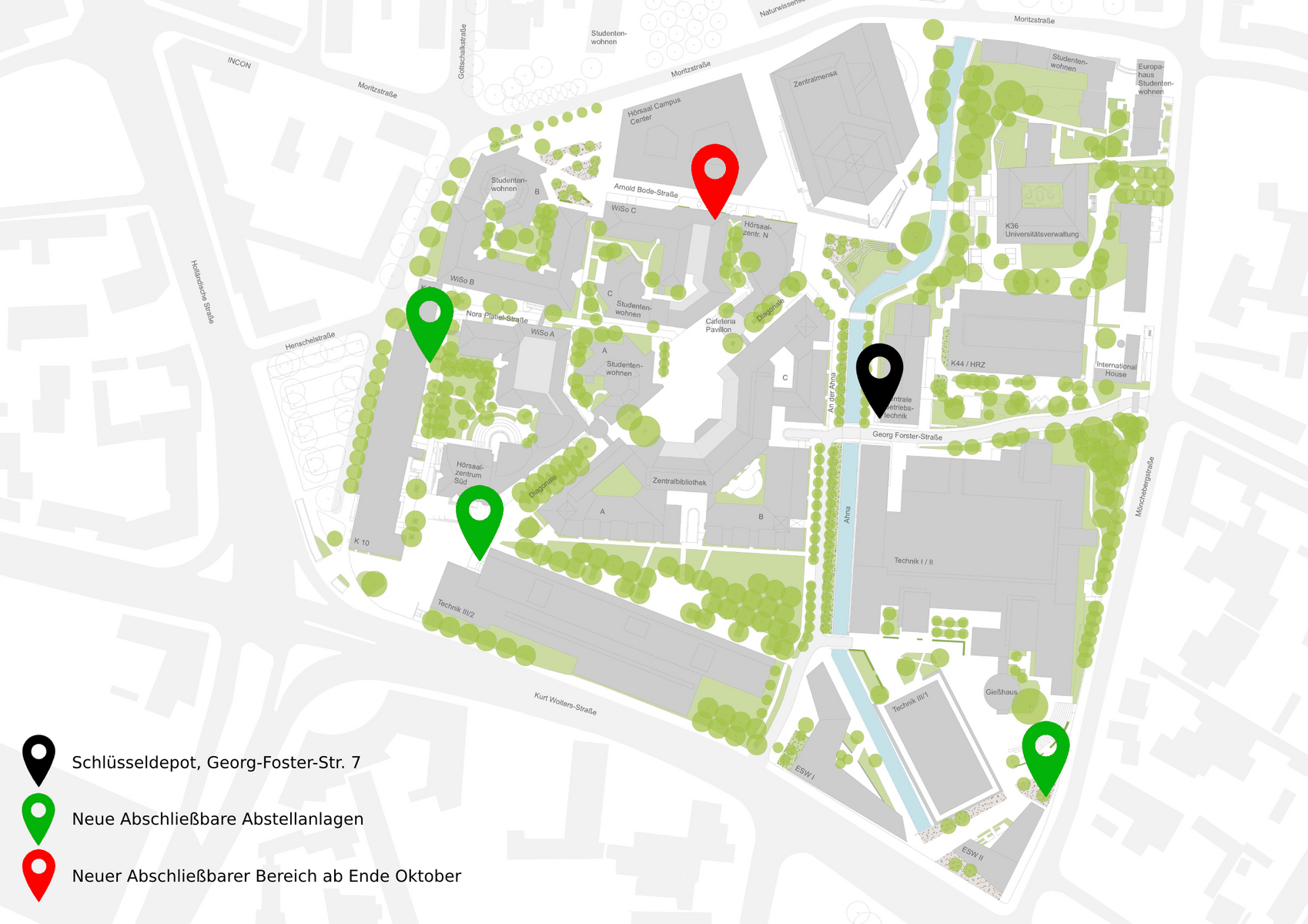
Locations of the new bicycle parking facilities
News from the mobility & transport sector
New lockable bicycle boxes at HoPla
|
Nextbike stations:
|
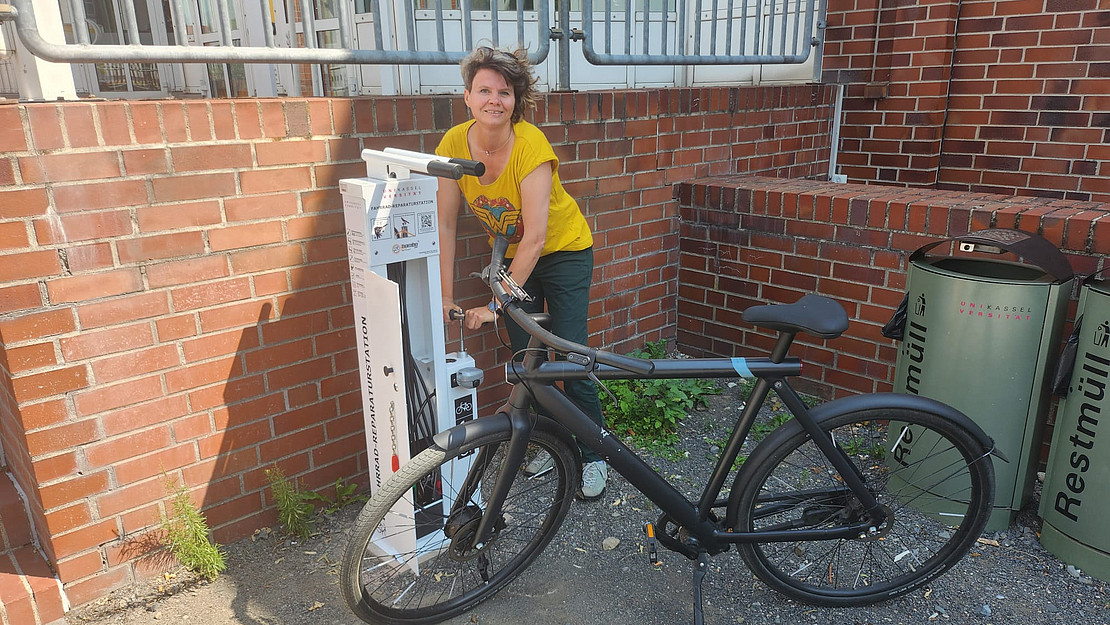
Bicycle repair stations
|
Sustain Group Mobility: Do you have ideas on how we can make mobility on campus more sustainable?
Have you been thinking about a specific topic for a while?
In the new Sustain Group on "Sustainable mobility on campus", we want to address such topics.
You can find current dates in the event overview!

Mobility & Traffic
The "Concepts and measures for sustainable mobility" project aims to develop new comprehensive and holistic strategies and approaches. As a first step, we conducted a comprehensive data collection on the mobility behavior of all university members. This enables us to understand the demand for transportation as well as the requirements and wishes regarding mobility. The second step is to use this data to develop a concept for sustainable campus mobility and logistics. This includes measures to improve the bicycle infrastructure and promote e-mobility. Once these measures have been implemented, the success of the concept will be reviewed in a third step by collecting data again. The aim is to ensure that the targeted improvements have been achieved.
The outcome of this project not only aims to achieve more sustainable mobility and logistics at the University of Kassel, but also to produce a scientifically sound guide in collaboration with the Department of Transport Planning and Systems. This guide will contain recommendations for the implementation of sustainable transport concepts for other universities.
How do students and employees get to the university from their homes? Do they walk, cycle, use public transport or drive? These questions were investigated by the Department of Transport Planning and Transport Systems at the University of Kassel under the direction of Prof. Dr.-Ing. The results of this mobility survey are now available.
The detailed results of the student survey can be downloaded here.
The detailed results of the employee survey can be downloaded here.
Low on air in the tires, loose screw on the luggage rack? No problem, because on the Holländischer Platz campus, in Nordbahnhofstraße in Witzenhausen and in Heirich-Plett-Straße there are now bicycle repair stations!
Repair stations are in preparation for the other locations.
Sustainability principles for business trips at the University of Kassel
Based on its self-image of protecting nature and the environment, the University of Kassel strives for sustainable mobility. The sustainability guidelines and principles laid down in the resolution of November 20, 2023 must therefore be observed when carrying out business trips.
In July 2022, the project to promote sustainable mobility at the University of Kassel was launched with the aim of promoting environmentally friendly and climate-friendly mobility.
Since February 2022, employees have been able to park their bicycles safely at two locations on the Holländischer Platz campus. Three bicycle parking facilities are located in the underground car park of the library (access via Georg-Forster-Straße, like the cars to the underground car park) and another in front of the administration building at Mönchebergstraße 19. These facilities are equipped with an electronic door lock system that allows access via the campus card. The campus card can be activated at the key depot at Georg-Forster-Straße 7 without having to apply.
Further secure parking facilities, including for students, are planned successively at all locations. By providing additional lockable parking spaces, the university aims to create incentives to switch to bicycles. The "Sustainable Mobility" project is one of a total of six funded projects that contribute to climate protection and the reduction of greenhouse gas emissions.
The University of Kassel strives to increase the attractiveness of bicycles compared to other means of transportation and to further improve the bicycle infrastructure. There are plans to double the number of bicycle racks at all locations and to install lockable bicycle lock systems to meet demand. Various campaigns and information about cycling, especially for new employees and students, are intended to raise awareness of the use of bicycles.
The cargo bike rental service VELOAD at the Green Office will end on 01.08.2025.
The opportunity to borrow a large cargo bike for employees of the University of Kassel was very well received and very successful. The test period of originally 6 months was extended by a further 6 months until the end of July 2025, but unfortunately cannot be extended again.
As a consolation for all those who would like to continue borrowing a cargo bike: in cooperation with the AStA and "KARLA - KAsseleR LAstenrad " , there will soon be a cargo bike in the Nordstadt district, which is located on campus in front of the student house.
The University of Kassel is planning to set up new shower and changing facilities for all those arriving by bike. Various requirements need to be taken into account and suitable facilities need to be found.
We are working on it! More details will follow.
In addition to individual mobility, the university's internal processes, such as business trips and the vehicle fleet, are also being examined more closely. Measures are to be taken to promote climate-friendly mobility behavior. The vehicle fleet is to be gradually converted to climate-friendly vehicles, provided that appropriate vehicles with environmentally friendly drive systems are available.
The first goal is to set up a charging infrastructure with an initial 10 charging points for electric vehicles at all locations.
With the help of the "COME-Mobility" funding program, the plan is to set up a charging infrastructure for electric vehicles that is also accessible to private transport. The declared aim of this funding program is to equip all of the state's offices with charging infrastructure for electric vehicles in line with demand by 2030.

Procurement

Energy

Mobility

Biodiversity

Green IT

Waste
WIZ / Steinstraße

WIZ / Nordbahnhofstraße
Frankenhausen

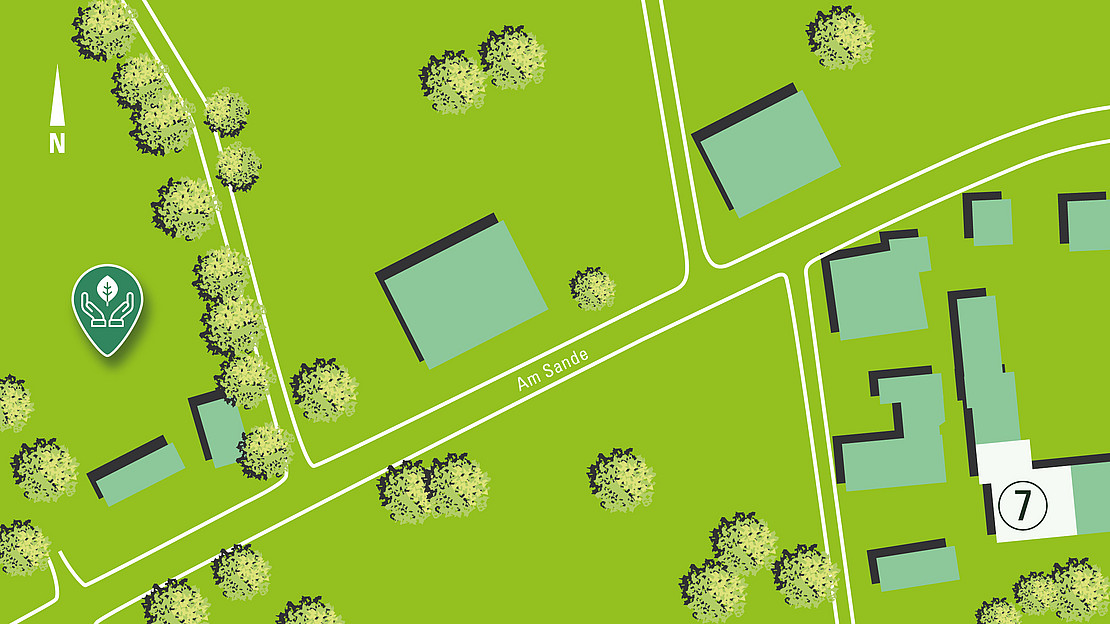
On the sand