
Kassel team develops guidelines for the EU Nature Conservation Regulation
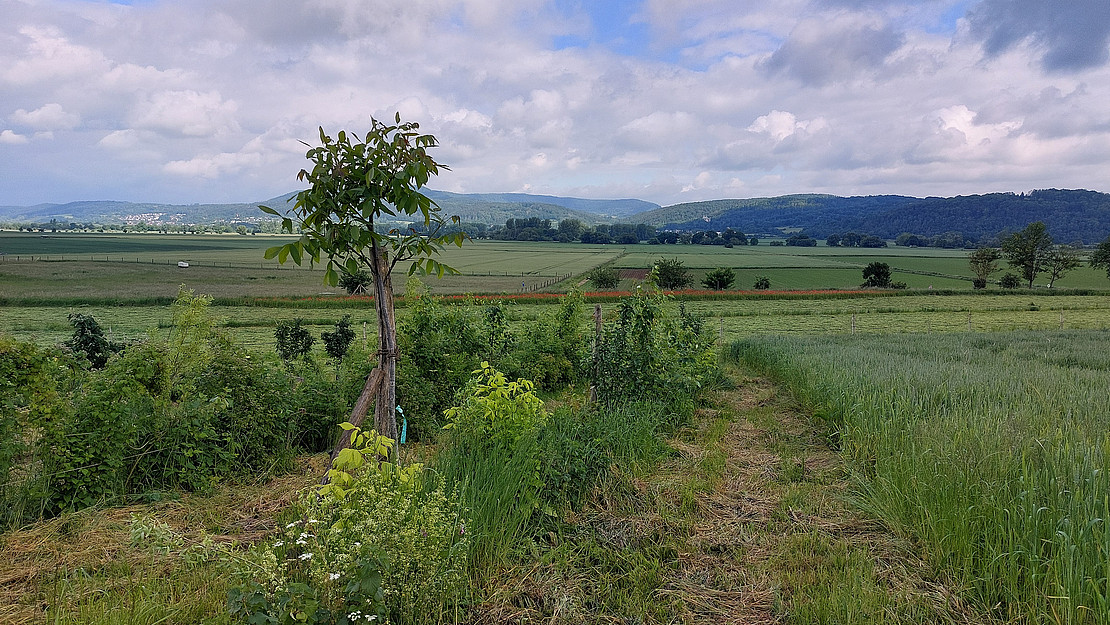 Image: Tobias Plieninger.
The regulation obliges all EU member states to restore 20% of degraded ecosystems such as forests, moors and agricultural landscapes by 2030. Scientifically, this is considered a decisive step in nature conservation, but socially and politically the project is met with reservations. In order to reduce these hurdles, the researchers have identified five socio-ecological dimensions that are crucial for acceptance and effectiveness: Using landscapes as places of learning; incorporating rural and agricultural cultural heritage; empowering land users to take responsibility for their own actions; supporting multifunctional land use and anchoring participatory, cooperative approaches. "Social trends such as structural change in agriculture, urbanization and digitalization have led to the loss of many connections between people and nature. However, diverse opportunities to experience nature are crucial for the successful and socially accepted restoration of biodiversity in our agricultural landscapes in the long term," explains lead author Abul Polas.
Using examples from Germany, the research team shows how socio-ecological approaches can improve the acceptance and implementation of restoration projects. For example, renaturation measures could be implemented through improved cooperation between agriculture, nature conservation, administration and research - for example via local restoration councils or landscape conservation associations. The multifunctionality of restored areas could be promoted by removing political hurdles for agroforestry systems or paludiculture. Culturally significant landscape elements (such as orchards), traditional land use practices (such as sheep farming) or regionally produced food could also be systematically protected, made visible and integrated into restoration programs.
"The EU regulation on nature restoration offers a great opportunity. For it to be a success in times of multiple ecological and social crises, social and ecological aspects must be considered together," emphasizes Plieninger.
To the policy article: https://onlinelibrary.wiley.com/doi/10.1111/rec.70278
What does this mean in summary?
- EU regulation: restore 20% of degraded ecosystems by 2030 (forests, peatlands, agricultural landscapes).
- Success depends on the connection between people and nature.
- Five guidelines: Learning in landscapes, incorporating cultural heritage, empowering land users, promoting multifunctional use, ensuring participatory implementation.
- Practical examples show: Cooperation, cultural elements and traditional use increase acceptance and impact.
Contact:
Prof. Dr. Tobias Plieninger
E-mail: plieninger[at]uni-kassel[dot]de