Study structure
The content on this page was translated automatically.
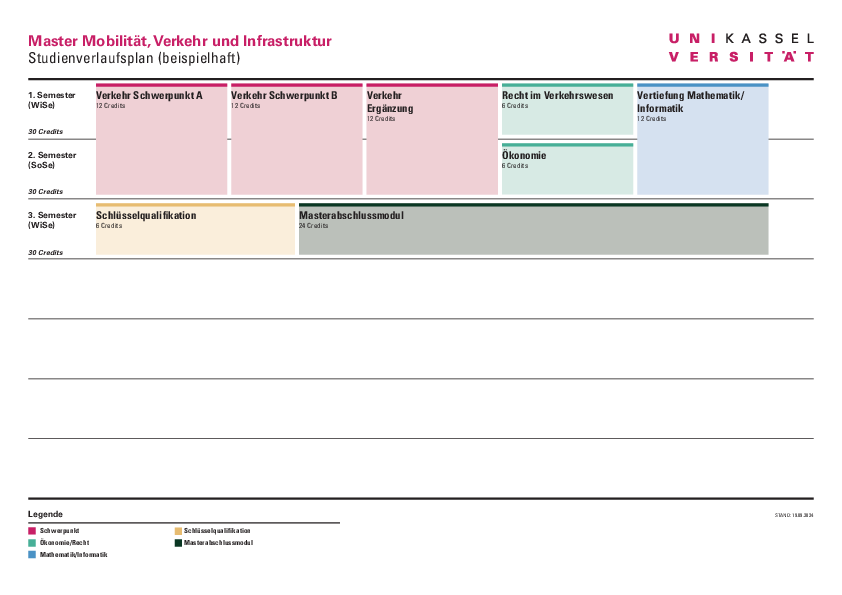
The new degree program provides students with a comprehensive overview of the key content and skills in the areas of mobility, transport and infrastructure. By choosing two (out of six) specializations with 12 credits each, special knowledge in two subject areas in transport is deepened, which correspond to potential professional fields.
This transportation science content is supplemented by further subject-specific courses amounting to 12 credits ("Transportation Supplement" module). In addition, a total of 30 credits from non-transport science subjects must be taken:
- Specialization in Mathematics/Computer Science (12 credits),
- Law in transportation (6 credits),
- Economics (6 credits) and
- key qualifications (6 credits).
The interdisciplinary approach and the combination of skills from the areas of planning, technology, economics and law enable graduates to understand and evaluate the complex interrelationships between the individual sub-areas of transportation. In the Master's thesis with colloquium (24 credits), students finally apply their newly acquired knowledge by independently answering a question from the fields of mobility, transportation and infrastructure.
Sample study plan