Study structure

This page contains automatically translated content.

The Master's program consists of the following modules:

- M1 "Fundamentals of Empirical Educational Research"
- M2 "School and teaching research"
- M3 "Social conditions, processes and outcomes of formal, non-formal and informal education"
- M4 "Methods and Methodology of Empirical Educational Research - Introduction and Consolidation"
- M5 "Methods and methodology of empirical educational research - project seminar and application"
- M6 "Current topics and challenges in empirical educational research"
- M7 "Research internship"
- M8 "Master's thesis and final colloquium"

As a student of the Master's degree program in Empirical Educational Research, you will complete a 3-month research internship in an educational research institution or in a practice-oriented educational institution in the 3rd semester. You can find more information about the research internship here.

Details on the modules can be found in the detailed module handbook.

to the module handbook

You can gain an insight into previous student projects here.

Forward

General

A degree programme consists of modules that are defined in the examination regulations and described in more detail in the module handbook. In terms of content and time, it makes sense to study these modules in a certain order. There is a sample study plan for each degree program, which shows you an ideal course of study. If you study in this way, you can complete your studies within the standard period of study. This is not always possible, so there may be individual deviations from the suggested course. When planning, you should bear in mind that not every module is offered in the winter and summer semesters and that some modules build on each other or have other participation requirements. The Student Advisory Service will help you to plan your studies individually.

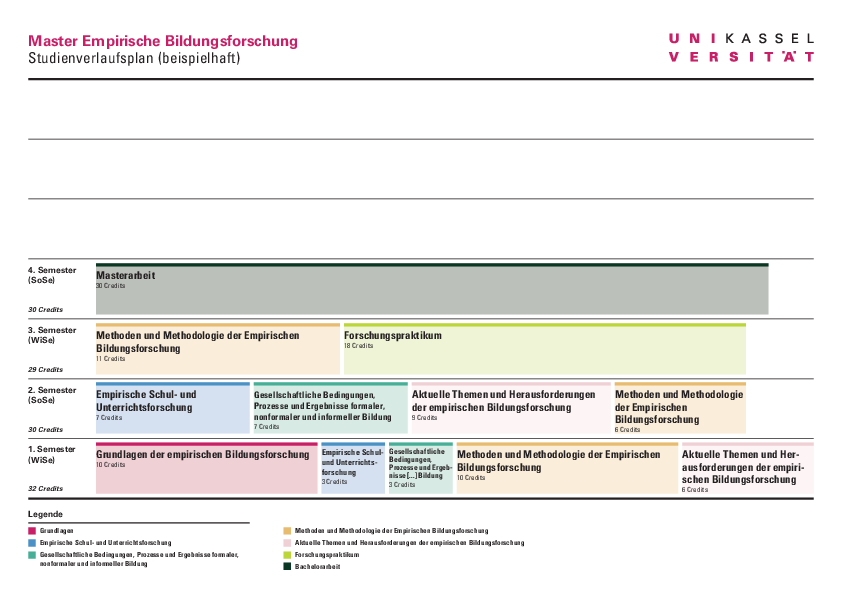
Sample study plan