Apprenticeship as an electronics technician for industrial engineering
The content on this page was translated automatically.
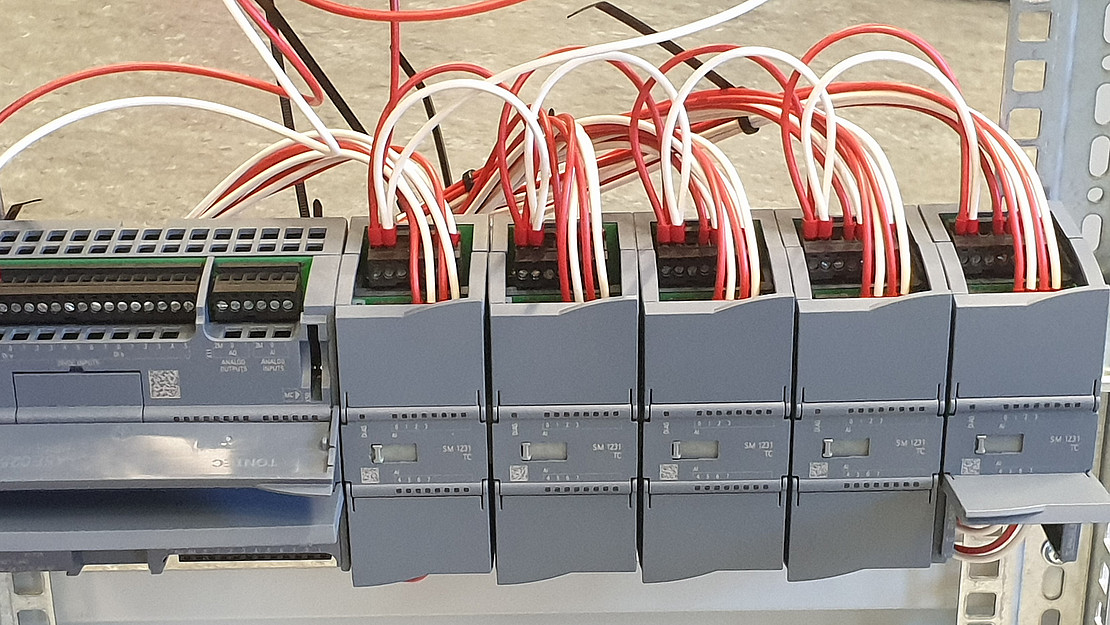 Image: Electrical training workshop
What does an electronics technician for industrial engineering do?
At the start of the apprenticeship, you should have an intermediate school leaving certificate (Realschulabschluss). Your grades in mathematics, physics and English should be at least "satisfactory" or better in your school leaving certificate. An interest in manual work, IT and electronics, a technical understanding and logical thinking are also important.
There are fixed working hours from 7.00 a.m. to 3.30 p.m. on weekdays.
The apprenticeship to become an electronics technician for industrial engineering has a dual structure. It lasts three and a half years. Trainees work in the electrical and electronics workshop of the electrical engineering/computer science department, where they gain practical experience right from the start.
The theory is taught at the vocational college. This involves block teaching. This means that the trainees spend one week at the vocational school and two weeks in the company. The vocational school is the Oskar-von-Miller-Schule in Kassel.
Vocational school is an important part of your training, as it provides you with the theoretical background knowledge for your professional practice. You will learn about electrotechnical systems, analyze control systems and become familiar with the devices and assemblies in systems. After all, you will need to be able to assemble them later on and know their functions for programming control systems.
Important subjects at vocational school are
- Operating technology
- Installation and energy technology
- Control technology
- System and device technology
A monthly training allowance is paid in accordance with Section 8 (1) of the collective agreement for trainees in the state of Hesse (TVA-H BBiG). This currently amounts to
- EUR 1,126.85 in the 1st year of training
- EUR 1,181.43 in the 2nd year of training
- EUR 1,231.51 in the 3rd year of training
- EUR 1,300.97 in the 4th year of training
Technical specialist: Of course you should be technically adept. After all, as an electronics technician for industrial engineering, you are responsible for all electronic work.
Patient: In addition to technical understanding, patience also plays an important role.
Logical: It is an advantage if you can think logically. This makes it all the easier for you to install or connect electrical equipment, for example.
Tell us about your training!
I plan and set up electrical installations and lay cables. I also set up electrical installations and systems and test or repair them. I plan and convert circuit diagrams into electrical control systems. It is also important that I learn and apply occupational safety and protection measures when working with electrical systems.
Why did you choose an apprenticeship and this one in particular?
The education system in Germany is very much geared towards practical learning. During the apprenticeship, you learn theory and practice at the same time. I think that's very good, because you've gained enough experience afterwards to be able to hold your own in the world of work. I've always enjoyed technology. I like repairing electrical appliances at home. It makes me very happy when I see that the appliances are working again. That's why I wanted to know more about electrical engineering.
What else would you like to pass on to others?
Hi guys, electronics is very interesting. We have nice and experienced experts here. If you are interested in technology, just come and see us.
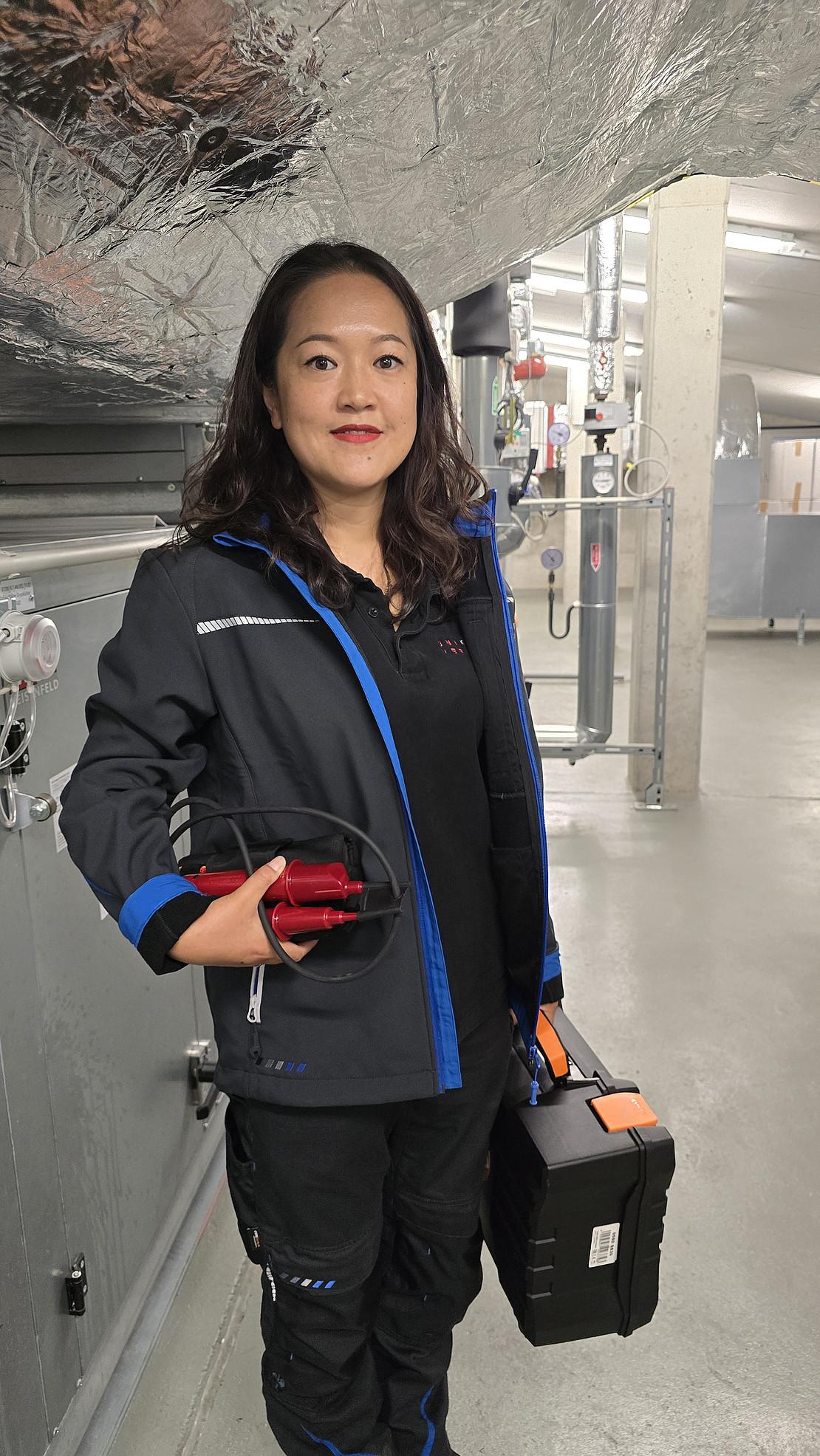
Ask yourself beforehand whether ...
- you enjoy theoretical work.
- you already liked math and physics at school.
- you are responsible.
Or whether you ...
- get impatient as soon as technology doesn't work.
- are not so good at practical work.
- get a sinking feeling in your stomach when dealing with high voltage current.
Go-Link of this page: https://www.uni-kassel.de/go/ausbildung-elektroniker