Training as a housekeeper
The content on this page was translated automatically.
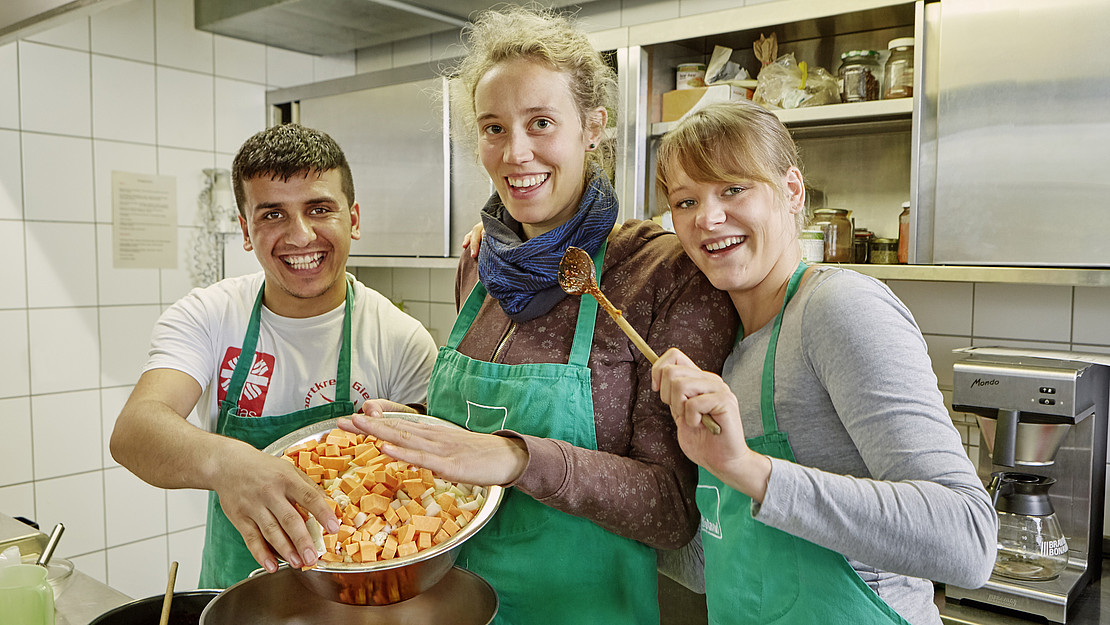
What does a housekeeper do?
At the time of starting the apprenticeship, you should have at least a secondary school leaving certificate.
The working time is 40 hours per week. There are fixed working hours from 8 am to 4:45 pm. This may vary slightly during work peaks, and weekend work is also possible. Compensation days are offered promptly.
Training as a housekeeper is a dual training program and lasts three years. As an apprentice, you will work in the housekeeping department, the canteen kitchen or the seminar house, where you will gain practical experience right from the start.
The theory is taught on certain days of the week at the vocational school, the Elisabeth-Knipping-Schule in Kassel.
The specialist lessons at the vocational school are divided into several learning fields, including, for example, "Caring for groups of people" or "Looking after groups of people". Business administration and hygiene standards are also covered, as well as interior design and textile care - the versatility of this apprenticeship is hard to beat.
The subjects of mathematics, German and politics/social sciences are also taught. Practical lessons take place every two weeks. There, meals are prepared together in the training kitchen.
A monthly training allowance is paid in accordance with Section 8 (1) of the collective agreement for trainees in the state of Hesse (TVA-H BBiG).
This currently amounts to
- EUR 1,126.85 in the 1st year of training
- EUR 1,181.43 in the 2nd year of training
- EUR 1,231.51 in the 3rd year of training
The prerequisite for training as a housekeeper is a friendly nature and an interest in people. You should work carefully in every respect and at least know how to operate a vacuum cleaner and an oven. You need skilled hands if you need to sew a pair of trousers, and you should be well-groomed so as not to pose an additional risk of allergies and illness. Your German should be good enough that you can write plans and talk to people without any problems. Good math skills will help you with housekeeping and cost calculations. It must be important to you to provide people with the best possible care.
What do you deal with in your apprenticeship?
- Preparing and serving food for employees and guests
- Laundry care
- Helping out in the farm shop
- Harvest helper
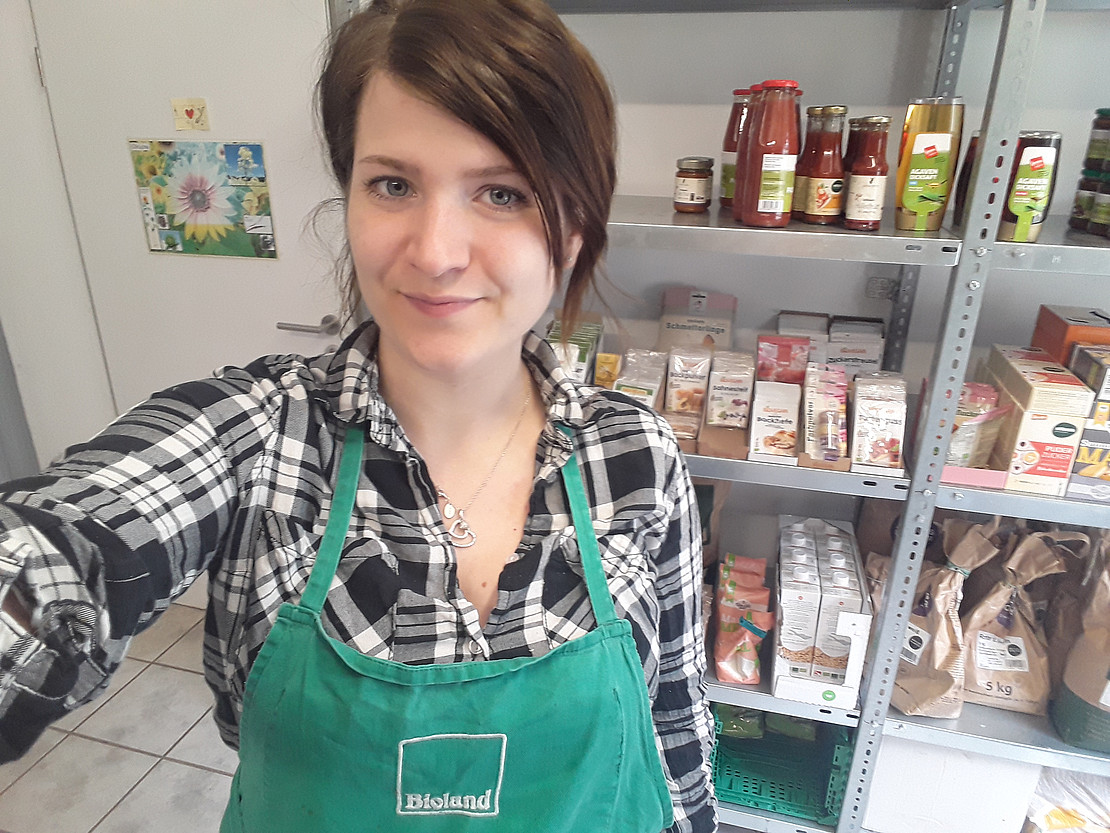
Why did you choose an apprenticeship and this one in particular?
- so that I have even better opportunities to find a job later on
- for a better future
- because I liked the company straight away
What else would you like to pass on to the others?
Take your time to make the right decisions for you.
It's never too late, even if you're doing your first apprenticeship at the age of 30.
Ask yourself beforehand whether ...
- ironing, washing up and cooking are not a chore for you.
- you have no fear of contact.
- you like to make other people happy.
Or whether ...
- even preparing packet soups is too much for you.
- you are very impatient.
- you would rather be served than serve others.
Go-Link of this page: https://www.uni-kassel.de/go/ausbildung-hauswirtschafter