STEM degree programs and career fields

The content on this page was translated automatically.

The University of Kassel offers a wide range of STEM degree courses for first-year students and prospective students with various degree options.

It is also possible to get to know the STEM subjects during the orientation phase of the innovative plusMINT degree program, as well as studying in a practical network. STEM graduates have very good career prospects in industry, as teachers and in research, which we provide information about in our overview.
Orientation studies plusMINT

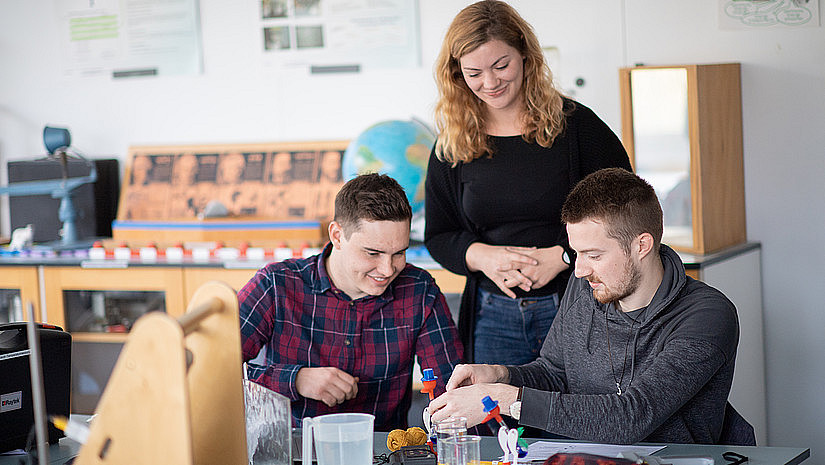
The plusMINT orientation course enables students to embark on a Bachelor's degree course that qualifies them for a wide range of exciting and future-oriented STEM jobs.

In a two-semester orientation phase, students get to know the various STEM subjects, consolidate their basic knowledge and acquire interdisciplinary skills before starting the six- to seven-semester major.

Combined study / dual study program

Some degree courses at the University of Kassel can be completed as part of the "Studieren im Praxisverbund - StiP" program. Students begin their studies at the University of Kassel and combine them with in-depth practical phases in corresponding companies, which support them with remuneration.

Teacher training in MINT subjects

At the University of Kassel, it is possible to study different teaching qualifications with almost all subject combinations. All teacher training courses include the compulsory part of the educational and social science core studies as well as internships at Kassel's city and district schools.

L1 = Teaching degree at elementary school
L2 = Teaching degree at secondary modern and intermediate schools
L3 = Teaching degree at grammar schools
L4 = Vocational education

Continuing education Energy ∙ Building ∙ Environment

The topics of the qualification and further training programs for energy efficiency experts are geared towards market requirements and the goals of sustainable development. They are continuously developed in line with demand and consist of study programs, courses and one-day seminars.

Study programs and occupational fields in the STEM spectrum
Civil engineering

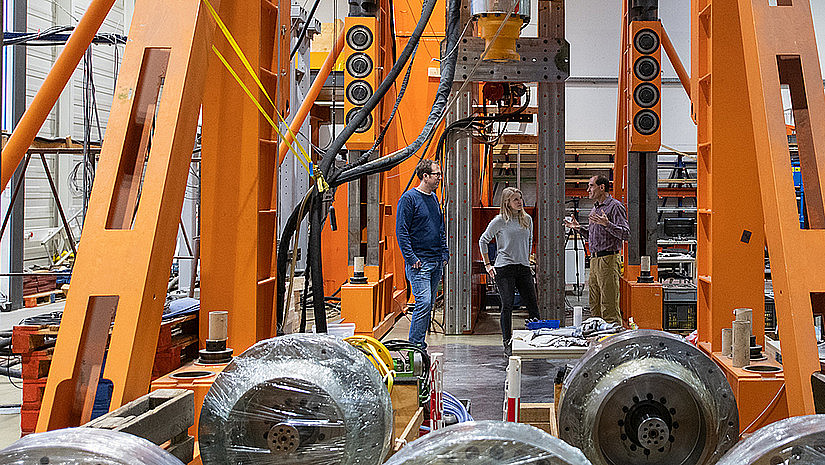
Civil engineers work in construction companies and public authorities, where they are responsible for the timely, cost-effective and high-quality completion of construction projects and the economic operation of buildings.

Image: Paavo Blafield

Chemistry for sustainability

This course is aimed at anyone who wants to study chemistry in order to develop innovative and environmentally friendly materials and technologies.

Electrical Communication Engineering

The objective of the program is to enable students to work in different fields of electrical communications, both in academia and industry, i.e. to pursue a PhD or a job. The program is geared towards students with a B.Sc. degree in communication technology or a related area.

Functional Safety Engineering

The safety of computer based systems is becoming increasingly important. For this reason, the University of Kassel offers holders of a bachelor in mathematics, electrical engineering, mechatronics or computer science the three-semester master course study Functional Safety Engineering (FUSE).

Vehicle construction, aerospace, energy technology, automation and production through to medical technology - mechanical engineers are in demand wherever machines are developed, manufactured and maintained.
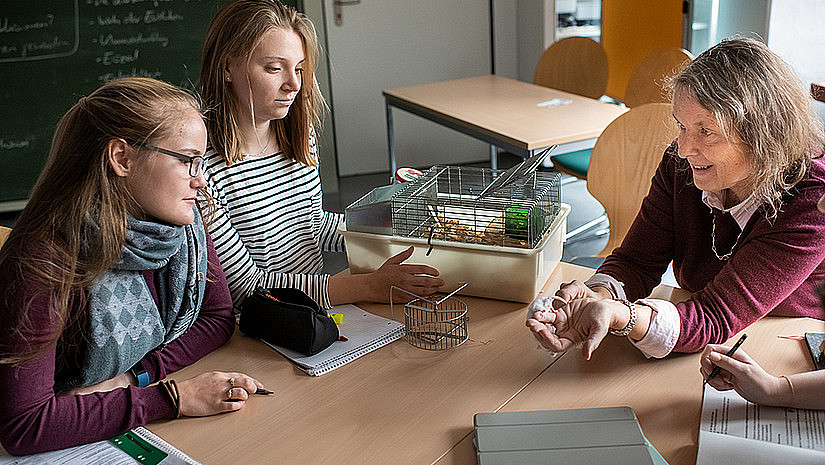

Image: Paavo Blafield

Biology

Students acquire a general understanding of biological structures, processes and causal relationships, taking into account related scientific disciplines.

Image: Generated with Freepic

Chemistry and mathematics for sustainability

Combine chemistry and mathematics for a more sustainable future: The degree program at the University of Kassel prepares you to combine scientific and mathematical methods to solve ecological, technological and social challenges.

Electrical engineering

Electrical engineering plays an important role in practically all technical areas. Communication systems, digital technology, automated production, energy supply systems, generation and distribution of renewable energies - the range is broad.

Information technology

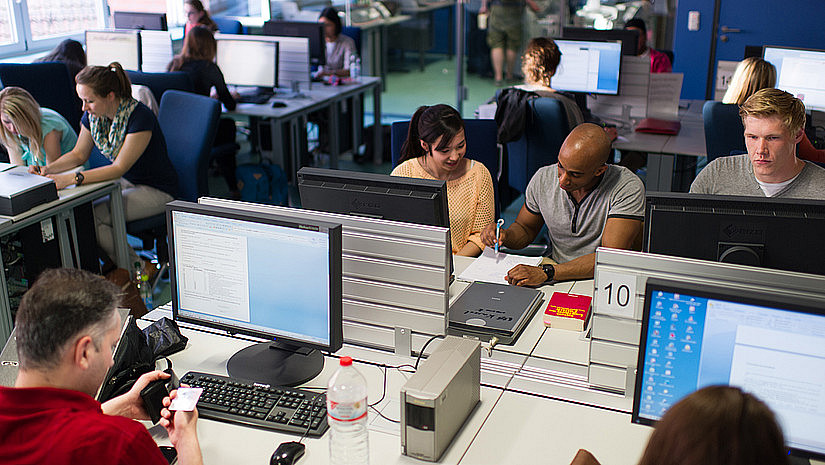
Computer science does not mean "learning to program" or "being able to use computers", but goes far beyond that. During the course, complex technical problems as well as social contexts are examined scientifically and across disciplines.

Mechanical engineering

If you are enthusiastic about technology, interested in working with computers and like to think logically, a mechanical engineering degree could be the right choice for you. Creativity is also in demand, as mechanical engineers are constantly working on new ideas to enrich the technical landscape.

Mechatronics

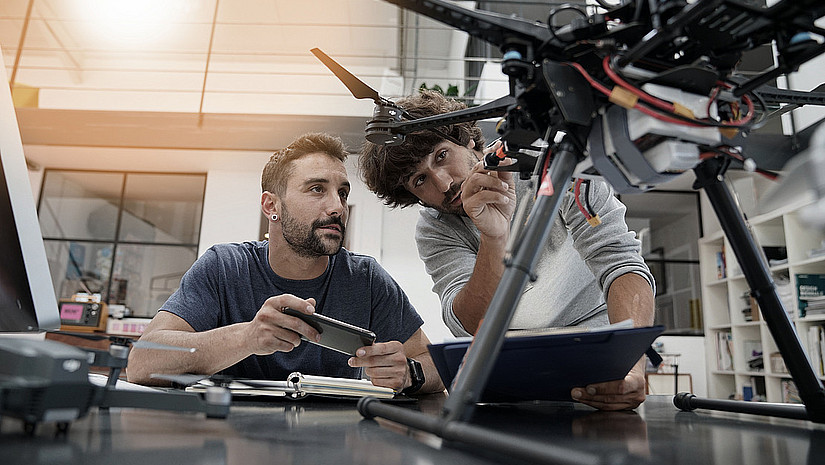
Those who study mechatronics opt for an interdisciplinary field within engineering that combines mechanical engineering, electrical engineering and computer science. Mechatronics engineers are sought-after employees because, as generalists, they can tackle projects and problems across disciplines.

Image: Adobe Stock

Sustainable electromobility

The Master's degree program combines engineering sciences with sustainability-oriented thinking. You will acquire in-depth knowledge of electrical engineering, information technology and systems engineering and develop innovative, environmentally friendly mobility solutions.

Sustainable materials and processes

In this degree program, you will learn to develop innovative solutions for an environmentally friendly world. You will acquire in-depth knowledge of the entire product life cycle and actively shape the sustainable transformation of industry and society.

Nanostructure sciences

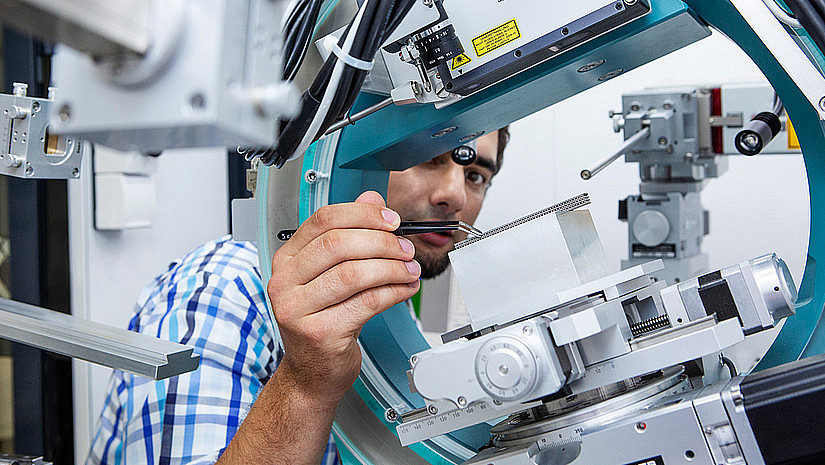
Anyone who can subscribe to the appealing idea that the greatest and most spectacular scientific discoveries may be possible in the unimaginably small world of nanostructures should consider studying nanostructure science.

The innovative Environmental Engineering course combines highly topical environmental issues with scientific and technological engineering know-how.

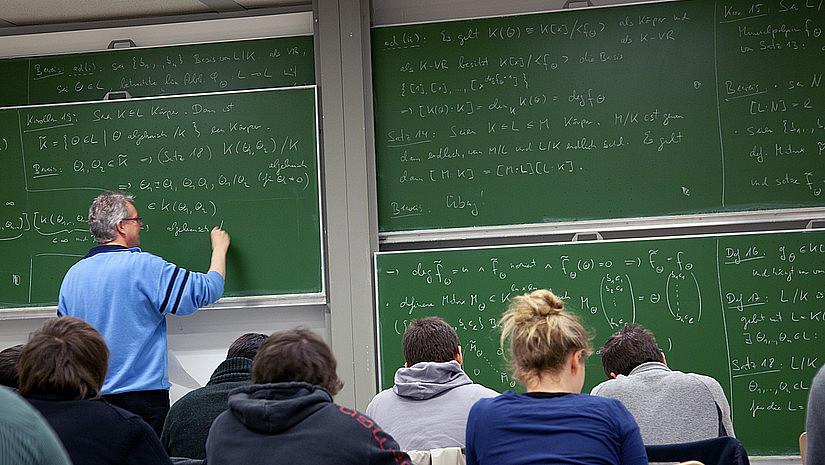
Image: Paavo Blafield

Technomathematics

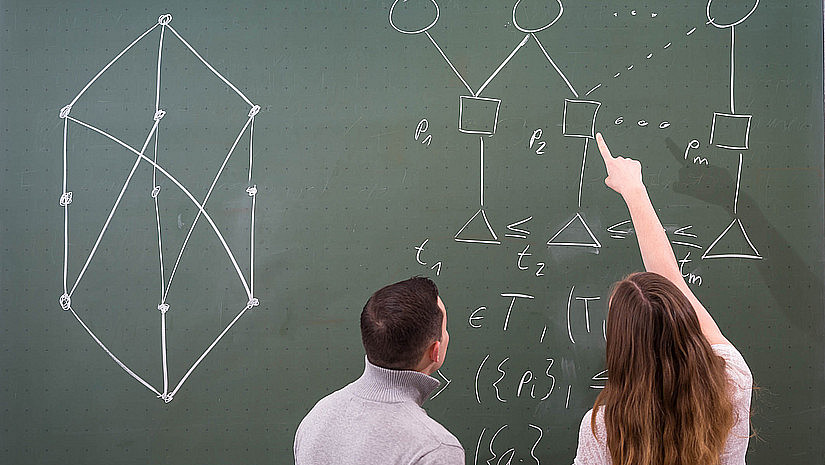
The mathematics course places great emphasis on modern, algorithmic and computer-oriented aspects of mathematics and the practical application of mathematical techniques.

Mathematics

Mathematicians analyze and solve complex problems in almost all technological and economic sectors: from banks and insurance companies to pharmaceutical, energy and telecommunications companies, vehicle and technology manufacturers, software companies, logistics service providers and consulting firms.

Mobility, transport and infrastructure

Transportation is booming, and in-depth knowledge of the links between planning, technical, economic and ecological contexts is becoming increasingly important. Our three-semester Master's degree course offers exactly that for Bachelor's graduates who want to delve deeper into their subject.

Image: Generated with Midjourney

Sustainable electrotechnical systems

Shape the technologies of the future sustainably: the Bachelor's degree course in Sustainable Electrotechnical Systems at the University of Kassel combines technical know-how with sustainability-oriented thinking.

Physics

Thanks to their methodological breadth and analytical skills, physicists have access to attractive, multifaceted fields of work worldwide.
In universities and research institutes, they work primarily in research and teaching, while
and teaching, while the spectrum in industry, business and society ranges from the IT, electronics and automotive sectors to insurance companies, banks, management consultancies, the media industry and politics.

Renewable energies and energy efficiency

Solar energy, wind and hydropower are playing an increasingly important role in the supply of electricity and heat. The Master's degree course in Renewable Energies and Energy Efficiency is therefore particularly forward-looking. Students who have already completed a degree in an engineering or technology-oriented natural science specialize here.

Environmental engineering

Environmental engineers deal with a wide range of engineering tasks and develop environmentally relevant solutions in the interests of sustainable development.

Part-time Master's degree programs subject to a fee

Since 2005, the Management School of the University of Kassel, UNIKIMS, has developed into an indispensable partner in university continuing education for companies, organizations and administrations with its business administration, engineering and human science part-time Master's degree courses.
Industrial production management

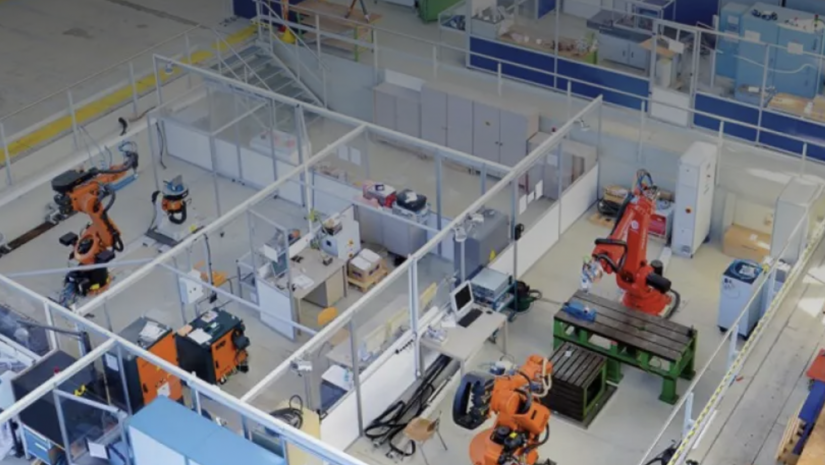
The part-time Master of Science in Industrial Production Management focuses on the holistic understanding and management of industrial processes and systems and qualifies graduates for production management in industry.

Renewable Energy and Energy Efficiency (REMENA)

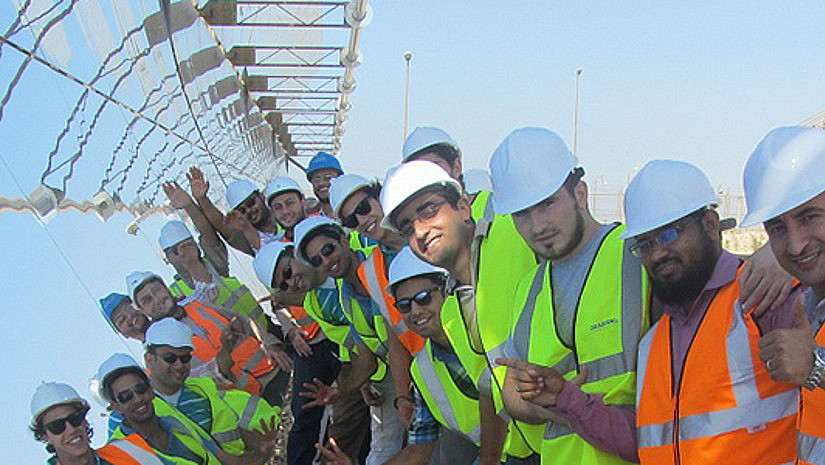
The REMENA Master program is directed to young professionals with work experience and a high motivation to contribute to introducing a sustainable energy supply and to the development in the Arab region in general, which includes a keen interest in the other culture and language.

Public transport and mobility

The part-time Master's degree in Public Transport and Mobility is aimed at specialists, managers and future managers who have completed their first university degree in engineering in all disciplines, economics, computer science, law, etc.

Wind Energy Systems (WES)

WES.online is a full master program designed for natural scientists and engineers who want to learn about the mechanical and electronic operation and interaction of wind turbines.